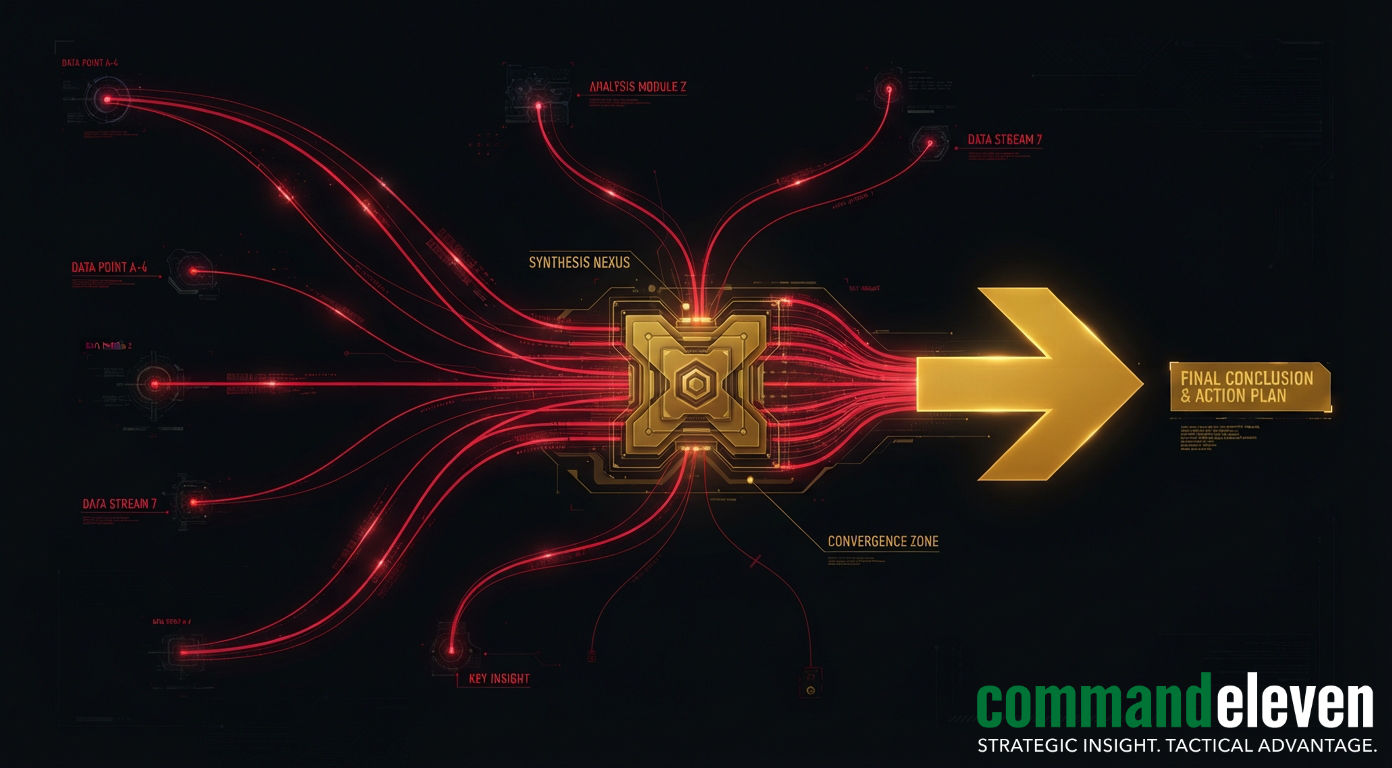
The intelligence compiled across this 5-part audit demonstrates that the Islamic Revolutionary Guard Corps (IRGC) does not operate as a traditional state military body. Instead, it functions as a highly adaptive, transregional network that deliberately blends sovereign authority with transnational criminal syndicates, deniable cyber personas, and integrated non-state proxies.
Tehran’s overarching grand strategy – driven by the doctrine of Defa-e Mozaik (Mosaic Defense) – is explicitly designed to neutralize the conventional technological superiority of Western and regional adversaries by imposing severe, asymmetric economic and physical costs.
The true center of gravity for the IRGC is its structural insulation from traditional state vulnerabilities. By using civilian infrastructure camouflage—such as disassembling advanced missile components into standard commercial shipping containers, masking state-directed cyber sabotage behind hacktivist fronts, and laundering narcotics proceeds through multi-jurisdictional Free Trade Zones—the IRGC exploits the open, rule-of-bounds nature of global commerce and democratic systems. Treaties, international sanctions, and standard kinetic deterrence models are structurally insufficient against an adversary operating on an uninterrupted, gray-zone continuum.
Strategic Recommendations for Defense and Policy Makers
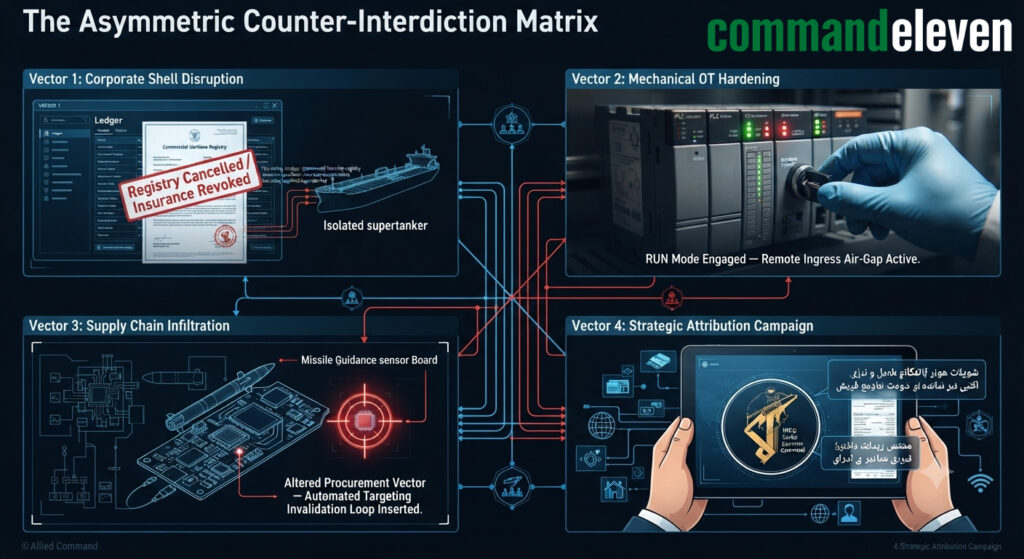
To blunt, decouple, and neutralize this multi-axis asymmetric engine, allied national security architectures must transition from a reactive, defensive posture to an aggressive, persistent counter-strategy.
I. Comprehensive Marine Interdiction and Cargo Registry Disruption
- Actionable Mandate: Allied naval task forces and maritime regulatory bodies must systematically declassify and expose the specific corporate shell registries, hull numbers, and flags of convenience tied to Unit 190.
- Operational Mechanism: Rather than relying exclusively on physical deep-sea boardings, international financial coalitions must target the civilian dependencies of the Dark Fleet. Forcing the immediate revocation of maritime insurance policies, classification certificates, and port-bunkering access for verified smuggling vessels effectively strands the cargo hulls at port, breaking the logistics pipeline before it reaches international transit corridors.
II. Mechanical Hardening and Border Isolation of Industrial Assets
- Actionable Mandate: Critical infrastructure operators must immediately execute non-negotiable operational technology (OT) hardening protocols to counter the IRGC Cyber-Electronic Command.
- Operational Mechanism: Beyond standard software patching, asset owners must manually switch all deployed programmable logic controllers (PLCs) to a physical, hard “RUN” configuration, creating a permanent mechanical air-gap that blocks remote logic manipulation. Simultaneously, international intelligence agencies must track and intercept the black-market procurement pipelines used by the Shahid Kaveh Research Group, inserting altered or tracking-enabled micro-components into the supply chain to ensure smuggled guidance packages fail during operational deployment.
III. Systemic Decoupling of Transregional Financial and Crime Nets
- Actionable Mandate: Western enforcement agencies must target the Hezbollah Business Affairs Component (BAC) and its trade-based money laundering (TBML) nodes operating across Latin America and global Free Trade Zones.
- Operational Mechanism: Treasury departments must deploy advanced machine-learning algorithms across cross-border clearing networks to automatically identify and freeze non-resident accounts matching the anomalous, round-dollar transaction footprints used by Rahbar fronts. Furthermore, allied border security architectures must implement secondary biometric screening filters for all travel sequences matching corruptly issued Venezuelan state identification documents, permanently restricting the operational mobility of cross-continental logistics agents.
IV. Proactive Strategic Information Offensives
- Actionable Mandate: Allied intelligence agencies must exploit the profound internal friction existing between the privileged IRGC elite, the conventionally starved regular military (Artesh), and a domestic population facing economic crisis.
- Operational Mechanism: Launch a coordinated, persistent information campaign that directly injects verified telemetry regarding the vast wealth accumulation, foreign real estate holdings, and corrupt corporate front portfolios of senior IRGC generals directly into domestic Iranian media spaces. Exposing this systemic hypocrisy destroys the regime’s myth of ideological purity, fuels internal polarization, and forces Tehran to aggressively divert its technical, financial, and intelligence resources inward to preserve regime security—substantially degrading its capacity to project aggressive power across the regional continuum.
IRGC Deconstructed: Mapping Tehran
- The Architecture of Regional Defiance – Part 1
- Command Hierarchy and Institutional Architecture of the IRGC – Part 2
- Technical Audit of IRGC Transshipment Corridors: Red Sea & Bab-el-Mandeb Axes – Part 3
- The Financial Engine — Front Companies, Smuggling Cartels, and Sanction-Evasion Infrastructure – Part 4
- Cyber-Kinetic Operations — IRGC Electronic Warfare Units and SCADA System Target Selection – Part 5
- Defa-e Mozaik (Mosaic Defense) and the Asymmetric Deterrence Continuum – Part 6
- Core Analysis and Strategic Recommendations – Part 7 (you are here)