Executive Summary and Strategic Context
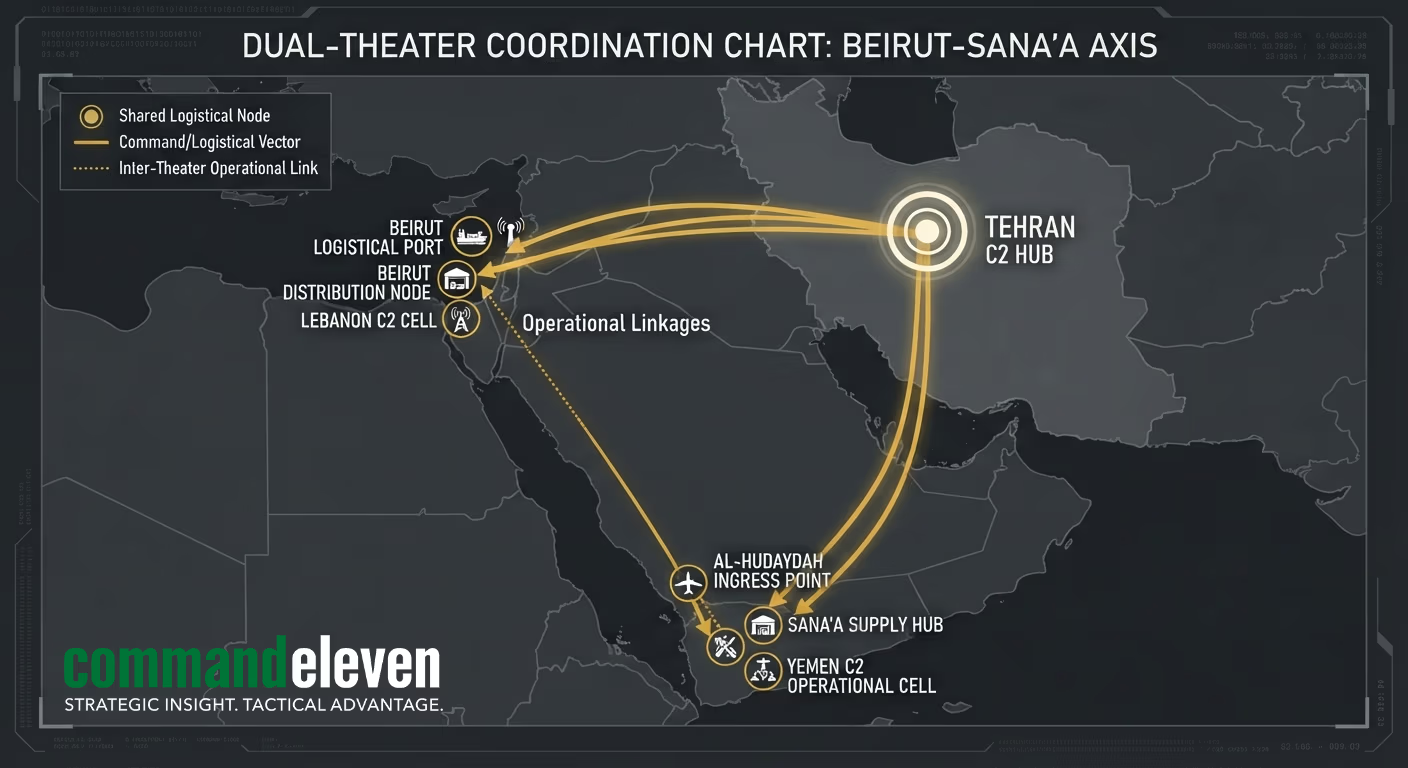
This dossier analyzes the strategic integration of Iran’s asymmetric proxy networks in Lebanon and Yemen, focusing on the operational synchronization achieved by the Islamic Revolutionary Guard Corps (IRGC) Quds Force. The alignment of these two theaters is not a localized tactical phenomenon but a core component of Tehran’s regional power-projection model. By leveraging geographically disparate nodes, the Quds Force creates a mutually reinforcing system of deterrence and attrition. This integration serves to maximize the “friction surface” for regional adversaries, forcing a diffusion of intelligence and kinetic resources across an expansive, non-linear operational arc. This dossier evaluates the technical mechanisms of this coordination and the implications of this networked integration for theater-wide security.
Network Topology: Synchronized Operational Nodes
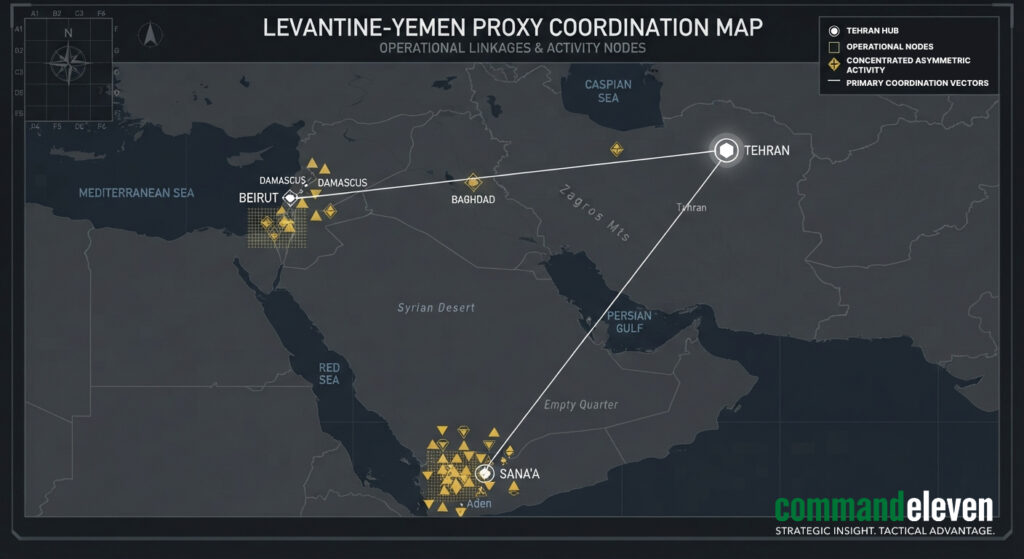
The efficacy of the Lebanon-Yemen axis is predicated on the professionalization of proxy forces through centralized training, logistical support, and high-level strategic direction provided by the IRGC.
- Command Integration: The Quds Force maintains a tiered command structure that embeds technical advisors within local militia leadership. This allows for the direct transfer of strategic objectives while maintaining a veneer of local autonomy for the proxy actors.
- Synchronized Kinetic Pacing: Operations in both theaters are increasingly synchronized in time and effect. By initiating concurrent or sequenced kinetic actions, the network forces adversaries to contend with simultaneous regional crises, thereby depleting defensive focus and straining the readiness of rapid-reaction forces.
- Shared Intelligence and Targeting: Intelligence gathered by proxy networks in one theater is routinely integrated into the broader regional targeting repository, enabling a cross-pollination of tactics, techniques, and procedures (TTPs) that enhances the overall resilience of the network.
Logistical Interdependence and Force Multiplication
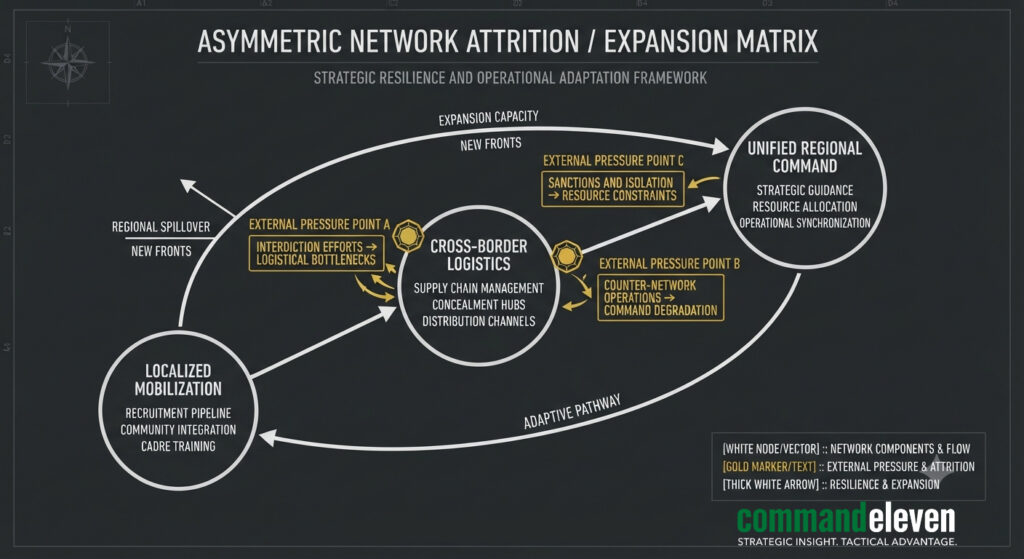
The Lebanon-Yemen axis functions as a force-multiplier by creating logistical interdependencies that bypass traditional border controls.
- Guidance and Component Relays: High-value hardware, including guidance kits for ballistic missiles and specialized UAV components, are moved through regional logistical relay networks. These components are often routed through multiple transit countries, with proxy nodes in Lebanon and Yemen serving as the final destination and assembly points.
- Resource Sharing and Cross-Pollination: Expertise gained in the Lebanese theater—particularly in tunnel warfare, urban defensive fortifications, and anti-access operations—has been effectively transferred to Yemen. This cross-pollination allows proxy actors to rapidly scale their capabilities without the need for indigenous R&D.
- Financial Clearing Mechanisms: The network utilizes decentralized financial clearing, often involving the laundering of commodities, to ensure that the costs of maintaining regional infrastructure are shared among the network nodes. This pooling of resources ensures that the financial strain of the conflict is not concentrated on a single geographic theater.
Adversary Strategic Dilemma
The integrated network presents a multifaceted challenge for conventional military actors.
- Targeting Complexity: The dispersion of proxy capabilities across Lebanon and Yemen creates a target-rich, high-complexity environment for conventional forces. The political and logistical challenges of conducting sustained, high-intensity operations in both theaters simultaneously are significant.
- The Attribution Deficit: By maintaining an asymmetric integration model, Tehran successfully navigates the “gray zone” between peace and overt conflict. Proxy nodes provide Tehran with plausible deniability while executing sophisticated, coordinated operations that align with Iranian state objectives.
- Escalation Control: The Quds Force maintains the ability to “dial” the intensity of operations in either theater. This flexibility allows Tehran to manage the pace of regional escalation, ensuring that the conflict remains within the threshold of managed instability rather than spiraling into an existential direct state-level conflict.
Forecasting and Escalation Vectors
Future developments in this network integration require monitoring several key performance indicators.
- Interoperability Maturation: The degree of interoperability between proxies in Lebanon and Yemen regarding communications, command structure, and combined arms operations will determine the network’s potential for high-intensity regional strikes.
- Technological Standardization: A convergence in the type and sophistication of munitions used across both theaters would indicate a high level of logistical standardization and command synchronization, signaling a move toward integrated regional strike capabilities.
- Operational Resilience: The network’s ability to survive sustained, intelligence-led disruption efforts will be the ultimate test of its integration model. If the nodes continue to operate effectively despite targeted interdiction, it confirms that the network has achieved a level of redundancy that renders traditional disruption methods inadequate.
The Lebanon-Yemen integration is a dynamic system of asymmetric power projection that has fundamentally altered the security architecture of the region. By creating a networked environment where regional actors are linked through shared objectives, logistical dependence, and centralized command, the Quds Force has effectively “weaponized” geography. Future security frameworks must address the fact that the Lebanon-Yemen axis is not a temporary alignment of regional militias, but a permanent, integrated infrastructure designed for enduring, multi-front asymmetric attrition.
Read the entire series:
- Strategic Depth and Asymmetric Attrition
- The Logistics of Resilience: Iran’s Shadow Supply Chain
- Asymmetric Network Integration: Lebanon and Yemen
- The Information War: US vs. Iran (Cognitive Warfare)
- EW and RF Spectrum Contention: Iranian Defensive Architectures
- Strike Back Capabilities and Escalation Potential
Additionally, CommandEleven Intelligence has published a 6 part Deconstruction of the IRGC breaking down their internal and external operations, as well as front companies, money laundering and trans-shipment structures.