
Strike Back Capabilities and Escalation Potential – Part 5
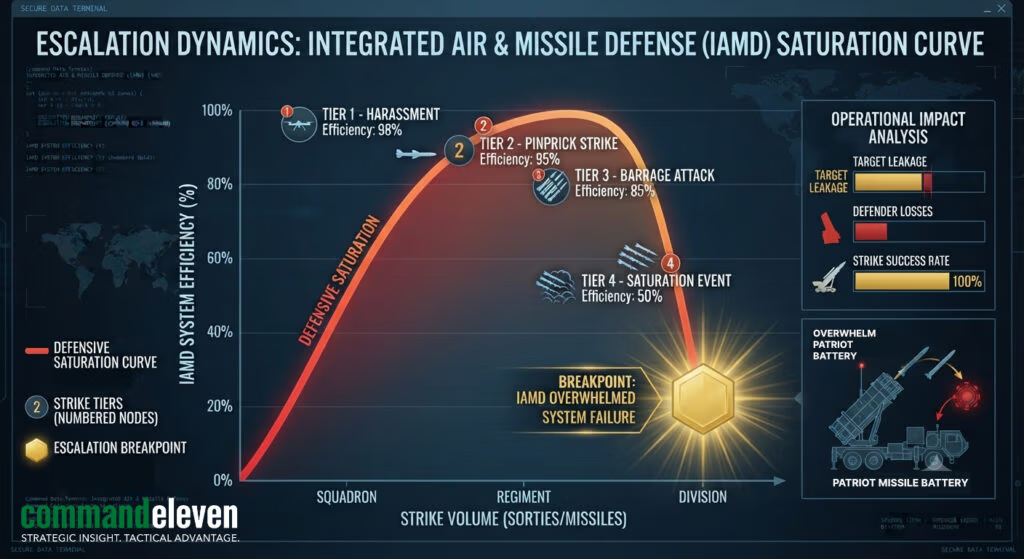
Part 5: Iran’s three-tier missile and drone strike-back capability, the saturation limits of regional air defenses, and where escalation breaks loose.
EW and RF Spectrum Contention: Iranian Defensive Architectures
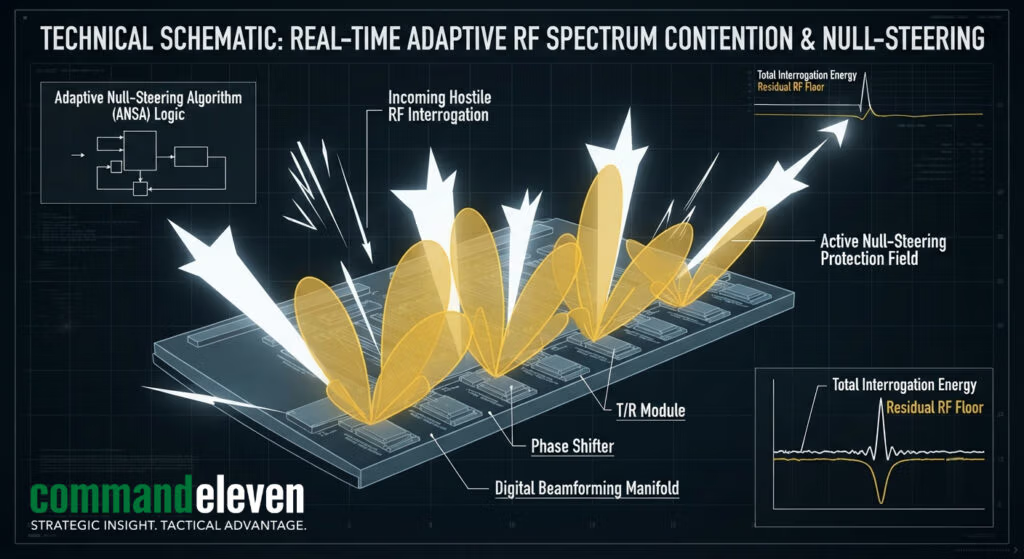
Part 5: how Iran uses jamming, frequency hopping and radar deception to shield mobile launchers and degrade adversary sensors, and where it stays exposed.
The Information War: US vs. Iran Cognitive Warfare
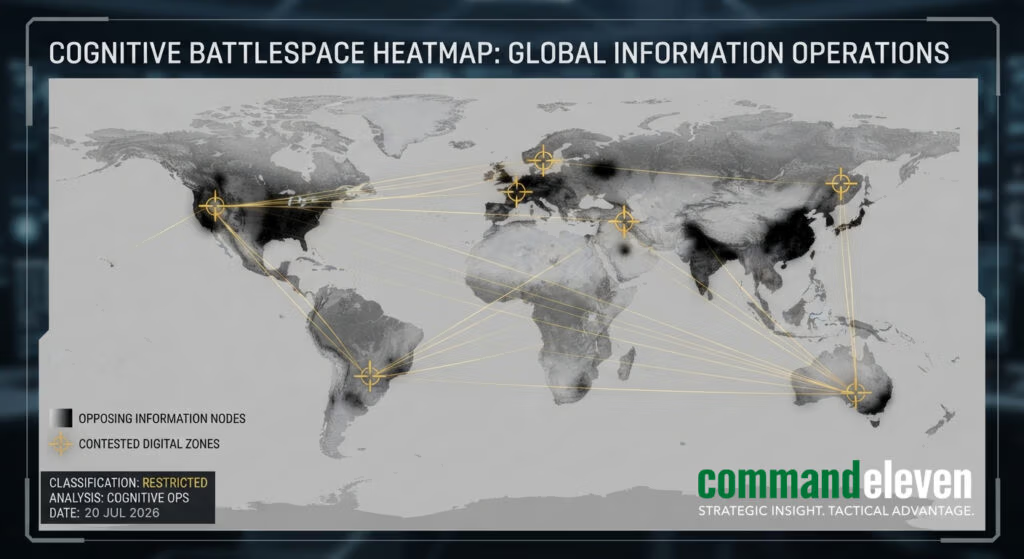
Part 4: why Tehran’s fast, decentralized influence operations outpace slower US messaging in the information war, and how deepfakes may raise the stakes.
Asymmetric Network Integration: Lebanon and Yemen – Part 2
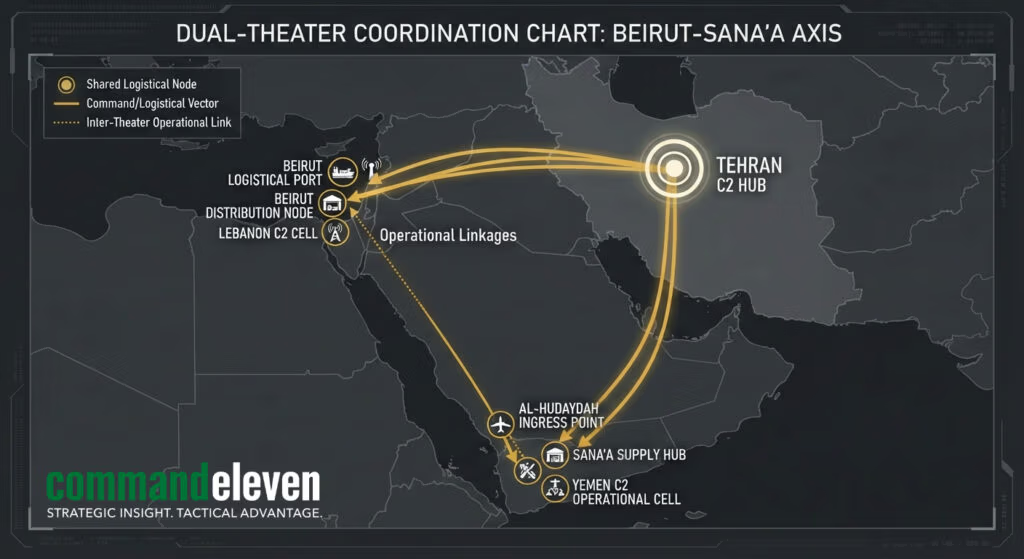
Part 3: how the IRGC Quds Force links its Lebanese and Yemeni proxies through shared command, logistics and finance to stretch adversaries on two fronts.
The Logistics of Resilience: Iranian Shadow Supply Chain

Part 2: the dark-fleet transfers, overland relays and hawala clearing behind Iran’s shadow supply chain, and where it is most exposed to interdiction.
Strategic Depth and Asymmetric Attrition – Iran

Part 1: how the IRGC Quds Force swapped territorial defence for ‘Forward Defense’, using Lebanese and Yemeni proxies to impose a costly attrition cycle.
Iran’s Asymmetric Defense Architecture: A Six-Part CommandEleven Intelligence Series
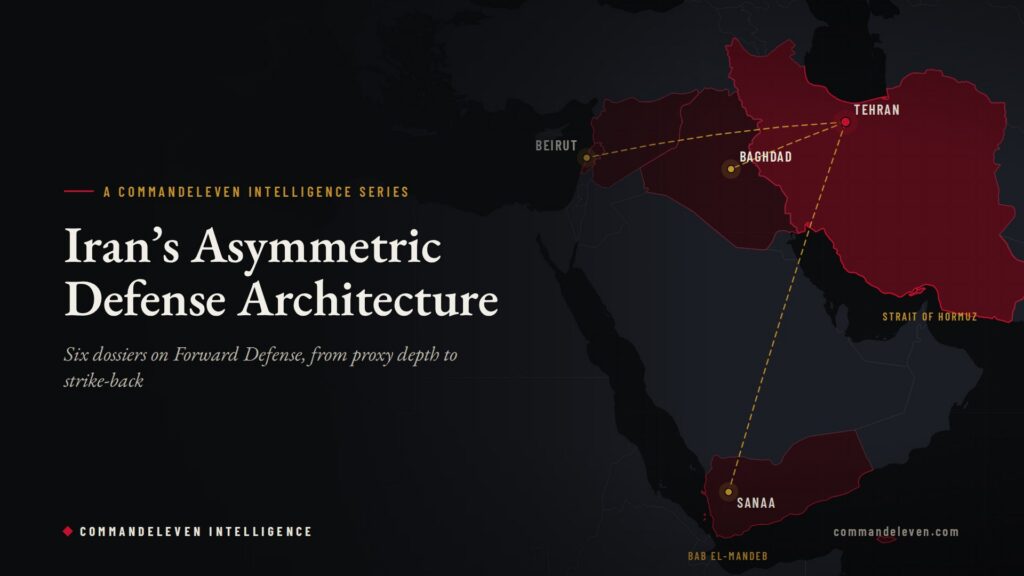
Six dossiers on how Iran defends itself without conventional parity: proxy depth, shadow supply chains, two-front integration, information war, EW and strike-back.