
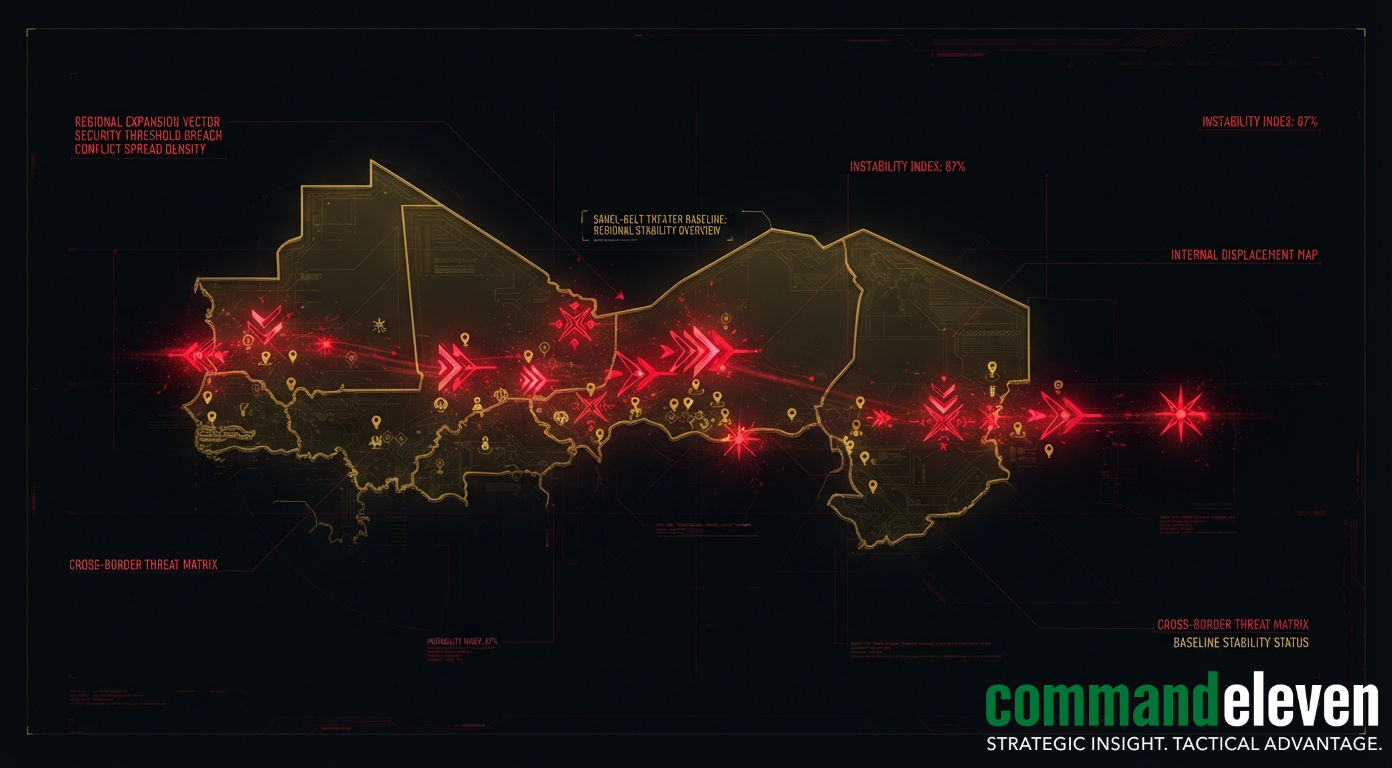
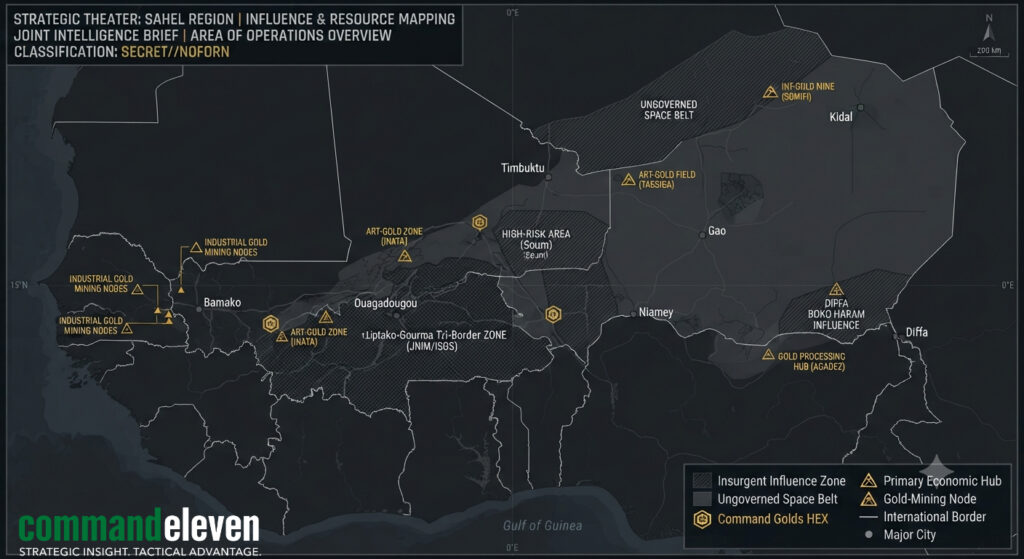
As of July 2026, the Sahel region represents the global epicenter of asymmetric security collapse. The operational environment is characterized by the confluence of state fragility, the rapid territorial expansion of transnational insurgent networks—specifically those pledging allegiance to Al-Qaeda and Islamic State affiliates—and the systematic failure of legacy security architectures. This assessment identifies the Sahel not merely as a theater of localized insurgency, but as a critical strategic node where climate-induced resource competition, porous sovereignty, and the exploitation of artisanal supply chains create a “permanence of instability.” The region is currently transitioning into a fragmented, multi-polar security theater where traditional counter-terrorism efforts are increasingly marginalized by the decentralized nature of non-state actor operations.
Overall Threat Indicators
- Insurgent Proliferation: Territorial control by non-state actors has shifted from peripheral bush-warfare to the active siege of regional economic hubs. The synchronization of insurgent movements across the Liptako-Gourma region serves as a primary indicator of operational maturity and command-and-control (C2) resilience.
- State-Collapse Contagion: The rapid erosion of central authority in Mali, Burkina Faso, and Niger has created a contiguous belt of “ungoverned space,” facilitating the unimpeded movement of militants, illicit trade, and human trafficking networks that destabilize the wider coastal West African states.
- External Power Competition: The Sahel has become a focal point for the expansion of non-Western security partnerships. The introduction of unconventional state-backed security providers has fundamentally altered the tactical landscape, often prioritizing regime survival over the long-term regional stability of the population-centric counter-insurgency model.
Operational Topology: The Attrition Architecture
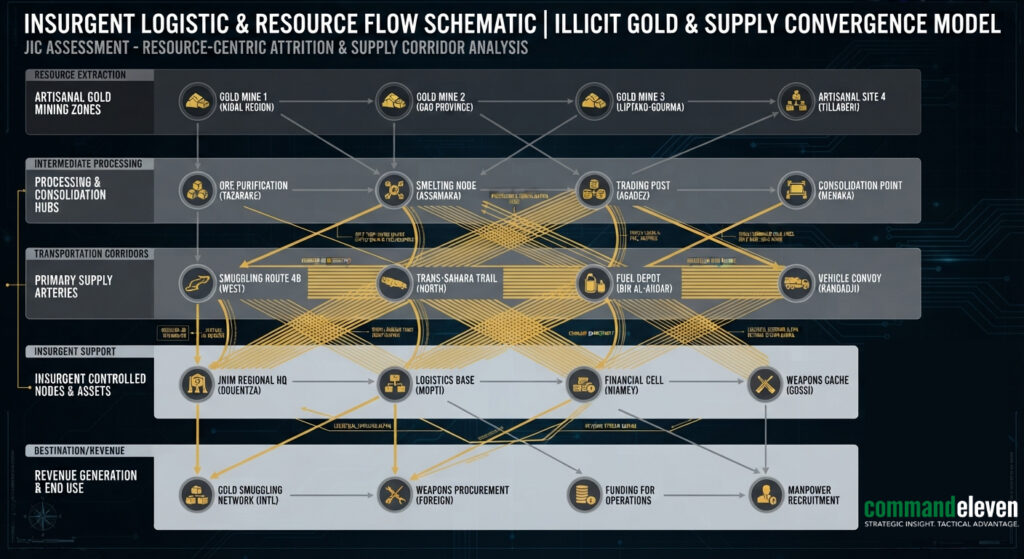
The Sahel’s “Attrition Architecture” is defined by extreme environmental friction and the exploitation of localized grievances:
- Logistical Asymmetry: Insurgent groups utilize highly mobile, low-signature transport methods—primarily motorbikes and hardened off-road vehicles—to bypass conventional military checkpoints and interdiction grids. Their ability to leverage indigenous knowledge of the terrain allows for effective “hit-and-vanish” strike cycles that deplete state security resources without engaging in costly, symmetric battles.
- Resource-Centric Conflict: The control of artisanal gold mines and strategic livestock corridors provides the requisite capital for insurgent sustainment. These nodes function as the financial arteries of the insurgency, and their protection is the primary objective of current militant tactical postures.
- Demographic Exploitation: Insurgent networks have integrated themselves into local community structures, utilizing communal tensions over water and grazing land to recruit and secure safe havens, effectively turning the civil-military divide into a structural advantage.
Technical Integration and Asymmetric Warfare
- Low-Tech Precision: While the Sahel does not share the high-tech saturation of the Levant or Ukraine, the tactical integration of COTS (Commercial Off-The-Shelf) technology—specifically encrypted mobile communications and small-scale tactical drone surveillance—has significantly enhanced insurgent situational awareness.
- RF Spectrum Shadowing: The exploitation of the Sahel’s vast, unmonitored RF spectrum for tactical coordination allows insurgent groups to communicate and coordinate multi-axis attacks with relative immunity from signals intelligence (SIGINT) monitoring.
- IED Innovation: The evolution of improvised explosive device (IED) technology, specifically in the move toward remote-detonation and signature-suppressed triggering mechanisms, remains the primary kinetic threat to military and civilian transport across the theater.
Strategic Implications for Regional Stability
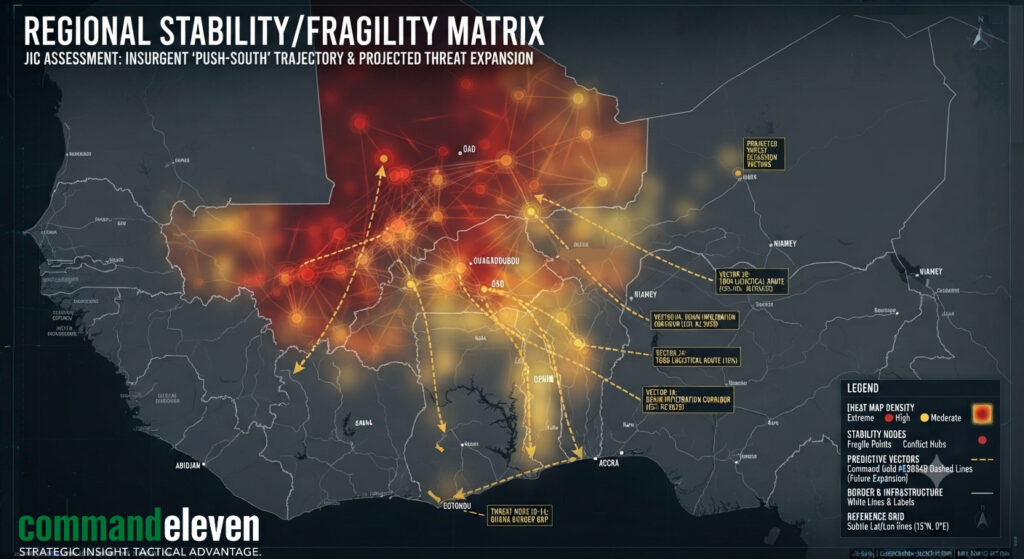
- The Coastal Spillage: The progressive movement of insurgent influence from the Sahel toward the littoral states of the Gulf of Guinea is the most pressing macroeconomic and security risk for West Africa. This spillover threatens the stability of critical regional trade routes and maritime ports.
- Food and Resource Security: The weaponization of resource scarcity—specifically the control of water access points—is emerging as a potent tool for insurgent governance, forcing local populations into dependency and further eroding state legitimacy.
- Security Architecture Obsolescence: The collapse of regional collaborative security frameworks has left states to navigate the crisis in isolation, leading to a “security-dilemma” where individual states prioritize unilateral, often repressive, measures that fail to address the underlying drivers of the insurgency.
Forecasting and Baseline Indicators
Future stability in the Sahel theater will be tracked through these indicators for the remainder of Q3 2026:
- Insurgent “Push-South” Metrics: Monitoring the frequency and scale of militant incursions into the northern provinces of Côte d’Ivoire, Benin, and Togo as a lead indicator of regional spillage.
- Artisanal Resource Capture: Tracking the control of primary gold-mining sites and the volume of illicit trade flows moving through insurgent-controlled nodes.
- Governance/Recruitment Delta: Measuring the rate at which local populations pivot from state-aligned administrative structures to insurgent-provided “justice” and security mechanisms.
The Sahel is currently undergoing a structural realignment toward perpetual, localized conflict. The baseline confirms that until state authorities can decouple insurgent networks from the local economic and resource nodes they occupy, the theater will remain a vacuum of security that consumes regional stability and necessitates long-term strategic containment.

