
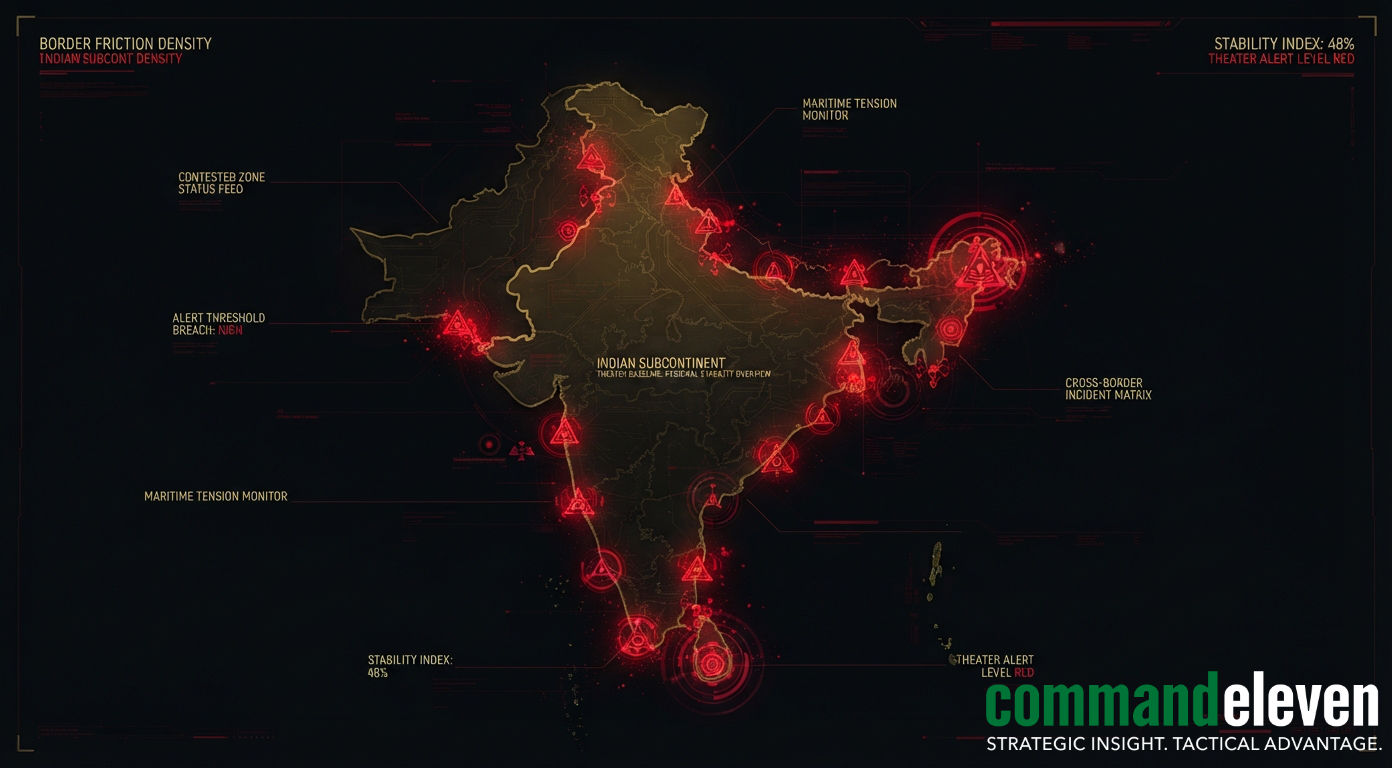
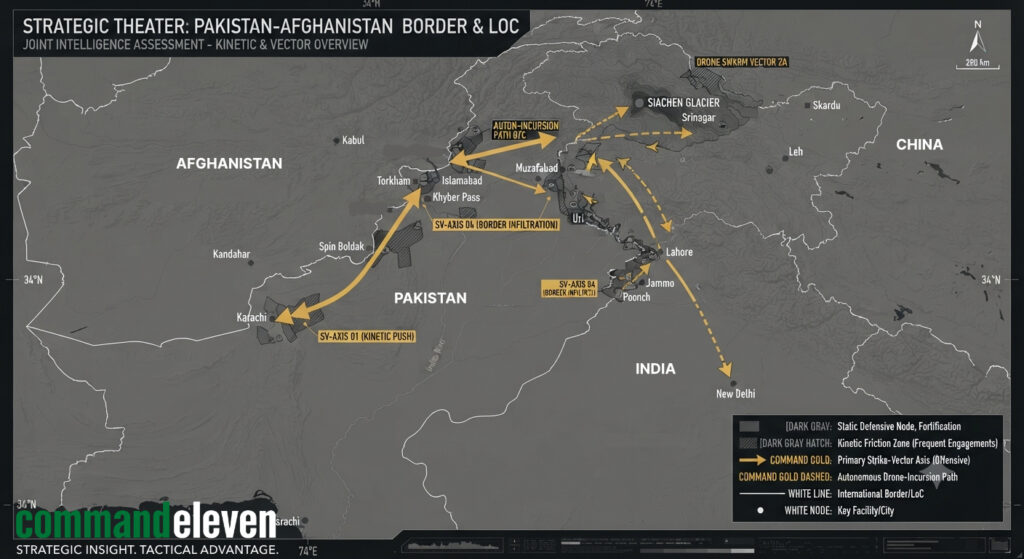
As of July 2026, the Indian Subcontinent theater is defined by a high-stakes, multi-polar friction dynamic. The rivalry between major regional powers, complicated by porous borders and the proliferation of non-state actors, has created a permanent state of “contained volatility.” This assessment identifies the region as a critical fault line where the traditional nuclear-deterrence paradigm is increasingly challenged by rapid technological advancements and the integration of asymmetric warfare tactics by both state and non-state entities.
Overall Threat Indicators
- Border-Friction Dynamics: Persistent tensions across the Pakistan-Afghanistan border and the Line of Control remain the primary flashpoints for regional destabilization. The militarization of these zones has reached levels of unprecedented density.
- Asymmetric Network Resilience: The exploitation of regional geopolitical seams by non-state actors, utilizing cross-border logistical corridors, continues to disrupt long-term stability and complicates conventional counter-insurgency operations.
- Technological Parity: Both regional powers are actively engaged in accelerating their technological capabilities—specifically in missile defense, autonomous systems, and cyber-offensive capabilities—leading to a “security dilemma” where perceived parity fuels greater risk-taking.
Operational Topology: The Attrition Architecture
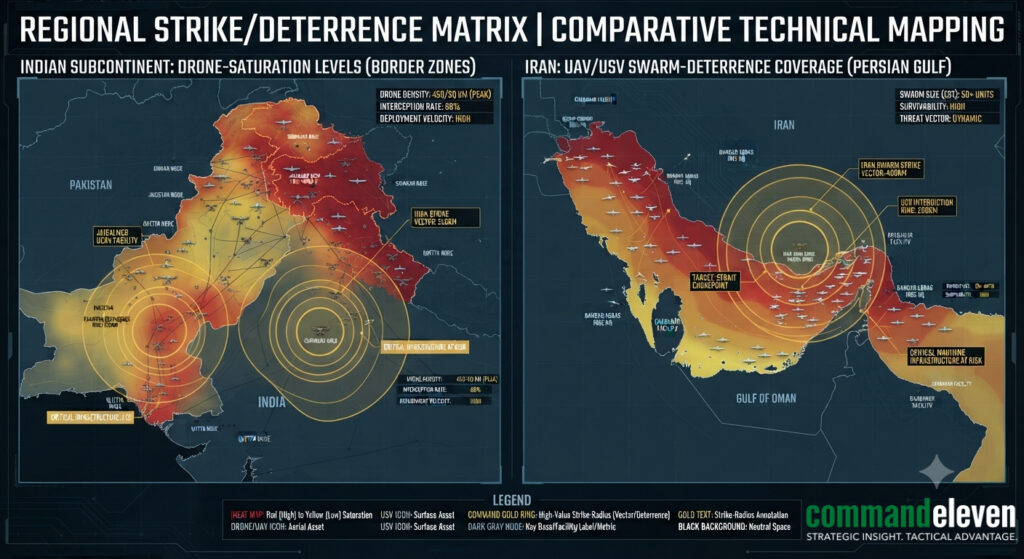
The theater’s “Attrition Architecture” is characterized by:
- High-Frequency, Low-Intensity Engagement: The reliance on constant, localized kinetic events—skirmishes, border shelling, and drone incursions—to maintain pressure and signal intent without escalating to full-scale conflict.
- Terrain-Hardened Logistics: The use of challenging, high-altitude terrain along border zones provides insurgent and non-state actors with significant tactical advantages in evasion and strike execution.
- Dual-Use Infrastructure: The modernization of regional transport, energy, and communication nodes has provided state actors with increased logistical depth, while simultaneously creating new targets for asymmetric disruption.
Technical Integration and Asymmetric Warfare
- Precision Strike Evolution: The region is seeing a marked increase in the integration of precision-guided munitions (PGMs) and tactical UAVs, fundamentally altering the calculus of border-zone skirmishes.
- Cyber-Frontline Integration: The cyber-domain has become a critical front for intelligence gathering and strategic disruption, with recurring attempts to penetrate state-level security, administrative, and economic networks.
Strategic Implications for Regional Stability
The stability of the Indian Subcontinent is fragile, held in check by the nuclear-deterrence framework, yet strained by the relentless march of asymmetric conflict. The persistent struggle for regional influence, coupled with the instability of neighboring zones, ensures that this theater will remain a top-tier global security concern for the foreseeable future.
Forecasting and Baseline Indicators
- Border-Zone Kinetic Frequency: Tracking the volume of skirmishes and technical incursions along key contested borders.
- Autonomous Asset Proliferation: Measuring the density of tactical UAVs and loitering munitions in regional arsenals.
- Strategic Narrative/Miscalculation Risk: Assessing the impact of regional media, cyber-warfare, and state rhetoric on the risk of accidental escalation in high-tension zones.

