
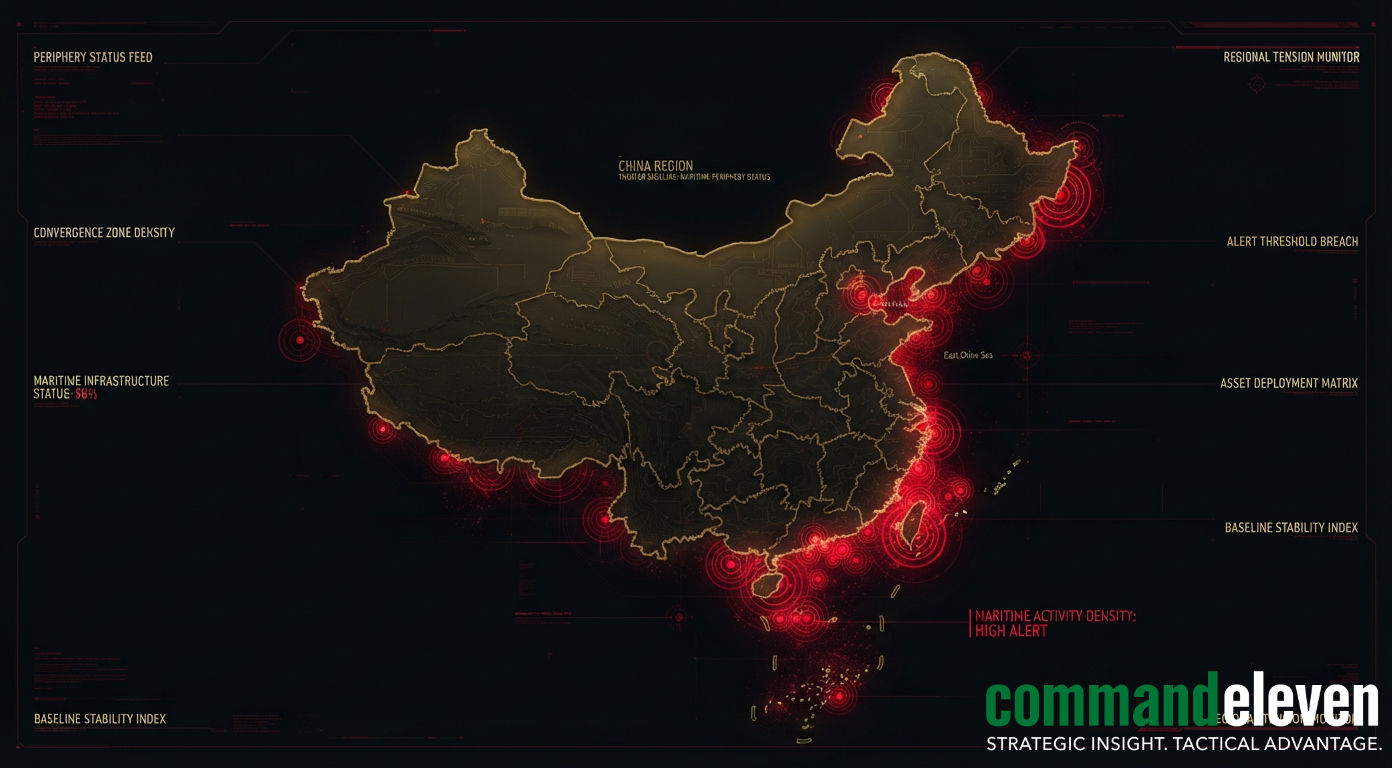
As of July 2026, the People’s Republic of China (PRC) has entered a critical phase of “assertive strategic consolidation.” Beijing is transitioning its military and economic posture from regional influence-building to the projection of global, multi-domain power. The operational theater is defined by the integration of the People’s Liberation Army’s (PLA) civil-military fusion (CMF) with a deliberate, long-term strategy of eroding US-led security architectures in the Indo-Pacific. This assessment identifies the PRC’s primary strategic objective as the establishment of a “securitized periphery,” where maritime, cyber, and economic domains are synthesized to ensure non-negotiable sovereignty over strategic maritime nodes and essential technological supply chains.
Overall Threat Indicators
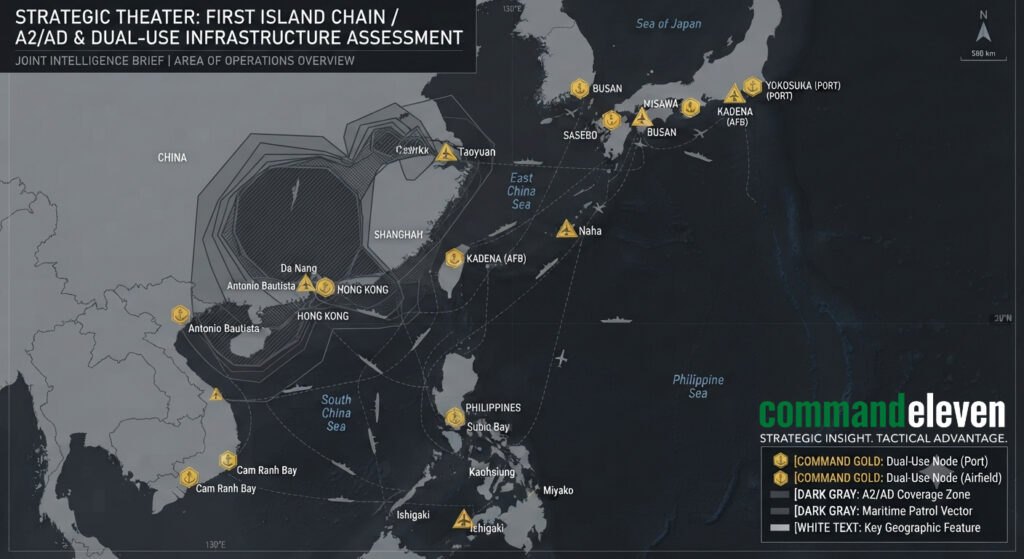
- A2/AD Densification: The expansion of anti-access/area denial (A2/AD) capabilities across the First Island Chain has reached a saturation point, effectively challenging freedom of navigation in the South China Sea. Recent telemetry confirms the deployment of integrated, mobile shore-based missile batteries coupled with persistent long-endurance ISR (Intelligence, Surveillance, and Reconnaissance) coverage.
- Cyber-Kinetic Convergence: China’s cyber apparatus has shifted toward “pre-positioning for disruption.” The penetration of critical infrastructure nodes within the Indo-Pacific and beyond indicates a doctrine of “strategic paralysis,” intended to disable decision-making systems at the onset of kinetic hostilities.
- Economic Coercion-to-Security Pipeline: The use of state-backed capital to control strategic ports, deep-water infrastructure, and critical mineral processing centers globally now serves as a foundational element of China’s military-logistical backbone.
Operational Topology: The Attrition Architecture
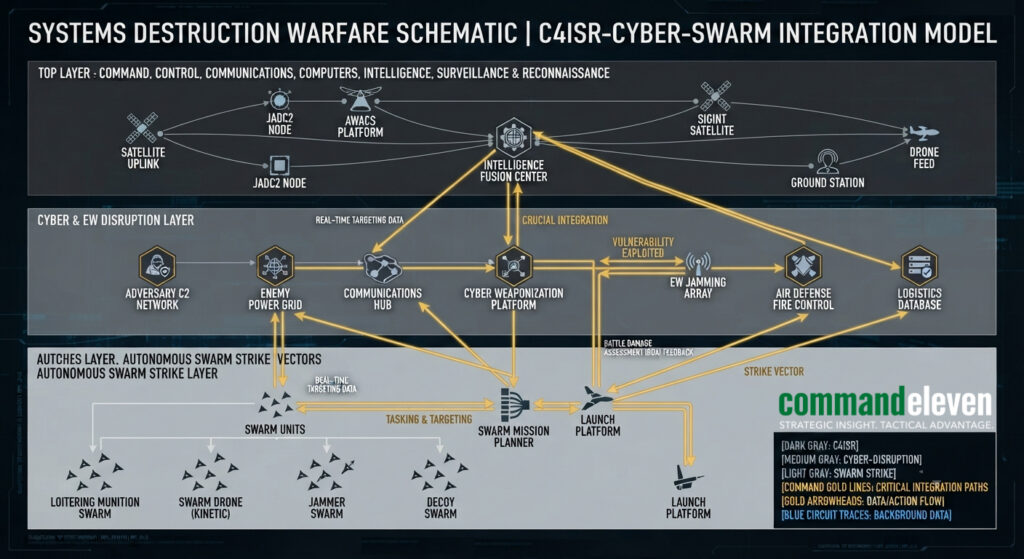
The “Attrition Architecture” of the Chinese model is based on “Systems Destruction Warfare”:
- Integrated Maritime/Air Maneuver: Beijing’s operational doctrine avoids direct symmetric engagement, favoring a “multi-vector pressure” approach. This involves constant, low-intensity maritime patrols, drone-swarm deployments, and high-tempo exercises designed to exhaust the reaction capacity of regional actors.
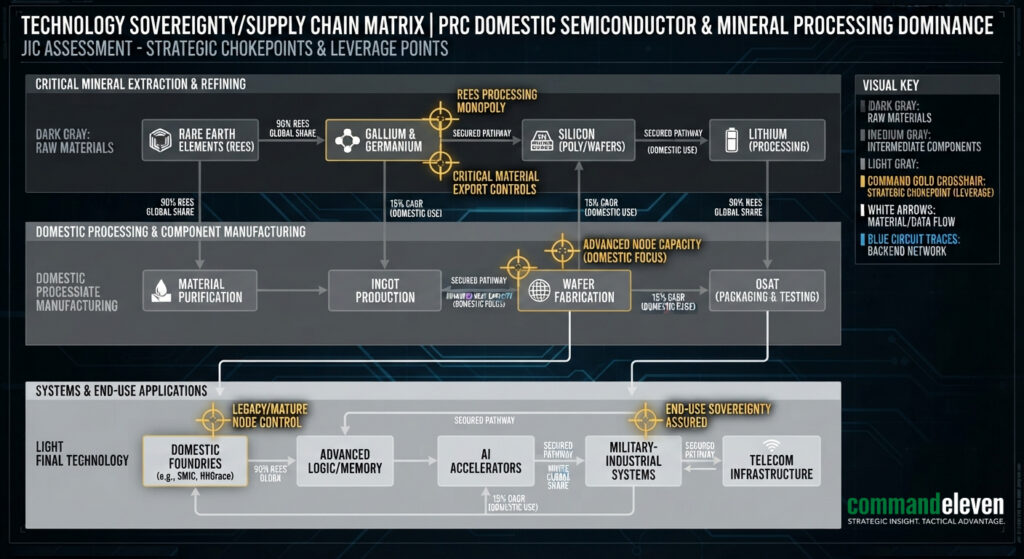
- Technological Sovereign Depth: By aggressively pursuing domestic self-sufficiency in semiconductor manufacturing and AI-driven military decision systems, the PLA is reducing its dependence on global supply chains, thereby insulating its military machine from the effects of international sanctions or supply disruptions.
- Urban-Maritime Interface: The militarization of artificial island features and the construction of dual-use infrastructure are the physical nodes of this architecture, functioning as forward-deployed, hardened reconnaissance and strike hubs.
Technical Integration and Asymmetric Warfare
- AI-Enhanced Decision Cycles: China is currently integrating advanced AI into its Command, Control, Communications, Computers, Intelligence, Surveillance, and Reconnaissance (C4ISR) systems to accelerate decision-making speeds. This reduces the latency between detecting a target and executing a strike.
- Electronic Warfare (EW) Dominance: The PLA has institutionalized high-power EW platforms designed to create persistent spectrum dominance. Their ability to jam, spoof, and degrade high-frequency communications is a core pillar of their regional tactical advantage.
- Autonomous Swarm Dynamics: The shift toward mass-produced, low-cost autonomous UAV/USV (Unmanned Surface Vehicle) swarms represents a fundamental change in the PLA’s attrition strategy, designed to overwhelm the high-value IAMD grids of potential adversaries through saturation.
Strategic Implications for Regional Stability
- Indo-Pacific Security Architecture: The sustained pressure on the First Island Chain is fundamentally destabilizing the status quo. The emergence of security blocs as a counterweight to PRC expansionism is heightening the risk of miscalculated escalation.
- The Technology Sovereignty Gap: As China achieves milestones in domestic chip fabrication and quantum computing, the technology gap that previously sustained US strategic dominance is shrinking, leading to a “strategic parity” that encourages risk-taking behavior in contested zones.
- Global Supply Chain Hegemony: China’s dominance in the processing of rare earth elements and the manufacturing of essential high-tech components creates a “chokepoint of influence” that can be mobilized to influence regional political alignment.
Forecasting and Baseline Indicators
Future stability in the China theater will be assessed through these indicators for the remainder of Q3 2026:
- Dual-Use Infrastructure Growth: Monitoring the development of deep-water port facilities and aviation hubs in the Indo-Pacific to determine their potential as forward-deployed PLA strike nodes.
- Cyber Pre-positioning Metrics: Tracking the incidence of “low-observable” cyber intrusion patterns in Western Pacific logistical and communications grids.
- A2/AD Saturation Levels: Measuring the delta between PLA regional strike assets and the defensive capacity of coalition air and maritime grids.
The PRC is executing a multi-decadal plan to rewrite the rules of regional security. The baseline confirms that Beijing does not seek a sudden flashpoint, but rather a “slow-motion displacement” of existing power structures, backed by a technologically advanced, highly integrated, and strategically patient military machine.

