
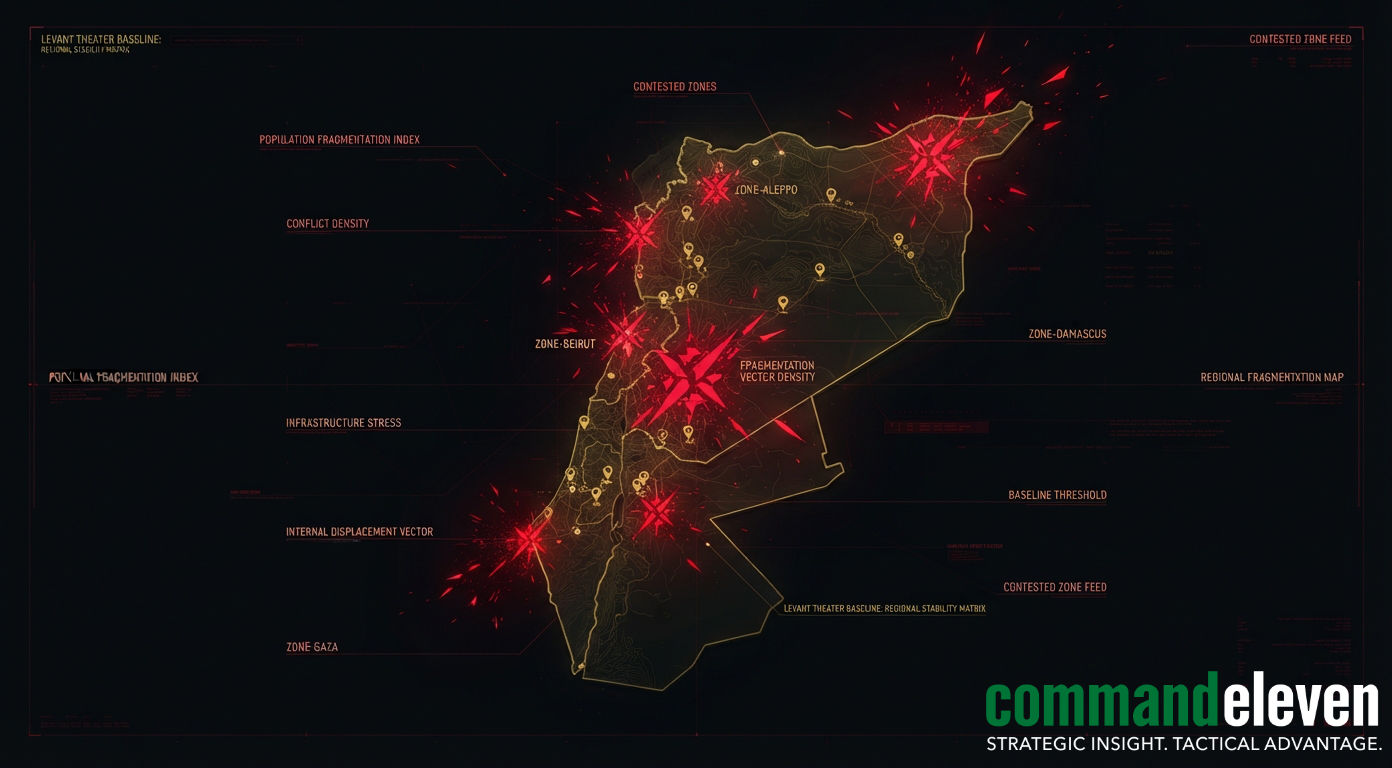
As of July 2026, the Levant remains the primary crucible for non-state actor integration and regional proxy attrition. The theater is defined by a “fragmented stability” where the traditional boundaries of sovereign control are continuously eroded by transnational militant networks, IRGC-aligned militias, and the geopolitical maneuvering of regional stakeholders. This assessment identifies the Levant as a zone of sustained, low-intensity kinetic engagement, transitioning from localized insurgency toward a broader, integrated network of asymmetric nodes. The operational environment is currently under extreme pressure from the convergence of cross-border logistical corridors, the militarization of autonomous systems, and the persistent destabilization of the Syria-Iraq-Kurdistan axis.
Overall Threat Indicators
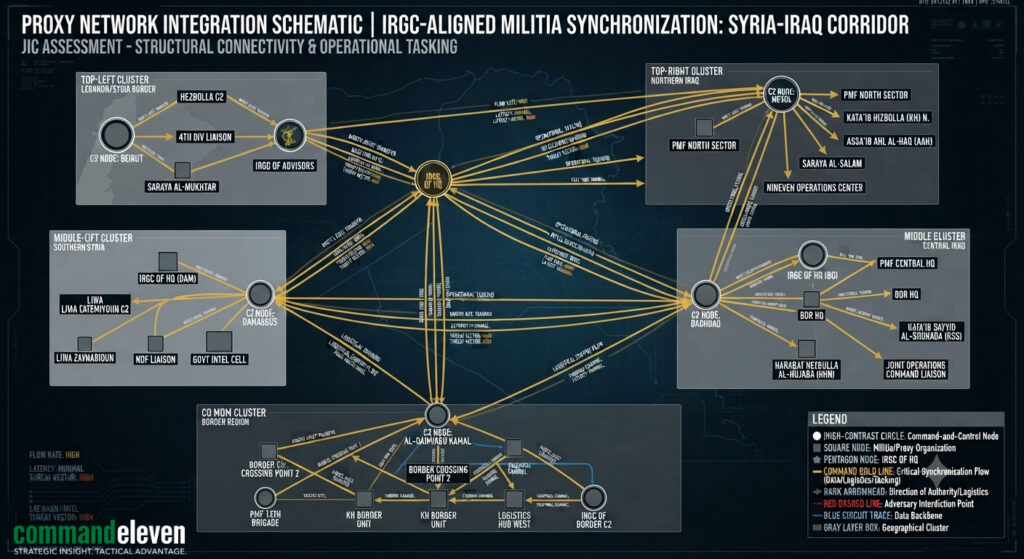
- Proxy Network Integration: The operational synchronization between militias in Syria and Iraq is at its highest recorded density since 2024. The institutionalization of these groups within local security frameworks has created “state-within-a-state” dynamics, complicating conventional counter-terrorism strategies and increasing the risk of miscalculated regional escalation.
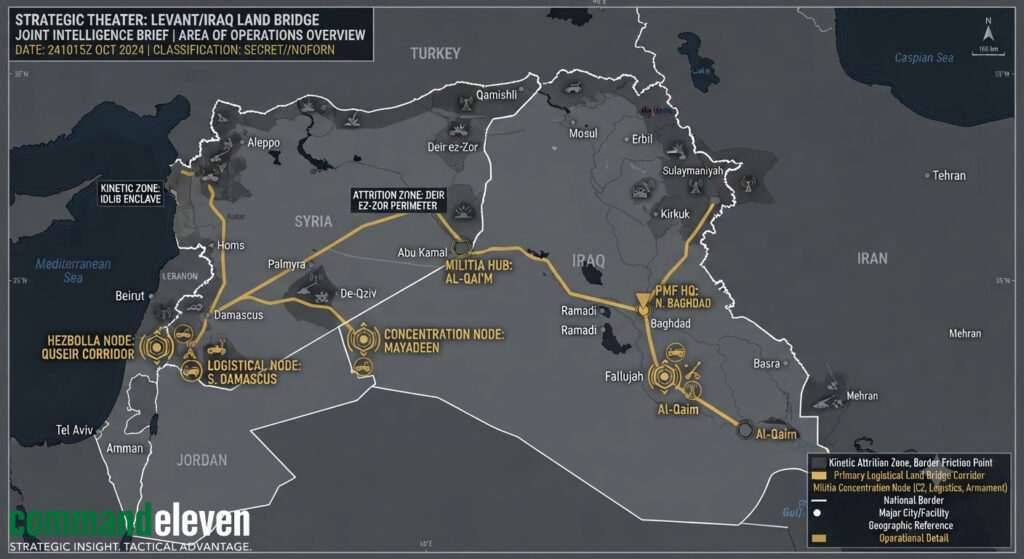
- Cross-Border Contagion: The Levant acts as a conduit for transnational criminal and insurgent movement. The porous nature of the Syrian-Iraqi border continues to facilitate the rapid transit of specialized weaponry and personnel, creating a perpetual feedback loop of regional destabilization that bypasses traditional border security protocols.
- Power Vacuum Dynamics: The fluctuating commitment levels of major external powers have created localized power vacuums, allowing non-state actors—particularly within the Kurdish territories and the Syrian interior—to seize and harden territory for use as long-term logistical and strike-launch hubs.
Operational Topology: The Attrition Architecture
The Levant’s “Attrition Architecture” is characterized by high-density, non-linear engagement nodes:
- Logistical Corridors: Infrastructure connecting the Tehran hub to the Levant littoral is the central target of adversarial interdiction. This “land bridge” is not a static line but a dynamic, multi-path system of hardened subterranean caches, mobile supply nodes, and protected civilian transit channels.
- Urban Hardening: Militant forces have effectively mastered urban-centric attrition. By utilizing the dense, complex architecture of Syrian and Iraqi metropolitan centers, they have forced adversarial forces into costly, time-intensive urban clearance operations that produce high civilian friction and provide high-value propaganda opportunities.
- Terrain-Neutralized Mobility: The reliance on small-unit, highly mobile strike teams equipped with high-mobility improvised systems ensures that conventional military superiority is frequently neutralized by the adversary’s ability to “swarm and vanish” within the rugged, compartmentalized terrain of the Levant’s interior.
Technical Integration and Asymmetric Warfare
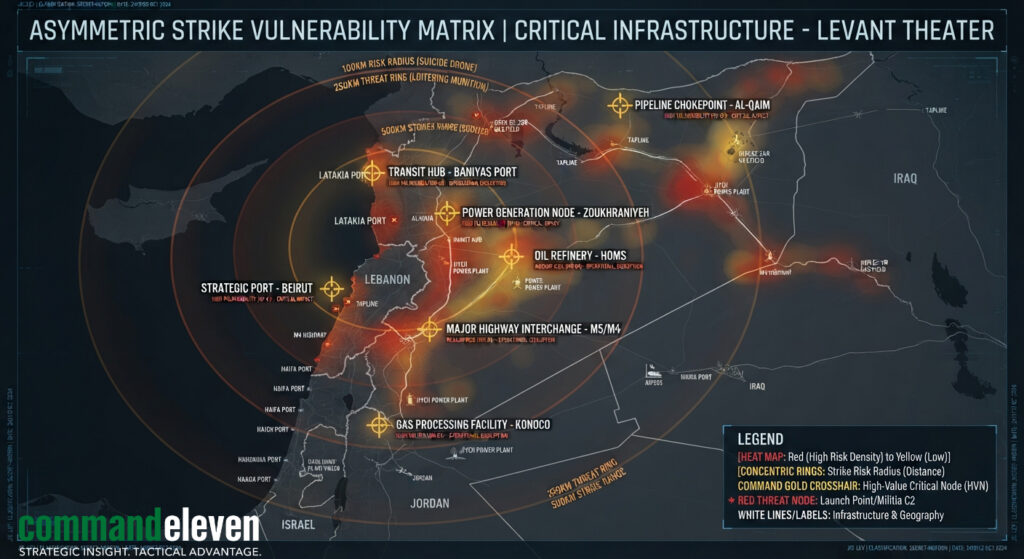
- UAV Proliferation: The Levant has seen a saturation of small-to-medium range UAVs. These assets are now being used not just for intelligence, surveillance, and reconnaissance (ISR), but for coordinated, multi-vector strikes that threaten critical infrastructure and energy nodes across Iraq and eastern Syria.
- RF Spectrum Contention: Tactical EW suites are being deployed by non-state actors with increasing sophistication. The use of low-cost RF jammers and spectrum hopping capabilities has disrupted communication links, making tactical coordination for regional security forces progressively difficult.
- Autonomous Munitions: There is a discernible shift toward the use of loitering munitions within the Levant’s asymmetric arsenal. This technical jump reduces the sensor-to-shooter loop to critical seconds, rendering traditional, non-automated air defense grids vulnerable to saturation.
Strategic Implications for Regional Stability
- Fragile Alliances: The Levant’s internal stability relies on a complex web of transactional alliances. The fragility of these arrangements means that localized, kinetic incidents can trigger unintended cascading reactions across the broader regional security architecture.
- Regional Hegemonic Competition: The Levant remains the primary theater for regional hegemonic competition, where non-state actors serve as the kinetic proxies for regional power players, ensuring that the conflict remains resistant to long-term diplomatic resolution.
- Energy Infrastructure Vulnerability: The security of regional energy pipelines is inextricably linked to the Levant’s operational stability. The susceptibility of these nodes to asymmetric disruption constitutes a significant global macroeconomic risk.
Forecasting and Baseline Indicators
Future stability in the Levant theater will be tracked through these indicators for the remainder of Q3 2026:
- Militant Node Density: Monitoring the concentration and reinforcement of militant positions within the Syrian-Iraqi border regions.
- Autonomous Strike Frequency: Tracking the incidence and technical complexity of UAV and loitering munition strikes against critical logistical and energy infrastructure.
- Cross-Border Logistics Flow: Measuring the volume of specialized munitions and high-value technical hardware moving through established subterranean and mobile corridors.
The Levant is not a theater of resolution, but one of managed friction. Its future is tied to the evolution of the non-state actor, where technical capability is matched by organizational resilience, ensuring that the Levant remains the central, most unpredictable fault line in global regional security.

