
The Sulfur Shortage, Explained
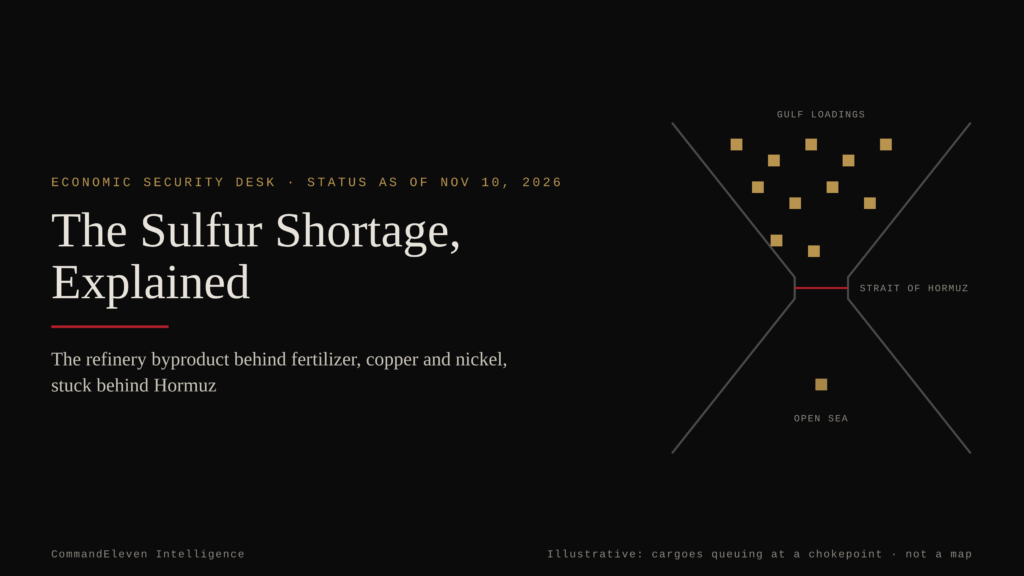
Why the Hormuz sulfur shortage matters: exports fell a third, phosphate plants idled, and mines in Indonesia, Chile and Congo feel it. Plain-language explainer.
Global Food Security: East and Southeast Asia – Part 7
El Niño could cut Southeast Asia’s rice harvest by up to 8%, as much as Thailand exports in a year, while fuel emergencies hit the Philippines and the region’s import-dependent poor.
Global Food Security: Africa – Part 6
Africa is the only region exposed to all four food shocks at once. Sudan is the world’s worst hunger crisis, and El Niño puts East, West and Southern Africa at risk into 2028.
Global Food Security: Australia and the Pacific – Part 9
Australia’s winter crop is forecast down 21% and El Niño brings drought to the east. The Pacific islands, dependent on imported fuel and food, have already declared emergencies.
Global Food Security: The Indian Subcontinent – Part 8
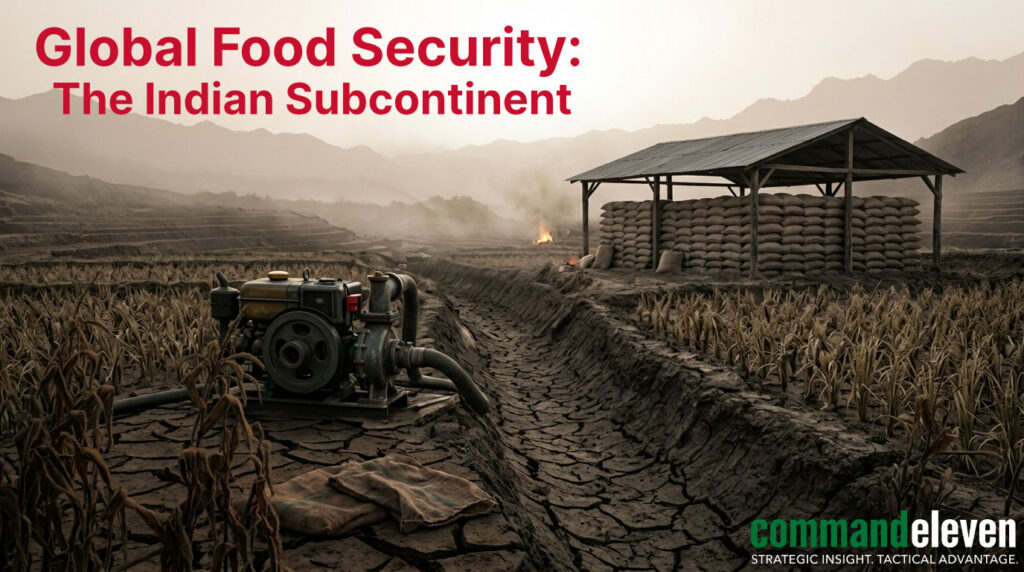
India’s weakest monsoon since 2015, Pakistan’s 33% flour inflation and Bangladesh’s diesel-run irrigation: the subcontinent faces every food shock at once, peaking in early 2027.
Global Food Security: The Middle East and Arab World – Part 5
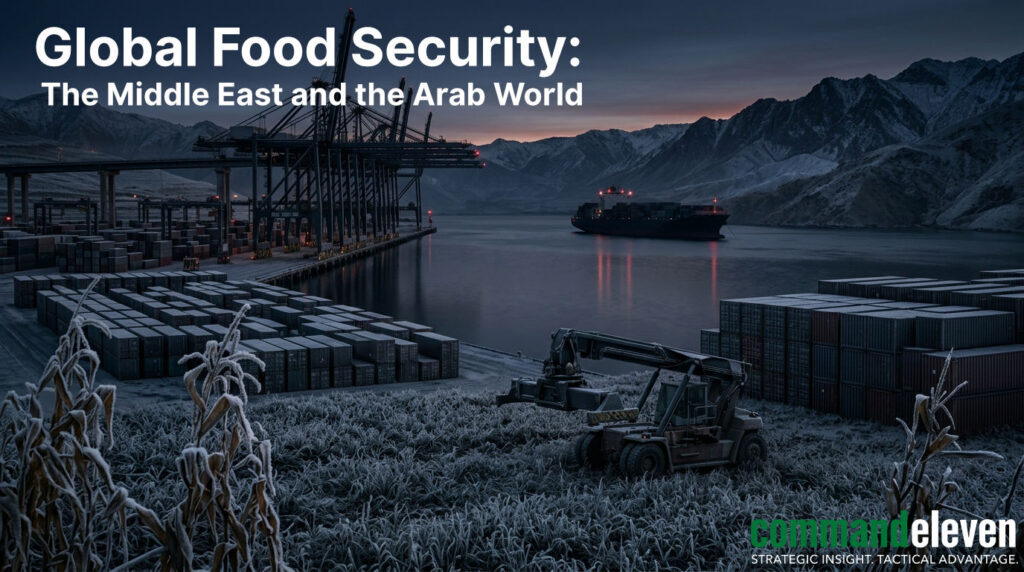
The Gulf is rich and import-dependent, with food routed through two contested chokepoints. Yemen, Lebanon and Gaza are in crisis, and Egypt has lost its Black Sea wheat.
Global Food Security: Europe – Part 4
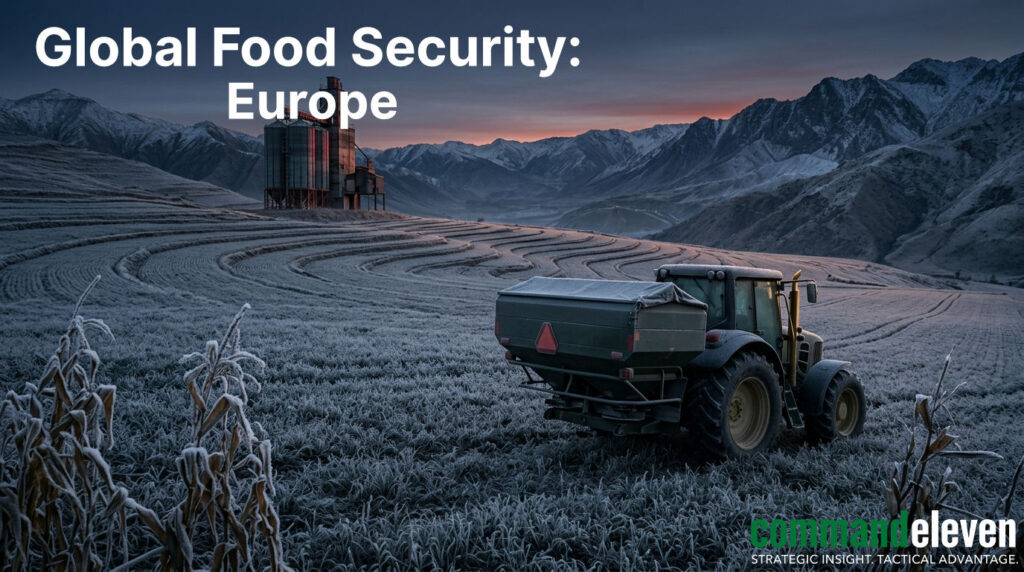
European shoppers barely feel it yet, but farmers do: fertilizer up 13%, energy up 22%, crop prices down. Add a closed Black Sea and Europe’s real risk is the 2027 harvest.
Global Food Security: South America – Part 3
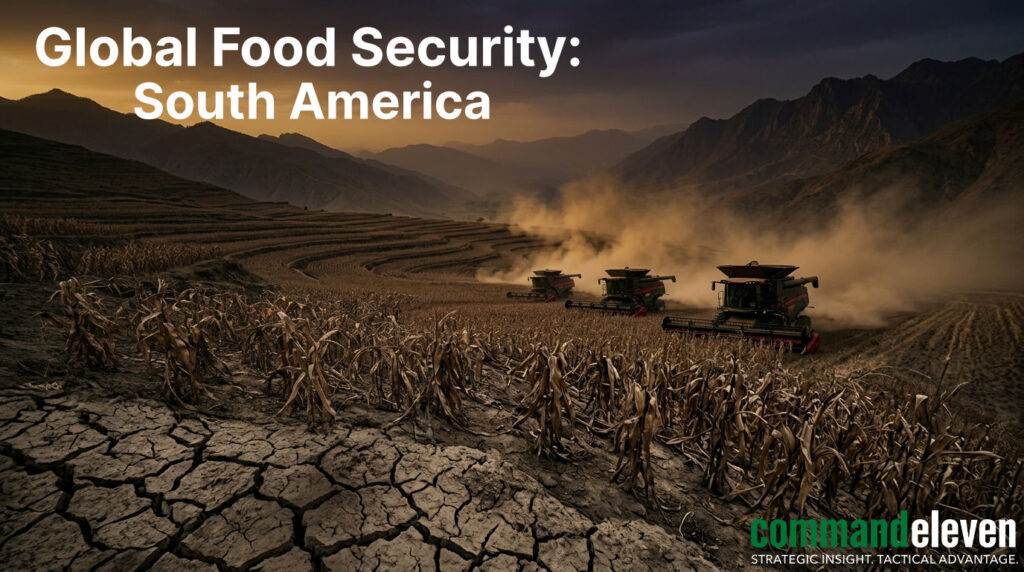
Brazil and Argentina are the world’s swing food suppliers. Fertilizer dependence and an El Niño threat to central Brazil’s soy crop make their 2026–27 season a global risk.
Global Food Security: Central America and the Caribbean – Part 2
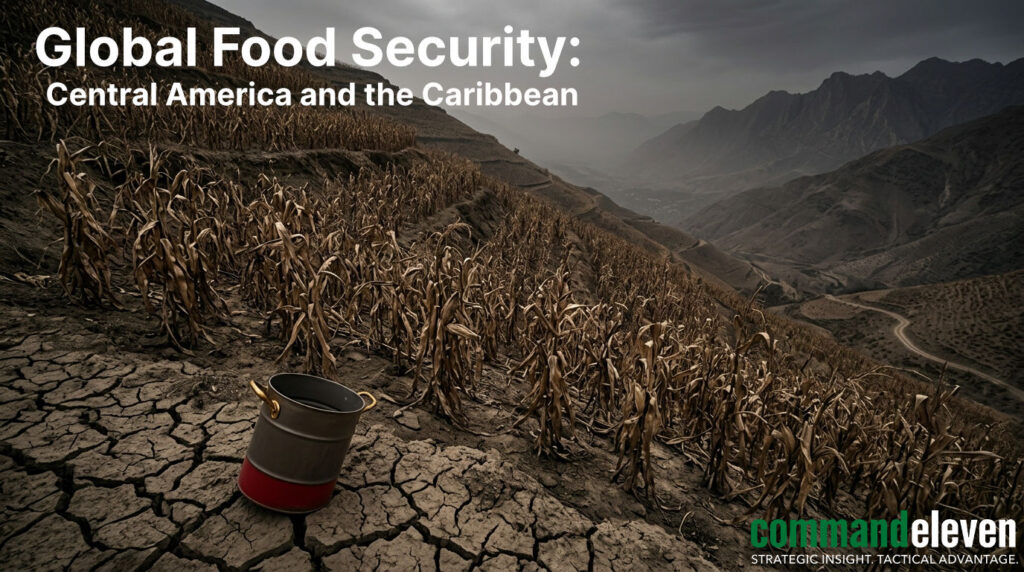
El Niño has already wiped out maize and bean harvests in the Dry Corridor, and Haiti has 5.8 million people in acute hunger. The region’s peak comes in 2027.
Global Food Security: North America – Part 1
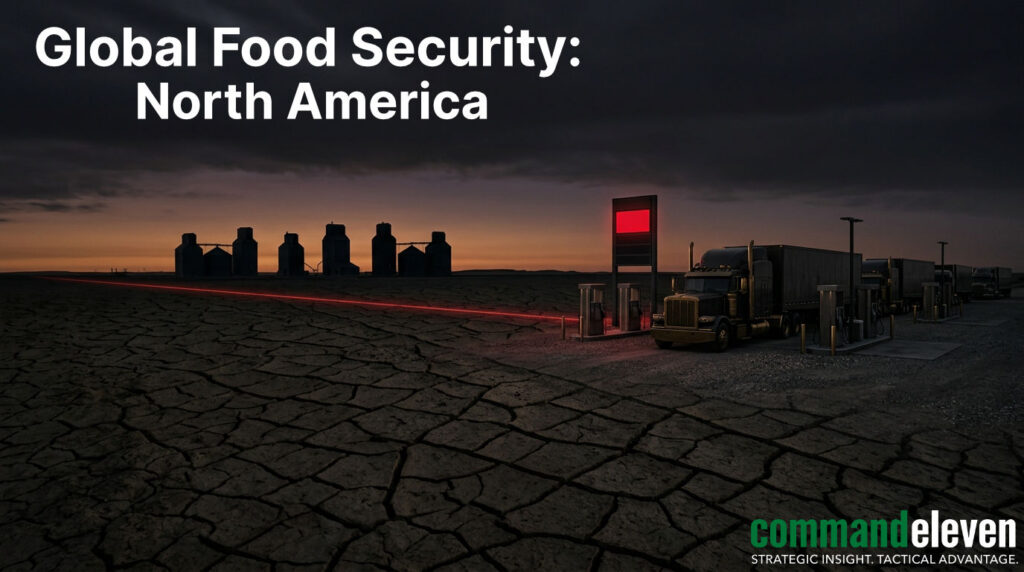
Canada and Mexico face the 2026 food shock from opposite ends: Canada through diesel, Mexico through near-total dependence on US corn. Exposure, response and outlook.