As of November 13, 2026. Evidence tiers: CONFIRMED, REPORTED, ASSESSED, DATA DEFICIT.
Update, November 13, 2026. Iranian media announced on November 10 that the IRGC Navy had targeted “enemy navigation systems” on Oman’s Didamar Island. Reuters, citing three sources, reported on November 11 that infrastructure tied to ship navigation was hit, and said its video analysis shows smoke and satellite imagery shows thermal activity. An Omani official told Maritime Executive on November 10 that the navigation aids were not struck. The U.S. has not commented. Tier: REPORTED (contested); damage and cause DATA DEFICIT.
Key Judgments
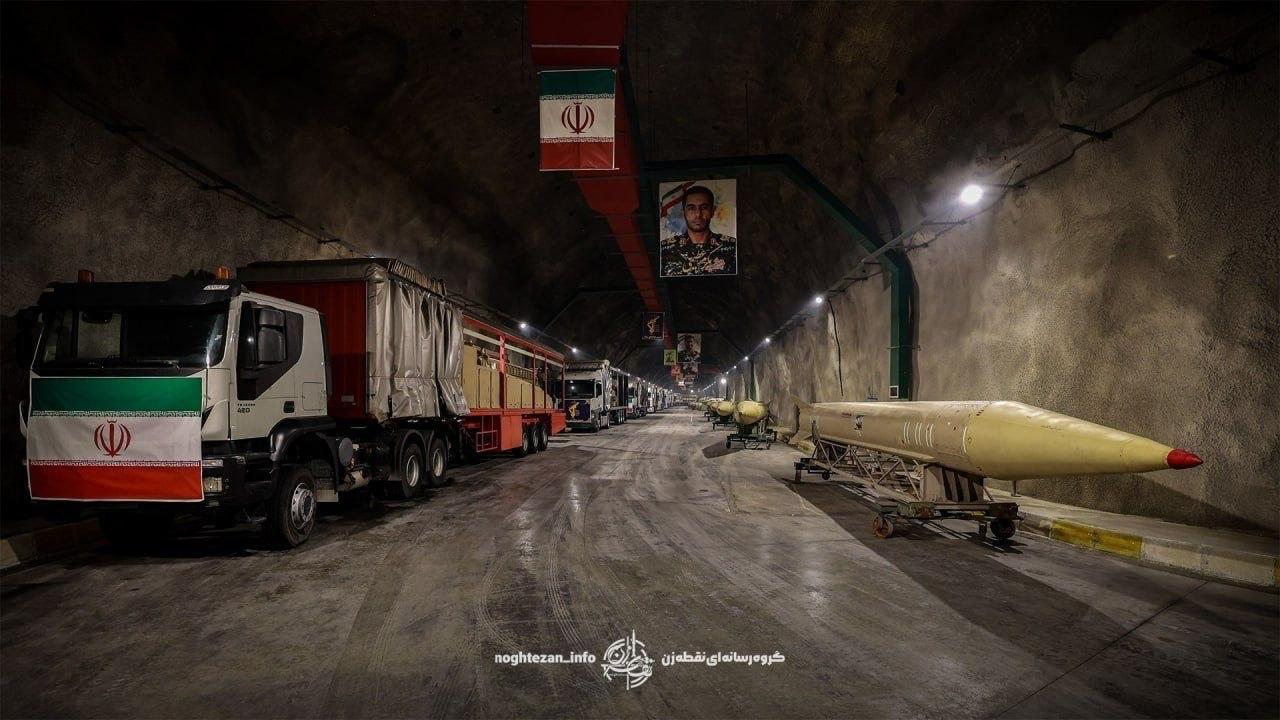
- CONFIRMED: The IRGC Aerospace Force unveiled a new underground “missile city” on November 10, with the armed forces chief of staff and the Aerospace Force commander present. The release came from Iranian state-linked media.
- ASSESSED: The display is deterrence messaging timed to the U.S.-Iran negotiating track. Its main claim is resilience: production and storage that can survive bombardment. It does not show how many missiles Iran has or how fast it can build them.
- ASSESSED: The more probable near-term risk to U.S. bases in Europe is not missile fire. It is the proxy, low-technology plot pattern charged in the RAF Fairford indictment on the same day.
- DATA DEFICIT: Location, stockpile size, production rate and what the blurred object in the footage is.
What State Media Showed
Tier: CONFIRMED (event); REPORTED (claims)
On November 7, IRGC spokesman Brig. Gen. Hossein Mohebbi said the Guard had moved missile and drone production lines underground and would soon unveil a “missile city.” Al Jazeera reported his claim that the move lets Iran keep producing even if adversaries think its stockpiles are running low. On November 10, the unveiling took place. JNS reported that Maj. Gen. Ali Abdollahi, chief of staff of the armed forces, and Brig. Gen. Seyyed Majid Mousavi, commander of the IRGC Aerospace Force, inspected the site. Tasnim quoted Mousavi saying Iran would target enemy capabilities across the region and beyond if necessary.
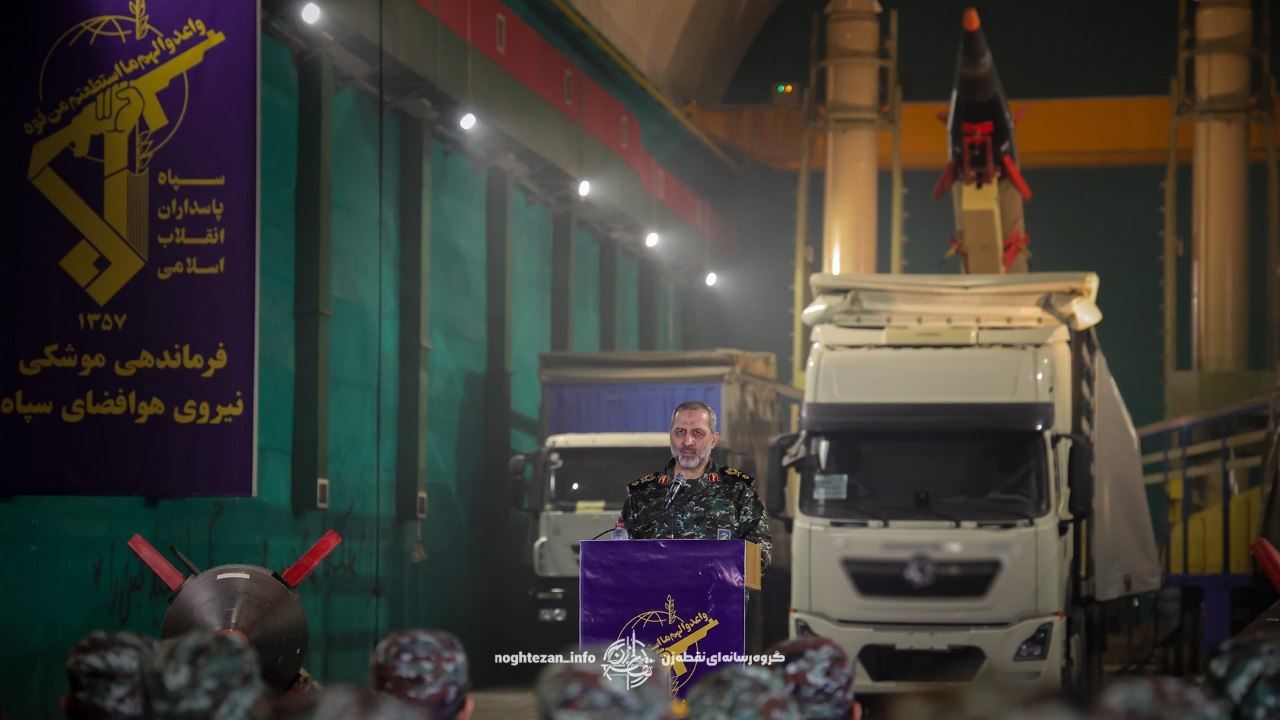
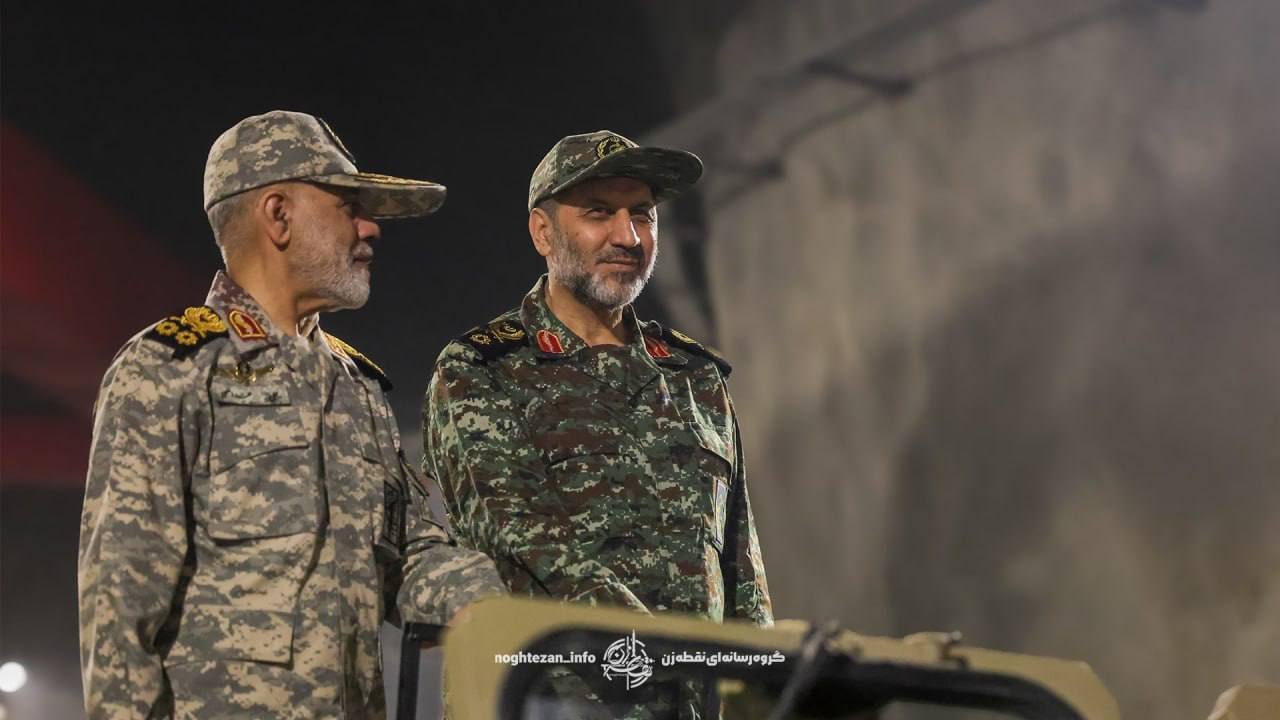
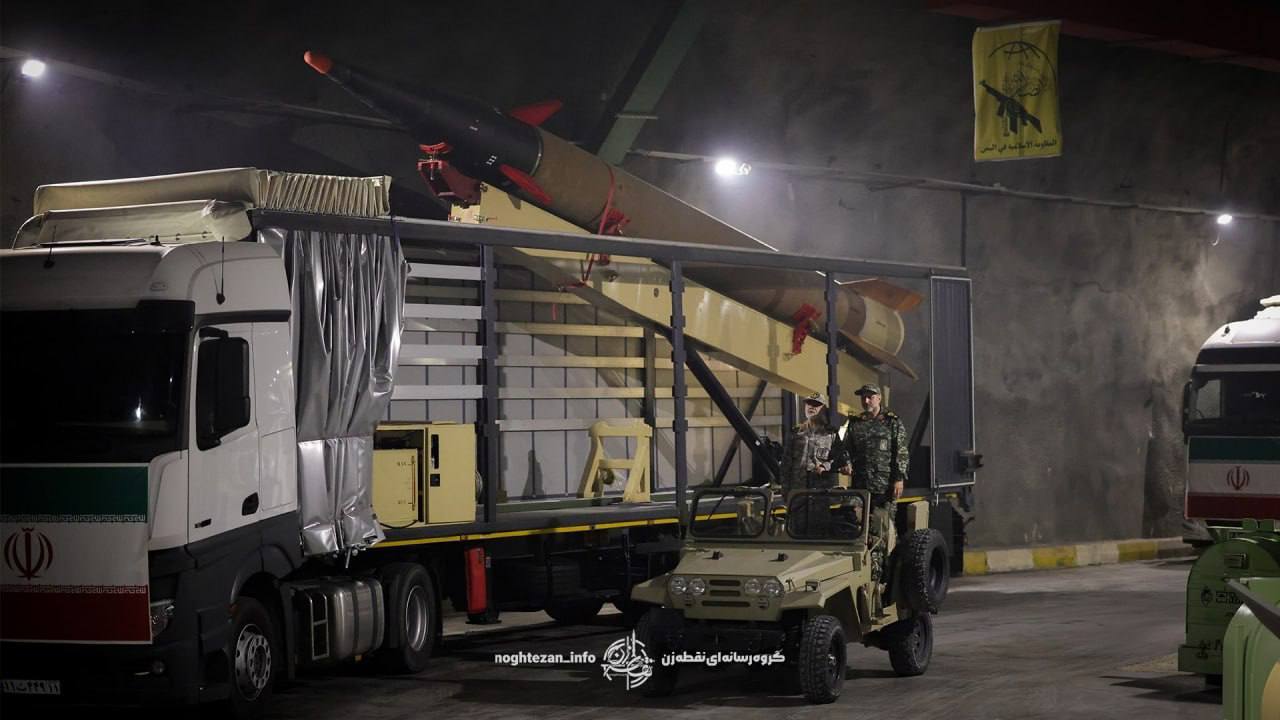
The footage shows long rows of missiles on transporters and under covers inside a lit tunnel, plus a ceremony before seated personnel. Iranian officials did not say where the site is, and nothing in the released images identifies it. We have not attempted to place it.
What We Can Verify, and What We Can’t
Tier: CONFIRMED / ASSESSED / DATA DEFICIT
The images and video are Iranian-released. They show what Tehran chose to display. They cannot establish how many missiles are stored, whether the hardware shown is operational, or how much of the underground production claim is real. Iranian officials say production continues even if adversaries believe stockpiles are running low. Nothing in the release lets us test that.
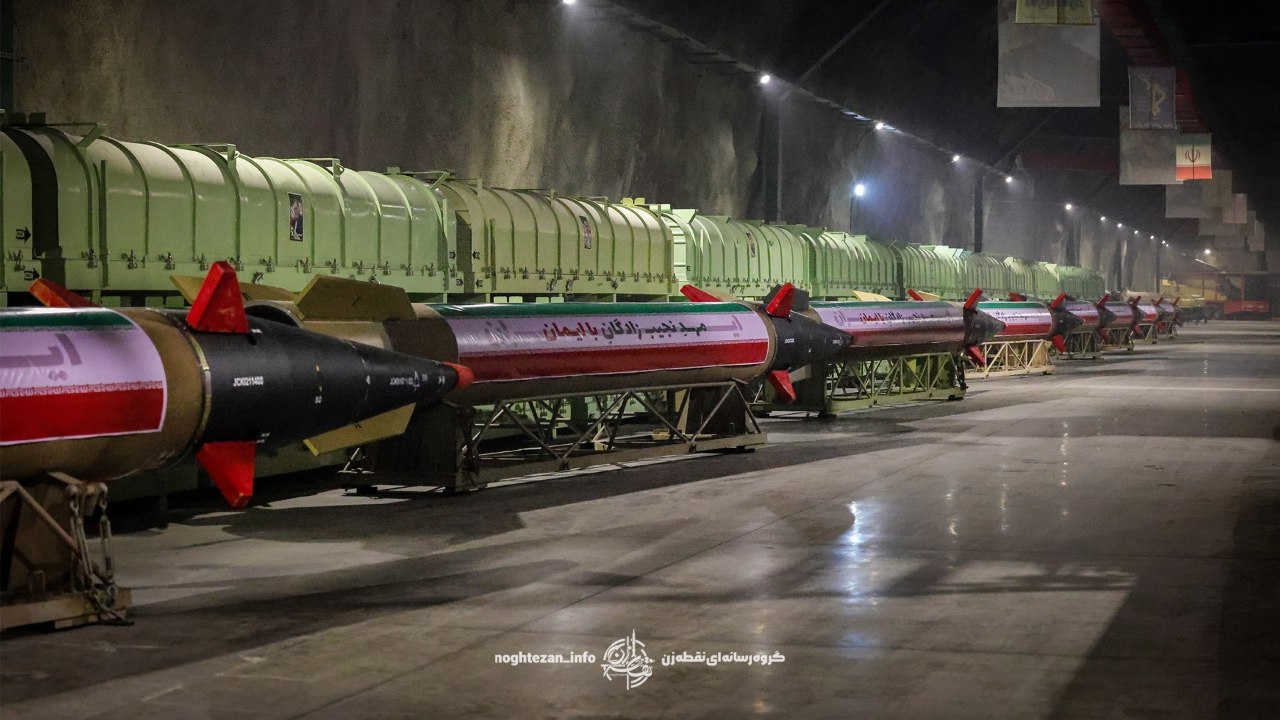
Three further points. First, part of the footage carries a blur over one object. Some open-source analysts say a new cruise-missile variant was shown by mistake. Iranian officials have not confirmed this, and we do not assess the design of any system shown. (DATA DEFICIT) Second, an IRGC adviser, Gen. Balali, described one system’s flight behavior in a separate interview. His statements are Iranian claims and we do not repeat his figures. (REPORTED, unverified) Third, several yellow banners hang in the tunnel. In one frame the Arabic text reads “The Islamic Resistance in…”, with the last word too blurred to read, and the emblem resembles Hezbollah’s. If the flag is Hezbollah’s, it shows an Iran-aligned militia’s symbol displayed inside an IRGC missile facility. At this resolution that is an inference, not a finding. (ASSESSED, low confidence)
The Range Claim
Tier: REPORTED; DATA DEFICIT (fielding)
The IRGC says restrictions on Iranian missile range have been lifted, following Supreme Leader Mojtaba Khamenei’s instruction to respond “without geographical limits.” The announcement does not show that longer-range weapons are in service. Iran’s reach depends on what it can field, with what payloads, and how those weapons perform. Until it demonstrates that, treat the lifted limit as a policy signal and not a capability.
The Signal to U.S. Bases in Europe
Tier: REPORTED (statements); ASSESSED (meaning)
The unveiling follows a week of threats aimed at Europe. On November 4, Euronews reported an Iranian lawmaker saying missiles would be fired toward Europe if the U.S. uses its bases there, including in Italy and Germany. The threats are conditional: they apply if those bases are used against Iran. Euronews also reported a banner outside the German embassy in Tehran quoting Mohsen Rezaei, and no official statement from a European government.
On November 10, NPR reported that the Wall Street Journal, citing people familiar with the matter, said the U.S. military moved aircraft out of RAF Mildenhall because of a threat from Iran. NPR could not independently confirm that, and neither government has said why aircraft moved. The British Defense Ministry says aircraft relocate routinely.
The same day, federal prosecutors in New York unsealed an indictment charging three men with a campaign of attacks and attempted attacks on behalf of the IRGC and Kata’ib Hezbollah, including a September plot against RAF Fairford. Al-Monitor and NPR describe it, and we break down the charges in RAF Fairford: U.S. Charges Three Iran-Backed Men and Names the HAYI Network. Those are allegations in an indictment, not findings. We assess that this pattern is the likelier path to harm at a base: paid local associates, vans and fuel, a plan directed from abroad. A missile salvo on a European base would be a far larger escalation, and the public record shows nothing that makes it imminent.
The Negotiating Track
Tier: REPORTED (single-source, relayed)
The display lands while mediation is active. Al Arabiya, citing sources, reportedly described a Qatar-Pakistan framework that would involve the release of billions of dollars in frozen Iranian assets, an immediate lifting of the U.S. naval blockade and the reopening of the Strait of Hormuz. We have seen that report only as relayed on social media. Reports also say Iran had not received the proposal and no agreement exists. Claims from unnamed sources about “secret” terms circulate widely, and we are not repeating them. A show of underground production strengthens Tehran’s hand in any talks, and that is consistent with the timing.
What to Watch
- Independent imagery or reporting that places the site. This is the missing piece for any hardening or targeting analysis.
- Any demonstration of the lifted range limit, as opposed to the announcement.
- Further aircraft movements at U.S. bases in the United Kingdom and Europe, and whether either government explains them.
- Whether the Fairford indictment produces more charges or names additional network members.
Related Reading
- The Gig Economy of Terror: From Hatzola to Fairford – Part 3
- Iran Sanctions 2026: Trump’s Toolkit vs. China’s Defiance
- Iran Foresight Audit: July 2026 Doctrinal Series vs. the War Doctrine & Strategy Series
- Iran War Status Brief: October 2026
Sources
- Al Jazeera, Iran’s IRGC says building underground sites for weapons production, storage (Nov. 7)
- JNS, Iran’s IRGC unveils new missile city (Nov. 10)
- Tasnim, Iran to strike all enemy assets across, beyond region if necessary (Nov. 10)
- Euronews, Iranian MP says Tehran’s missiles will strike Europe if the U.S. uses its bases there (Nov. 4)
- NPR, An Iran-backed trio is accused of plotting attacks on a U.K. base hosting U.S. jets (Nov. 11)
- Al-Monitor, U.S. charges three Iranian operatives over U.K. airbase plot (Nov. 10)