Technical Takeaways
- Elimination of Factional Redundancy: The re-absorption of Jama’at-ul-Ahrar (JuA) directly into the central TTP command framework has neutralized historical command fractures, consolidating localized funding streams, tactical training facilities, and specialized suicide-engineering teams under a single command node.
- Institutionalized Succession Deficits: By restructuring the command hierarchy into centralized, specialized ministries (Nizamat) modeled on the Afghan IEA blueprint, the TTP has created a highly resilient bureaucratic framework that ensures immediate operational continuity and data routing if a senior commander is eliminated.
- Exploitation of Asymmetric Sovereignty: The operational deployment of decentralized Shadow Provinces (Wilayah) inside Pakistan is sustained by deep, permanent cross-border logistical lines running into fortified safe havens inside eastern Afghanistan, rendering localized state counter-insurgency operations inside Pakistan temporarily disruptive rather than structurally fatal.
Bottom Line Up Front (BLUF)
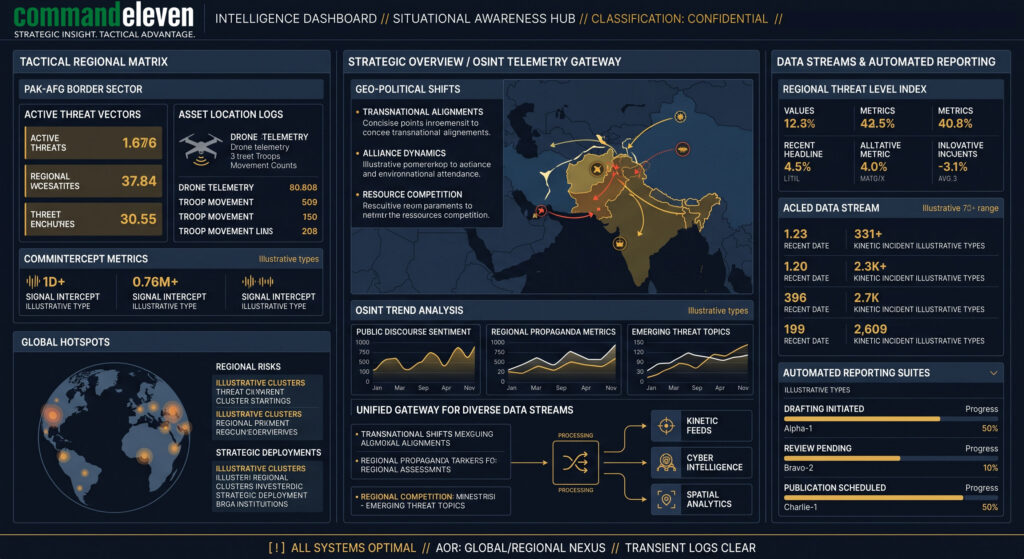
The formal re-integration of Jama’at-ul-Ahrar (JuA) into the Tehreek-e-Taliban Pakistan (TTP) command framework has neutralized historical structural fragmentation along the Pakistan-Afghanistan border. Operating under a consolidated Rahbari Shura (Supreme Leadership Council), the TTP has transitioned from a loose coalition of regional tribal militias into a highly synchronized, asymmetrical military organization. This unified architecture utilizes a decentralized “Shadow Province” (Wilayah) administrative system to sustain high-intensity kinetic campaigns, expand cross-border logistical lines, and systematically target state critical infrastructure and security personnel.
The JuA-TTP Structural Re-Integration Mechanics
The fragmentation that historically degraded the strategic efficacy of the Pakistani Taliban was largely resolved through the formal re-absorption of its most lethal splinter nodes, primarily Jama’at-ul-Ahrar (JuA) and Lashkar-e-Islam (LeI). This consolidation pass was not merely a political truce; it was a structural engineering overhaul directed by central TTP leadership to unify tactical resources under a singular command and control (C2) node.
Prior to this integration, JuA operated autonomously in the Mohmand, Bajaur, and Khyber districts, frequently running parallel fundraising, recruitment, and targeting pipelines that conflicted with the central shura’s strategic directives. Under the current unified format, JuA has surrendered its independent organizational identity, fully dissolving its separate shura into the centralized TTP architecture.
The primary operational benefit of this merger is the complete synchronization of specialized kinetic capabilities. JuA brought with it an extensive network of experienced bomb-makers, a highly insular logistical framework running through eastern Afghanistan, and a dedicated pool of suicide bombers (Estishhadi). By absorbing these assets directly into the central command structure, the TTP eliminated operational redundancies and infighting over local protection rackets, smuggling routes, and extortion syndicates along the border.
Furthermore, this structural alignment has standardized tactical training and operational security (OPSEC) protocols across all units. JuA’s specialized suicide-operational wings have been reorganized into centralized brigades that answer directly to the TTP military commission, rather than local commanders. This prevents unauthorized wildcat operations that could disrupt the broader strategic objectives of the central leadership, creating a highly disciplined, multi-tiered insurgent force capable of projecting force simultaneously across multiple urban and rural sectors.
Command and Control Architecture: The Rahbari Shura
The contemporary TTP command structure is built on a rigid hierarchical matrix modeled directly after the organizational layout of the Islamic Emirate of Afghanistan (IEA). At the apex sits the Amir (Supreme Commander), who exercises absolute authority over political, judicial, and military decisions. The Amir operates in direct coordination with the Rahbari Shura (Supreme Leadership Council), which functions as the primary policymaking and advisory organ of the insurgency.
The Rahbari Shura supervises a series of centralized ministries or commissions (Nizamat), which decouple strategic planning from localized tribal dynamics. The most critical of these is the Military Commission, which dictates operational targets, manages weapon procurement pipelines, and allocates tactical resources to different operating theaters. Additional specialized commissions include:
- The Intelligence Commission (Ghazwa): Manages internal security, screens new recruits for state infiltration, conducts reconnaissance on security forces, and executes targeted assassinations of counter-terrorism personnel.
- The Finance Commission: Oversees centralized revenue collection, managing cross-border smuggling taxes, timber transport levies, real estate extortion syndicates, and digital asset tracking loops.
- The Media and Information Commission (Umar Media): Controls the group’s centralized propaganda output, psychological warfare operations, and multilingual digital radicalization campaigns.
This bureaucratic centralization ensures that if a senior commander or head of a commission is eliminated, the structural node remains intact. The system automatically routes operational data and authority to designated deputies, eliminating succession crises and ensuring continuity of command during high-intensity counter-insurgency operations.
The Decentralized “Shadow Province” (Wilayah) Framework
To execute a sustained campaign across a broad geographic area without creating vulnerable, static command centers, the TTP has divided its theater of operations into decentralized Shadow Provinces (Wilayah). This administrative layout maps directly over traditional administrative divisions within Pakistan, particularly across Khyber Pakhtunkhwa (KP) and Balochistan.
Each Wilayah is governed by a designated shadow governor and a local military commander appointed directly by the Rahbari Shura. These local leaders are granted operational autonomy to execute tactical strikes, manage local safe havens, and collect field intelligence, provided their actions align with the macro-level strategic guidelines issued by the central Military Commission. Key operational sectors include:
- The Malakand Division Shadow Province: Focuses on the sub-alpine border tracts, running highly insular mountain corridors into Kunar and Nuristan provinces. This sector specializes in cross-border snipers, small-unit ambushes, and establishing deep high-altitude weapons caches.
- The Peshawar/FATA Shadow Province: Targets the urban-rural interface of the Peshawar Valley, Mohmand, Khyber, and Darra Adam Khel. This command manages high-value extortion operations against industrial nodes and orchestrates complex IED attacks against police infrastructure.
- The Dera Ismail Khan / Southern Zone Shadow Province: Coordinates kinetic activity throughout North and South Waziristan, Tank, and DI Khan. This sector utilizes dense riverine terrain and rugged mountain passes to launch complex assaults on military outposts and execute targeted assassinations of intelligence officers.
This decentralized framework prevents state security forces from disrupting the insurgency by targeting a single command hub. If one Shadow Province faces intense counter-insurgency pressure, neighboring Wilayah structures automatically ramp up kinetic activity to divert military resources, creating a highly resilient network of operational nodes.
Cross-Border Logistical Corridors and Sanctuary Mechanics
The operational continuity of the TTP is entirely dependent on its ability to maintain unhindered cross-border logistical lines running between eastern Afghanistan and northwestern Pakistan. Despite the formal installation of border fencing and security outposts along the Pakistan-Afghanistan border, the rugged terrain of the Hindu Kush provides hundreds of unmonitored infiltration routes that the TTP exploits with clinical precision.
These logistical corridors are organized into distinct functional lines. The northern route, traversing Kunar and Nangarhar into Bajaur and Mohmand, is primarily utilized for the movement of personnel, specialized suicide engineering teams, and high-value leadership figures. The central and southern routes, running through Paktia, Paktika, and Khost into Waziristan and Zhob, function as heavy-freight military supply lines.
The sanctuary mechanics within Afghanistan operate with the tacit complicity of localized elements within the IEA structure, particularly within the networks controlled by regional border commanders. The TTP maintains permanent, hardened training encampments, logistics depots, and safe houses in the border districts of Khost, Kunar, and Paktika. These installations operate in plain view, utilizing natural cave complexes and fortified compounds to protect hardware assets from visual aerial surveillance.
These sanctuaries allow the TTP to cycle combat-worn tactical units out of the Pakistani theater for rest, retraining, and replenishment. New recruits are processed through these Afghan-based facilities, where they undergo standardized ideological indoctrination and advanced weapons training before being deployed across the border. This cross-border fluidity ensures that state security operations within Pakistan can only achieve temporary disruption, as the core structural assets of the insurgency remain protected within sovereign Afghan territory.
Kinetic Methodology and Target Profiling Matrix
The unified TTP tactical doctrine has shifted significantly away from indiscriminate civilian attacks toward high-density, targeted kinetic operations designed to degrade state authority, attrit security forces, and sever critical infrastructure lines. The group’s current target profiling matrix classifies operations into three strategic categories:
Attrition Striking of State Security Forces
The primary kinetic focus is the systematic targeting of the Police Counter-Terrorism Departments (CTD), Frontier Corps (FC) outposts, and military convoys. The TTP utilizes small-unit tactics, typically deploying 5 to 12 fighters equipped with thermal imagery optics, night-vision equipment, and M4 carbines left behind during the Western withdrawal from Afghanistan. Operations alternate between long-range sniper interdiction of checkpoint guards and synchronized multi-pronged assaults on isolated outposts using rocket-propelled grenades (RPGs) and heavy machine guns to overwhelm local defenses before reinforcing units can arrive.
Deep-Penetration Urban Suicide Operations
For high-value target profiles within administrative hubs, the TTP deploys its specialized suicide units. These operations are heavily planned, using intelligence gathered by embedded sleeper cells to identify systemic gaps in the security perimeters of police headquarters, military compounds, and intelligence offices. The current methodology favors multi-stage assaults: an initial vehicle-borne IED (VBIED) or suicide operative detonates at the primary outer gate to breach the physical barriers, allowing a secondary team of heavily armed, body-armored suicide commandos to penetrate the inner compound and maximize casualties among high-ranking personnel.
Critical Infrastructure and Economic Sabotage
To starve the state of resources and disrupt regional counter-terrorism capabilities, the TTP has escalated its targeting of critical infrastructure. This includes the systematic use of magnetic improvised explosive devices (sticky bombs) against telecommunications towers, electrical pylons, gas pipelines, and supply convoys. Furthermore, the group runs a highly organized extortion network targeting development projects, mining operations, and large-scale commercial transport networks. Entities that refuse to pay the specified “revolutionary taxes” to the central Finance Commission are systematically targeted with kinetic sabotage, paralyzing economic activity across active operational sectors.