Technical Takeaways
- Commercialization of Tactical ISR: Non-state networks have neutralized traditional counter-surveillance advantages by using consumer drones, open-source mapping data, and everyday social positioning to build high-fidelity intelligence dossiers on Western infrastructure.
- Soft-Target Priority Exploitation: Target selection focuses on high-density public venues because their open accessibility prevents the deployment of effective permanent security barriers, allowing cells to execute full attack cycles using locally sourced components.
- Data Proliferation Vulnerabilities: The mandatory public disclosure of infrastructure blueprints and municipal telemetry schemas for regulatory compliance has inadvertently provided threat networks with free, remote access to structural high-value target data.
Bottom Line Up Front (BLUF)
Transnational threat networks have deployed low-signature Intelligence, Surveillance, and Reconnaissance (ISR) typologies inside the Western Hemisphere. By exploiting the open social, legal, and digital architectures of Western democracies, clandestine cells accumulate high-fidelity targeting data on critical infrastructure and soft targets without triggering counter-intelligence watchlists. Target selection systematically prioritizes high-density public venues and critical infrastructure nodes based on their open accessibility, allowing remote-controlled cells to minimize pre-operational signatures while maximizing physical and psychological attrition.
Deployed Non-State ISR Typologies on Western Targets
The pre-operational planning cycles executed by groups like ISKP and the TTP against Western Hemisphere targets have achieved high technical fidelity. Rather than relying on static, visible human reconnaissance teams that risk detection by local law enforcement, modern cells leverage consumer technology, digital open-source streams, and deniable spatial positioning to build comprehensive targeting portfolios.
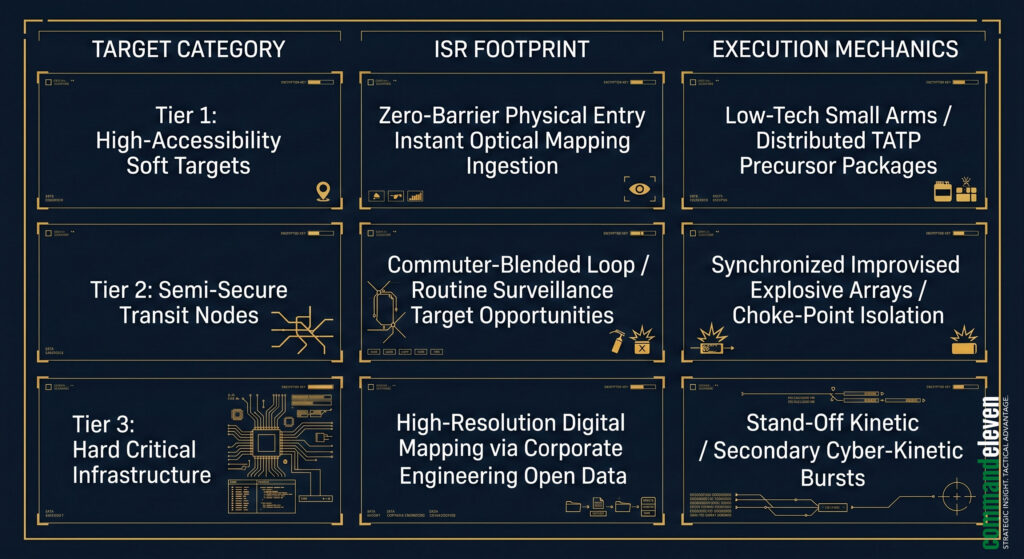
- Commercial Off-The-Shelf (COTS) Aerial Reconnaissance: Cells utilize readily available consumer drones modified with custom firmware to bypass localized geofencing and altitude restrictions. These platforms execute high-resolution optical mapping of critical infrastructure perimeters, logging security guard shift cadences, gate vulnerabilities, and camera blind spots.
- Open-Source Digital Mapping & Telemetry Ingestion: Pre-operational reconnaissance relies heavily on the aggregation of public-domain data layers. Planners ingest high-resolution satellite imagery, public municipal transit timetables, traffic camera feeds, and industrial engineering blueprints available via open-source corporate compliance sheets.
- Low-Signature Social Engineering & Human Reconnaissance: Embedded cells execute physical surveillance through deniable daily activities. Operatives secure employment or residential positioning adjacent to primary target vectors, allowing them to log physical security protocols, response vehicle routes, and structural vulnerabilities without generating suspicious signatures.
Target Vulnerability Model: Ease of Execution Index
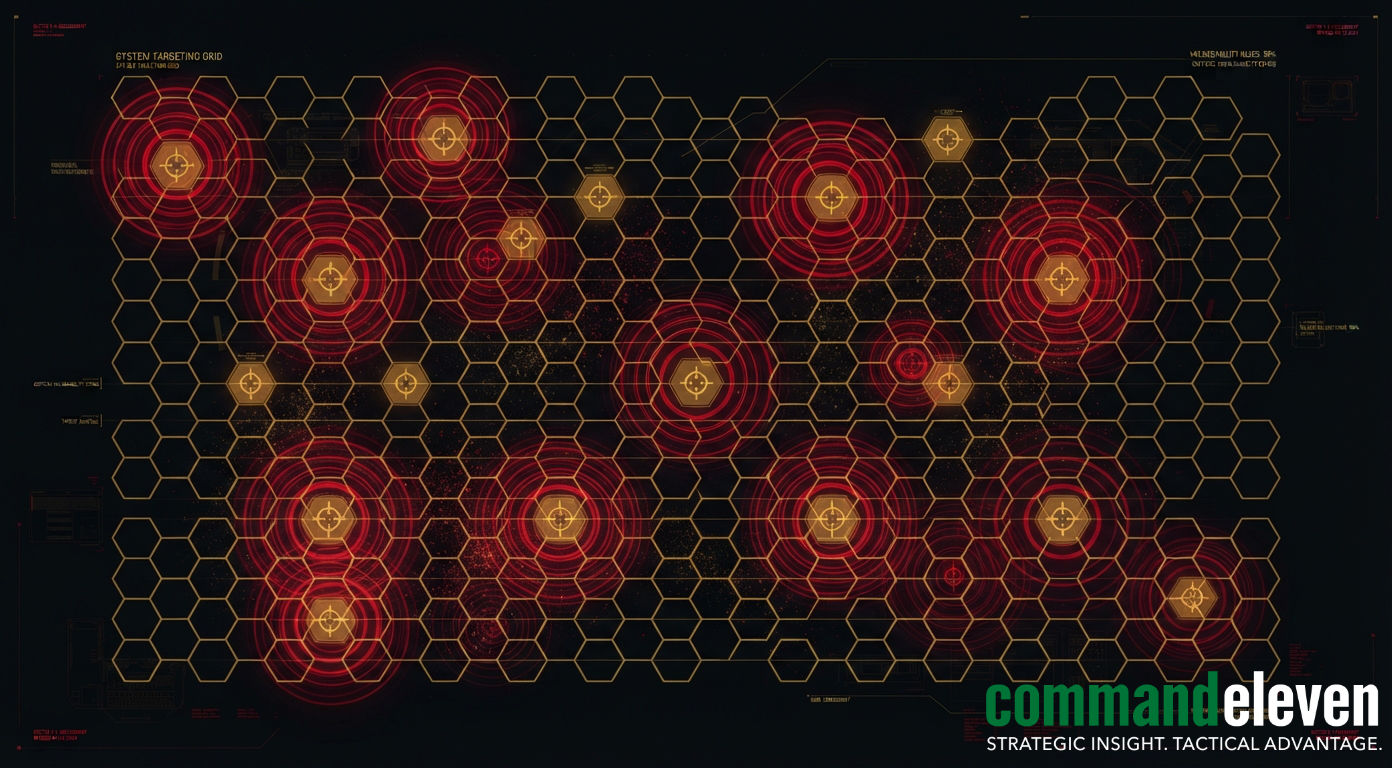
The contemporary target selection strategy prioritizes maximum psychological trauma and systemic economic disruption over hard military utility. Targets are modeled based on their open accessibility and the minimal hardware required to execute a high-casualty campaign.