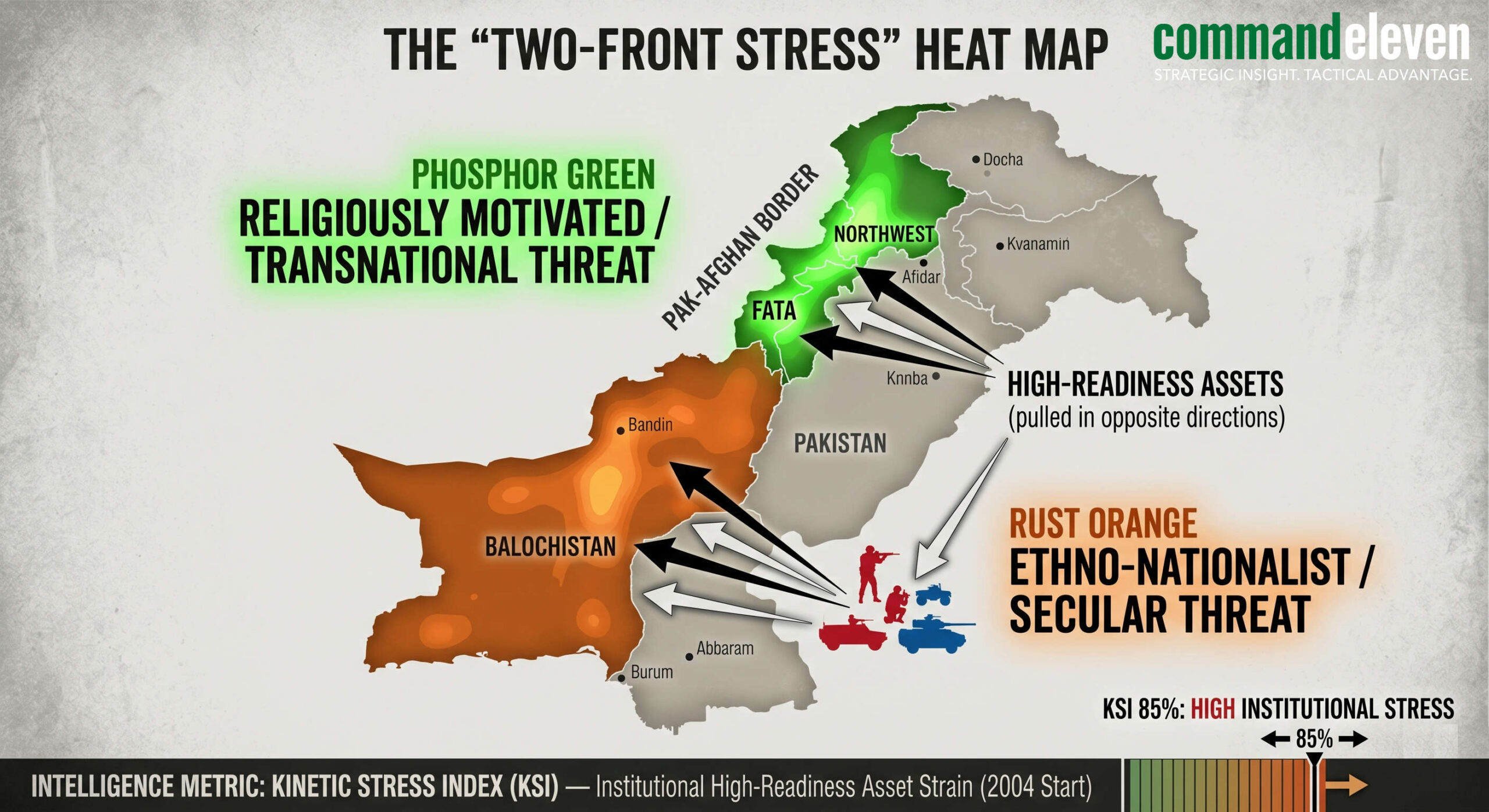
BLUF: The emergence of the Southwest Front in Balochistan (2004–2006) forced a strategic overextension of the security apparatus, creating a “Strategic Pincer.” Unlike the religiously motivated insurgency in the northwest, the Baloch front was anchored in Resource Nationalism, utilizing small-cell Sustained Attrition to target economic nodes. The 2006 kinetic elimination of Akbar Bugti served as a force multiplier for the insurgency, transitioning it from a tribal grievance to a radicalized, youth-led ethno-nationalist movement.
The Doctrine of Resource Nationalism
The technical objective of insurgent groups—primarily the Baloch Liberation Army (BLA) and Baloch Republican Army (BRA)—was the systemic disruption of state-led Logistical Oxygen.
- Symmetric Economic Nodes: Targeting was concentrated on natural gas extraction (Sui), railway infrastructure, and the nascent development of the Gwadar deep-sea port.
- Fiscal Crisis Induction: By sabotaging energy pipelines, the insurgency sought to induce a federal fiscal crisis, highlighting the state’s failure to translate resource wealth into local Administrative Utility.
Kinetic Shift: Sustained Attrition vs. Decisive Battle
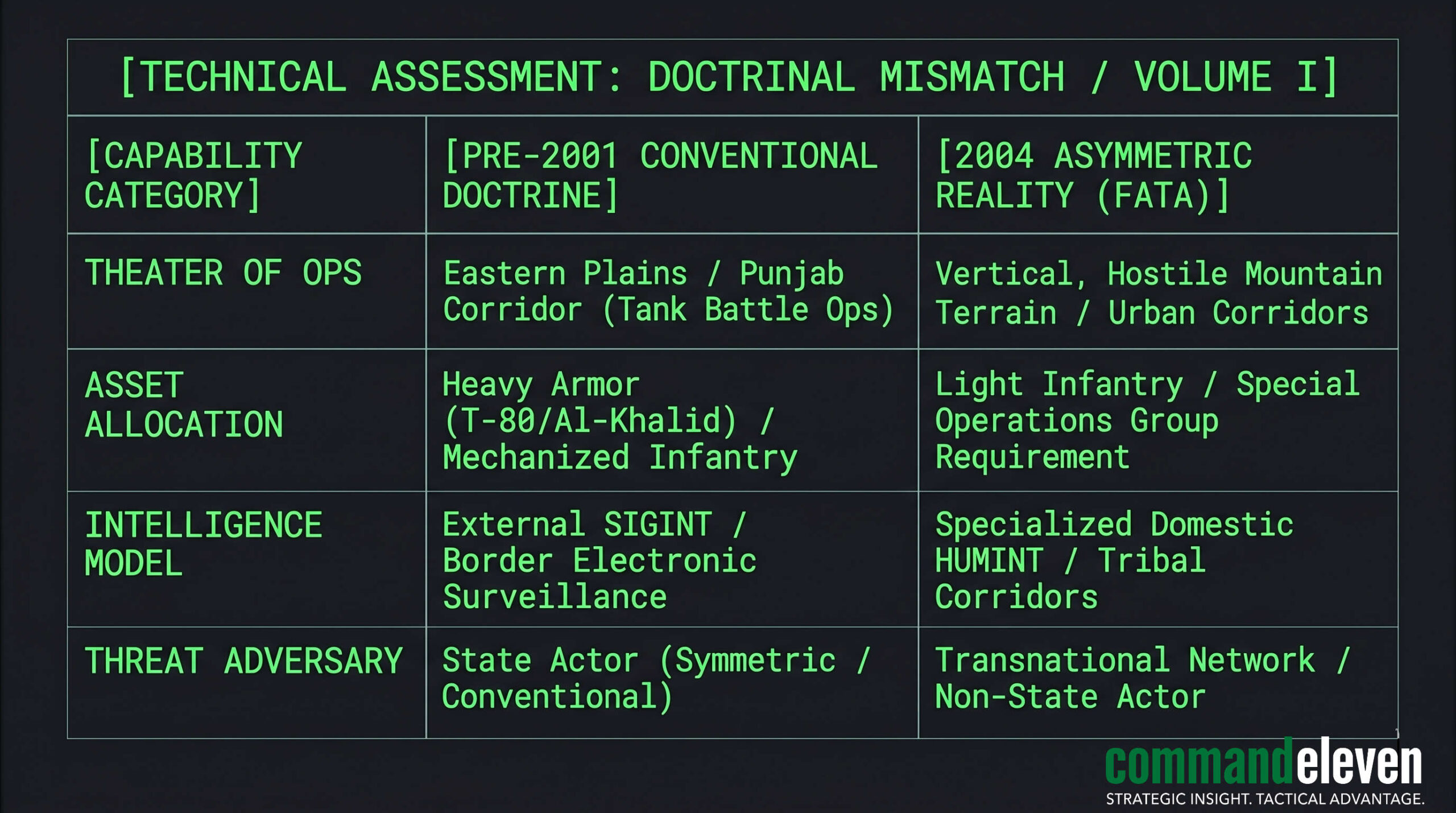
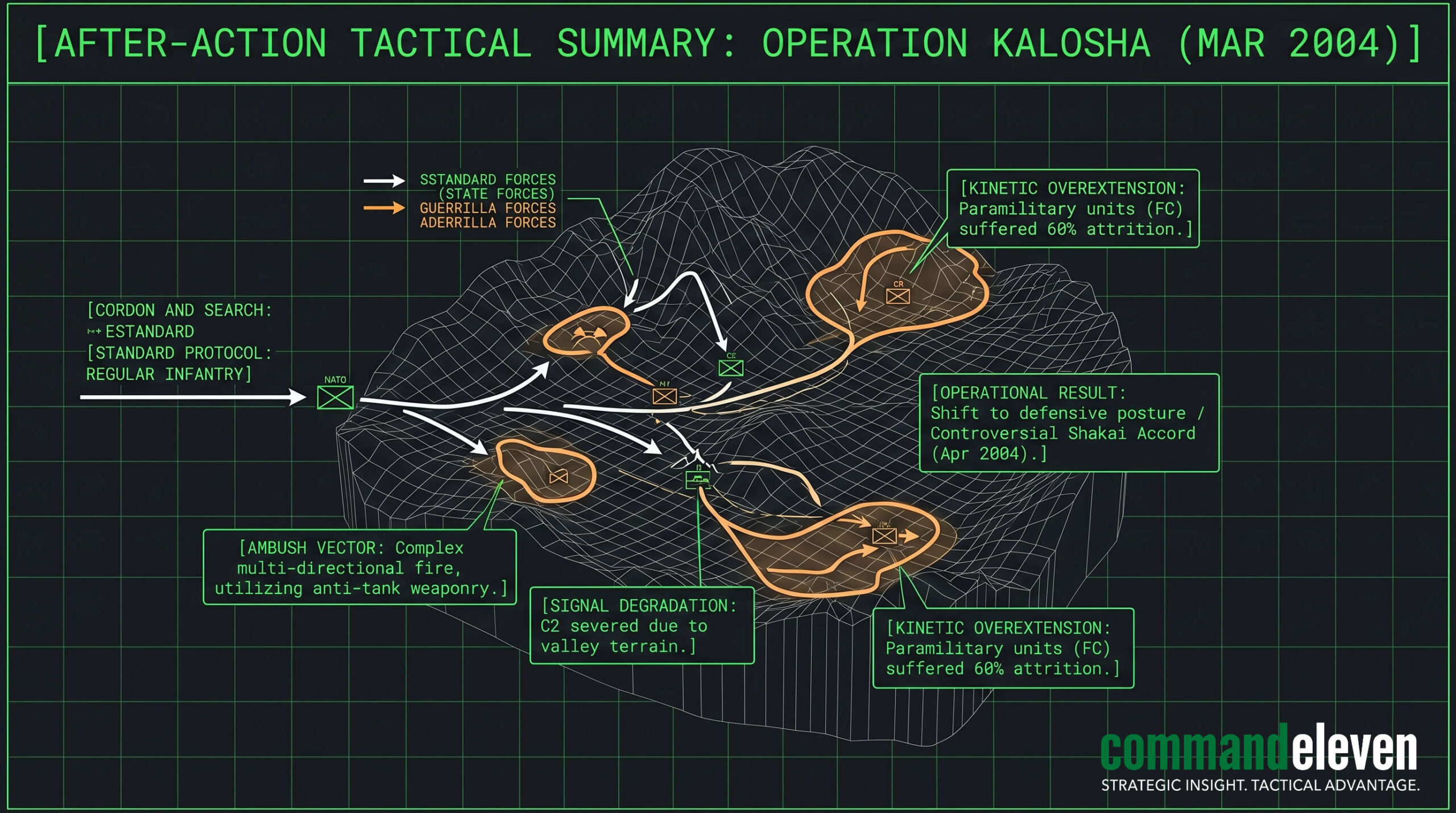
The military encountered a distinct tactical reality in the southwest compared to the FATA theaters.
- Northwest (FATA): Entrenched, vertical guerrilla warfare aimed at territorial control and shadow governance.
- Southwest (Balochistan): High-mobility, low-intensity Sustained Attrition. Small, autonomous cells exploited the vast, arid terrain to execute hit-and-run operations.
- Mechanical Incompatibility: The state’s India-centric mechanized assets were functionally ineffective in the expansive deserts of Kohlu and Dera Bugti, leading to chronic Kinetic Overextension.
The Decapitation Fallacy: Akbar Bugti (Aug 2006)
The security apparatus applied a “Kinetic Decapitation” model, assuming the elimination of Nawab Akbar Bugti would collapse the movement.
- The Result: The assassination acted as a catalyst for Ethno-Nationalist Fragmentation. It bypassed traditional tribal mediation and radicalized a new generation of urbanized youth, making the insurgency more resilient and harder to interdict through legacy tribal engagement.
Technical Metrics: The “Strategic Pincer” (2006)
Metric | NW Theater (FATA) | SW Theater (Balochistan) |
Ideology | Religious / Transnational | Secular / Ethno-Nationalist |
Primary Target | State Sovereignty / Military Posts | Economic Infrastructure / Resource Nodes |
Topography | Vertical (Alpine / Mountainous) | Horizontal (Arid / Expansive Desert) |
Tactical Signature | Suicide Vest (SVBIED) / Ambush | IED on Rail-Pipeline / Sniper Harassment |
Clinical Conclusion
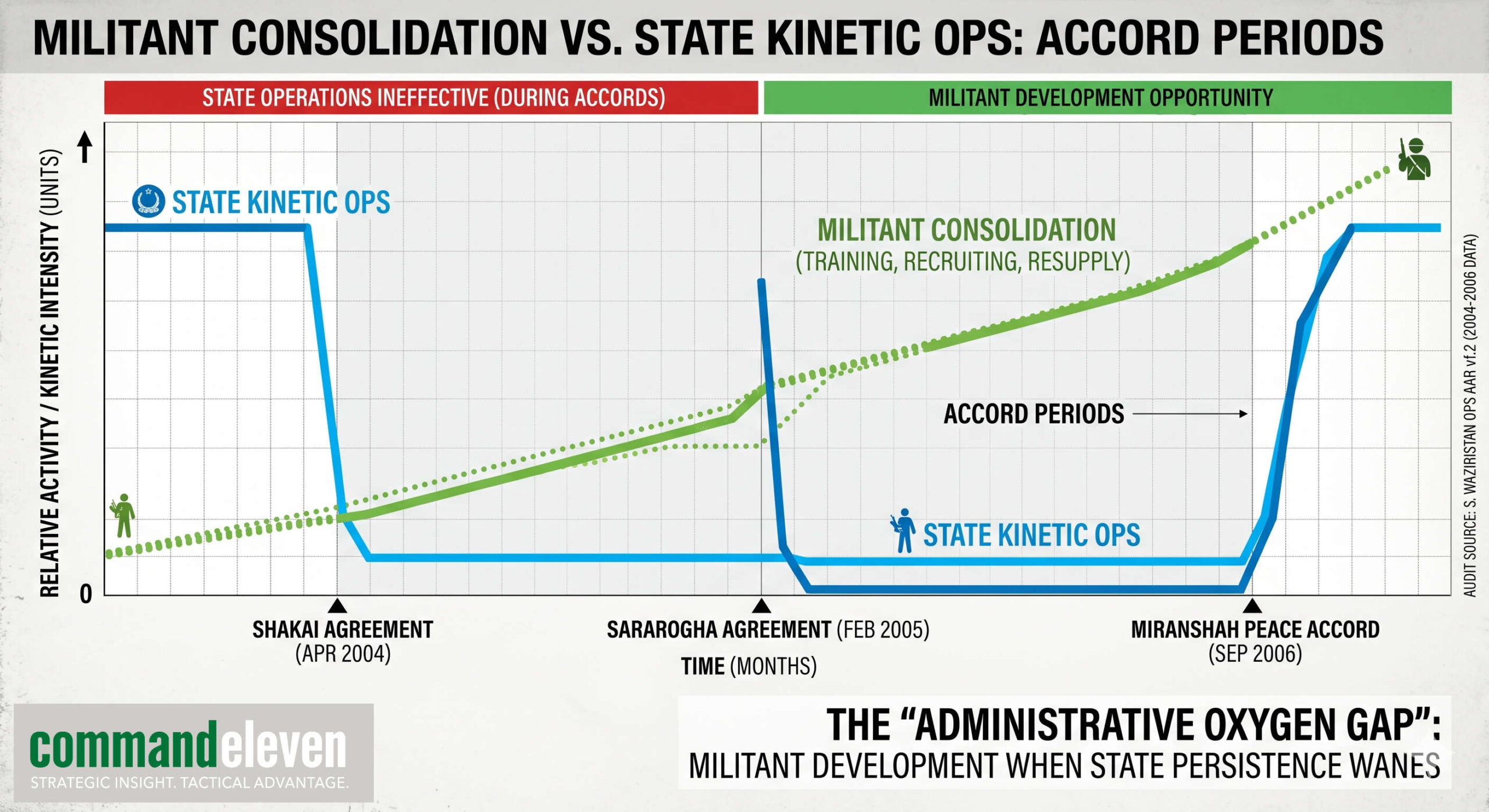
By late 2006, the state was trapped in a Strategic Pincer. The intelligence apparatus was blind-sided by the simultaneous maturation of both fronts. The failure to provide a socio-kinetic response in Balochistan, combined with the Tactical Whiplash in the North-West, left the state’s security architecture in its most vulnerable state since 1989. This dual-front pressure necessitated the eventual move toward a more integrated Mosaic Defense architecture.