BLUF: Volume I — Strategic Reversal (2001–2007)
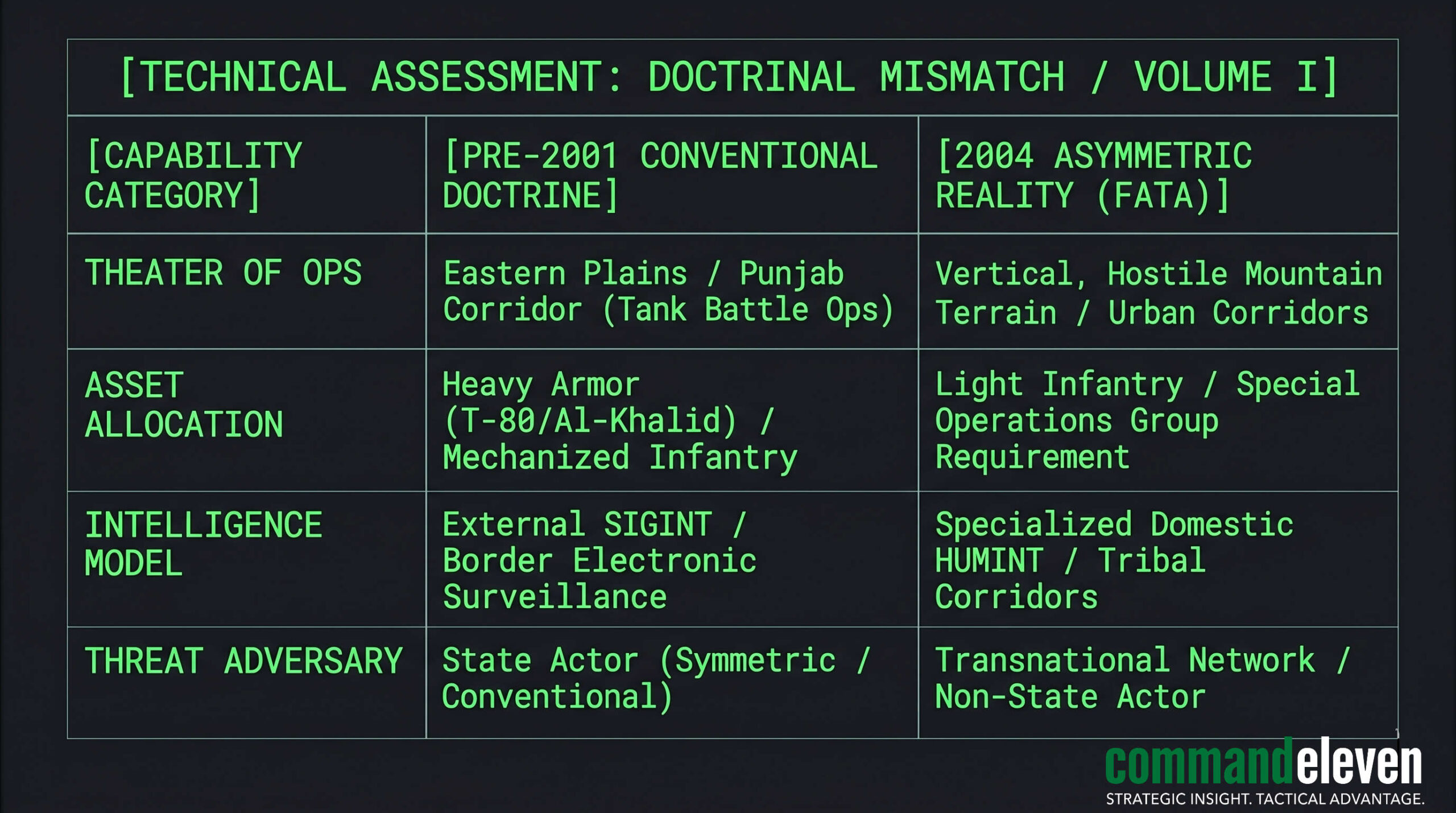
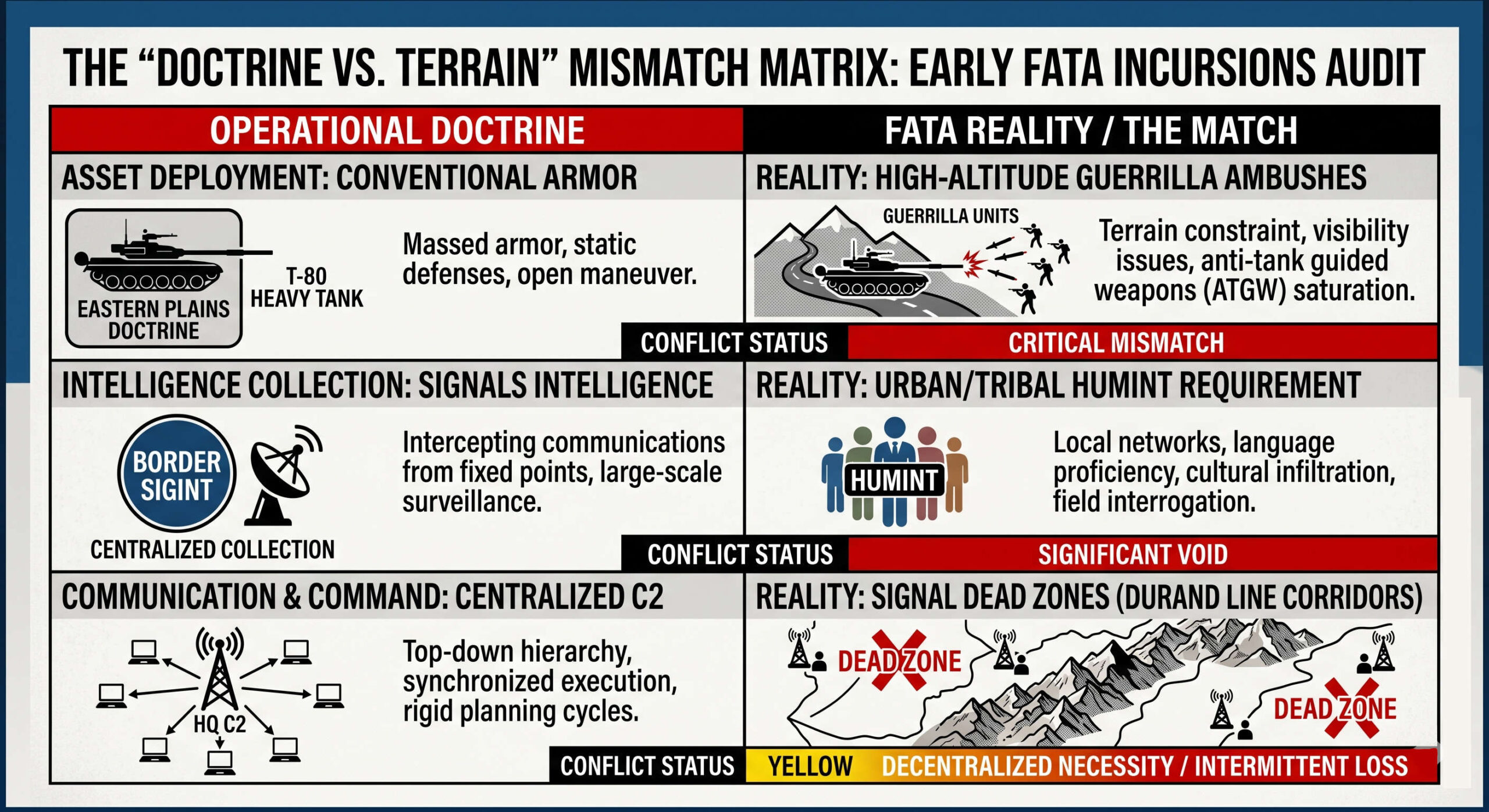
Volume I deconstructs the structural transition of the Pakistani security apparatus from an external proxy-management posture to an internal, asymmetric counter-insurgency (COIN) footing. This era is defined by the “Doctrinal Chasm”—the mechanical friction between a military optimized for conventional mechanized warfare and a domestic threat environment characterized by ideological blowback and unconventional multiplicity.
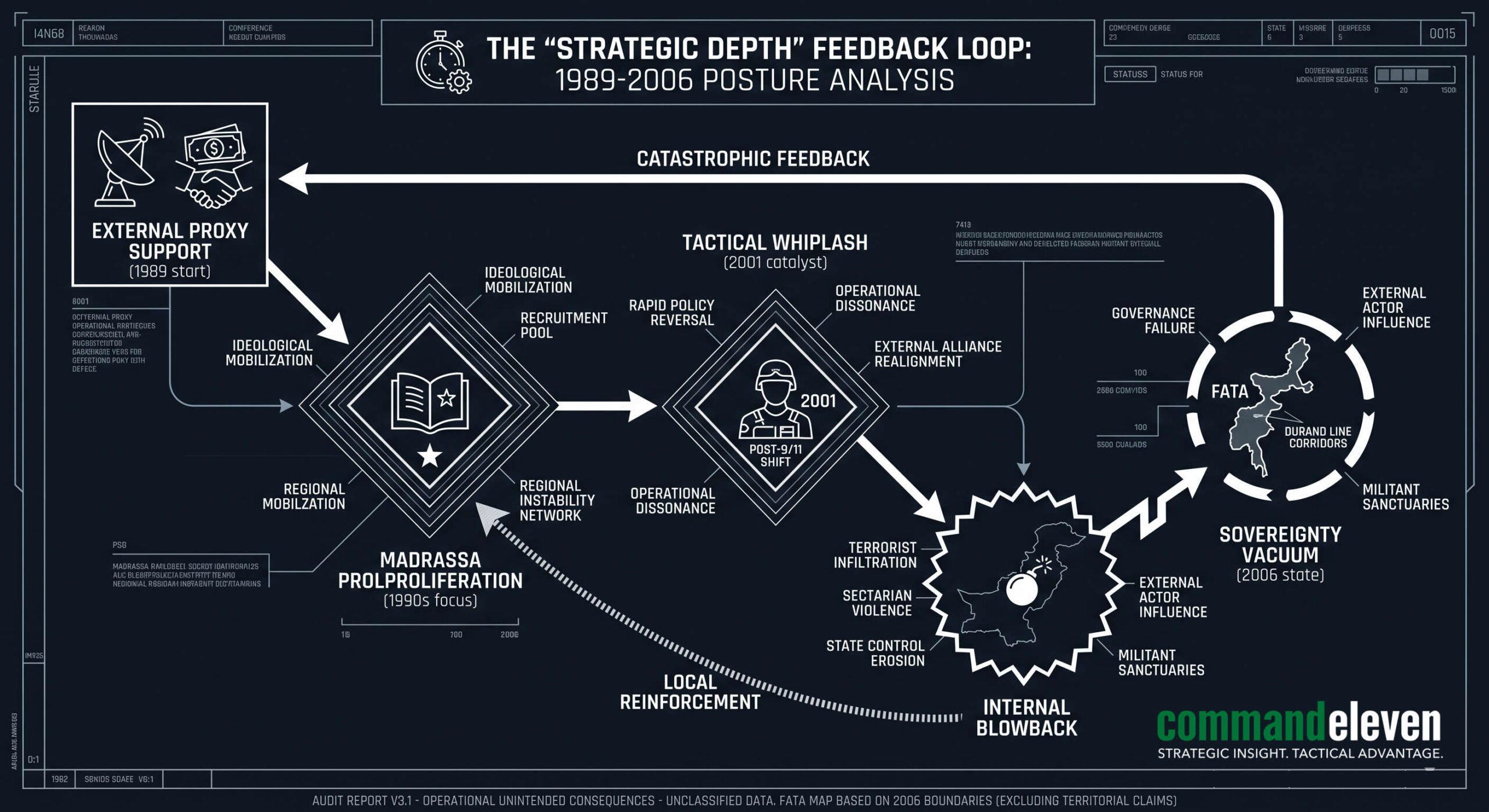
- Core Assessment: The 1989–2006 period represents the failure of Proxy Management as a sustainable security doctrine. The transition from an external “Strategic Depth” posture to an internal “Counter-Insurgency” reality exposed a profound structural deficit in the Pakistan Armed Forces.
- The Shock: The military’s “India-Centric” conventional doctrine was neutralized by the mountainous terrain of FATA and the decentralized nature of the IMU and Al-Qaeda Central.
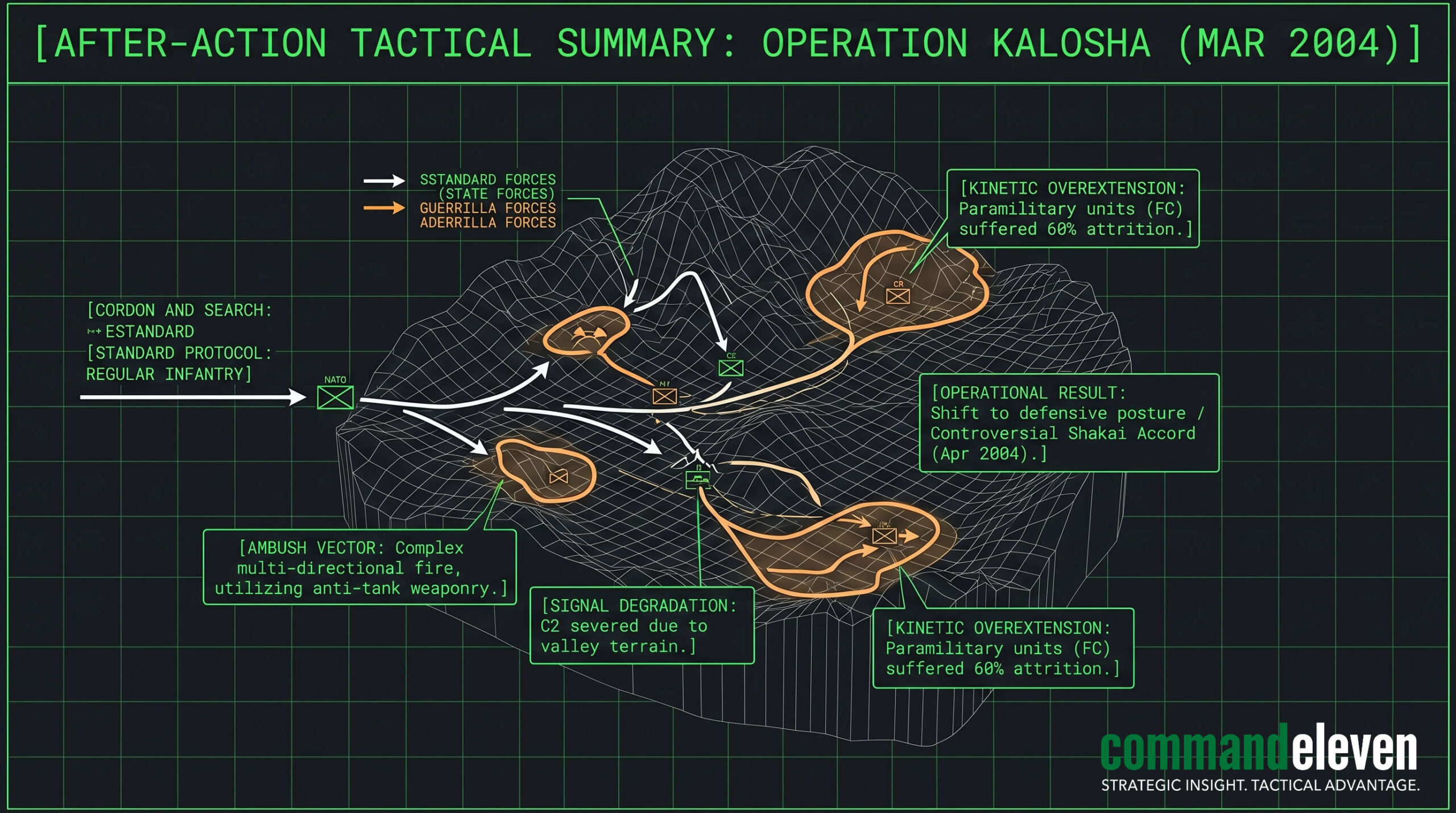
- Tactical Failure: Operations like Kalosha proved that standard infantry maneuvers were insufficient against entrenched guerrilla networks, leading to a cycle of “Kinetic Overextension” followed by capitulatory peace accords.
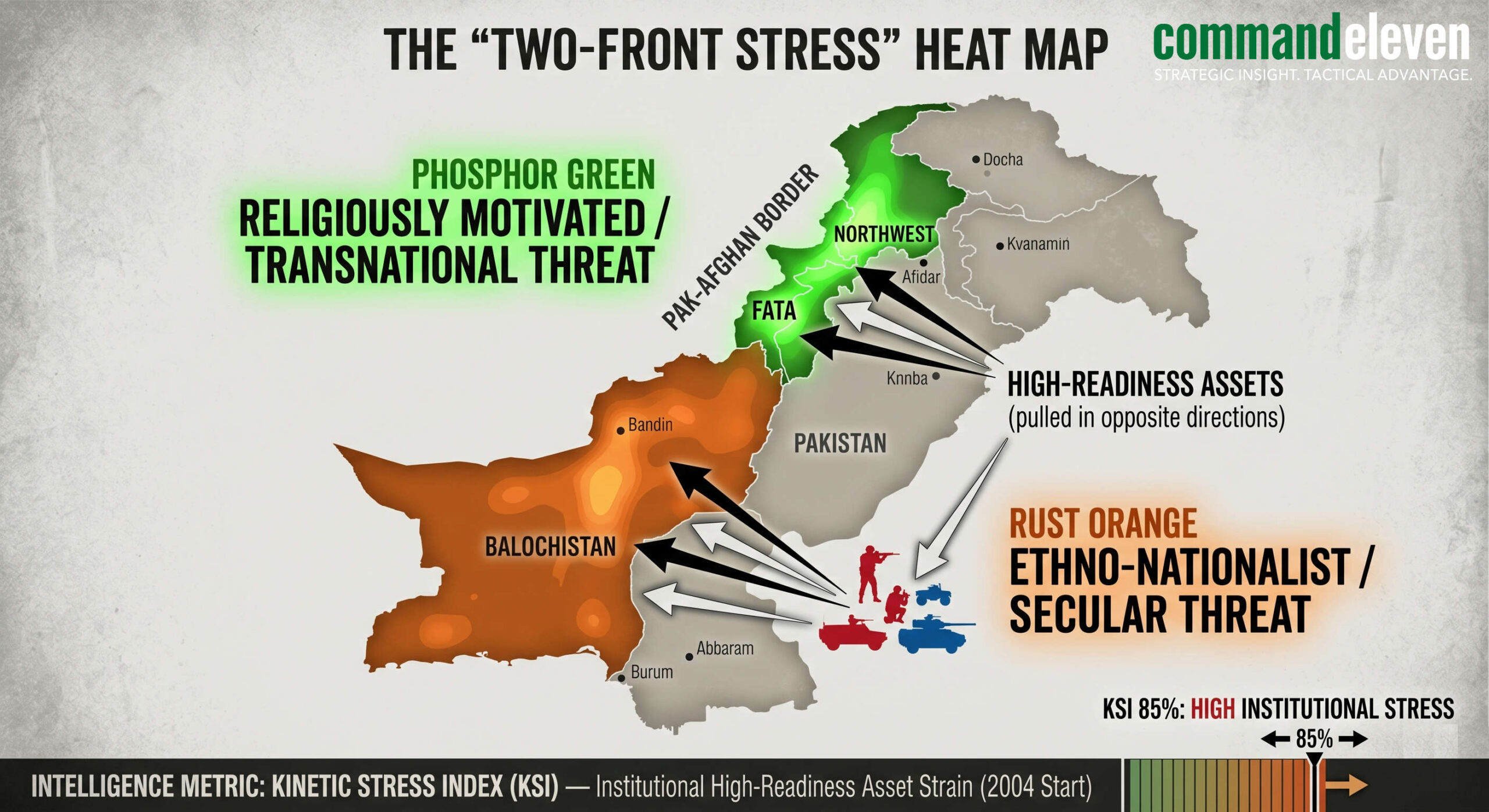
- Strategic Outcome: By 2006, the state faced a dual-front internal crisis: a religiously motivated insurgency in the north and an ethno-nationalist insurgency in Balochistan, both exploiting the state’s lack of administrative persistence.
The Pre-9/11 Baseline & Post-Soviet Fallout
During the 1980s, the Pakistani intelligence and military apparatus operated with peak efficiency in the domain of external proxy management. The Inter-Services Intelligence (ISI) developed elite expertise in logistical covert supply chains and guerrilla doctrine to support the Afghan Jihad.
However, the post-1989 withdrawal of superpowers created a strategic vacuum. The state’s pursuit of Strategic Depth—securing a sympathetic regime in Kabul to prevent Indian encirclement—led to the entrenchment of “Kalashnikov Culture” and unchecked ideological proliferation. By 1999, the state’s strategic posture was dangerously out of sync with its internal reality; while state infrastructure tolerated outward-facing groups (e.g., LeT, SSP), these networks provided the skeletal framework later co-opted by anti-state insurgents.
The Post-9/11 Strategic Shock (Oct 2001 – 2003)
The events of September 2001 forced an immediate, high-friction strategic reversal. The Musharraf administration’s decision to join the Global War on Terror (GWOT) severed the traditional “Administrative Oxygen” previously afforded to various militant factions. This pivot immediately exposed the state to Ideological Blowback, as former state assets rebranded as domestic insurgents.
Operation Al-Mizan and the Tribal Friction (2002–2006)
The military’s initial entry into the Federally Administered Tribal Areas (FATA) was characterized by conventional overextension.
- Operation Kalosha (2004): A clinical wake-up call for the military. A routine cordon-and-search operation in South Waziristan morphed into a multi-day siege by well-fortified foreign fighters (IMU) and local militants.
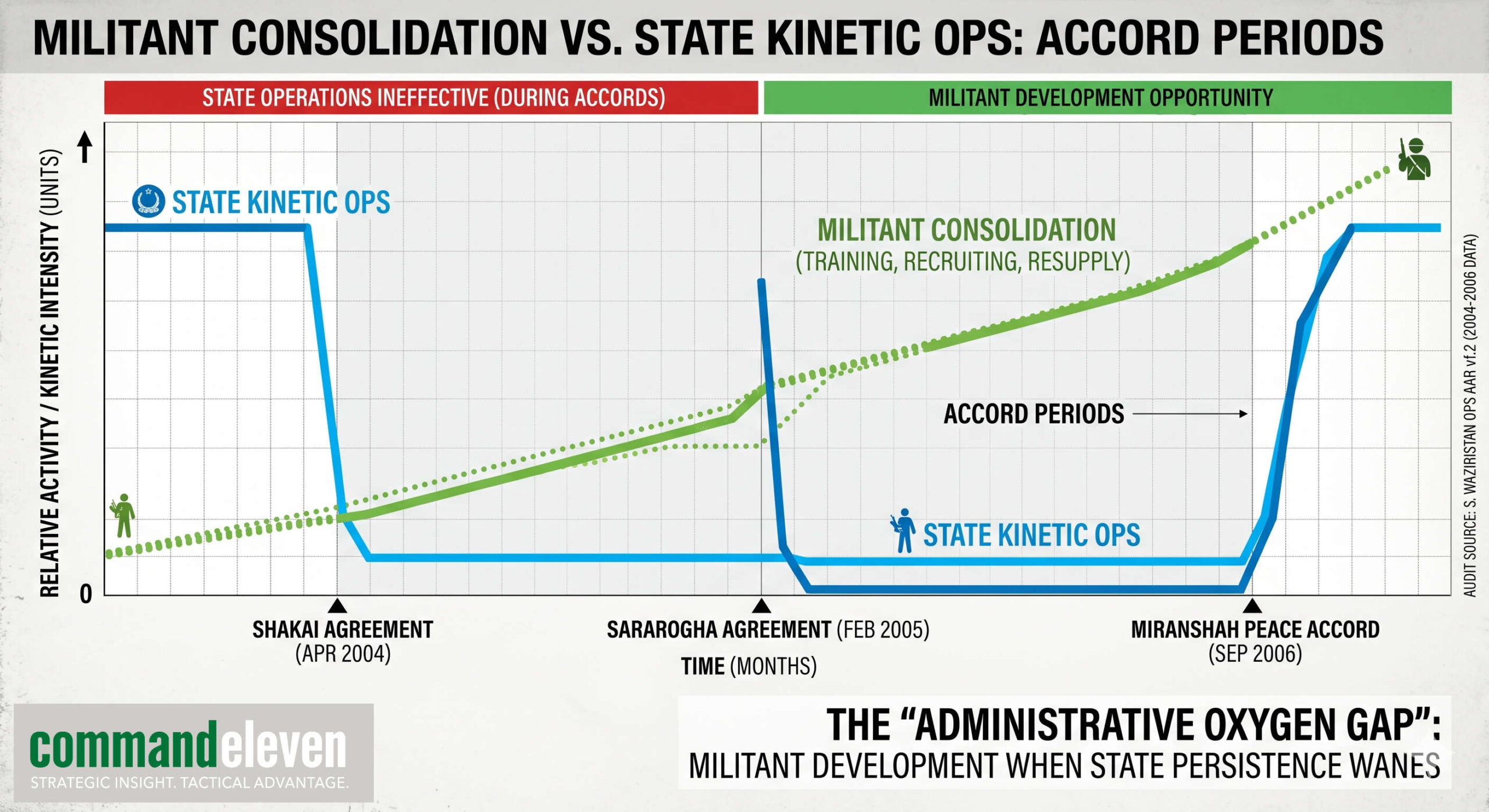
- The Treaty Cycle: High casualties and tactical unfamiliarity led to controversial peace accords (Shakai and Waziristan Accords). Mechanically, these served as “Operational Pauses” for the insurgency, allowing them to consolidate territory and establish shadow administrative nodes while the state retreated to conventional bases.
The Balochistan Insurgency: The Second Front (2004–2006)
Simultaneous to the religious insurgency in the north, the southwest erupted into a secular, ethno-nationalist conflict.
- Catalyst: The 2006 assassination of Akbar Bugti acted as an accelerant, transforming localized tribal grievances into a sustained armed insurgency.
- Asymmetric Multiplicity: The military was forced into a dual-front internal war: a religiously motivated kinetic threat in the north and a geographically expansive, resource-focused insurgency in Balochistan.