BLUF: Operation Kalosha serves as the definitive case study for Tactical Whiplash. The state’s attempt to apply conventional mechanized force to a decentralized, high-altitude threat resulted in a critical kinetic failure. This engagement validated the insurgent narrative and highlighted the necessity of transitioning to a model of Administrative Persistence.
Operational Context: The Shakai Valley
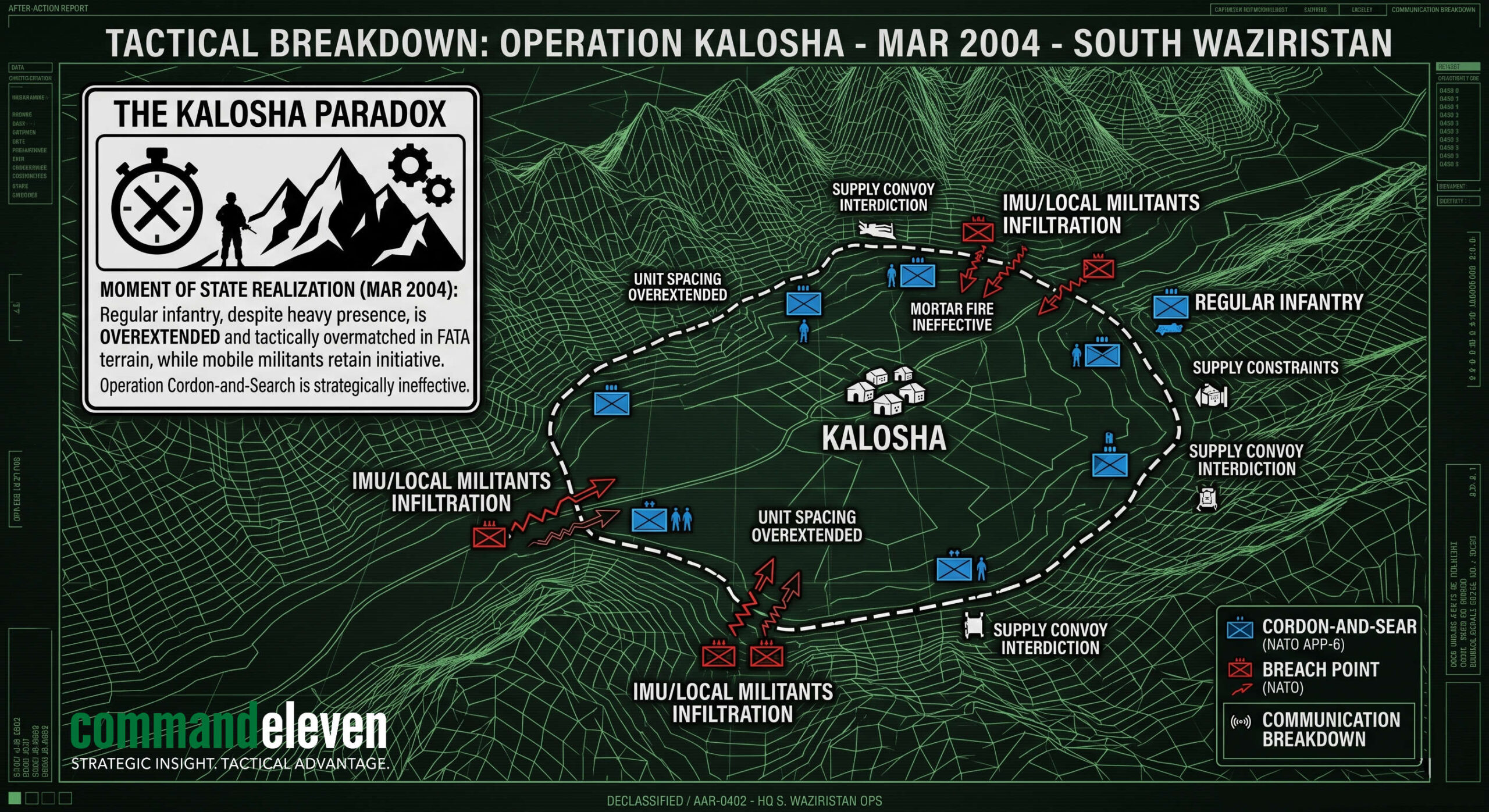
In early 2004, the Pakistan Armed Forces initiated a targeted Cordon-and-Search (C&S) operation in the Shakai Valley. The objective was the neutralization of foreign fighters who had occupied the Sovereignty Vacuum following the retreat from Tora Bora. The operation utilized conventional infantry doctrine, assuming a “Search and Detain” mission against a disorganized adversary.
Tactical Failures and Institutional Blind Spots
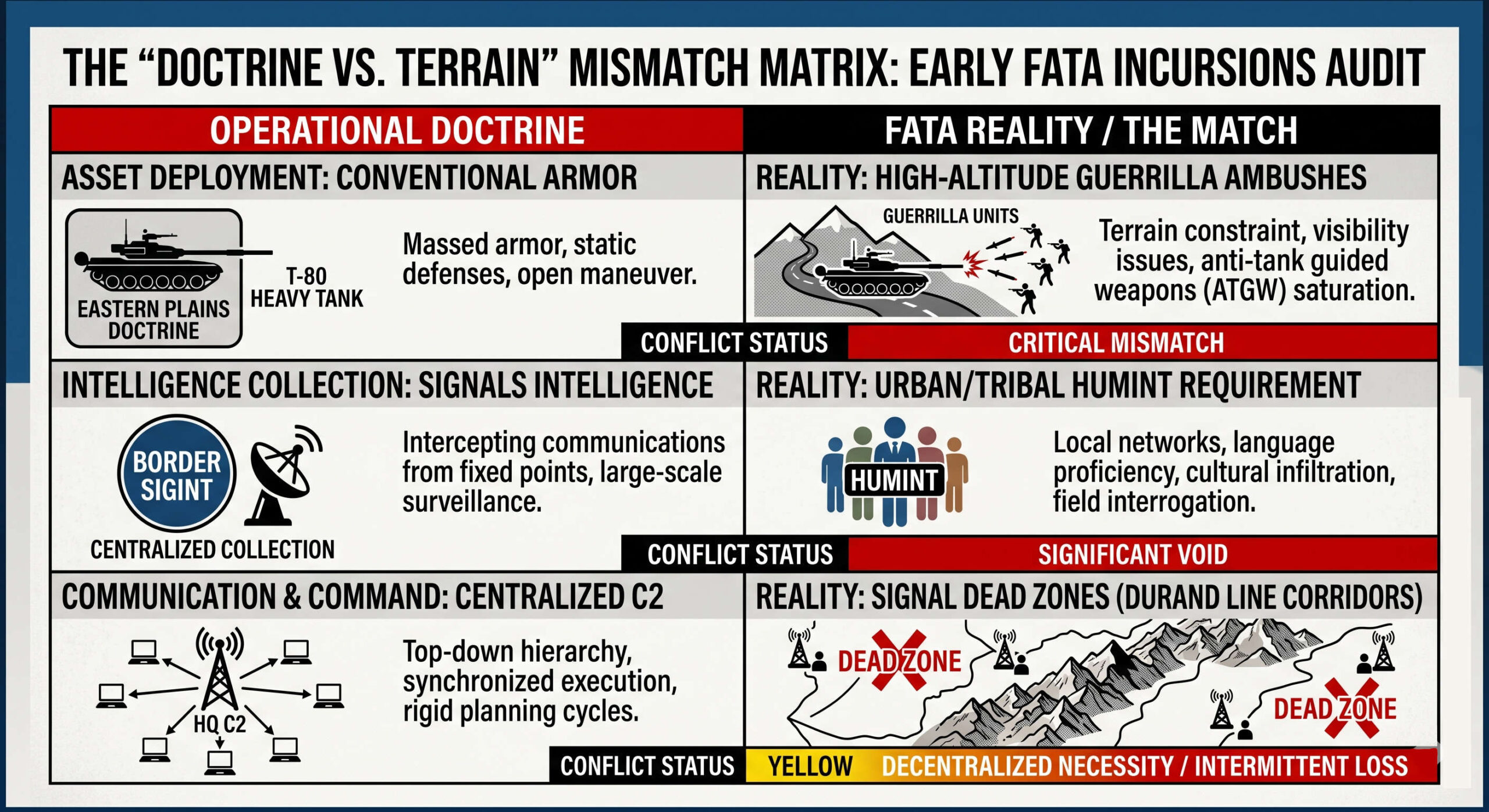
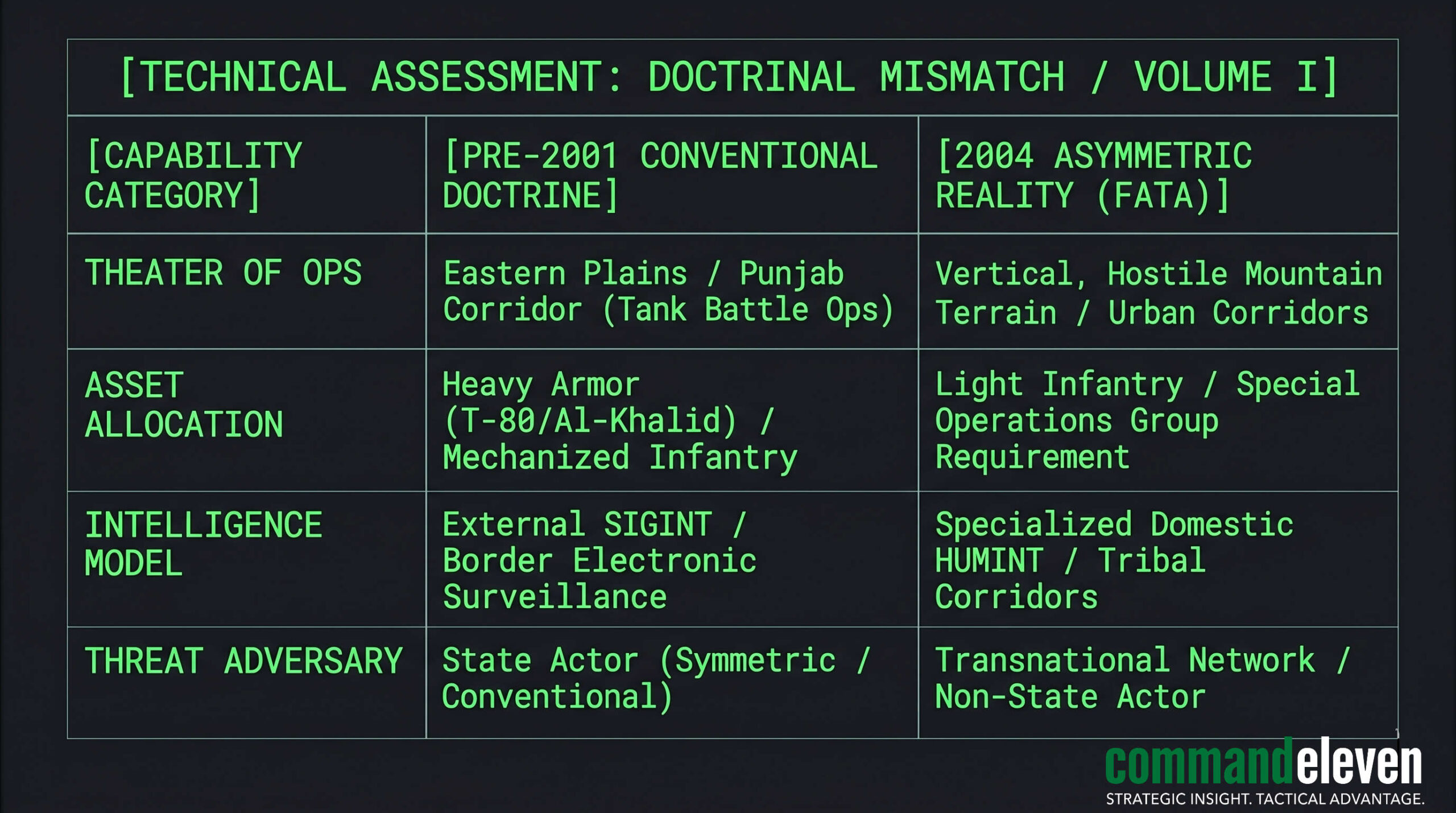
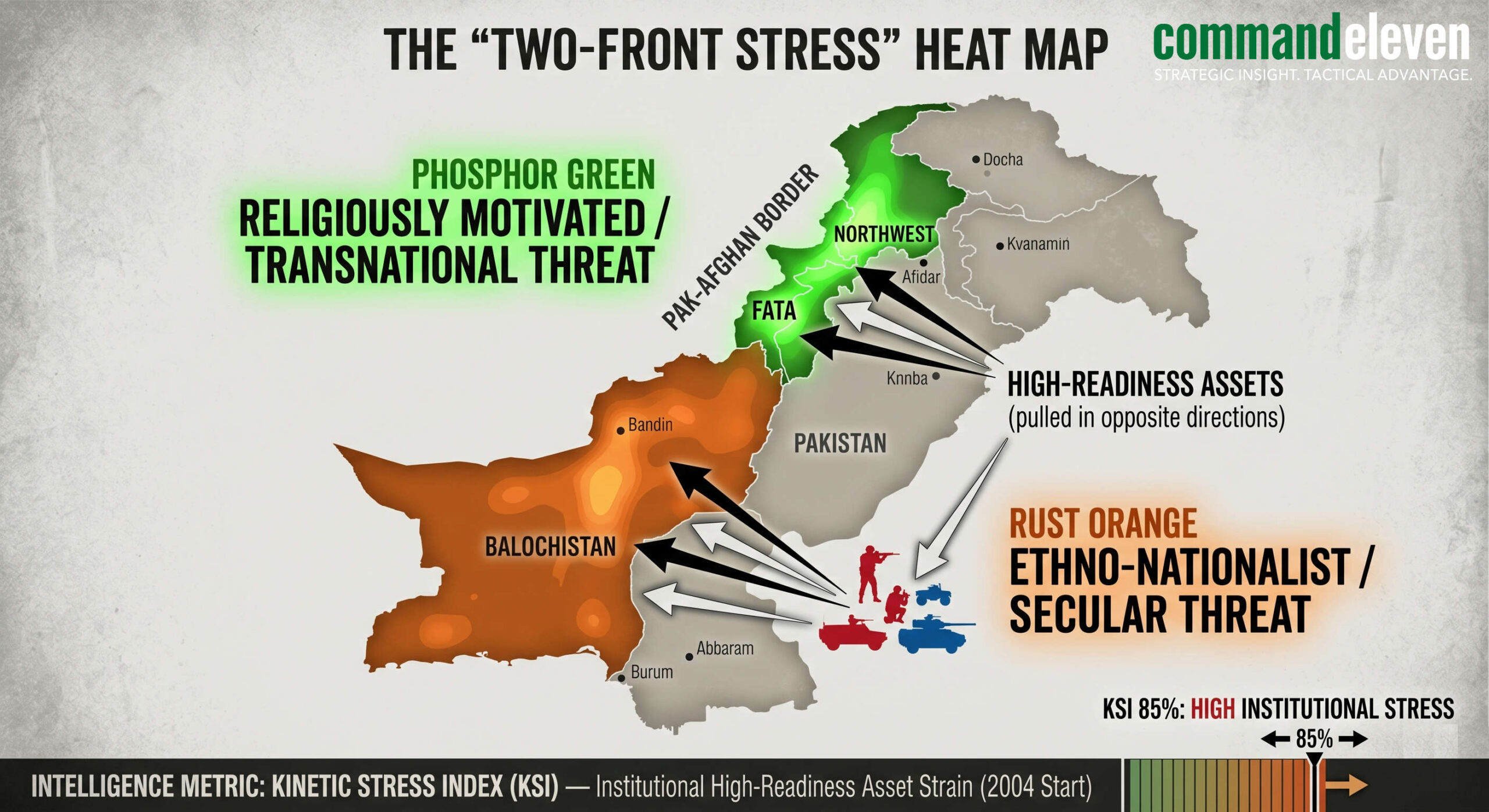
The security apparatus suffered from a total lack of domestic HUMINT. Relying on outdated data, the state operated within an intelligence blind spot, while the adversary established high-ground dominance.
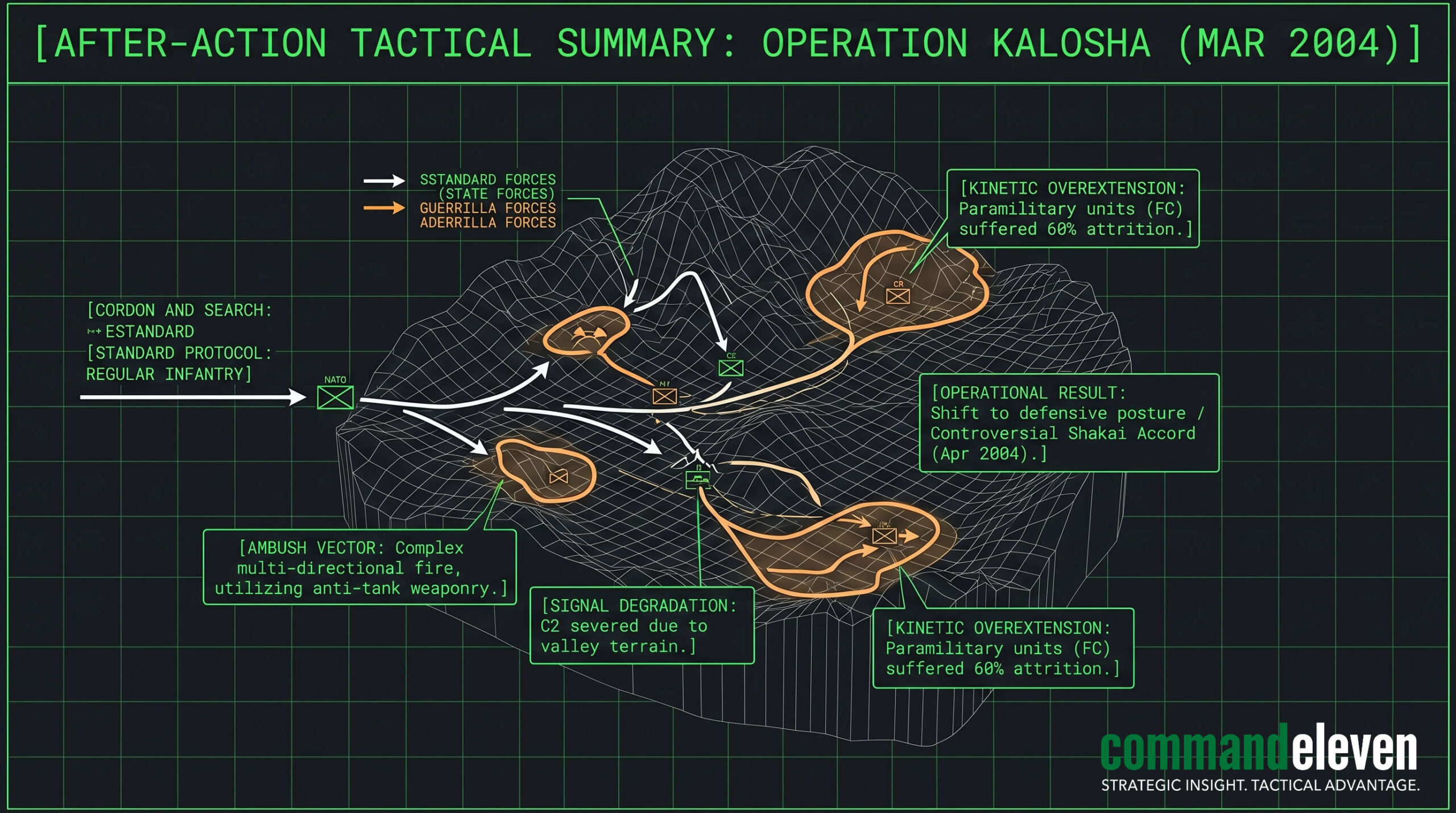
- Doctrine vs. Vertical Terrain: The military attempted mechanized maneuvers in a landscape demanding high-altitude agility. Light infantry and Frontier Corps (FC) units were pinned down by sophisticated, multi-directional fire.
- The Outcome: What began as a sweep morphed into a multi-day siege. The engagement proved that the state’s India-Centricity had left its troops tactically naked in a counter-insurgency environment.
The Shakai Accord: Administrative Oxygen
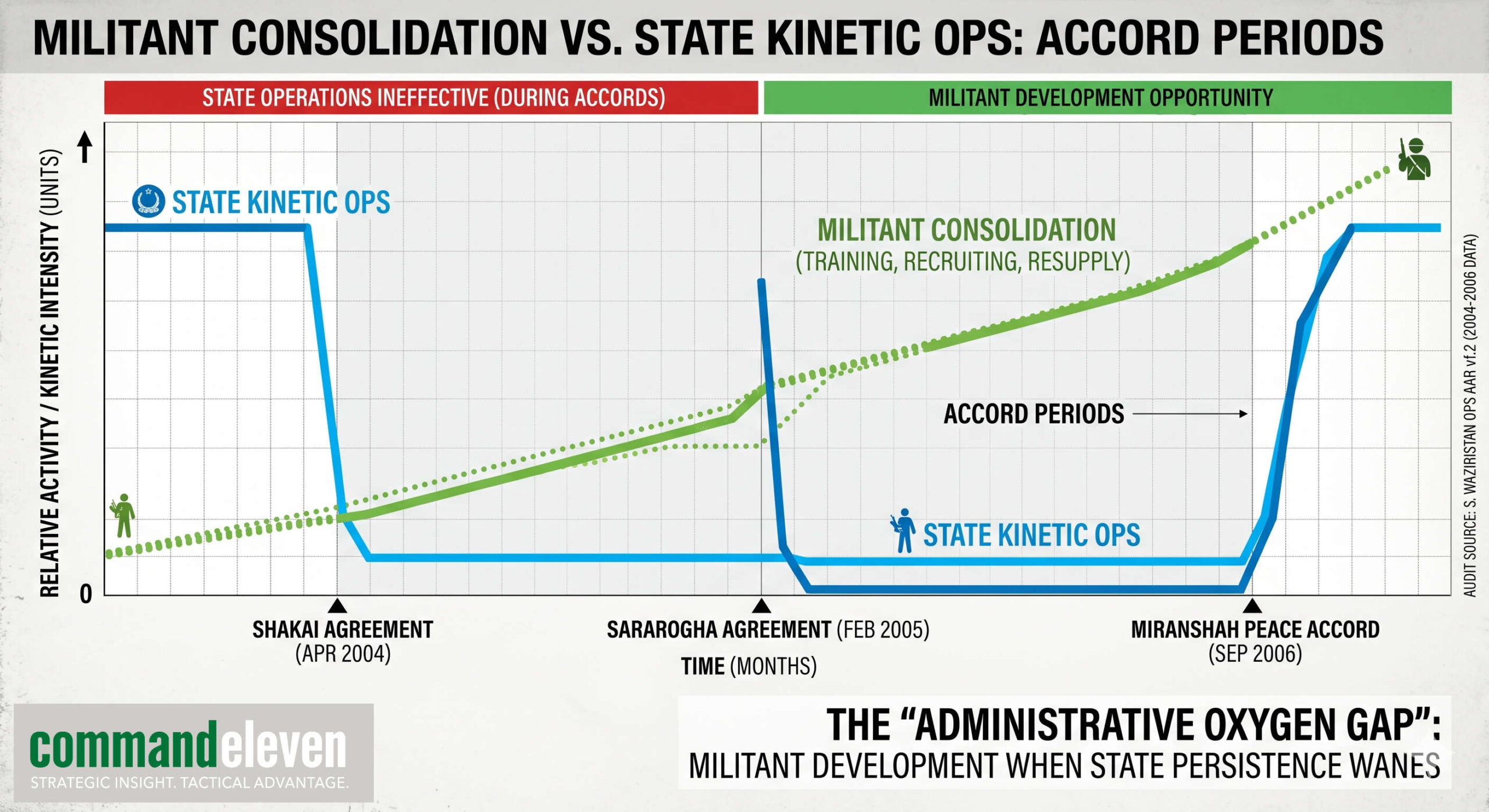
The sheer scale of the resistance forced the state into the Shakai Accord (April 2004). This move was a tactical admission of exhaustion. Rather than stabilizing the region, the accord provided the Administrative Oxygen necessary for militant consolidation, allowing the local network under Nek Muhammad Wazir to institutionalize its authority.