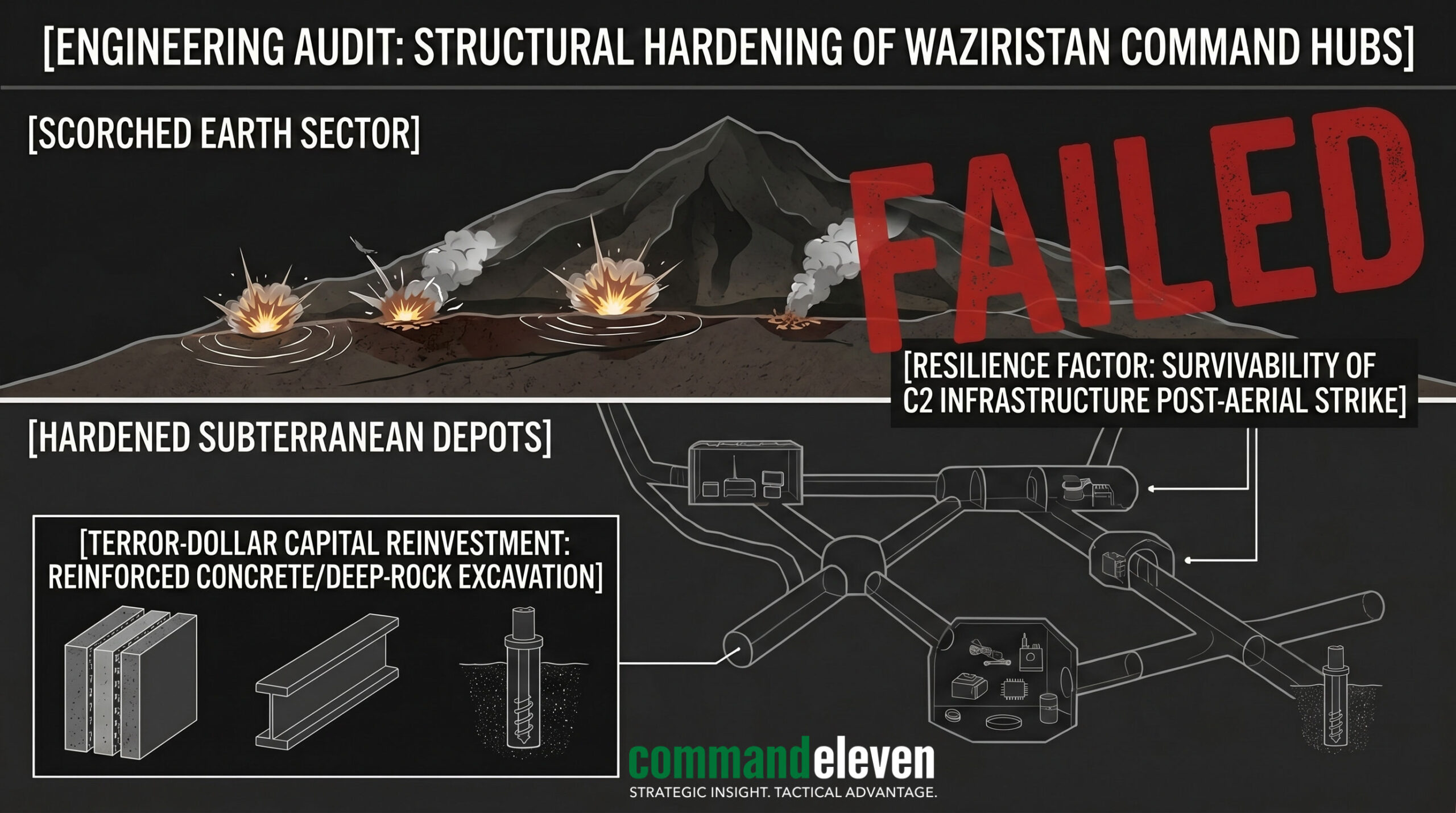
BLUF: The Anvil Gap (2014–2016) represents a critical failure in binational security synchronization during Operation Zarb-e-Azb. Despite the presence of a massive US and NATO footprint in Afghanistan, the refusal to provide a stationary “anvil” allowed the TTP leadership to evade kinetic eradication. This mechanical failure proved that domestic “Scorched Earth” operations are strategically incomplete without absolute, unilateral border control.
Strategic Concept: The Hammer and the Anvil
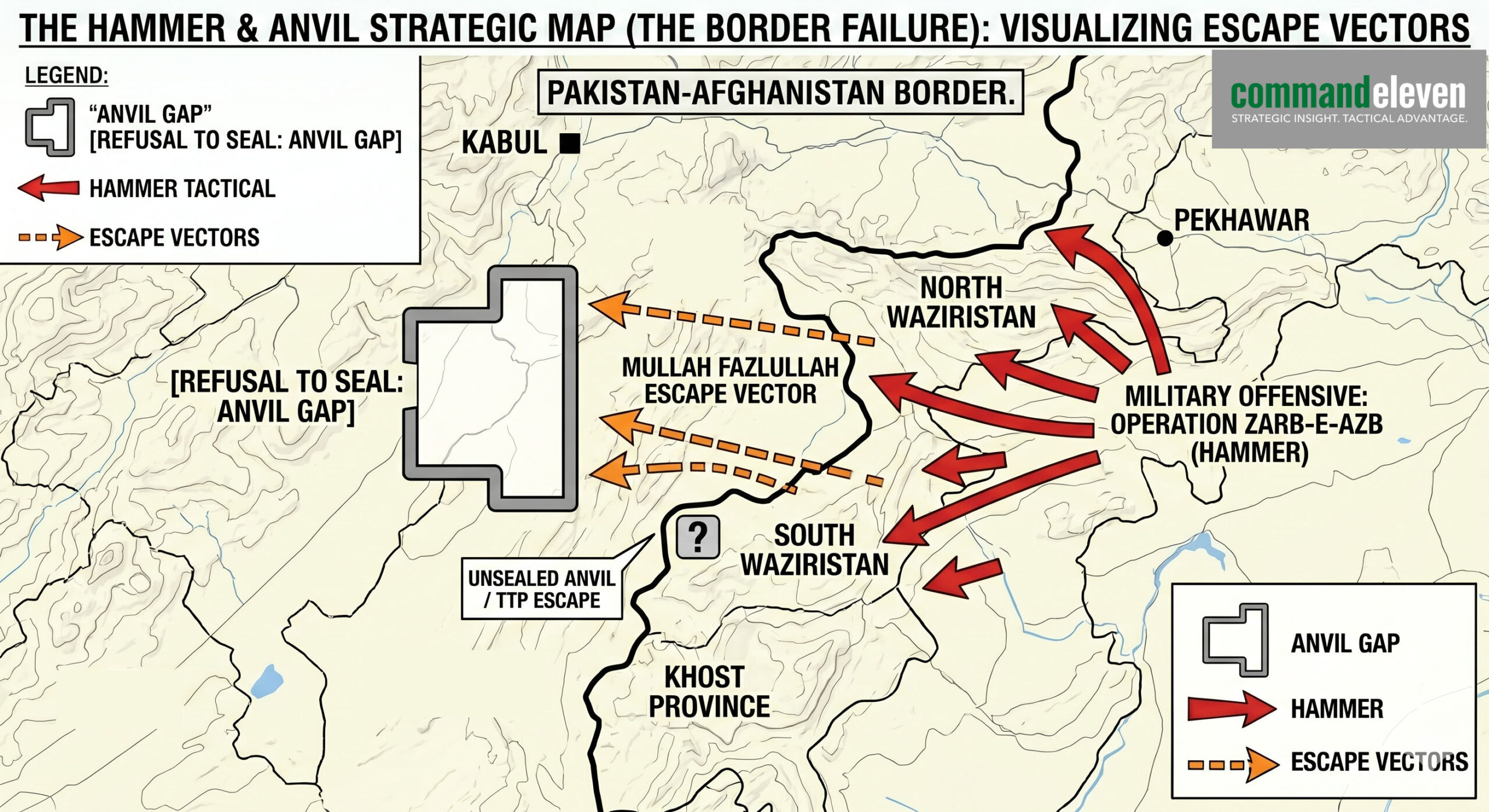
In counter-insurgency doctrine, a “Hammer and Anvil” maneuver requires one force to drive the adversary (the hammer) against a stationary blocking force (the anvil) to ensure total kinetic eradication.
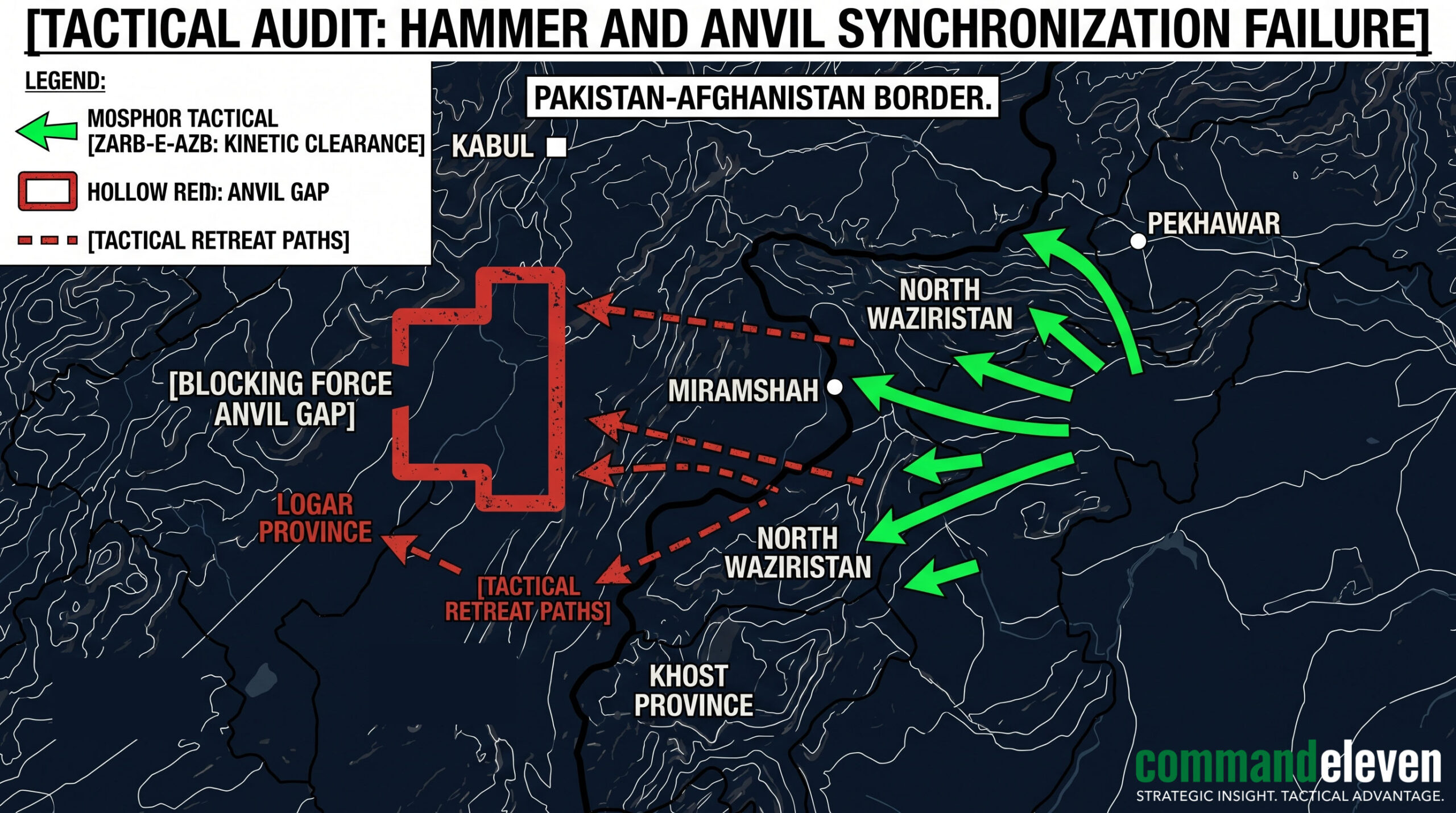
- The Hammer: The Pakistan Armed Forces pushing westward through the Waziristan Paradox.
- The Anvil: A sealed western border managed by US, NATO, and Afghan National Security Forces (ANSF).
The Refusal of the Anvil
Despite formal requests from Islamabad, the necessary synchronization failed to materialize on the Afghan side of the border.
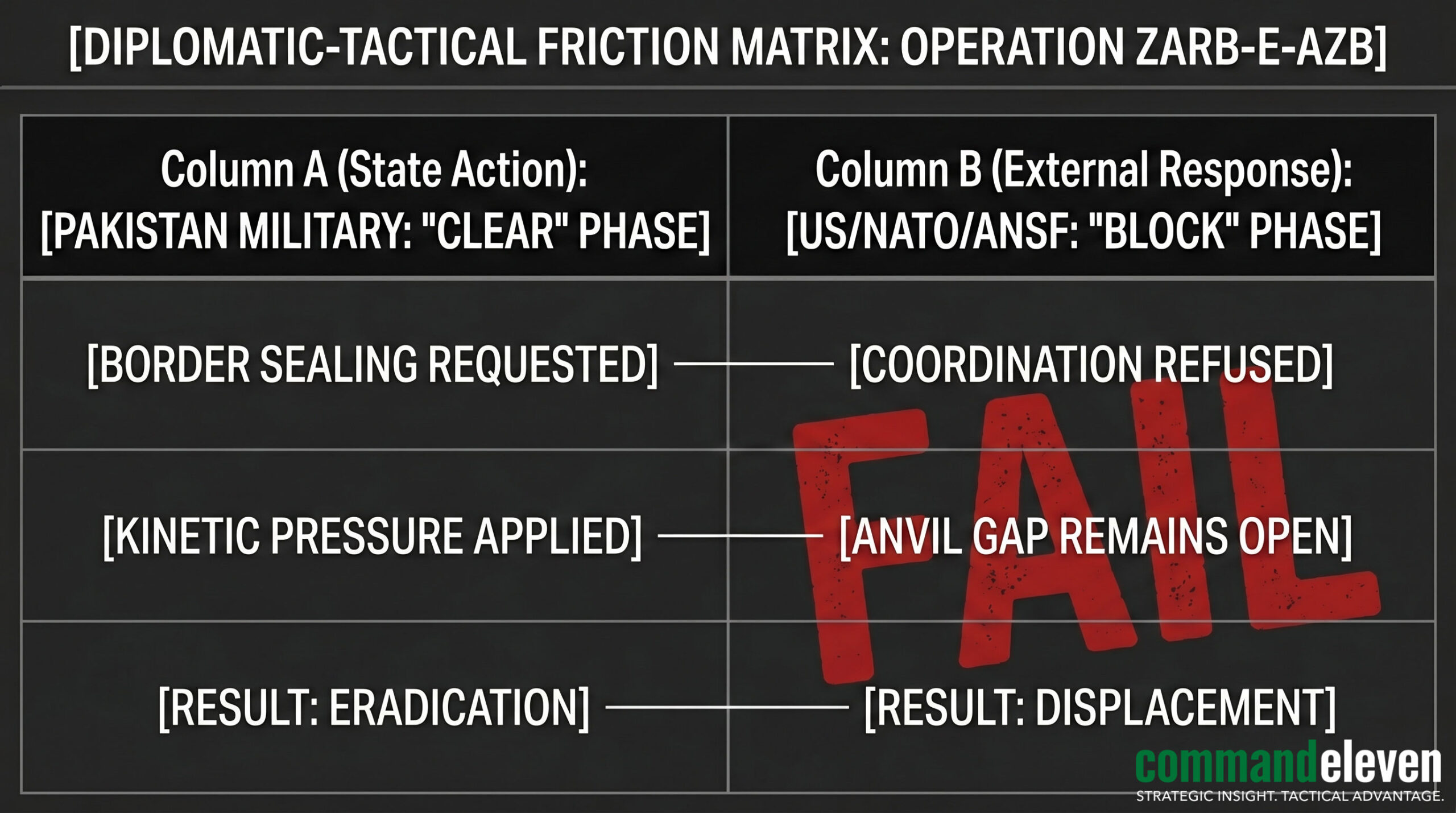
- Formal Requests: Pakistan’s military leadership explicitly requested that US and NATO forces seal the border to prevent insurgent egress during the launch of Operation Zarb-e-Azb.
- Tactical Neglect: The request was controversially refused. This created the Anvil Gap—a 2,640 km tactical vacuum that allowed high-value TTP targets, including Mullah Fazlullah, to effortlessly slip into Afghan territory.
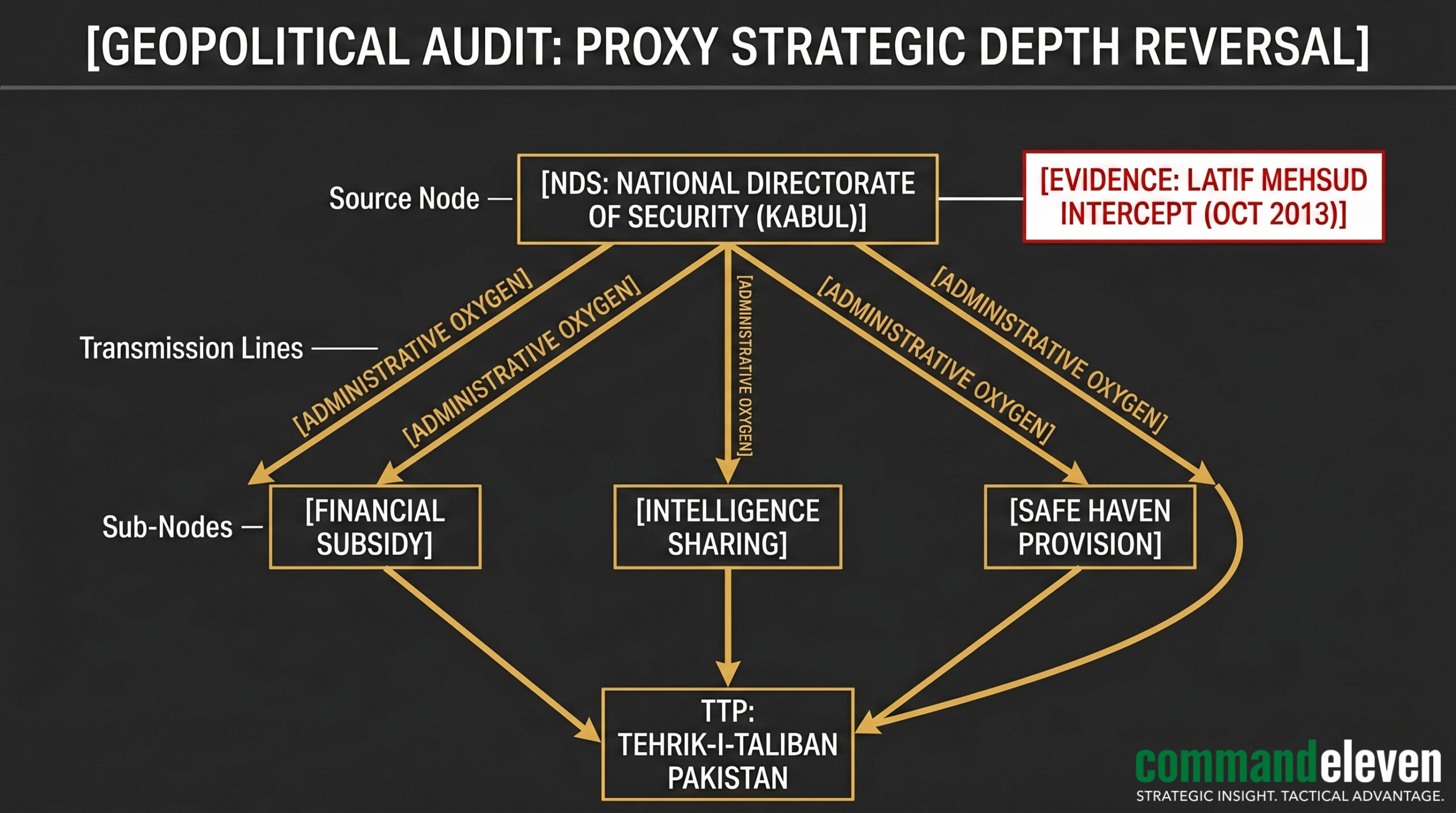
- The Proxy Factor: The refusal was intrinsically linked to the NDS-TTP Proxy Axis, where Afghan intelligence utilized the TTP as a reciprocal lever against Pakistan.
The US-NATO Dilemma
The refusal exposed a deep friction between US operational goals and Afghan host-nation interests.
- Host-Nation Sovereignty: US and NATO forces were often restricted by the Afghan government’s refusal to allow “hot pursuit” or border sealing that targeted NDS-sponsored assets.
- Intelligence Myopia: NATO forces focused on the Afghan Taliban (the “Hammer” from the Afghan perspective), while remaining indifferent to the TTP (the “Hammer” from the Pakistani perspective). This mismatch ensured that both sides provided unintended sanctuaries for the other’s primary adversary.
Strategic Failure: Displacement vs. Eradication
The Anvil Gap fundamentally altered the outcome of the 2014–2016 campaign.
- Surface Success: Nationwide terrorist attacks dropped by 70%, proving the “Hammer” was tactically lethal.
- Strategic Failure: Because the “Anvil” remained open, the operation functioned as a “Squeeze” rather than an “Eradication.” The TTP leadership survived, refitted in NDS safe havens, and prepared for the 2021–2026 rebound.
Clinical Conclusion
The Anvil Gap represents a catastrophic breakdown in binational security cooperation. It terminated the era of tactical reliance on neighbors and served as the primary driver for the multi-billion rupee Hard Border Management project. For the 2026 theater, the lesson is absolute: sovereignty is not a shared responsibility; it is a unilateral mechanical requirement.