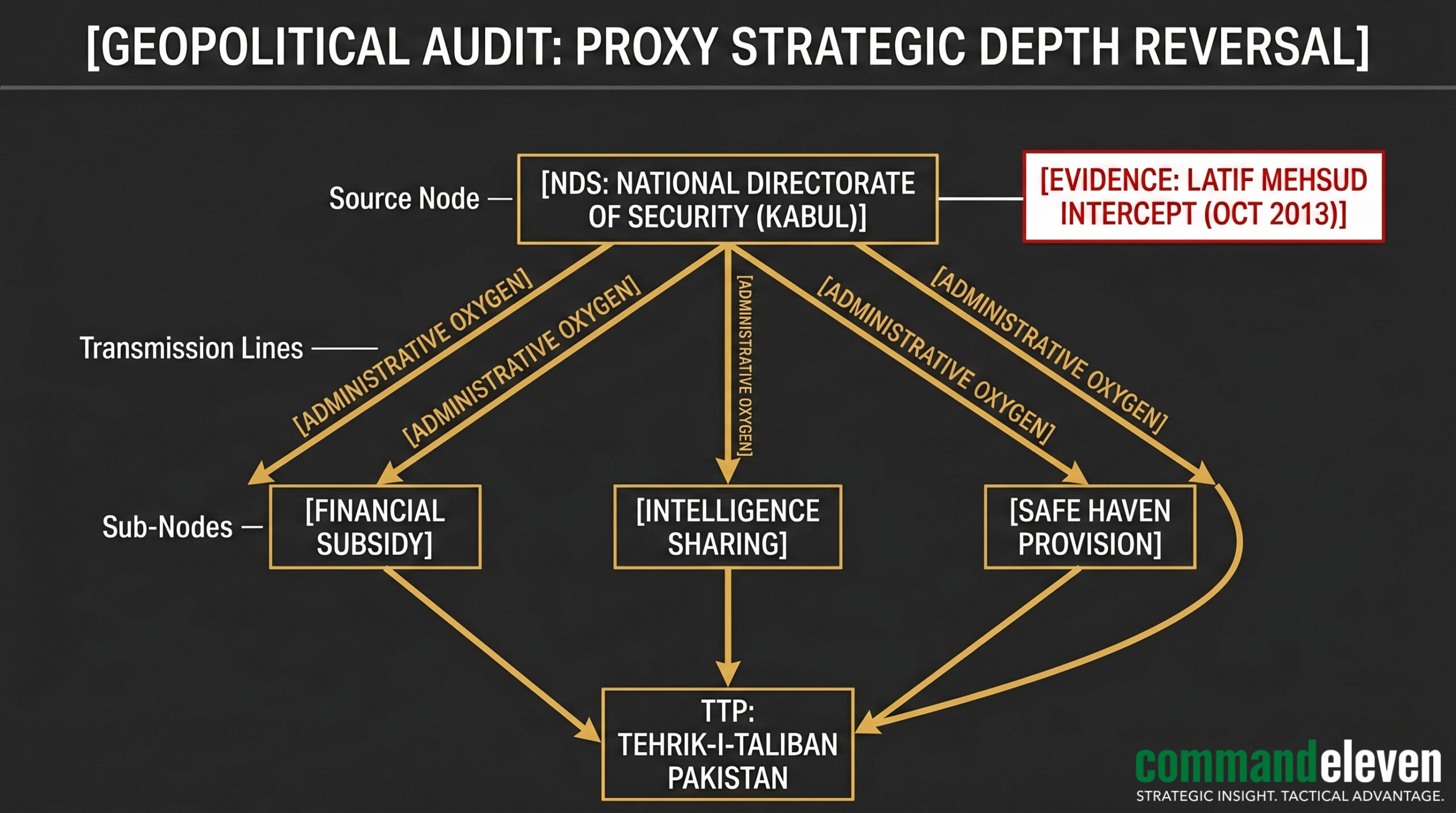
BLUF: By 2013, the geopolitical landscape along the Pakistan-Afghanistan border experienced a Strategic Depth Reversal. The Afghan intelligence apparatus, the National Directorate of Security (NDS), transitioned from a passive observer to an active sponsor of the Tehreek-e-Taliban Pakistan (TTP). This axis was designed to utilize the TTP as a proxy lever to foster domestic instability within Pakistan, mirror-imaging the regional dynamics of the 1990s.
Tactical Summary: The Strategic Depth Reversal
As the Pakistani military prepared for the non-discriminatory clearance of Operation Zarb-e-Azb, Kabul initiated its own doctrine of “Strategic Depth.” Under the Karzai administration, the NDS began providing the TTP with the Administrative Oxygen required to survive state offensives. This relationship ensured that the TTP was no longer a purely domestic insurgent group but a state-sponsored proxy force operating from trans-border sanctuaries.
Critical Evidence: The Latif Mehsud Capture (Oct 2013)
The definitive confirmation of the NDS-TTP nexus occurred in October 2013 in Logar Province, Afghanistan.
- The Target: Latif Mehsud, the deputy to TTP emir Hakeemullah Mehsud and a high-value operational commander.
- The Context: US Special Forces intercepted an NDS transport convoy. Mehsud was found being escorted by NDS agents for high-level strategic meetings in Kabul.
- The US Intervention: Recognizing the NDS was harboring a designated foreign terrorist organization (FTO), US forces forcibly removed Mehsud from the Afghan convoy, triggering a severe diplomatic fallout between Washington and Kabul.
The Anvil Gap: Refusal of Cooperation
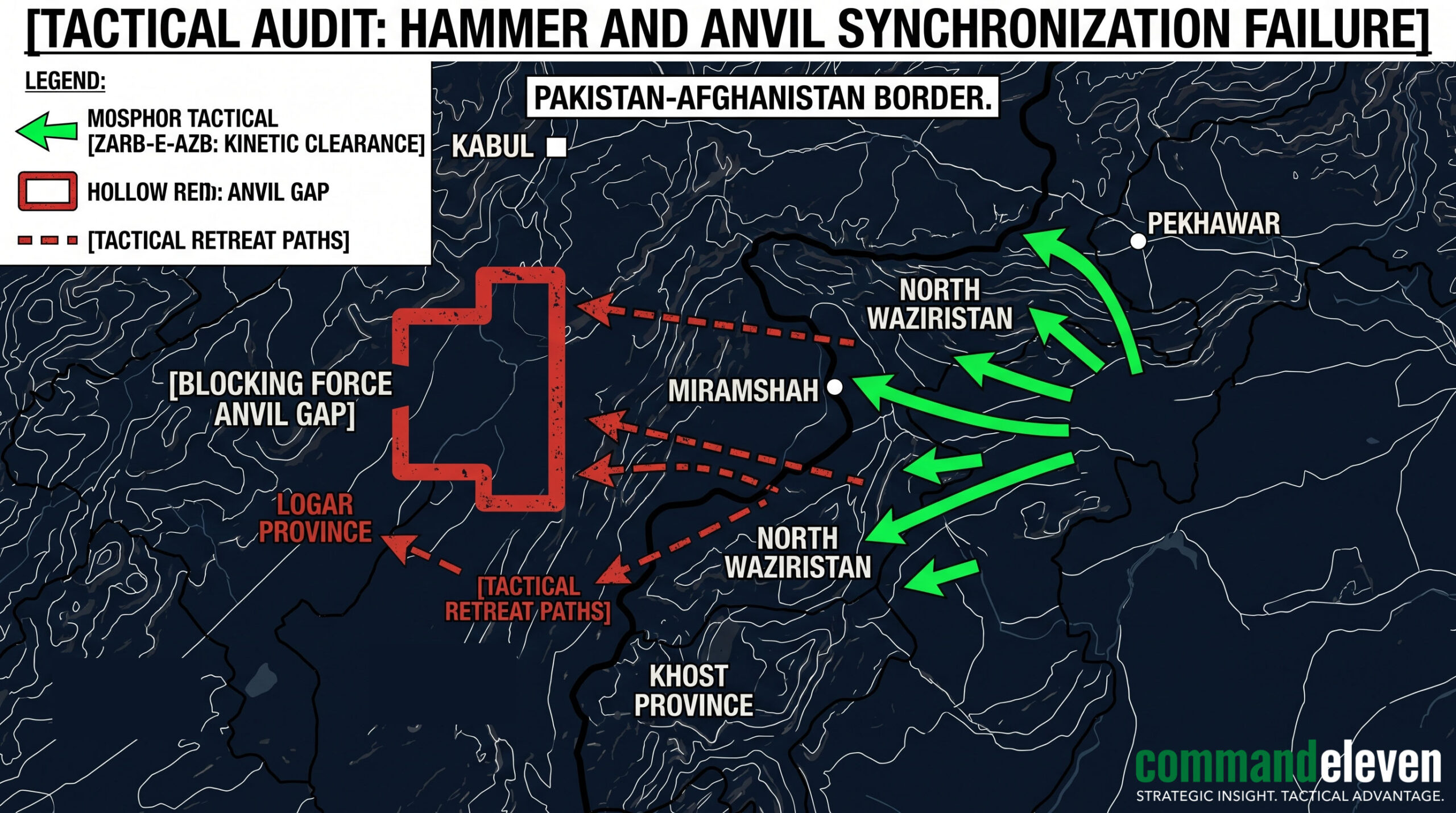
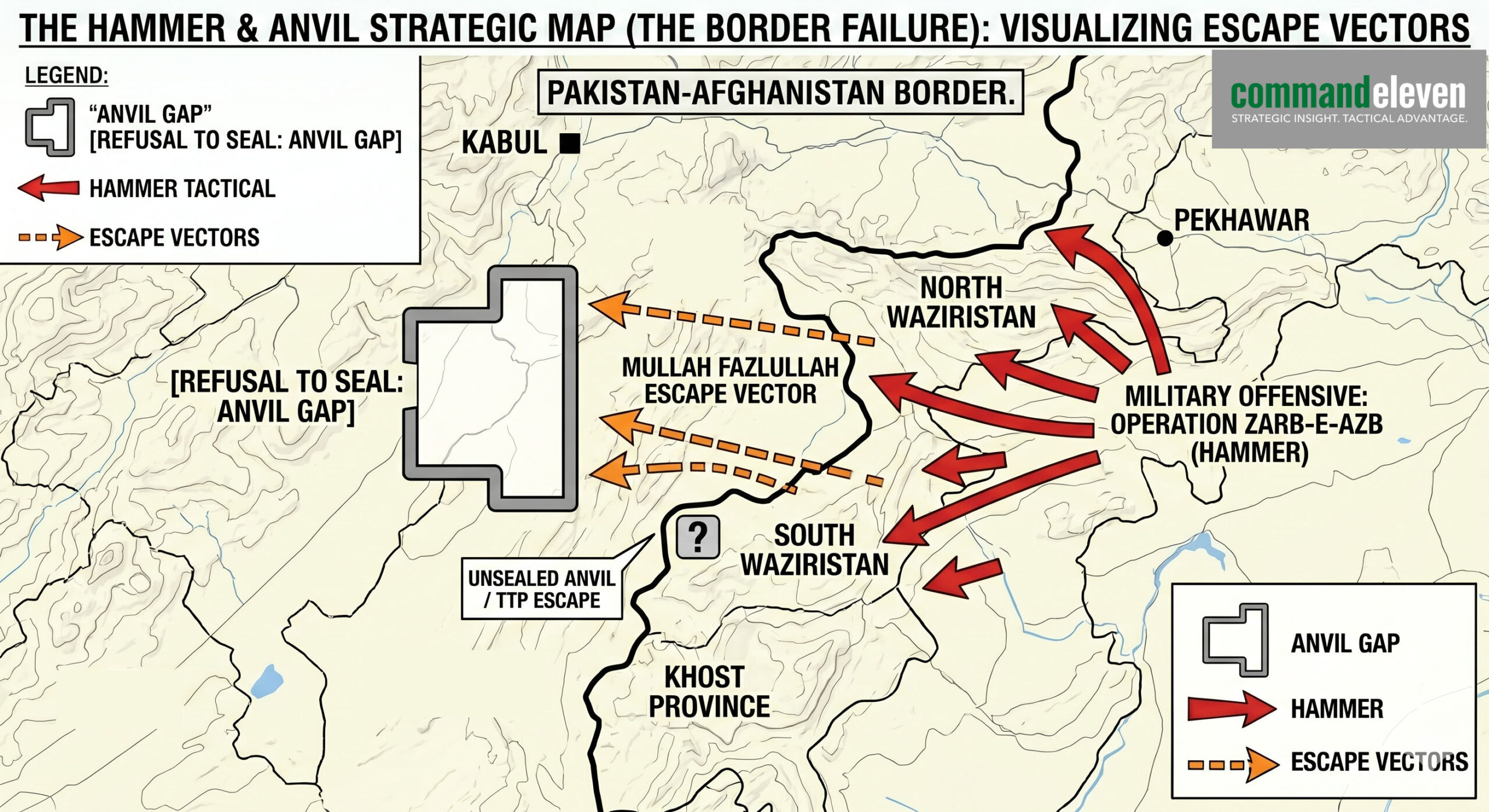
The success of Operation Zarb-e-Azb was mechanically hindered by the Anvil Gap.
- Operational Freedom: Despite formal requests from Islamabad, Afghan forces (NDS and ANA) refused to seal the border or act as the “anvil” to the Pakistani “hammer.”
- Logistical Sanctuary: This deliberate refusal allowed TTP leadership, including Mullah Fazlullah, to evade kinetic clearance by slipping across the border into NDS-sponsored safe havens.
Geopolitical Repercussions
The formal exposure of the proxy relationship led to a total breakdown in trust between Islamabad and Kabul.
- The Dual-Front Conflict: The military acknowledged it was fighting a proxy war subsidized by a neighboring intelligence apparatus.
- The Ultimatum: Following the APS Peshawar Massacre, which was linked to TTP handlers in Afghanistan, Pakistan issued a severe ultimatum, explicitly threatening to target sanctuaries if Kabul did not terminate its support for the TTP.
Clinical Conclusion
The NDS-TTP Proxy Axis transformed the conflict from an internal security matter into a regional geopolitical struggle. It proved that domestic kinetic successes are incomplete if the neighbor provides a Sanctuary Reservoir. This failure was the primary mechanical driver behind the transition to Hard Border Management and the multi-billion rupee border fencing project.