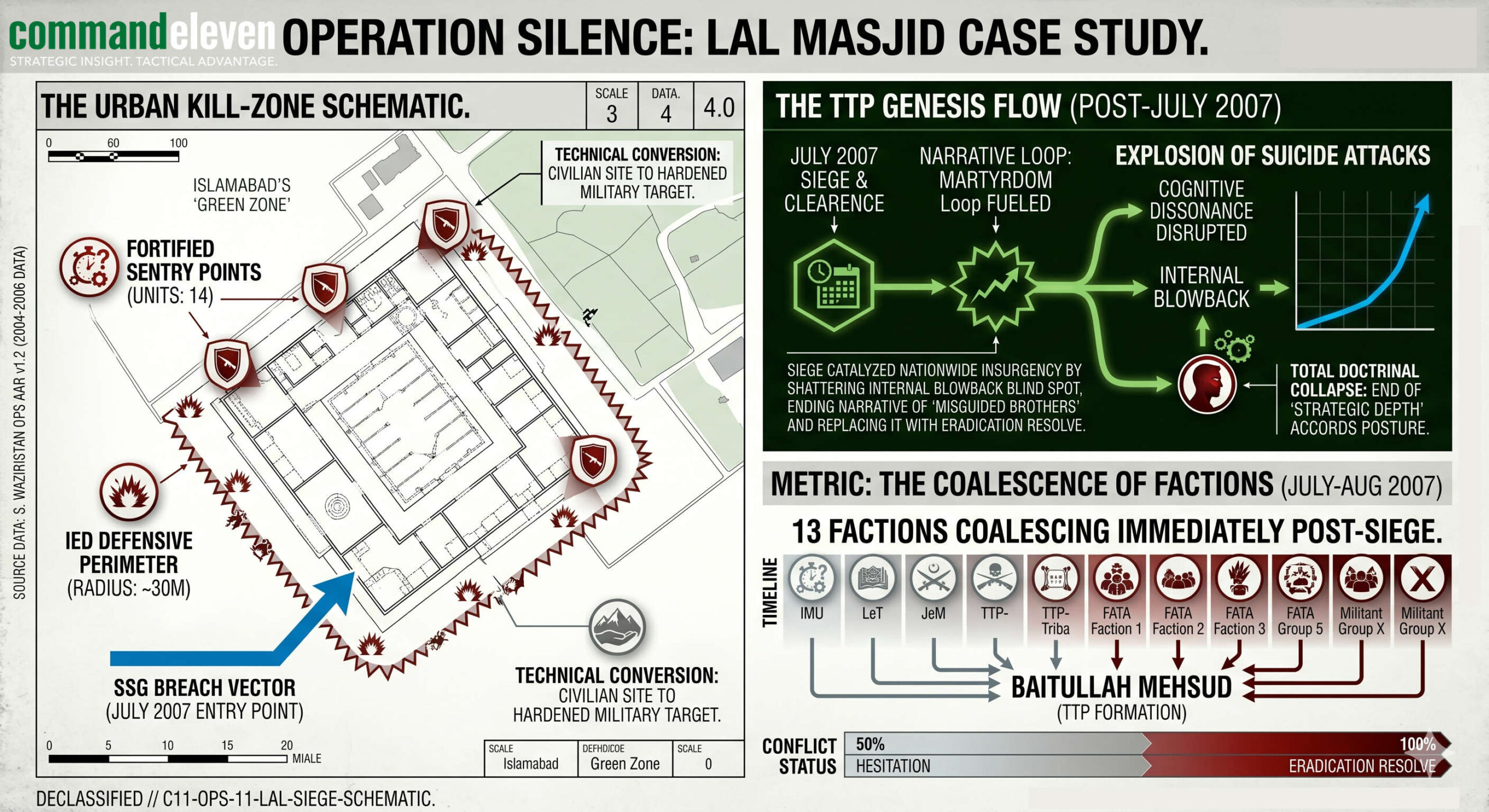
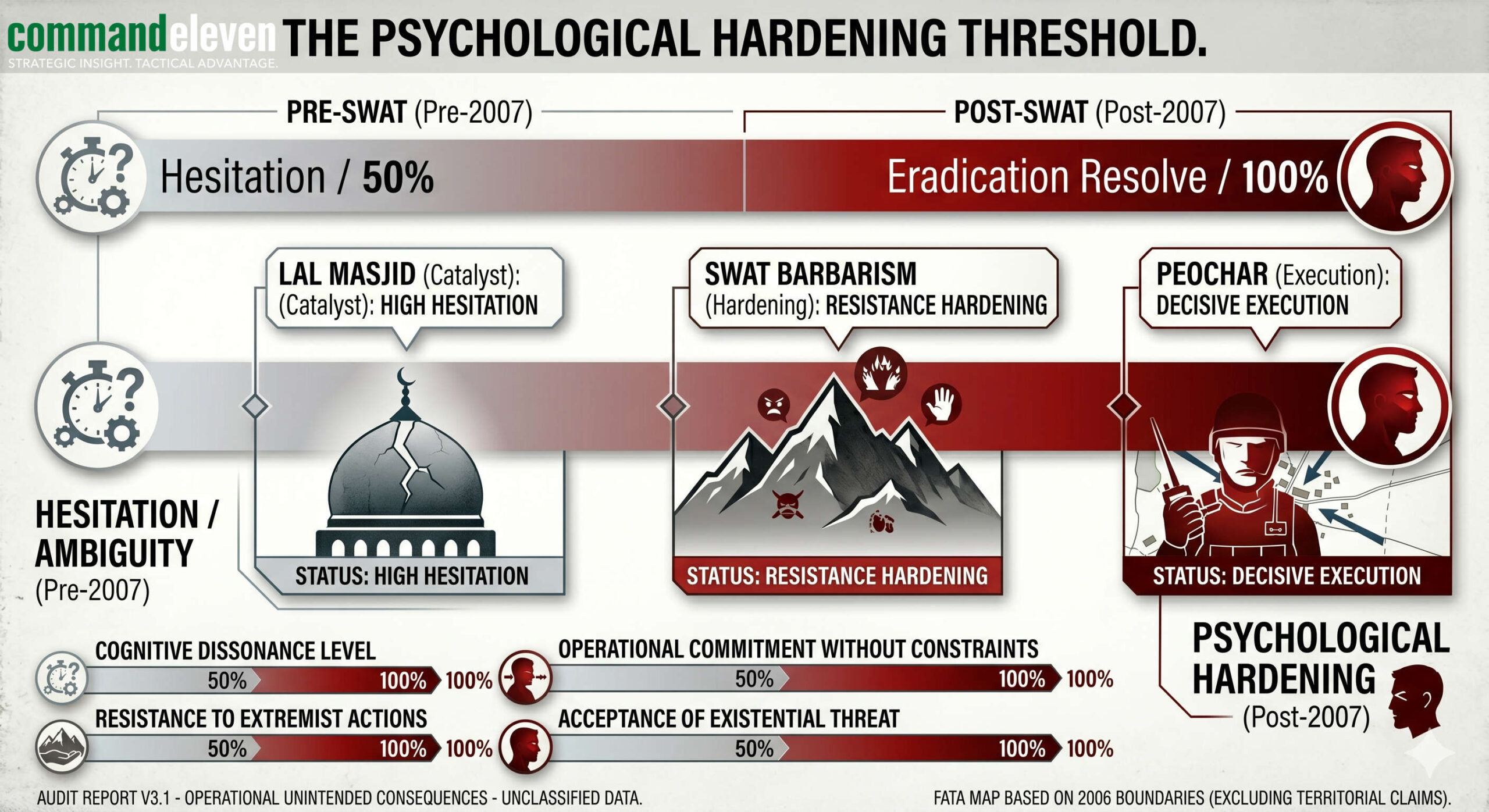
BLUF: The Swat Occupation remains the definitive case study in Territorial Delusion. The TTP’s initial success was predicated on a sophisticated Cognitive Maneuver that exploited the state’s Provincial Autonomy Gap. While the military ultimately reclaimed the valley through vertical innovation, the occupation proved that kinetic force can clear a valley, but only Administrative Persistence can hold it.
The Phase of Seduction: Parallel Justice & Collaboration
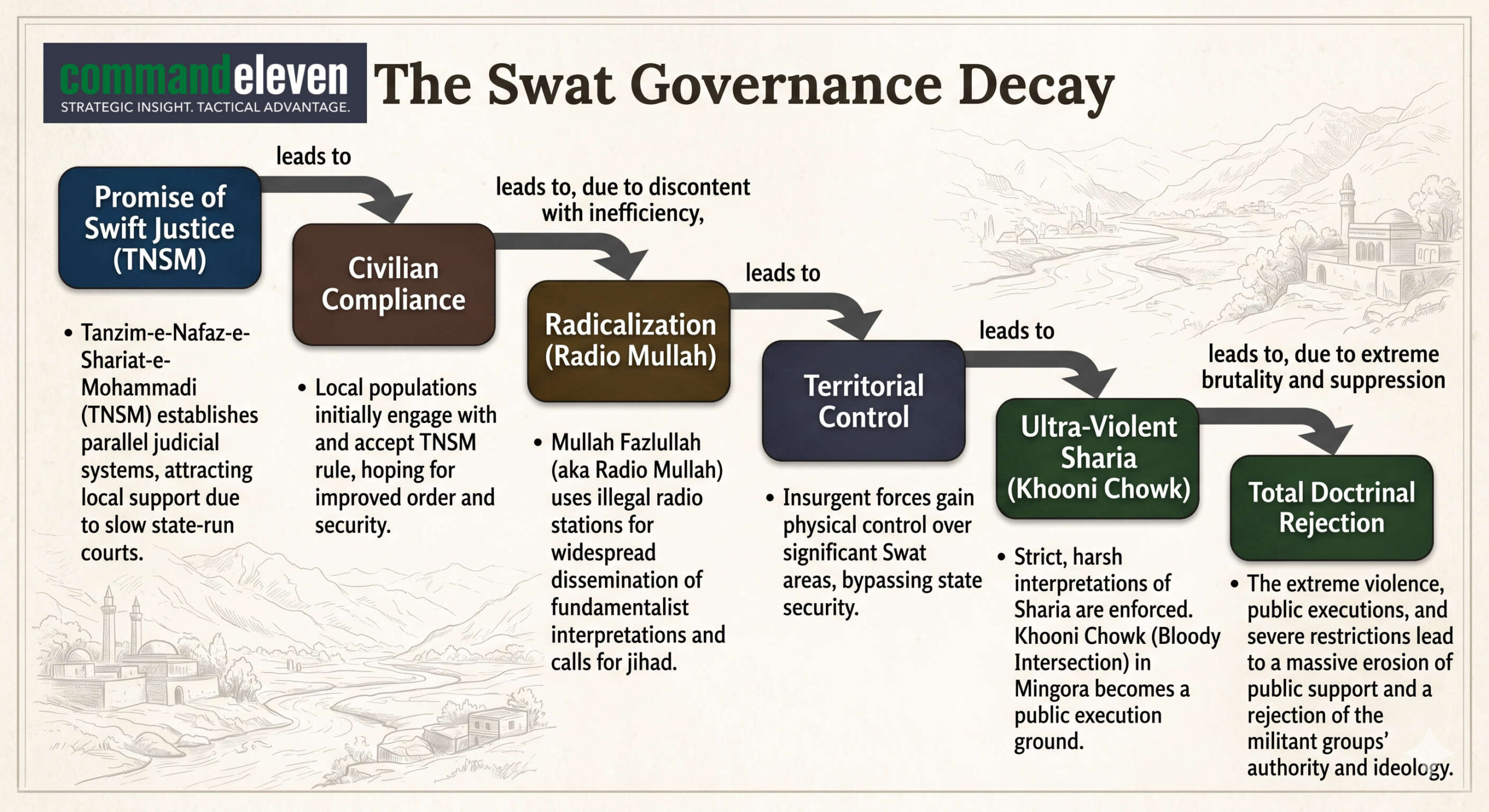
The TTP’s entry into the Swat Valley was not an immediate kinetic invasion, but a strategic exploitation of state utility failure.
- The Promise of Swift Justice: Exploiting a dysfunctional judicial system, the TNSM/TTP promised Sharia-based courts as a viable alternative to the state’s corruption-plagued legal backlog. This provided the Logistical Oxygen of local compliance.
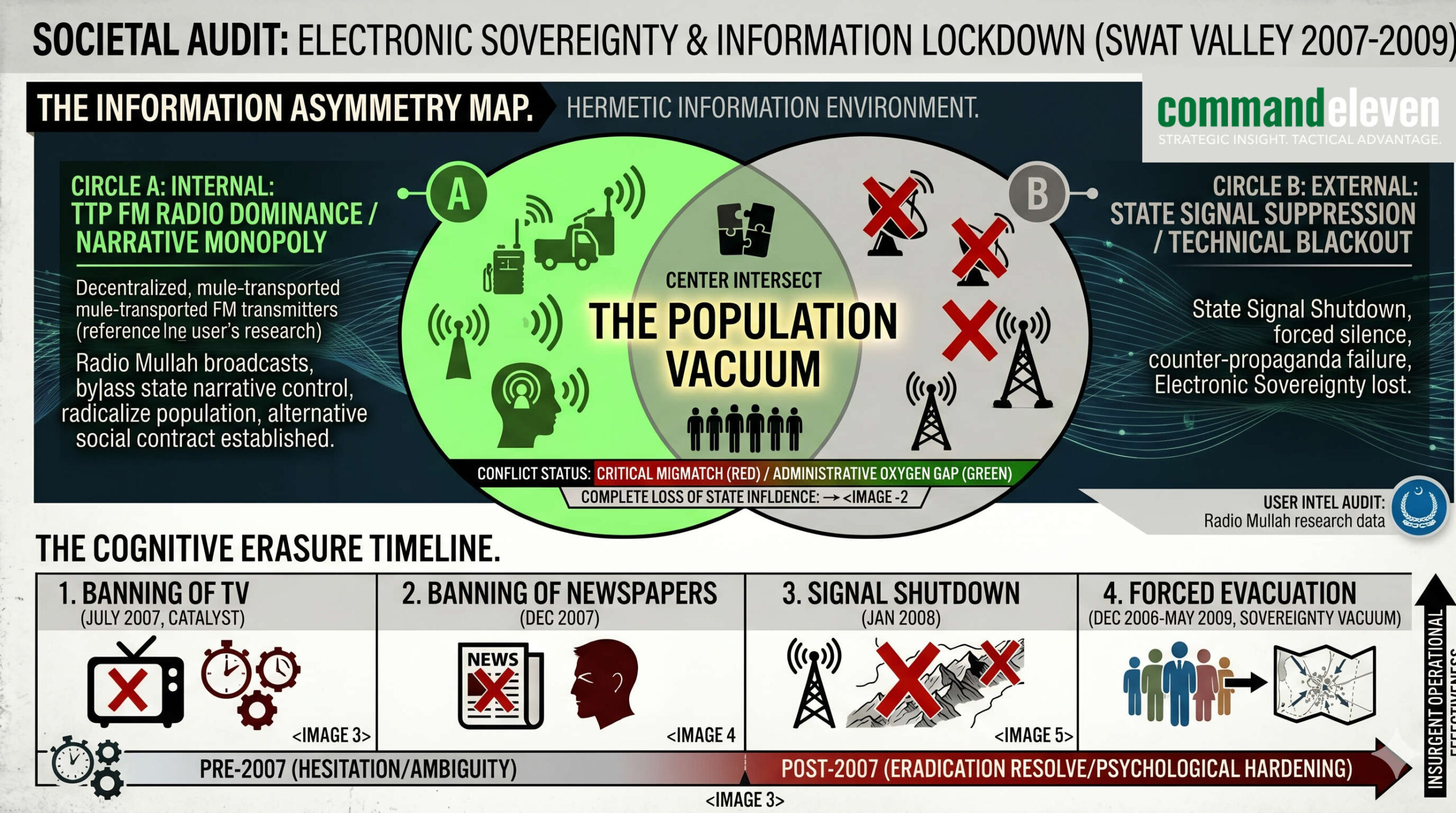
- The Radio Mullah: Mullah Fazlullah utilized illegal FM broadcasts to bypass state narrative control. By turning the household unit into an intelligence asset, the insurgency achieved a level of social engineering that neutralized traditional state influence.
Descent into Doctrinal Barbarism
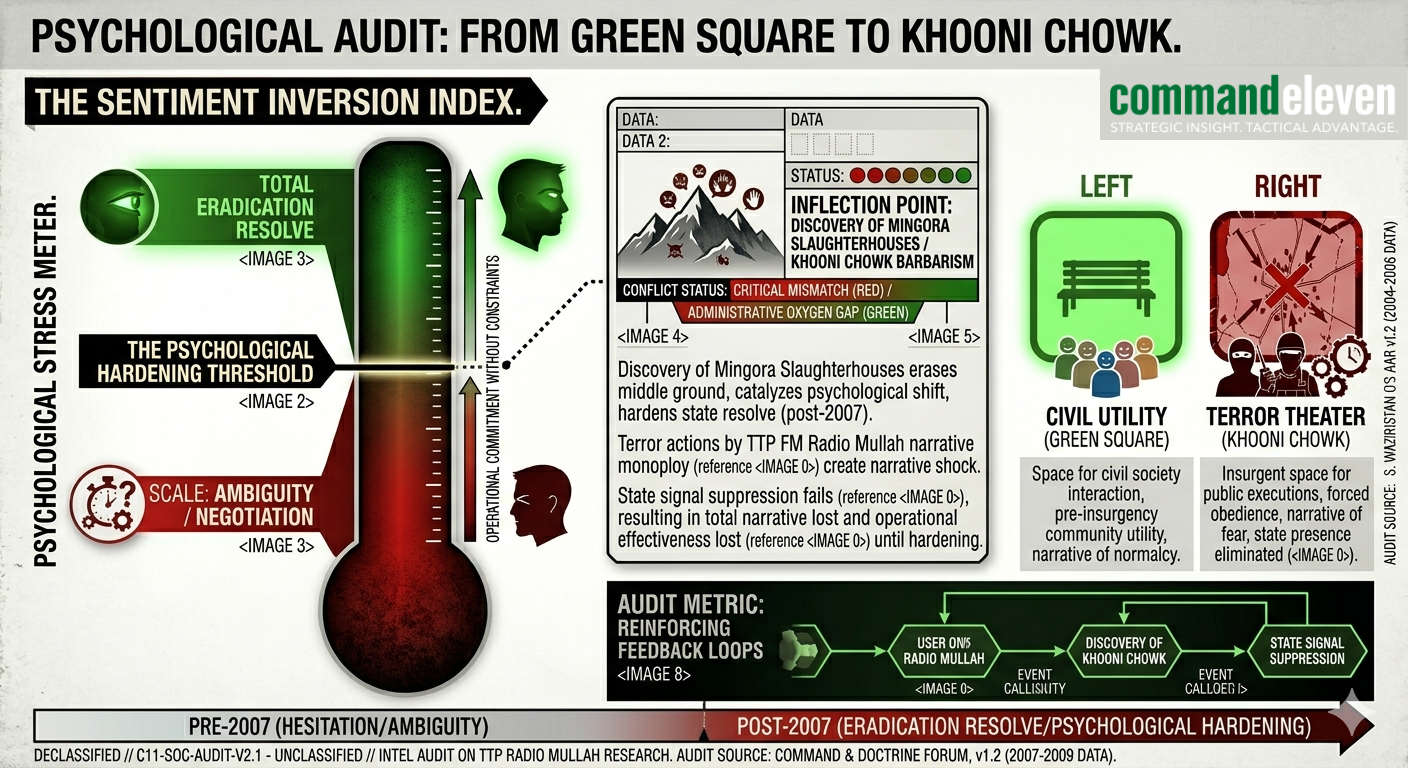
Once territorial consolidation was achieved, the TTP replaced its “justice” narrative with a campaign of ultra-violent subjugation designed for total psychological dominance.
- The Breach of Contract: The “Swift Justice” model was discarded in favor of public executions in Mingora’s “Green Square” (rebranded “Bloody Square”).
- Targeting the Future: The systematic destruction of girls’ schools and the attempted assassination of Malala Yousafzai were calculated attempts to eliminate the state’s long-term Administrative Utility.
The Kinetic Response: Operation Rah-e-Rast (2009)
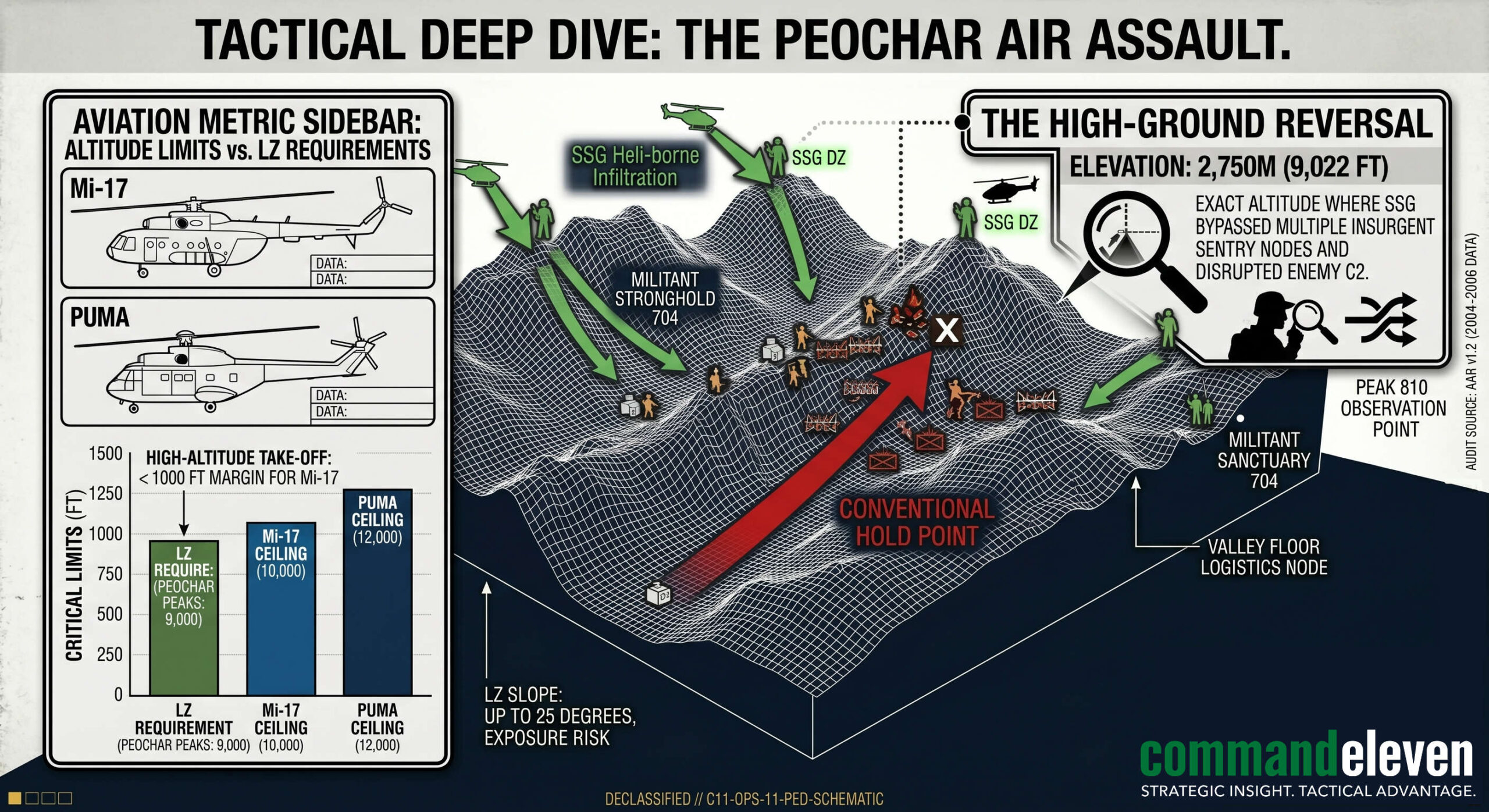
The state’s counter-offensive was defined by tactical innovation to overcome the TTP’s high-ground advantage.
- Vertical Envelopment at Peochar: The Special Service Group (SSG) executed a high-altitude heliborne operation to seize the TTP’s strategic headquarters. This reversed the “Hill Advantage” and forced the insurgents into an uncoordinated retreat.
- Air-Land Synergy: The Pakistan Air Force (PAF) conducted precision strikes on training camps, while mechanized units executed a “Clear and Hold” strategy in urban centers.
Failure Rationale & Strategic Costs
- The Logistical Oxygen Gap: The operation necessitated the displacement of 2.5 million civilians. The state’s failure to manage this secondary crisis initially provided the TTP with a recruitment opportunity within IDP camps.
- Sanitization Failure: While the territory was cleared, the TTP leadership escaped into the Anvil Gap of the border regions, proving that the victory was purely kinetic and lacked the Administrative Persistence to be terminable.
Clinical Conclusion
Swat proved that an insurgency can successfully govern a settled district through a mix of cognitive seduction and brutal subjugation. For the military, the success of Rah-e-Rast was a validation of tactical agility but a reminder of strategic vulnerability. Without the return of state utility and permanent Hard Border Management, kinetic gains remain vulnerable to the next adaptive rebound.