BLUF: The symbolic transformation of Mingora’s “Green Square” into Khooni Chowk (Bloody Square) served as a deliberate Cognitive Maneuver that effectively terminated state and civilian ambiguity regarding the TTP. By institutionalizing ritualized barbarism in an urban center, the insurgency inadvertently forged an Eradication Mandate within the security forces and triggered total societal rejection.
The Symbolic Appropriation of Space
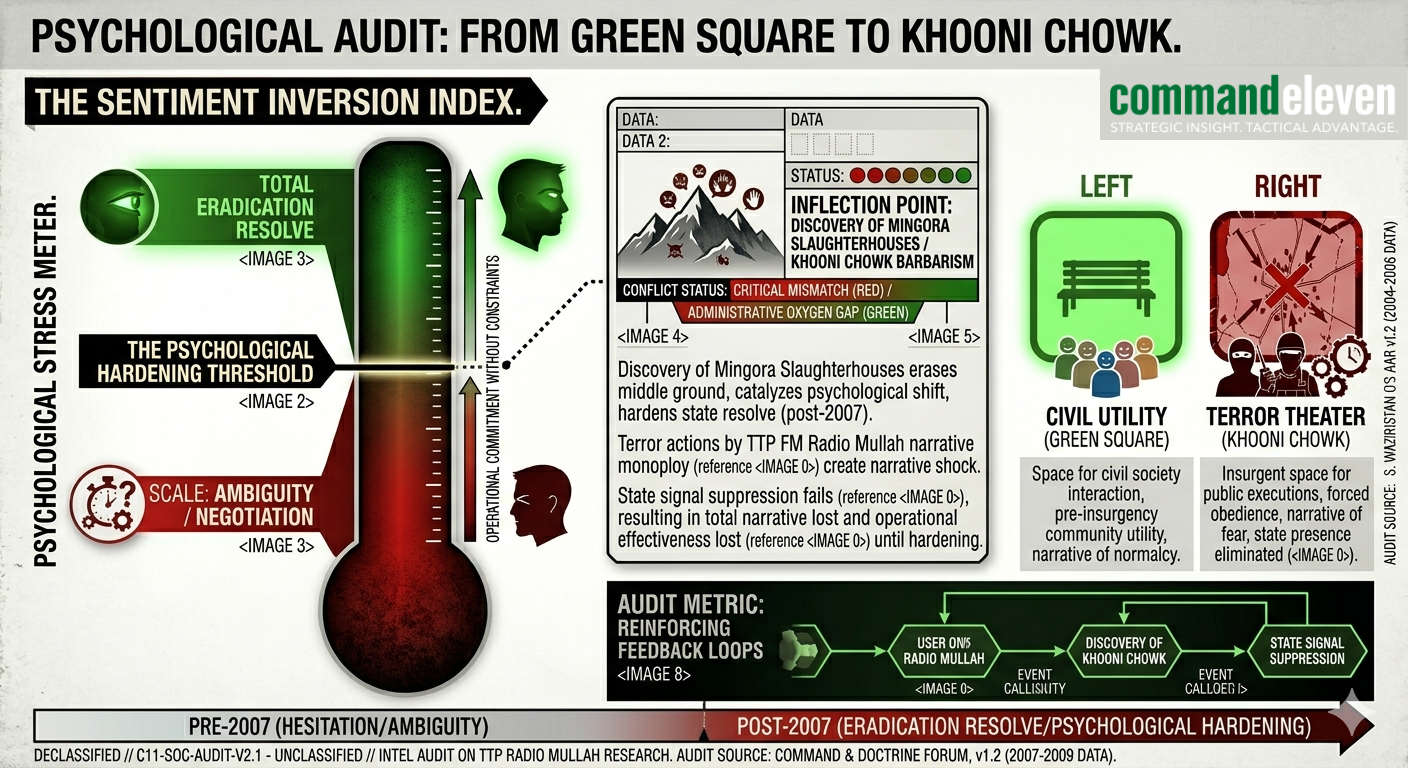
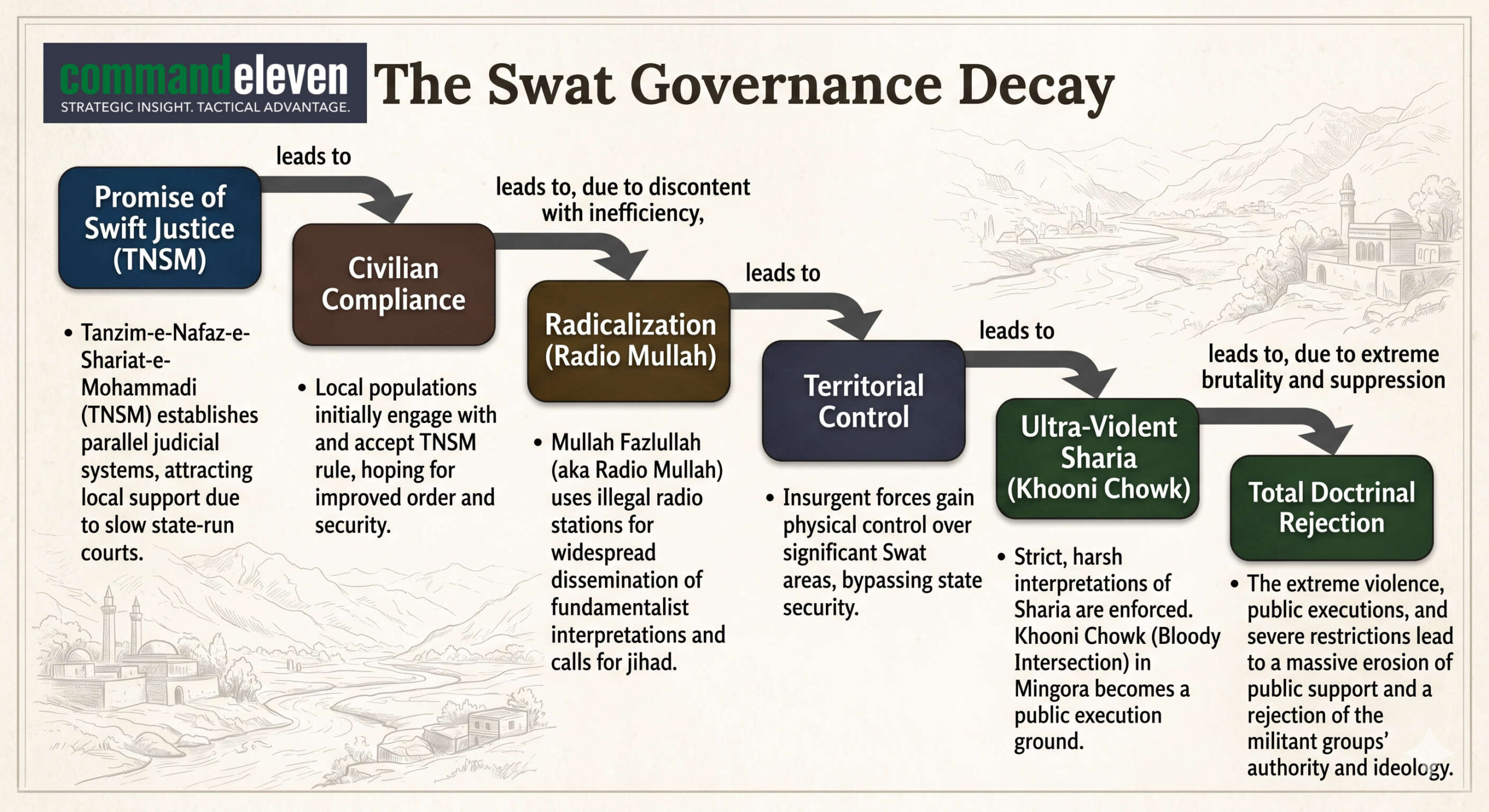
The transition from Green Square to Khooni Chowk was not merely a change in nomenclature; it signaled the total displacement of state sovereignty. By occupying the most visible urban center in the Swat district, the TTP transitioned from a mountain-based insurgency to an urban-dominance model.
- The Intent: To transform a symbol of civil life into a theater of ritualized terror.
- The Execution: Utilizing the square for public floggings, beheadings, and the display of mutilated security personnel. This served to enforce the Parallel Justice Seduction through absolute fear.
The Anatomy of Barbarism
The brutality at Khooni Chowk was clinically designed to achieve Total Psychological Dominance over both the civilian populace and the state’s frontline assets.
- Ritualized Desecration: Bodies of police officers and soldiers were frequently left hanging from electric poles. This was a direct strike at the “Dignity of the Uniform,” intended to demoralize the rank-and-file of the Frontier Corps (FC) and the regular Army.
- The Absence of Sanctuary: By performing these acts in a “settled” district, the TTP sought to prove that the state’s Reactionary Kineticism could no longer provide protection to its citizens or its representatives.
The Death of Ambiguity: Institutional and Societal Hardening
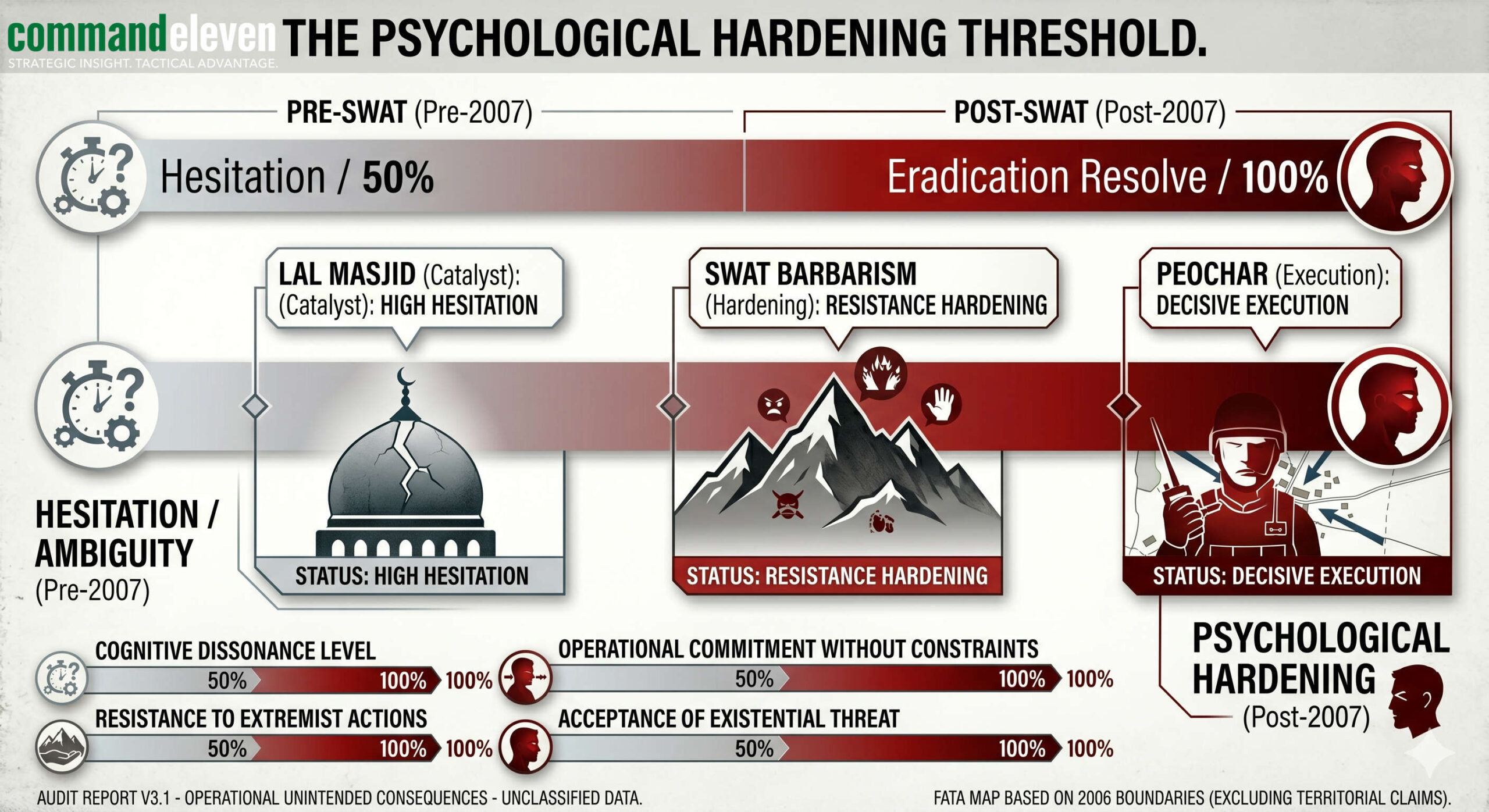
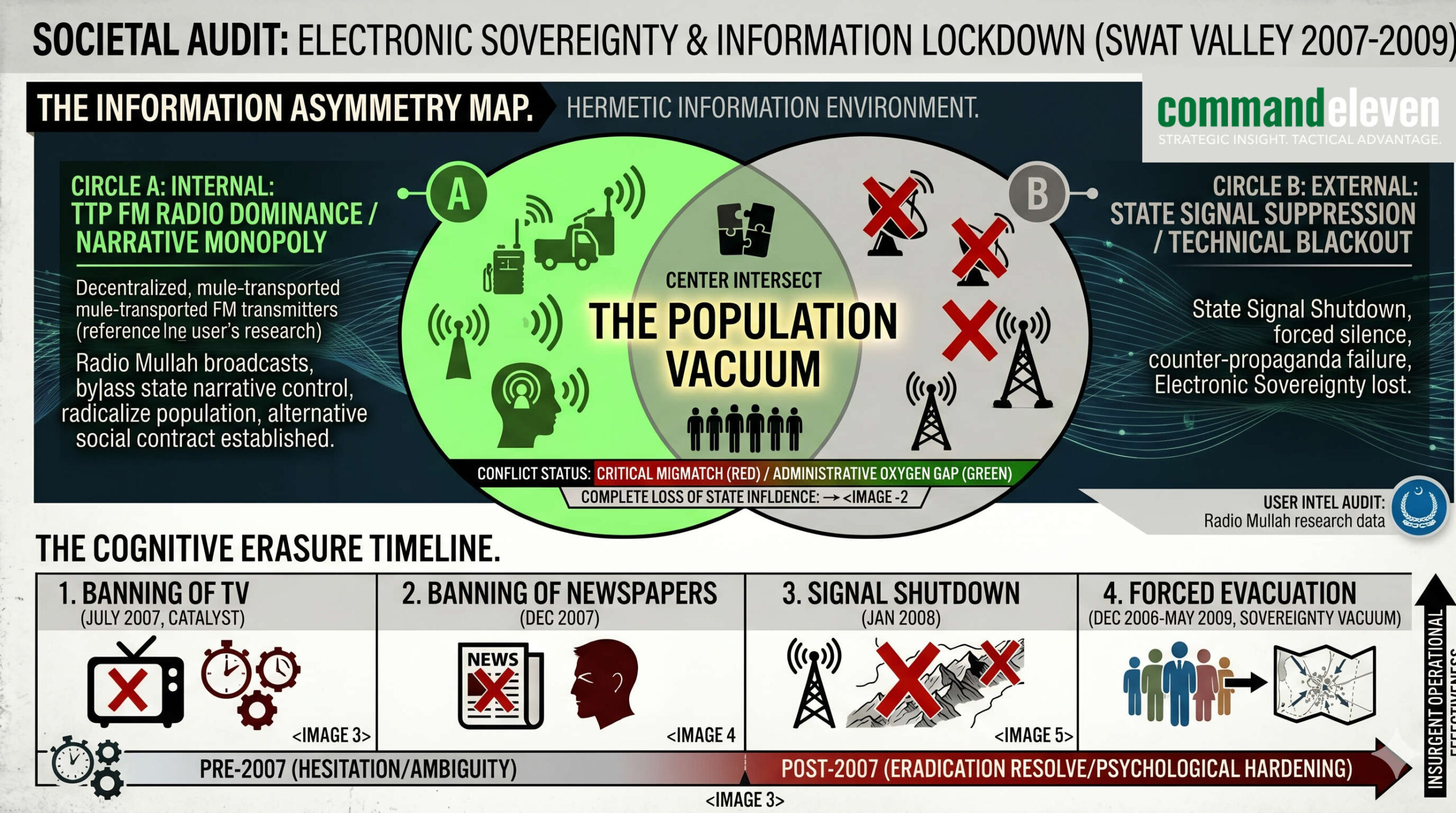
Prior to 2007, segments of the state and society maintained a degree of ambiguity regarding the TTP, often viewing them as “misguided” or open to peace treaties. Khooni Chowk effectively terminated this doctrine.
- Institutional Hardening: The sheer savagery encountered—specifically the discovery of ritualized torture—shattered the soldiers’ hesitation. The realization was absolute: the adversary was a De-territorialized Death Cult.
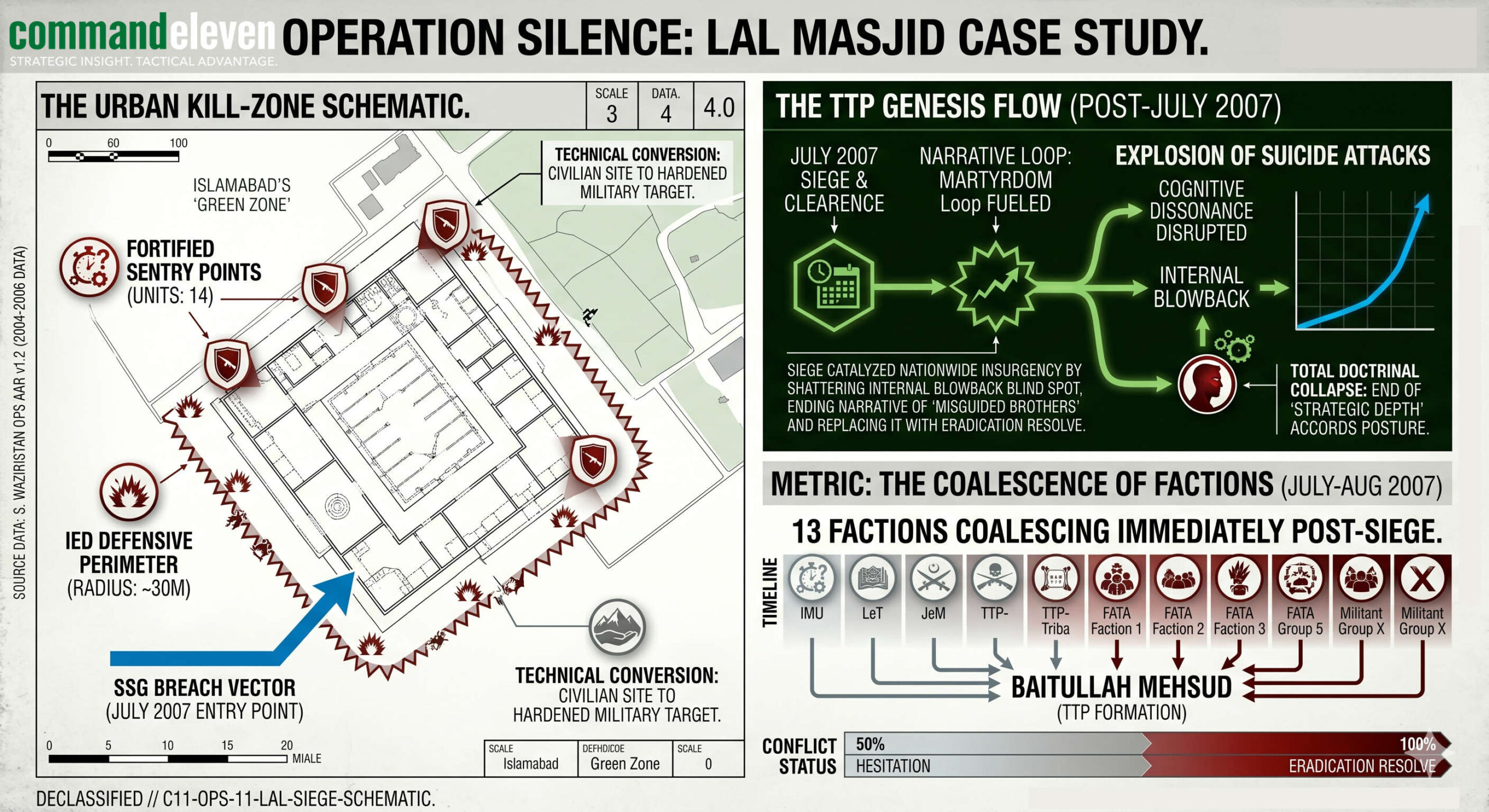
- The Eradication Mandate: This psychological shift was the primary driver behind the success of Operation Black Thunderstorm. The military moved from a “Containment” mindset to an uncompromising kinetic resolve.
- Societal Rejection: For civilians, the transition from the “promise of justice” to the reality of the “Bloody Square” resulted in a total doctrinal rejection of the TTP, facilitating cooperation during the 2009 displacement.
Clinical Conclusion
Khooni Chowk remains the definitive psychological marker of the conflict. It represents the point where the TTP’s Territorial Delusion met the state’s Conventional Pivot. While the TTP used the square to break the spirit of the state, they inadvertently forged a military resolve that was no longer susceptible to the lure of fragile peace accords.