BLUF: Volume II — The Conventional Pivot
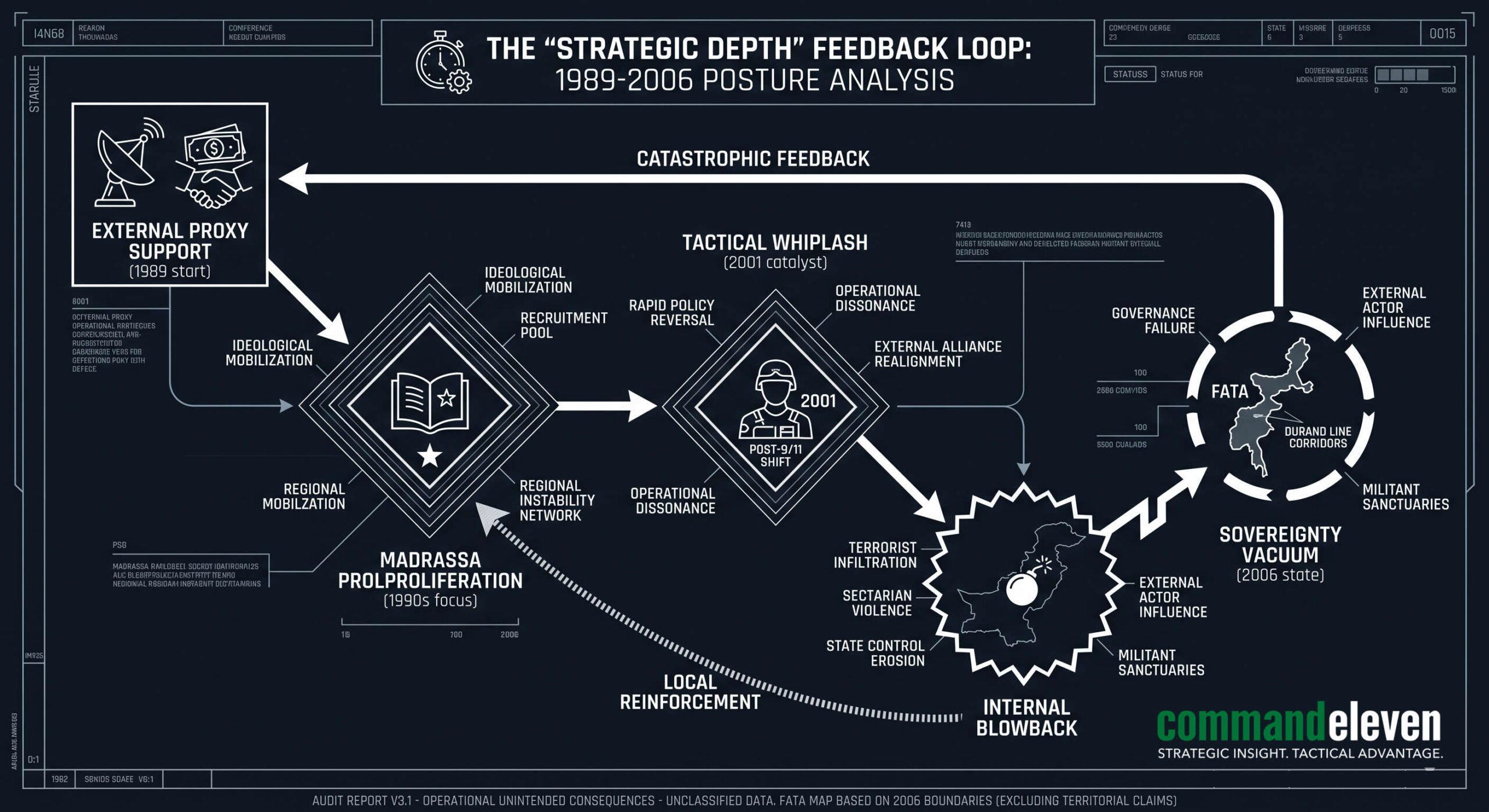
BLUF: Volume II documents the transition of the security apparatus from localized skirmishes to a full-scale national counter-insurgency. This era is defined by the crystallization of the domestic threat through the formation of the Tehreek-e-Taliban Pakistan (TTP) and the state’s subsequent escalation of force, utilizing heavy artillery, aerial assets, and mechanized divisions to reclaim territorial writ.
- Core Assessment: 2007–2010 marks the death of the “Misguided Brothers” narrative. Operation Silence (Lal Masjid) acted as the structural catalyst that unified fragmented cells into the TTP, forcing the state to abandon paramilitary border policing in favor of high-intensity conventional sweeps.
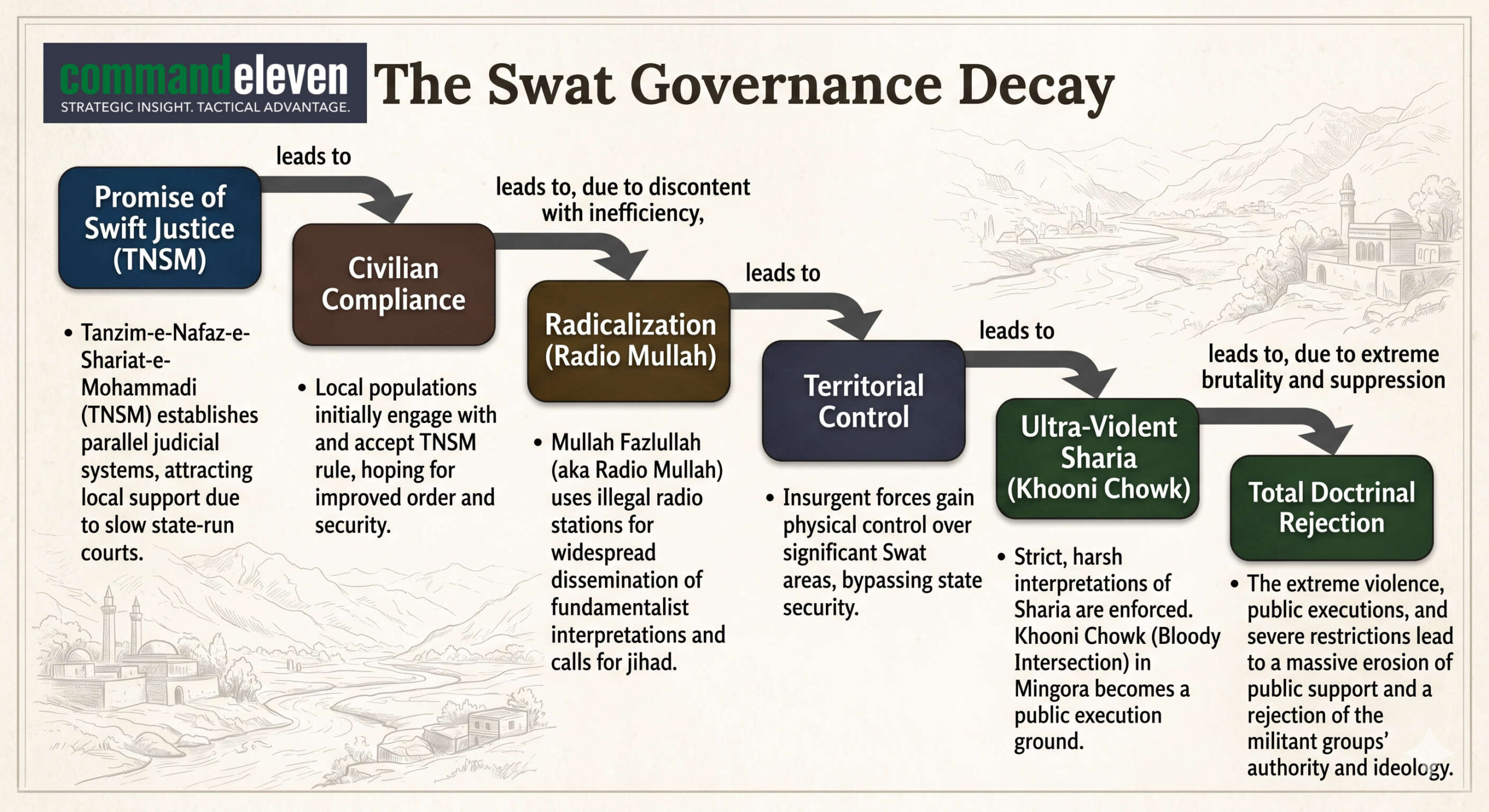
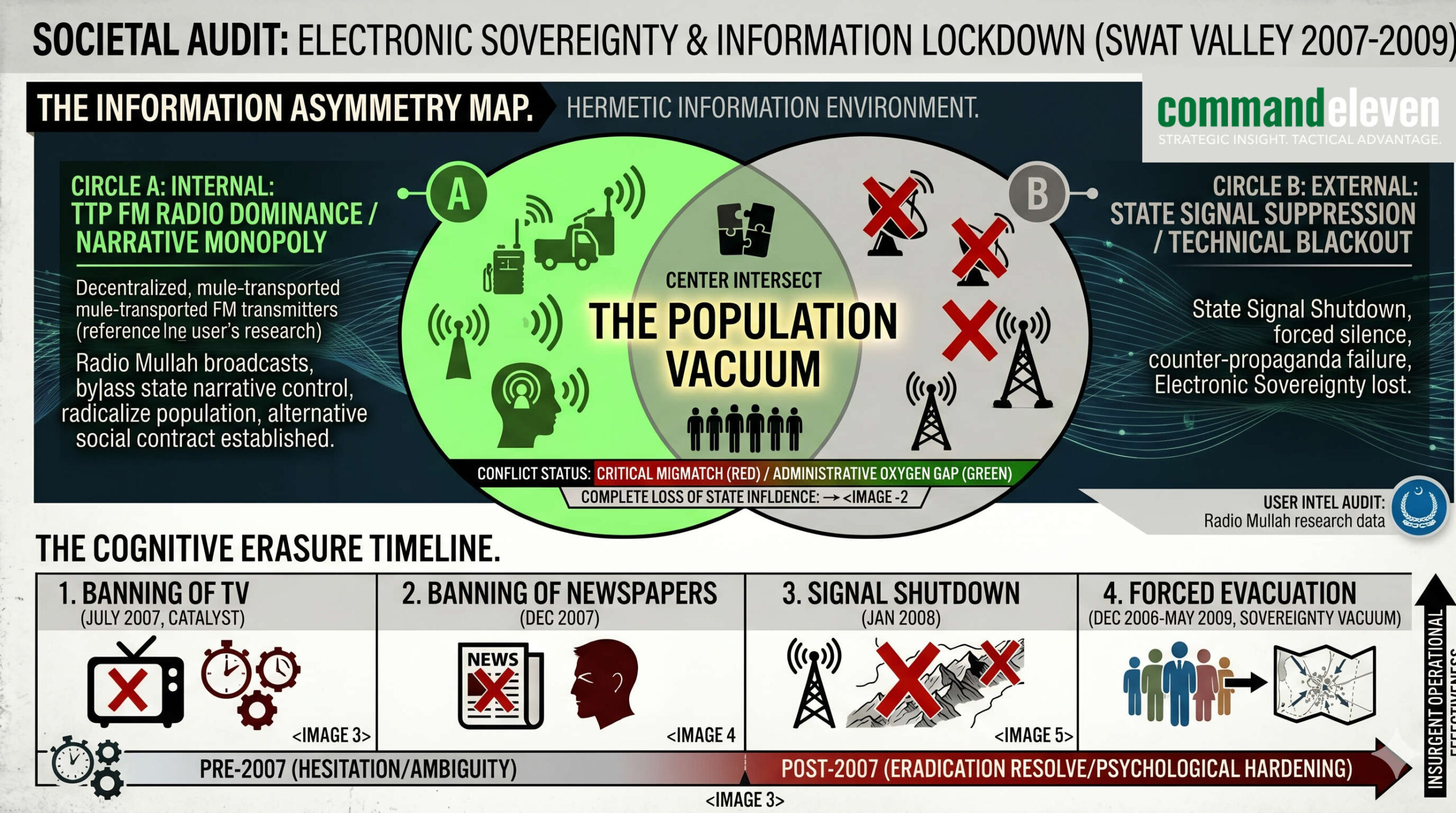
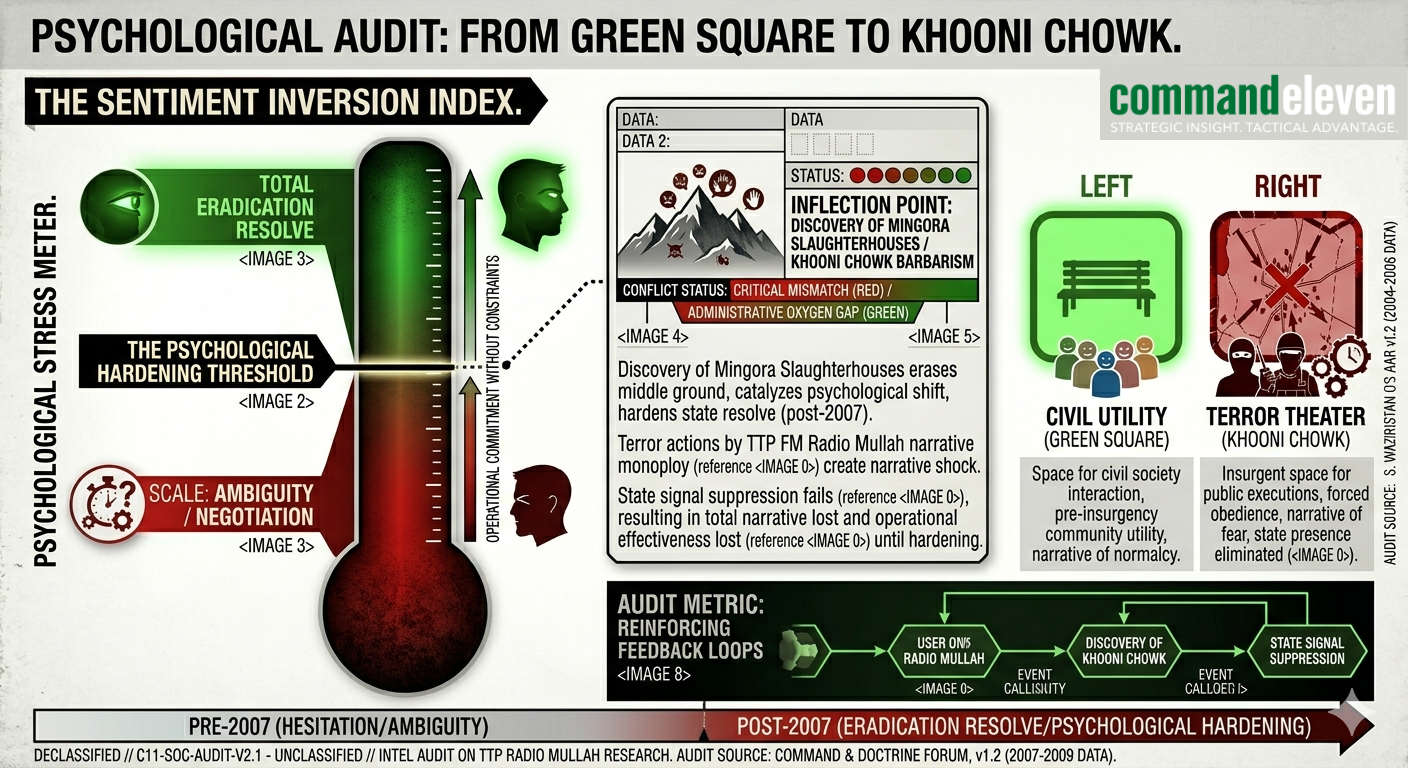
- The Swat Phenomenon: The TNSM’s occupation of Swat demonstrated the Seduction of Parallel Justice, where the state’s judicial failure created a vacuum for radical governance. The subsequent descent into barbarism (Khooni Chowk) provided the moral and psychological mandate for the military’s uncompromising response.
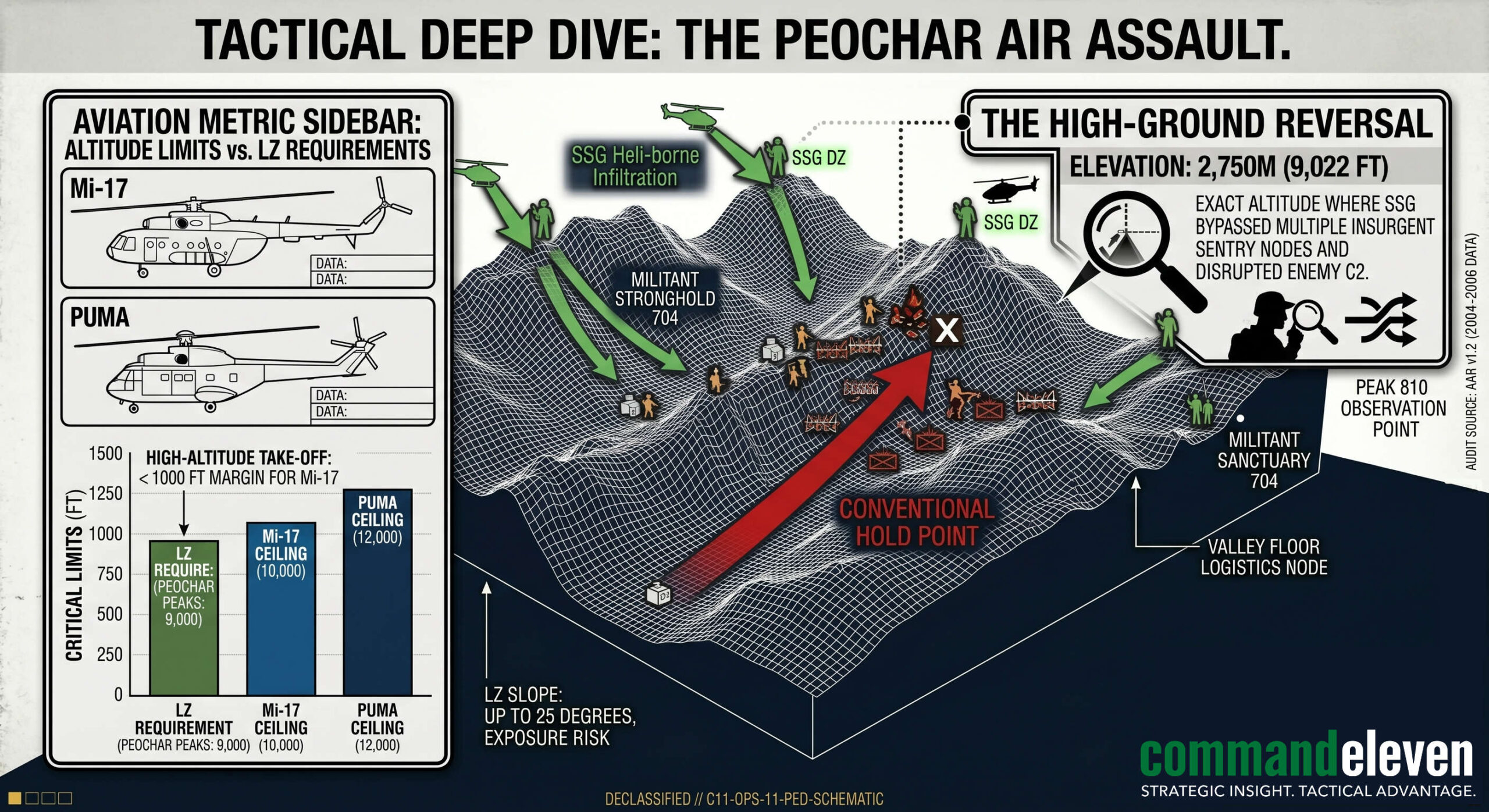
- Tactical Innovation: Operation Black Thunderstorm and the Peochar Air Assault proved the military’s capacity for Vertical Envelopment, successfully reversing the high-ground advantage of asymmetric actors.
- Strategic Outcome: While territorial “clearing” was achieved, the resulting displacement of 2.5 million civilians highlighted the Logistical Oxygen Gap, proving that kinetic victory is unsustainable without long-term administrative persistence.
Catalyst: Operation Silence – The Lal Masjid Siege (July 2007)
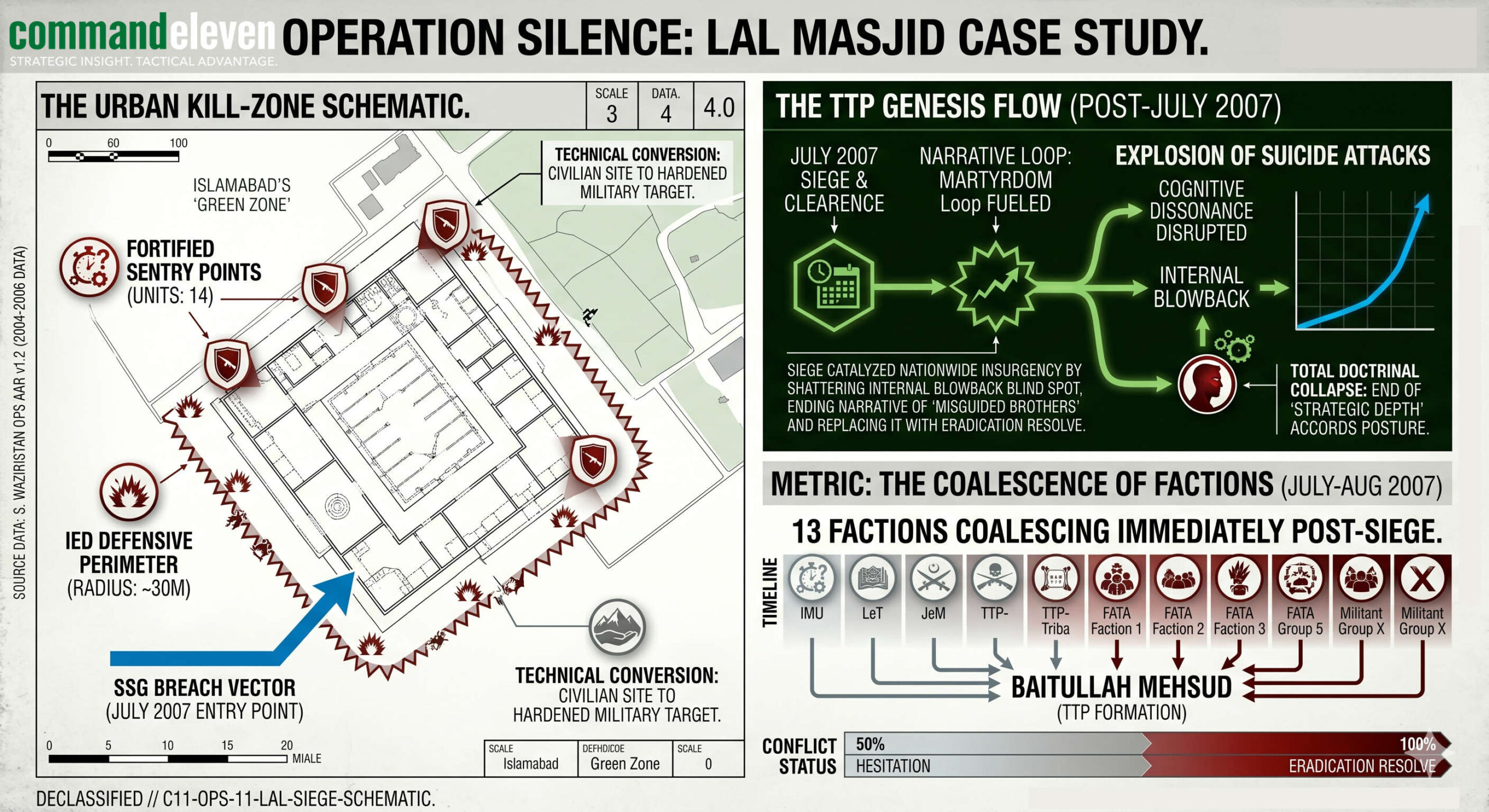
Operation Silence remains the definitive pivot point for the 25-year conflict. The kinetic clearance of the Lal Masjid complex in Islamabad by the Special Service Group (SSG) shattered the fragile truces of the previous era and eliminated the possibility of a negotiated settlement.
- The Unified Front: The operation acted as the primary driver for the unification of disparate tribal militant cells into the TTP under Baitullah Mehsud.
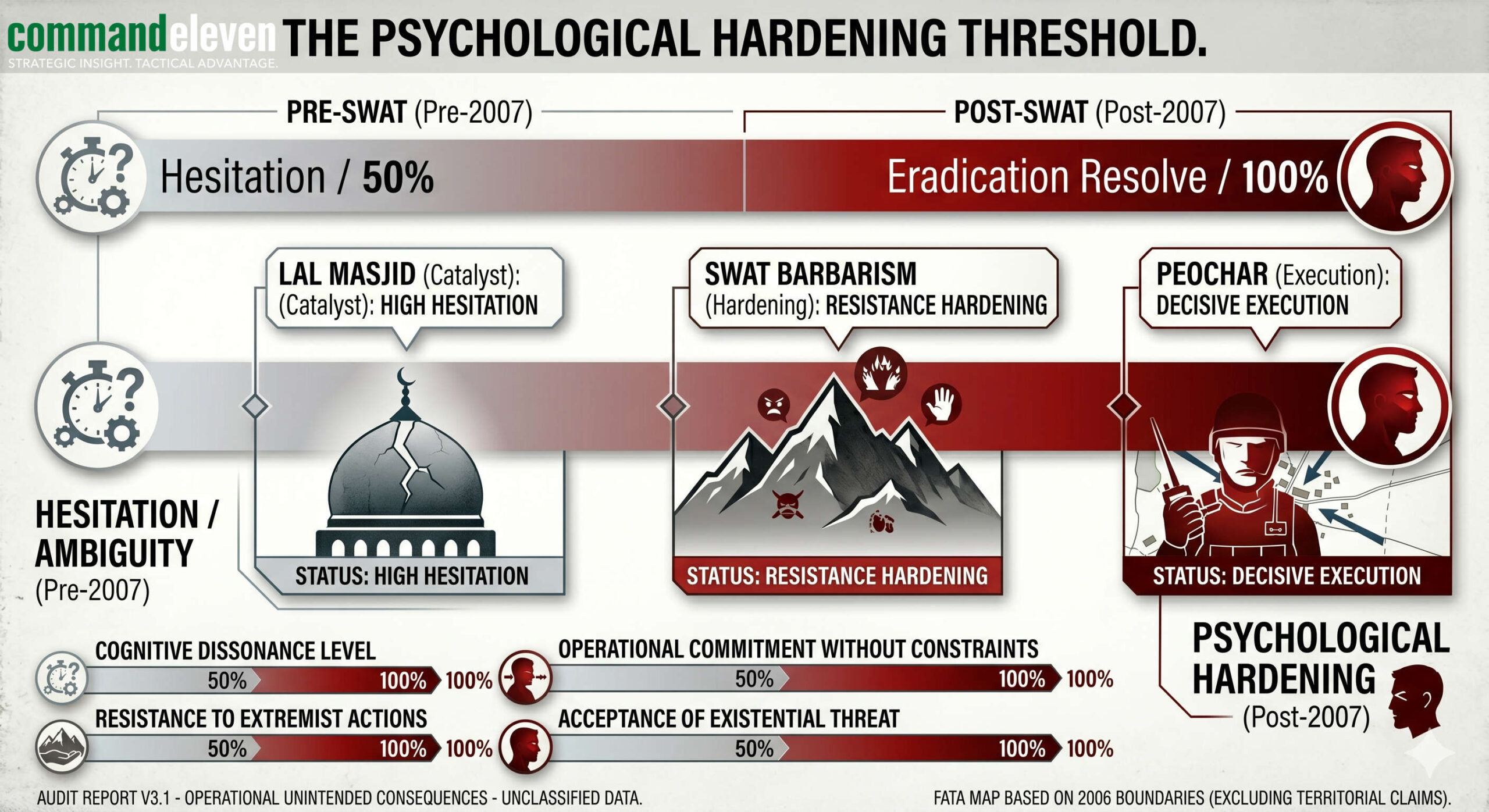
- Doctrinal Rupture: Post-Lal Masjid, the insurgency transformed from a “border resistance” into an existential war aimed at the overthrow of the Pakistani state. This necessitated a shift toward Reactionary Kineticism on a national scale.
The Swat Occupation: Brutality and Psychological Hardening
The 2007–2009 occupation of the Swat Valley by the TNSM/TTP represented the most significant threat to the state’s Sovereignty Vacuum.
- The Barbarism Pattern: The insurgency implemented a model of extreme psychological warfare, including public executions and the systematic destruction of state administrative infrastructure.
- The Territorial Delusion: The state’s initial failure to interdict the Swat occupation highlighted the limitations of the “Clear-Hold-Build” model when the “Hold” phase lacks Administrative Persistence.
Operation Rah-e-Rast: The Peochar Verticality (2009)
The May 2009 operation in Swat marked the military’s realization that conventional mechanized maneuvers were insufficient.
- Special Operations Dominance: The successful SSG-led vertical envelopment in the Peochar mountains broke the TTP’s back in the valley. It proved that Tactical Whiplash could only be countered through superior high-altitude agility and specialized intelligence.
- The Humanitarian Toll: The operation resulted in the internal displacement of over two million civilians, exposing the massive logistical strain of Kinetic Overextension.
Operation Rah-e-Nijat: Fracturing the TTP Birthplace (2009–2010)
Following Swat, the military pivoted to South Waziristan to target the TTP central command.
- fracturing the Nursery: Operation Rah-e-Nijat successfully dislodged the TTP from its birthplace, forcing a mass exodus of militant leadership toward North Waziristan.
- Intelligence Gaps: While the territory was cleared, the inability to seal the border allowed the Anvil Gap to persist, enabling militants to refit in trans-border sanctuaries.
Clinical Conclusion
The 2007–2014 era was the crucible that hardened the modern security apparatus. It proved that territorial clearance is a temporary kinetic event unless backed by a permanent state of Administrative Oxygen. The period established the “National Trampoline” effect—where every tactical success was met by an adaptive insurgent rebound, leading to the eventual requirement for the Hardened Border policy of the following decade.