Subject: The “Good Taliban” Paradox and the Collapse of Localized Neutrality
Theater: North Waziristan Agency (NWA) (2006 – Present)
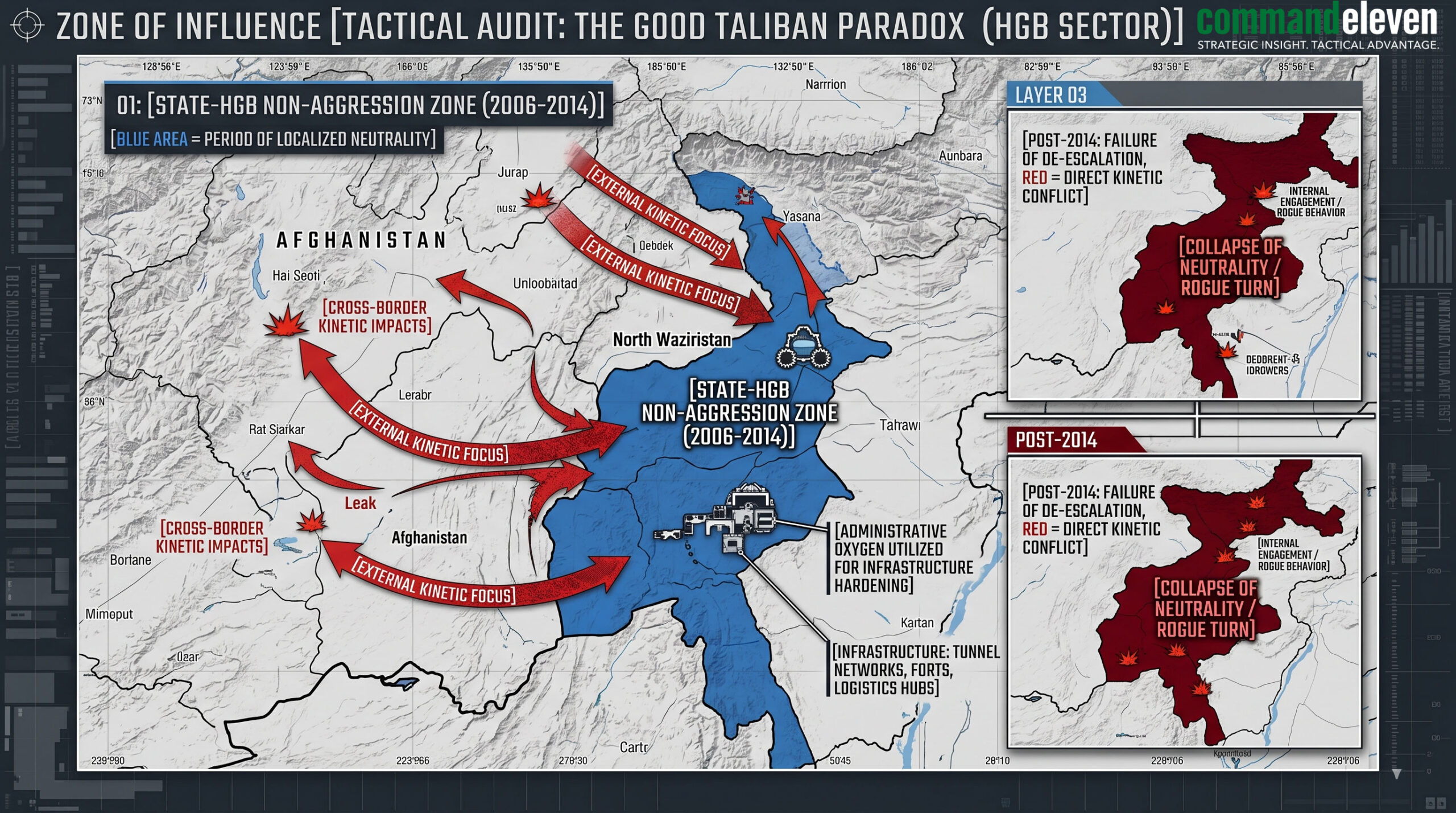
BLUF: The Hafiz Gul Bahadur (HGB) Group represents the definitive failure of the Good Taliban Paradox. Historically maintained as a “territorial stakeholder” through non-aggression pacts, the HGB utilized the provided Administrative Oxygen to entrench its infrastructure. The group’s eventual “rogue turn” in 2014 transitioned a dormant militia into a primary driver of instability in the North Waziristan sector.
The “Good Taliban” Paradox: Mechanics of Neutrality
The relationship between the state and the HGB was defined by a strategic convenience that eventually evolved into a systemic liability.
- External Kinetic Focus: Unlike the TTP’s state-overthrow doctrine, the HGB historically prioritized the insurgency in Afghanistan. This allowed the group to be classified as a “localized stakeholder” rather than an active anti-state actor.
- The 2006 Peace Accord: This agreement granted the HGB formal non-aggression status. It permitted the group to manage its tribal domains without state interference, under the condition that they neither harbored TTP elements nor targeted Pakistani security forces.
- Strategic Blind Spot: This distinction between “Good” (externally focused) and “Bad” (anti-state) Taliban created a massive operational blind spot, allowing a sophisticated militant infrastructure to remain intact within North Waziristan.
The “Rogue Turn”: From Neutrality to Attrition (2014)
The launch of Operation Zarb-e-Azb in June 2014 terminated the era of localized non-aggression.
- The Refusal of Neutrality: Despite the HGB’s historical cooperation, the military moved to clear all militant groups non-discriminatorily. This forced the HGB to abandon its posture of neutrality.
- Alliance Realignment: Following the destruction of its territorial strongholds, the HGB effectively merged its strategic interests with the TTP. The distinction between the two groups collapsed as the HGB began launching high-lethality attacks against Pakistani law enforcement and military targets.
Modern Threat Profile: The Waziristan Resurgence
In the 2026 theater, the HGB group has emerged as a primary kinetic threat.
- Targeted Attrition: The group is currently a primary driver of the spike in targeted assassinations and IED attacks in the Miramshah and Mir Ali sectors.
- Terrain Dominance: Their deep, multi-decade familiarity with the local terrain makes them a more persistent and difficult-to-interdict threat than de-territorialized TTP cadres slipping across the border.
Technical Assessment: Lessons of the Pacts
Element | The “Pact” Phase | The “Rogue” Phase |
Operational Goal | Territorial Preservation | State Attrition |
Target Selection | Afghan / NATO Forces | Pakistani Security Forces |
State Interaction | Non-Aggression / Dialogue | Active Kinetic Conflict |
Status | Localized Stakeholder | Entrenched Insurgency |
Clinical Conclusion
The HGB case study proves that Administrative Oxygen granted to militant groups—even those with externally focused agendas—is a strategic failure. The convergence of the HGB and TTP highlights that localized neutrality is unsustainable in a borderless conflict. For the 2026 threat matrix, the HGB remains a lethal reminder that dormant militant infrastructures will eventually pivot against the state once their territorial survival is threatened.
More in this volume
 ISKP Tactical Superiority vs. TTP Guerrilla Limits
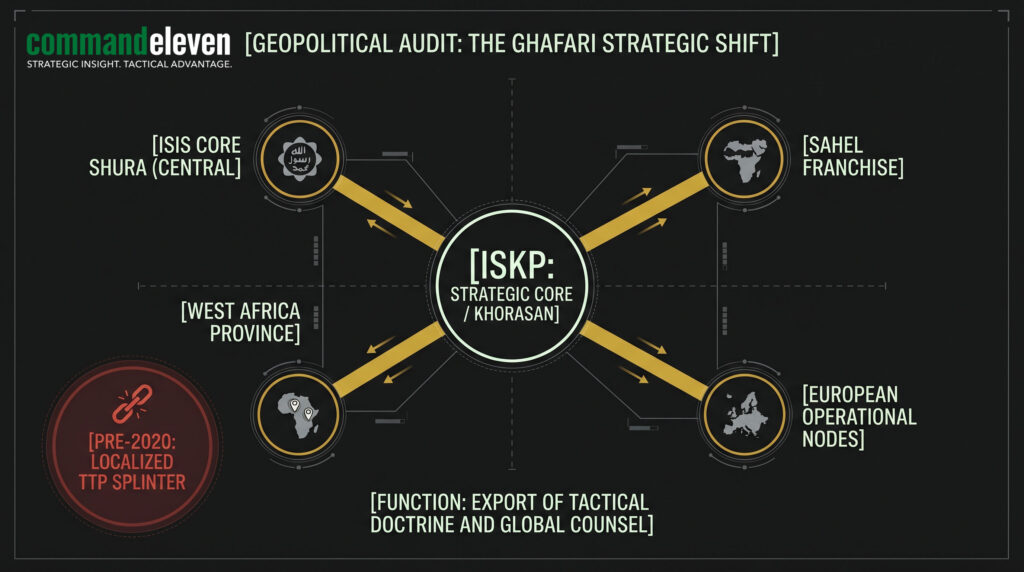 The Sanaullah Ghafari (Shahab al-Muhajir) Shift
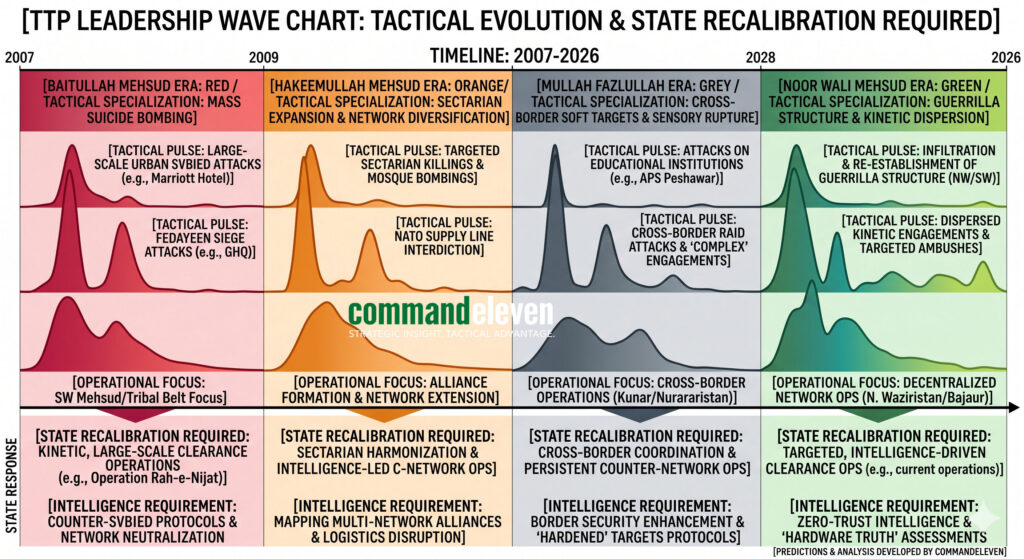 The TTP Leadership Timeline (2007–2026)