BLUF: Volume V — The Mutating Adversary
BLUF: Volume V provides a clinical analysis of the Tehreek-e-Taliban Pakistan (TTP)’s evolution through four distinct leadership eras. To understand the state’s multi-decade response, one must deconstruct how the TTP adapted from a fragmented tribal militia into a unified, state-sponsored proxy, and finally into a technologically empowered guerrilla force.
- Core Assessment: The insurgency is not a static entity but a series of overlapping waves. The transition from Baitullah’s Unification to Noor Wali’s Re-centralization reflects a strategic evolution from crude terrorism to sophisticated, structured guerrilla warfare.
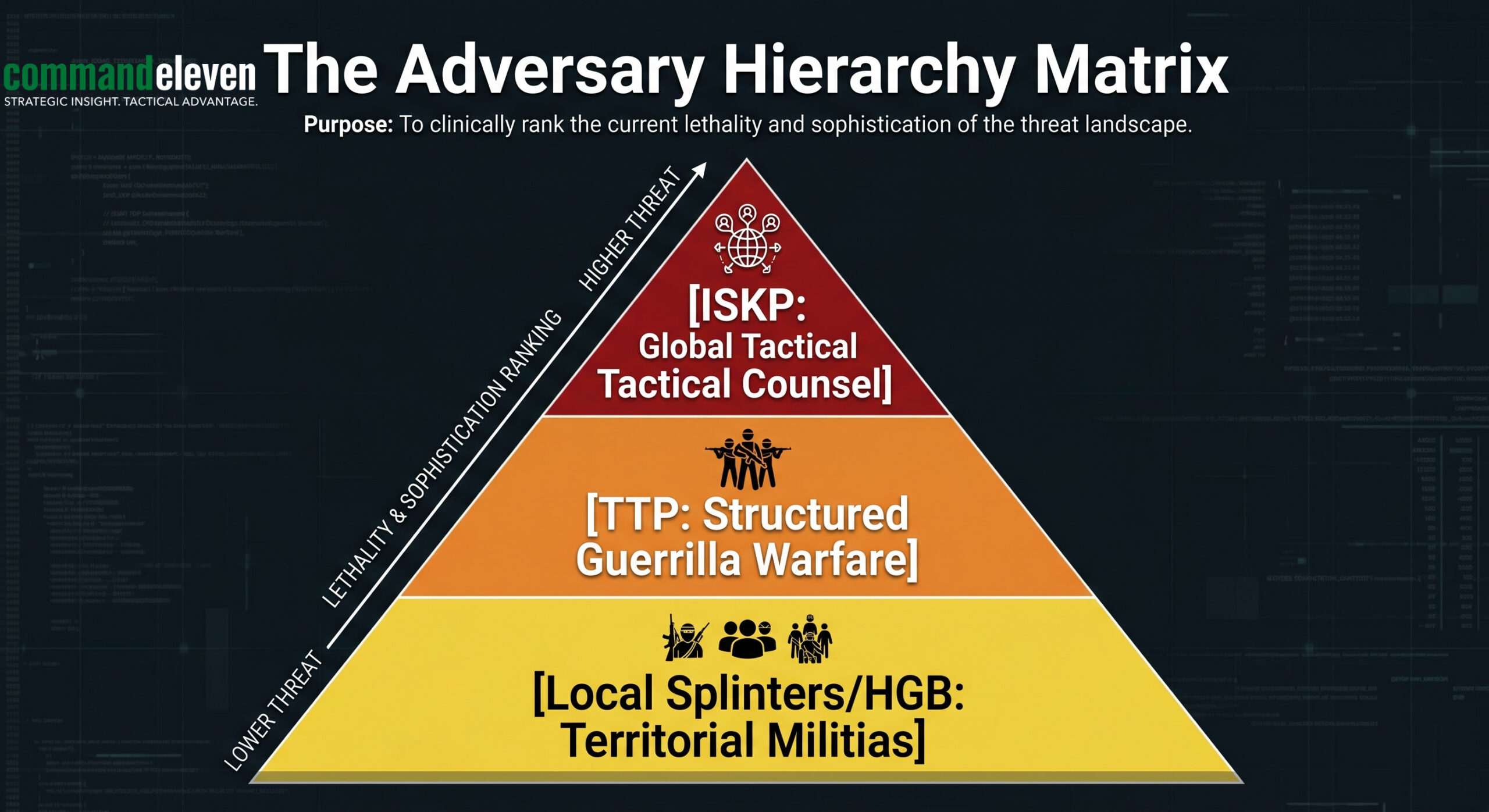
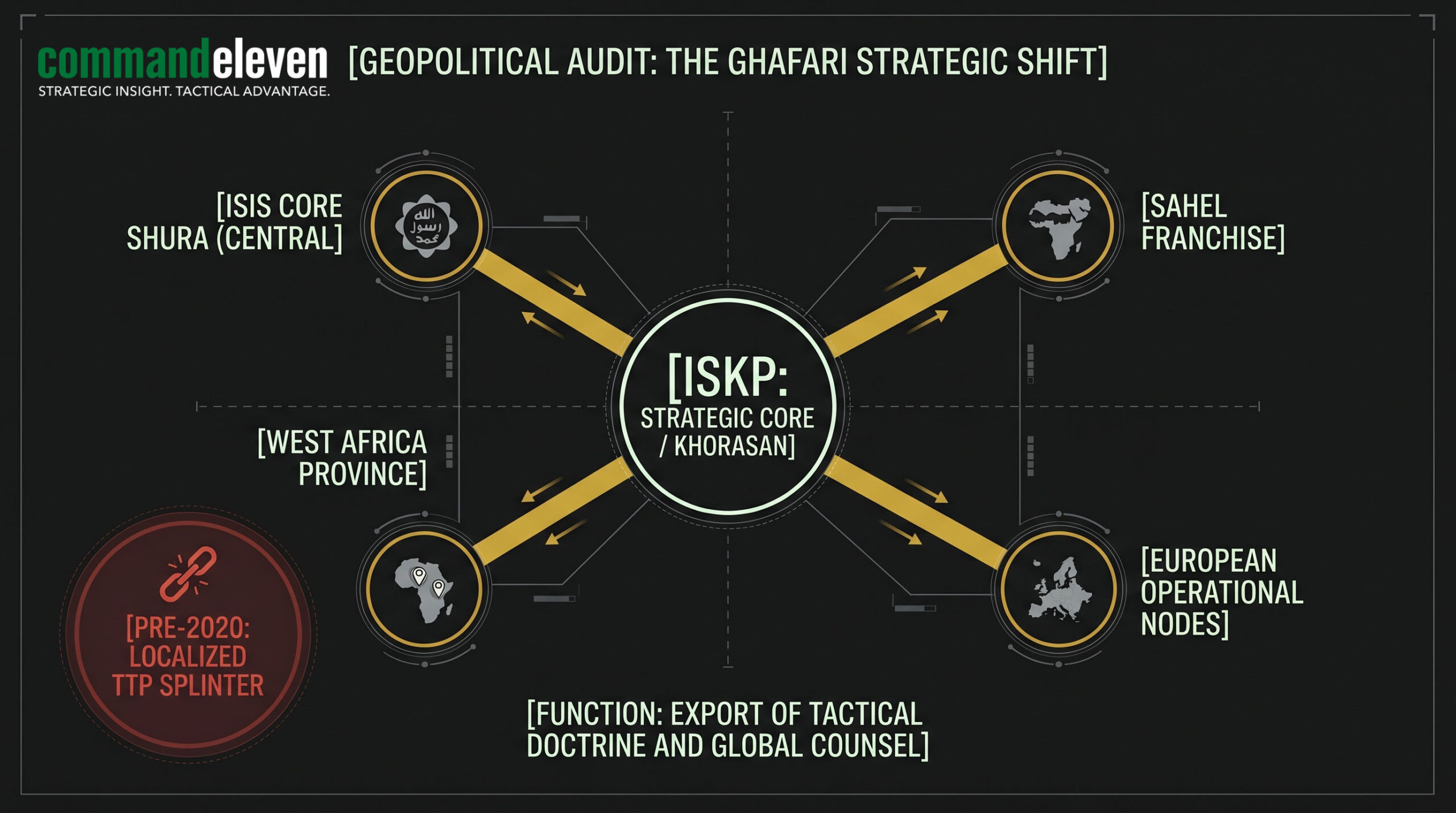
- The ISKP Transformation: ISKP has evolved from a “low-tier splinter” into a Tactical Superiority Under the Ghafari Shift, the group has secured a seat at the ISIS Core Shura, exporting tactical doctrines globally and outmatching the TTP in every operational metric.
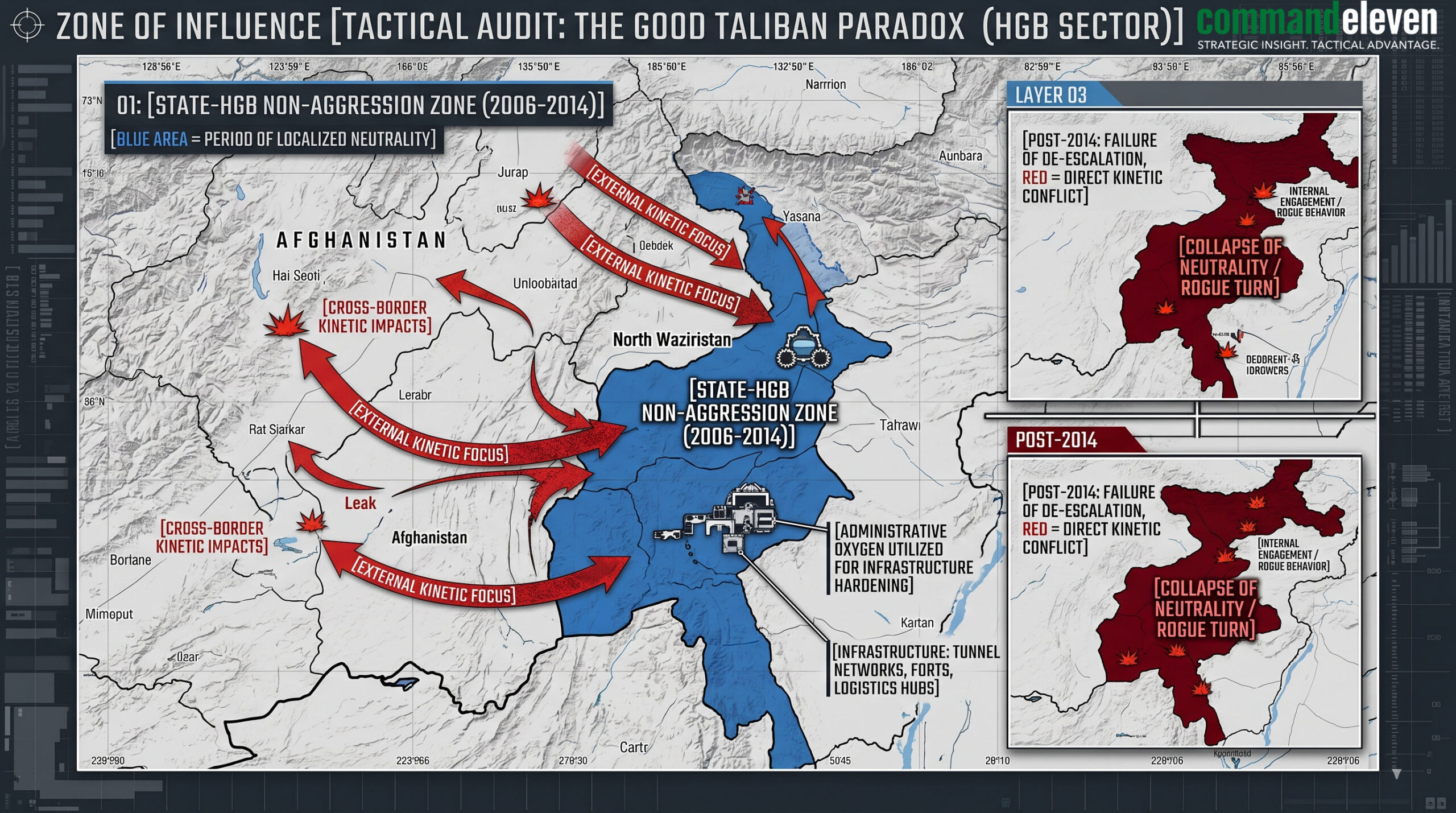
- The Good Taliban Paradox: The historical non-aggression pacts with the Hafiz Gul Bahadur (HGB) Group created a strategic blind spot. Their eventual rogue turn demonstrates the danger of localized “accommodations” in a borderless conflict.
- The Haqqani-Ghafari Nexus: The post-2021 environment allowed for a shadow war in Afghanistan, where ISKP was utilized as a tool for internal consolidation, leading directly to high-lethal events like the Abbey Gate Bombing.
A dedicated chapter analyzing the shifting doctrines, leadership eras, and splinter dynamics of the militant networks. To understand the state’s military responses, one must deeply analyze the constantly mutating structure of the primary adversary. The Tehrik-i-Taliban Pakistan (TTP) and its associated factions have never been monolithic; they adapt, fracture, and rebrand based on who holds the central command.
The Leadership Eras: Tactical Recalibration
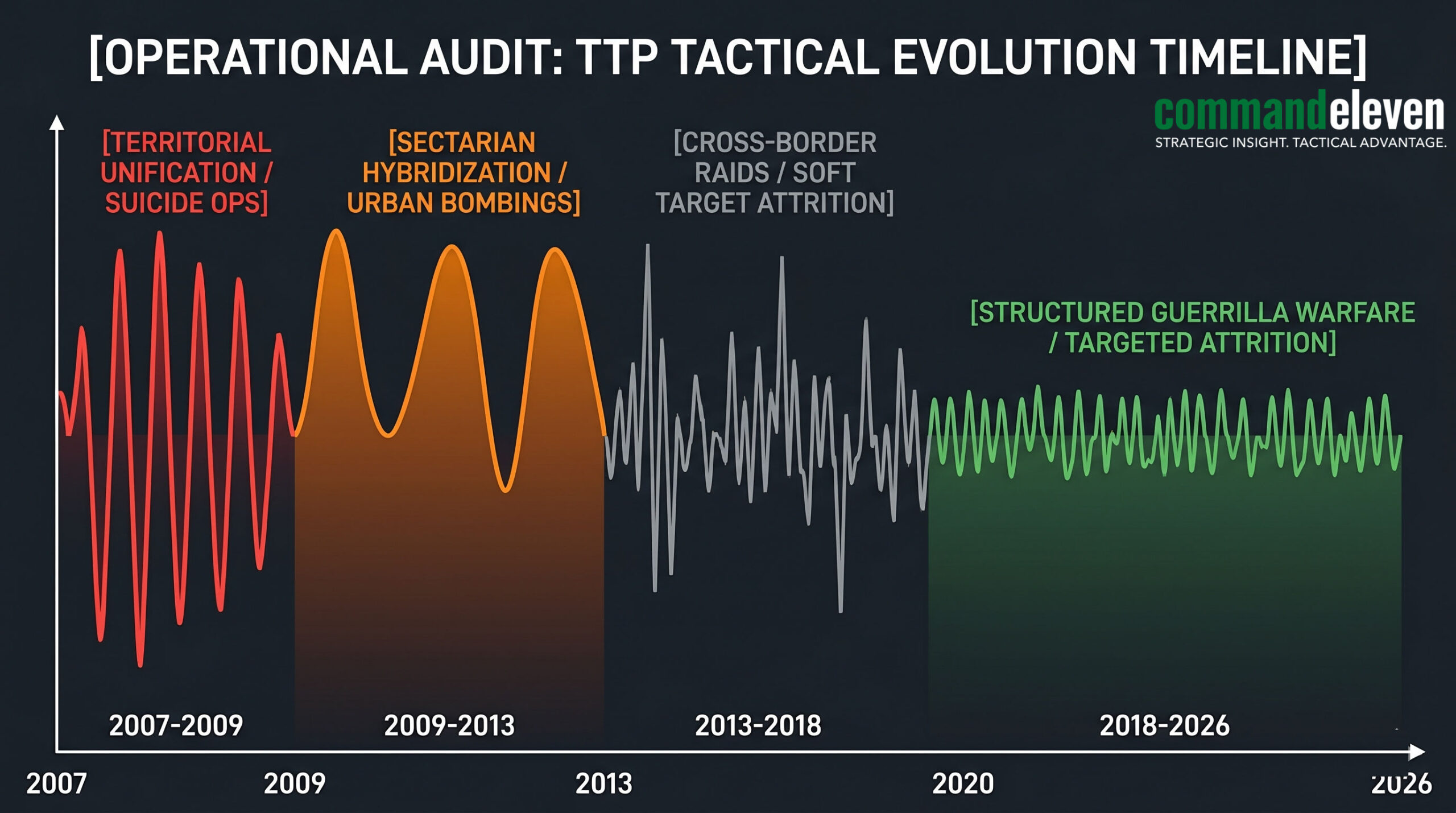
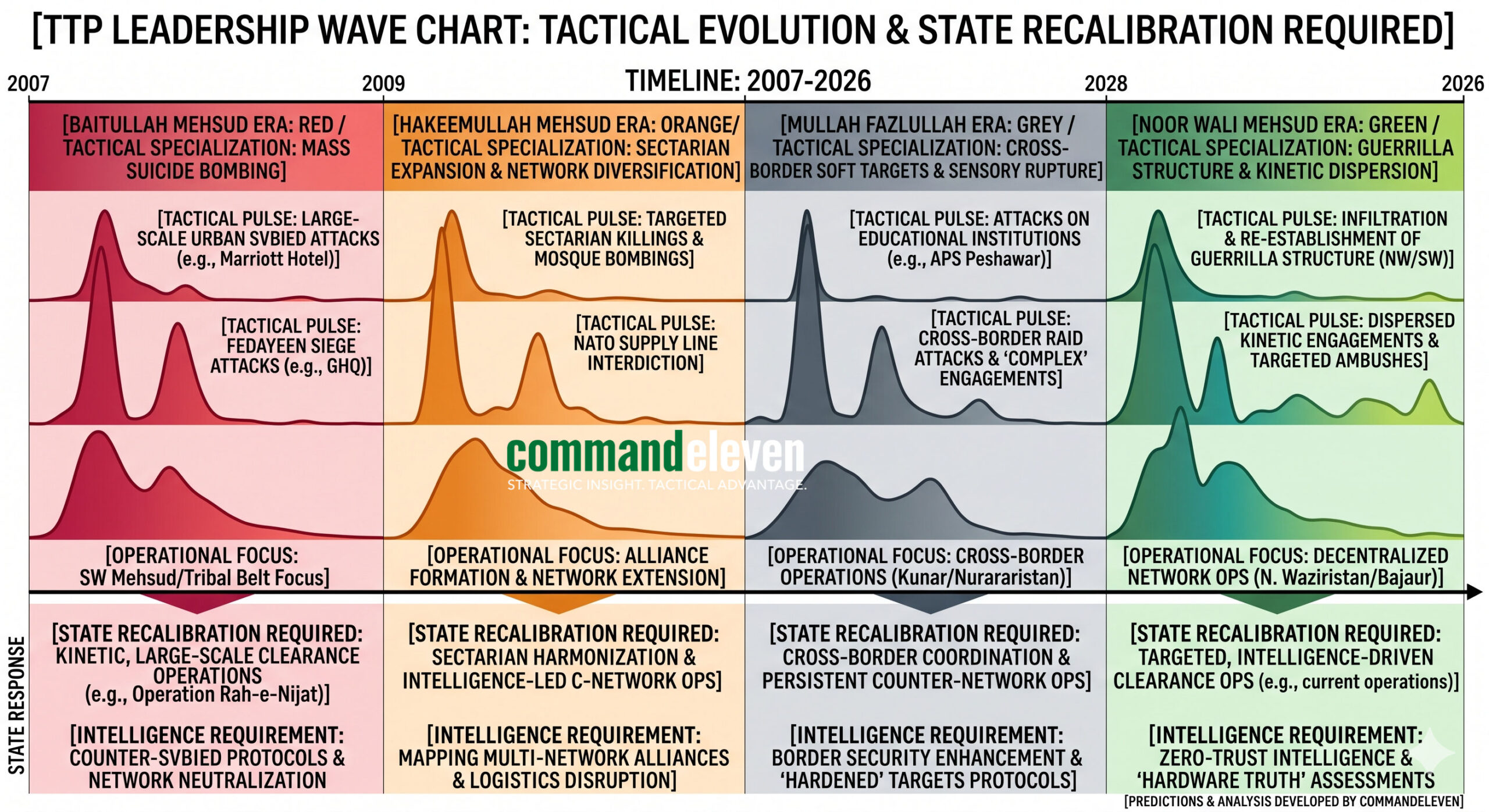
Baitullah Mehsud (2007–2009) – The Unification
Baitullah recognized that isolated tribal militias were vulnerable to localized state coercion.
- The Umbrella Doctrine: He synthesized disparate factions into a unified umbrella organization, providing the initial Administrative Oxygen for the insurgency.
- Mass-Casualty Introduction: His era defined the use of high-impact suicide bombings as a tool to challenge the state’s territorial writ.
Hakeemullah Mehsud (2009–2013) – The Sectarian Bleed
Following Baitullah’s death, Hakeemullah initiated a phase of hyper-violent expansion.
- Urban Expansion: He deepened ties with LeJ and Al-Qaeda, taking the war into major urban centers.
- The Erasure of Lines: Under his command, the TTP effectively erased the operational lines between sectarian terror and anti-state insurgency, leading to a relentless wave of urban bombings.
Mullah Fazlullah (2013–2018) – The Swat Era & Afghan Sanctuary
Fazlullah’s ascension marked a profound internal realignment, moving command away from the Mehsud tribe.
- The Sanctuary Pivot: Driven into Afghanistan by Operation Zarb-e-Azb, Fazlullah institutionalized the reliance on Sanctuary Reservoirs.
- Indiscriminate Barbarism: His era is synonymous with the most brutal phase of the conflict, including the APS Peshawar Massacre.
Noor Wali Mehsud (2018–Present) – The Guerrilla Refinement
Noor Wali restored the Mehsud central command and shifted the group toward a more sustainable model.
- Targeted Attrition: As detailed in the Noor Wali Manifesto, the focus shifted from civilians to security forces.
- The Re-unification: He successfully re-absorbed various splinter groups (like Jamaat-ul-Ahrar) that had drifted away during the Fazlullah era.
Splinters and Diametric Factions
The militant landscape is further complicated by factions that either rejected the TTP’s central authority or operated on diametrically opposed strategic doctrines, forcing the military to combat multiple insurgent models simultaneously.
- The Hafiz Gul Bahadur Group (HGB) & The “Good Taliban” Paradox: Understanding the HGB requires analyzing the “Good Taliban” paradox. Unlike the TTP, HGB historically maintained non-aggression pacts with the state, focusing its kinetic efforts externally toward Afghanistan. The state’s previous tolerance of HGB created a massive blind spot. Tracing their eventual rogue turn reveals how their localized, territorial strategy fundamentally differs from the TTP’s state-overthrow doctrine, yet still poses a lethal, entrenched threat to regional stability in Waziristan today.
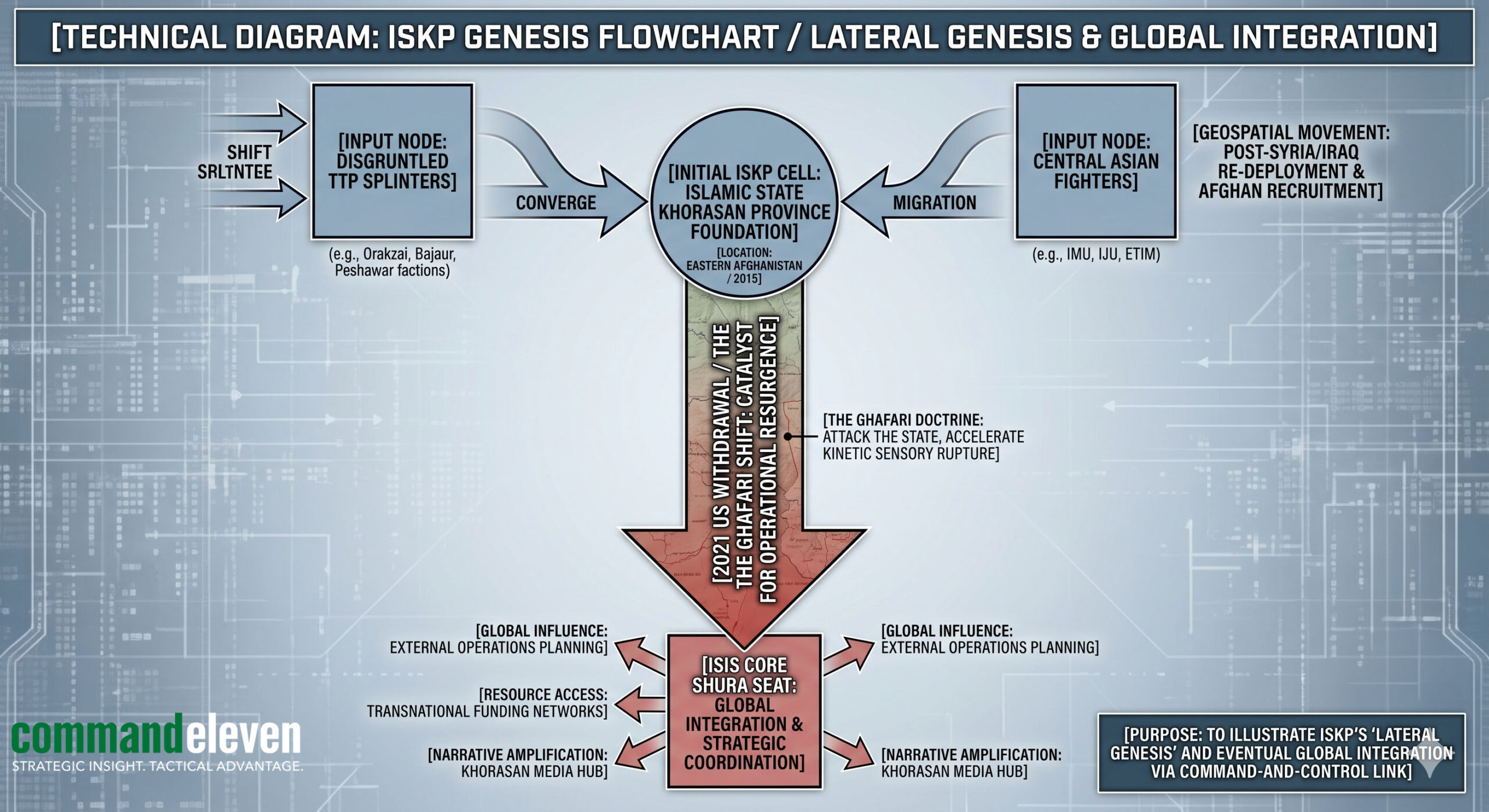
- Jamaat-ul-Ahrar (JuA) & ISKP Defectors: Disagreements over target selection, ideological purity, and power distribution during the chaotic Fazlullah era led to the rise of ultra-radical splinters that broke away. Organizations like JuA often acted as a transitional bridge for militants who eventually defected to the Islamic State Khorasan Province (ISKP). These defectors rejected the TTP’s updated “nationalist” boundaries, opting instead for a transnational, hyper-sectarian caliphate vision.
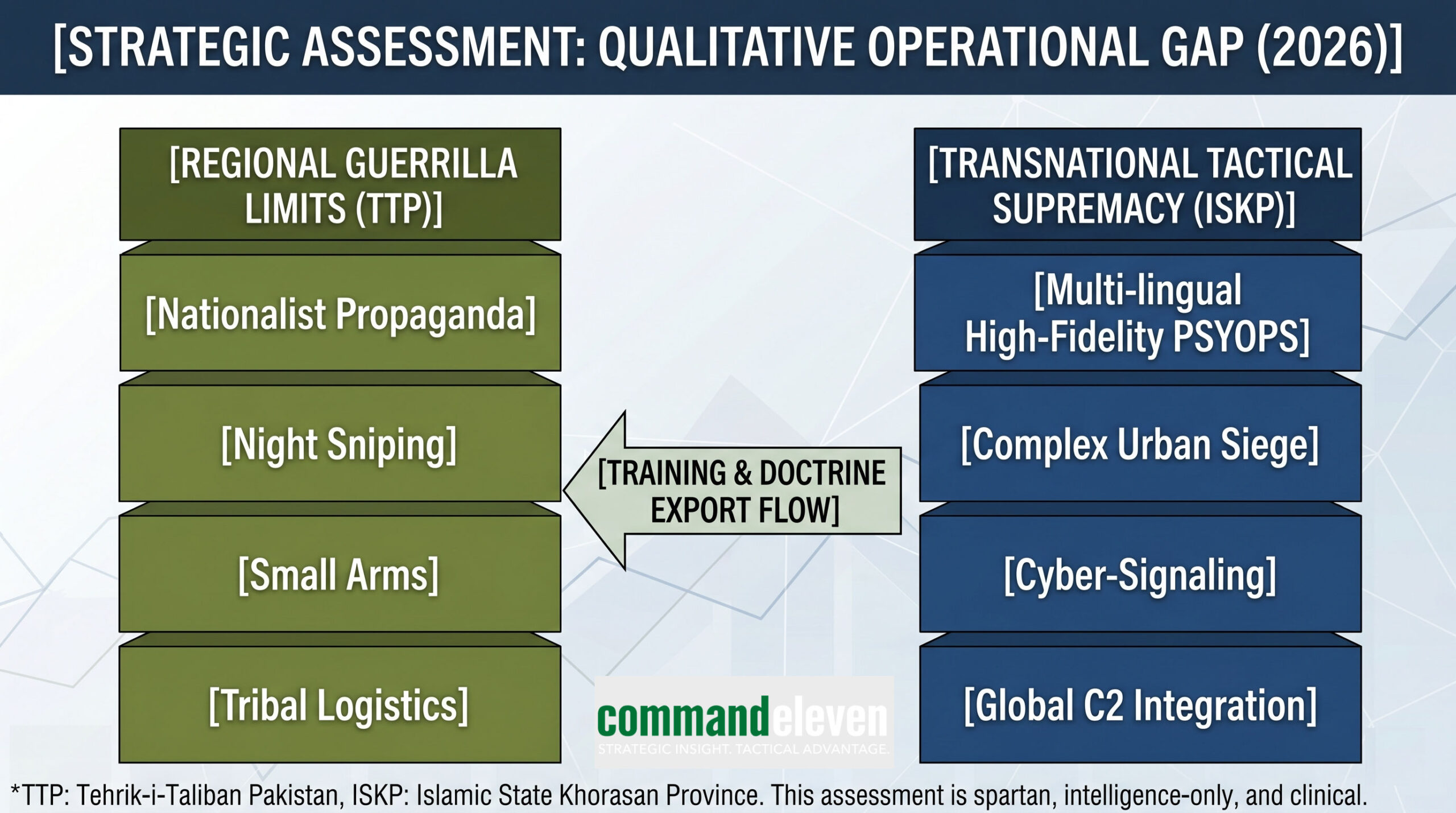
Comparative Assessment: ISKP Tactical Supremacy vs. TTP Guerrilla Limits
Feature | TTP (Guerrilla Framework) | ISKP (Tactical Supremacy) |
Primary Objective | Territorial/Political concessions in Pakistan. | Global Caliphate and transnational attrition. |
Target Selection | Strictly military, intelligence, and LEA targets. | High-lethality, non-discriminatory, international targets. |
Tactical Method | Hit-and-run ambushes, IEDs, and sniper fire. | Complex suicide missions, urban sieges, cyber-signaling. |
Command Logic | Centralized Bureaucracy (Al-Qaeda model). | Integrated into the ISIS Global Core Shura. |
Optics/Propaganda | Localized, regional languages (Nationalism). | High-fidelity, multi-lingual, global recruitment standard. |
The Qualitative Gap
Today, the operational reality is stark: ISKP is tactically and strategically vastly superior to the TTP in every metric.
- Global Integration: ISKP has officially secured an influential seat within the ISIS Core Shura, providing tactical and strategic counsel to various ISIS franchises globally.
- The Ghafari Nexus: Under Sanaullah Ghafari (Shahab al-Muhajir), ISKP was utilized as a weapon against rival Taliban factions, signaling its arrival with high-complexity operations like the Abbey Gate bombing.
- Training Export: While the TTP remains a lethal regional threat, it is confined by its own manifesto. ISKP represents the evolution of asymmetric warfare into a globally integrated, tactically superior doctrine.
Clinical Conclusion
Volume V proves that the adversary is a mutating organism. The TTP is confined by its localized objectives, while ISKP functions as a globally integrated strategic engine. Regaining the qualitative edge in 2026 requires the military to move beyond fighting “groups” and instead focus on neutralizing the Administrative Oxygen and Sanctuary Reservoirs that allow these leadership cycles and transnational shifts to persist.