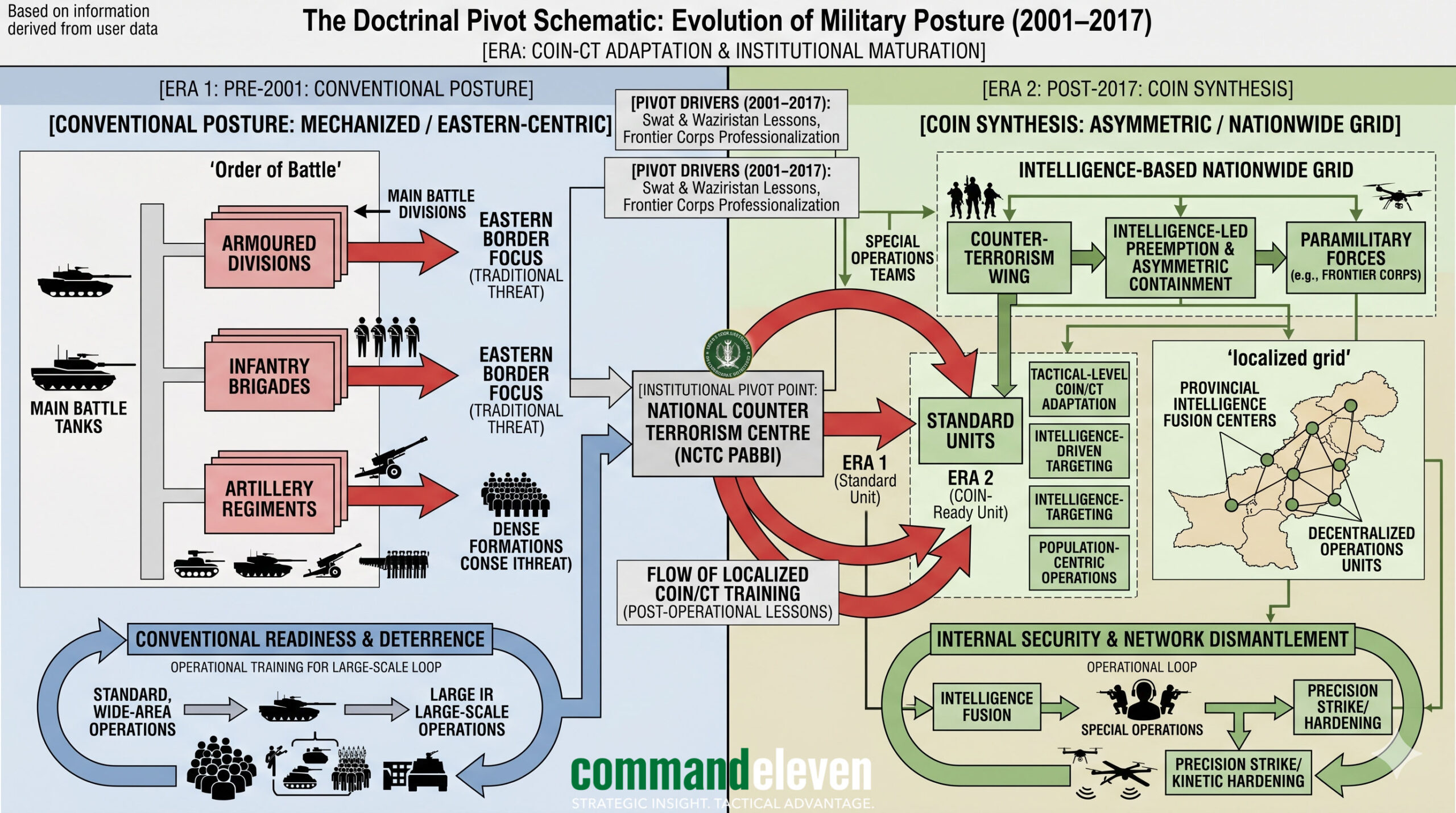
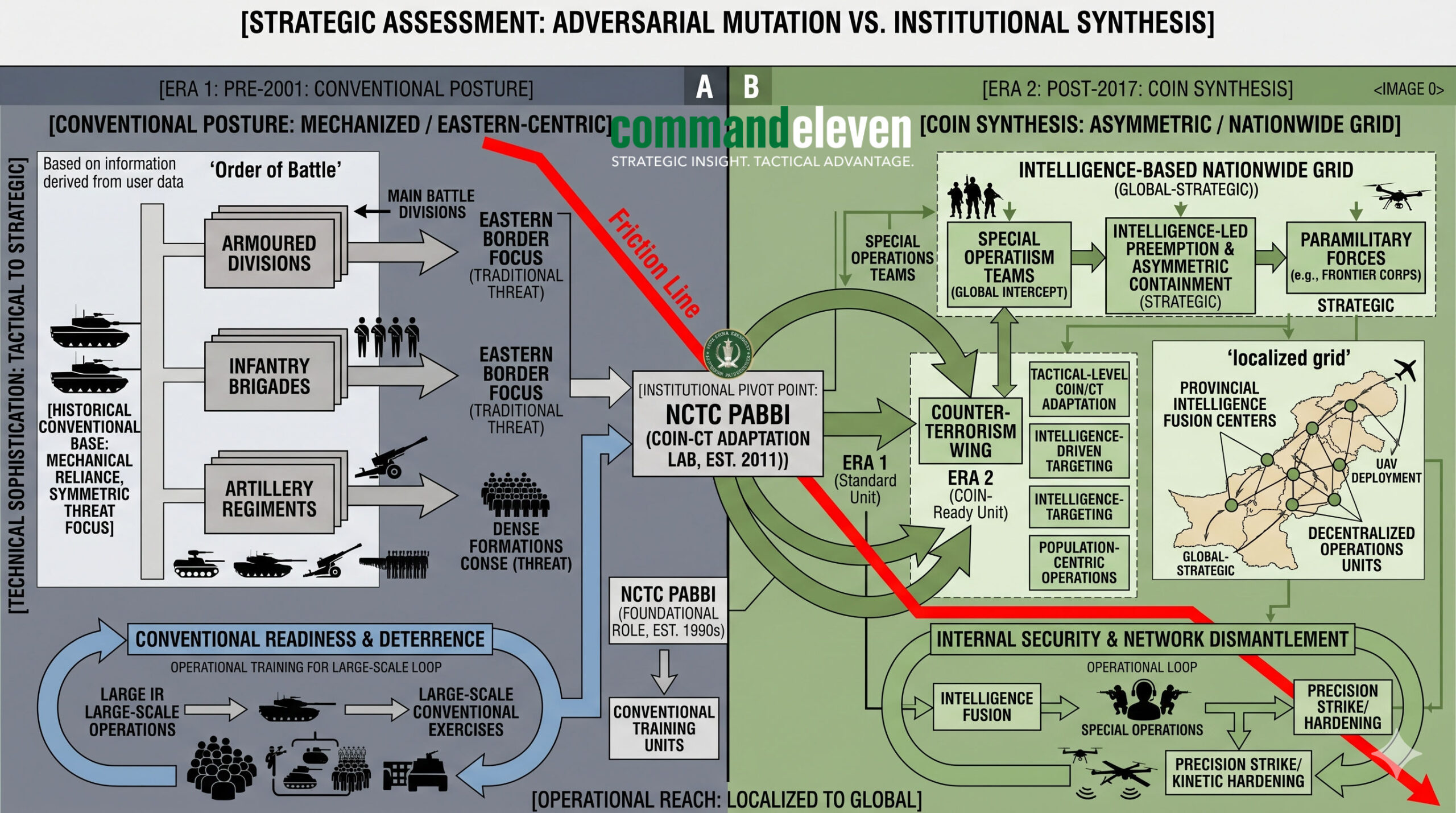
BLUF: The National Counter Terrorism Centre (NCTC) at Pabbi is the physical and doctrinal site of the state’s Institutional Maturation. Established to resolve the “Doctrinal Friction” of the early 2000s, the NCTC fundamentally re-coded the military’s combat DNA, transitioning the force from an India-centric mechanized posture to a specialized, high-agility Counter-Insurgency (COIN) footing.
The Catalyst: Doctrinal Friction
The early years of the conflict (2001–2004) exposed catastrophic gaps in conventional training when faced with high-altitude guerrilla nodes.
- Regular Infantry Limitations: Conventional divisions, trained for high-intensity warfare on the eastern plains, lacked the vertical agility required for the hostile mountain terrain of the tribal districts.
- Operational Attrition: Failure to adapt to “hit-and-run” tactics led to high casualty rates, forcing a pivot toward a dedicated center for localized doctrinal development.
Technical Evolution: The Pabbi Model
The NCTC moved beyond basic drills to become a laboratory for modern asymmetric warfare.
Re-coding the Infantry
- The Pabbi Model: COIN training became mandatory for every unit prior to deployment. The curriculum shifted focus to small-unit tactics, decentralized command, and mountain-warfare precision.
- Light Commando Battalions (LCBs): The NCTC served as the nursery for LCBs, designed to bridge the gap between regular infantry and the Special Service Group (SSG). These units provide the lethal autonomy needed for both mountain and urban engagements.
Inter-Agency Synergy
- Unified Tactical Language: The center integrates personnel from Counter-Terrorism Departments (CTDs) and the Frontier Corps (FC). This ensure that different branches of the security apparatus speak the same tactical language during multi-agency operations like Operation Radd-ul-Fasaad.
Tactical Impact: From Attrition to Precision
The institutionalization of COIN led to a definitive shift in the execution of major operations.
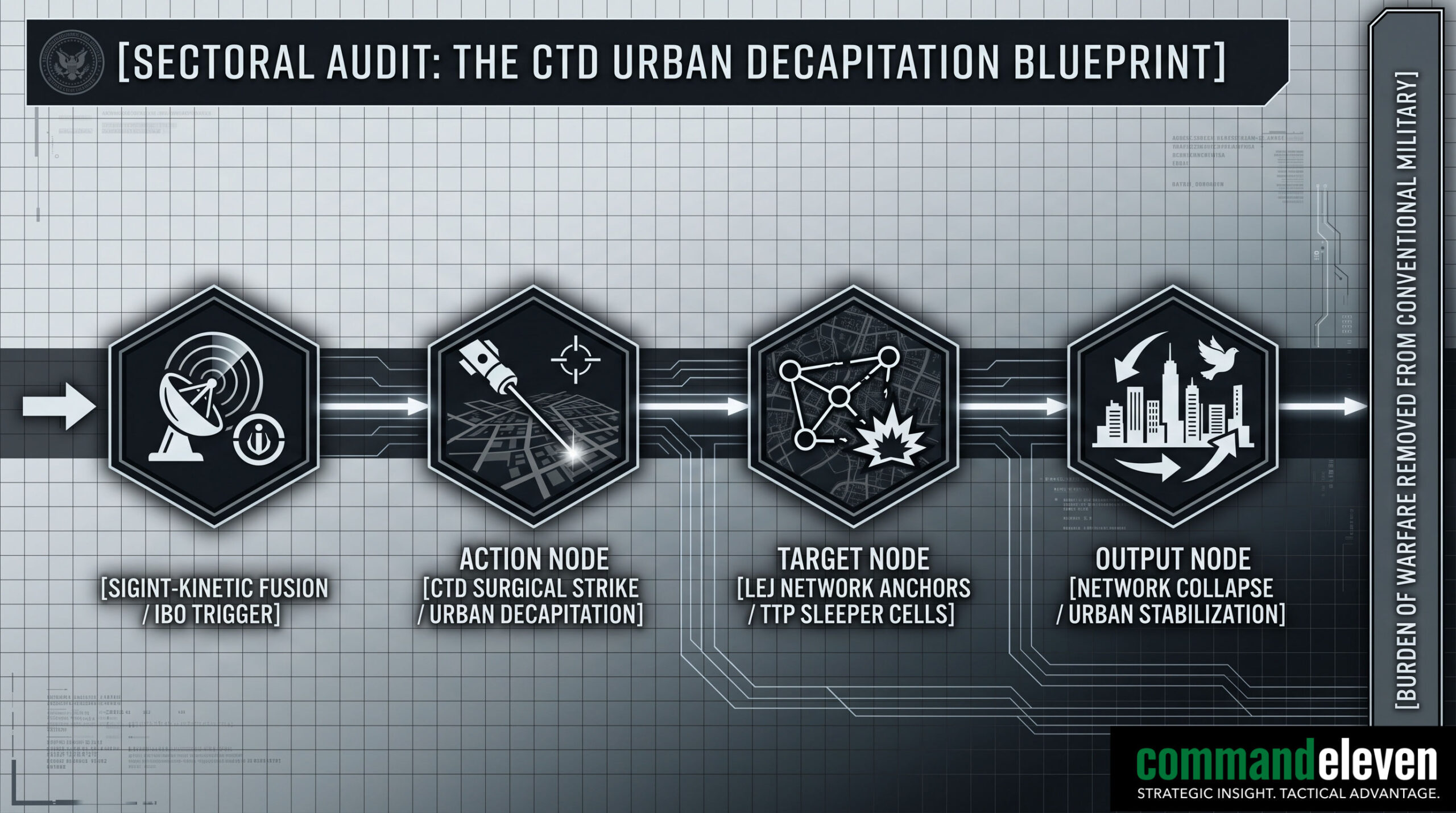
- Network Dismantlement: Operations shifted from simple “territorial sweeps” to intelligence-led efforts focused on the surgical dismantlement of militant infrastructure.
- Reduced Ground Friction: Precision-focused training at the NCTC has significantly reduced civilian displacement and ground friction by enabling more surgical kinetic engagements.
Clinical Conclusion
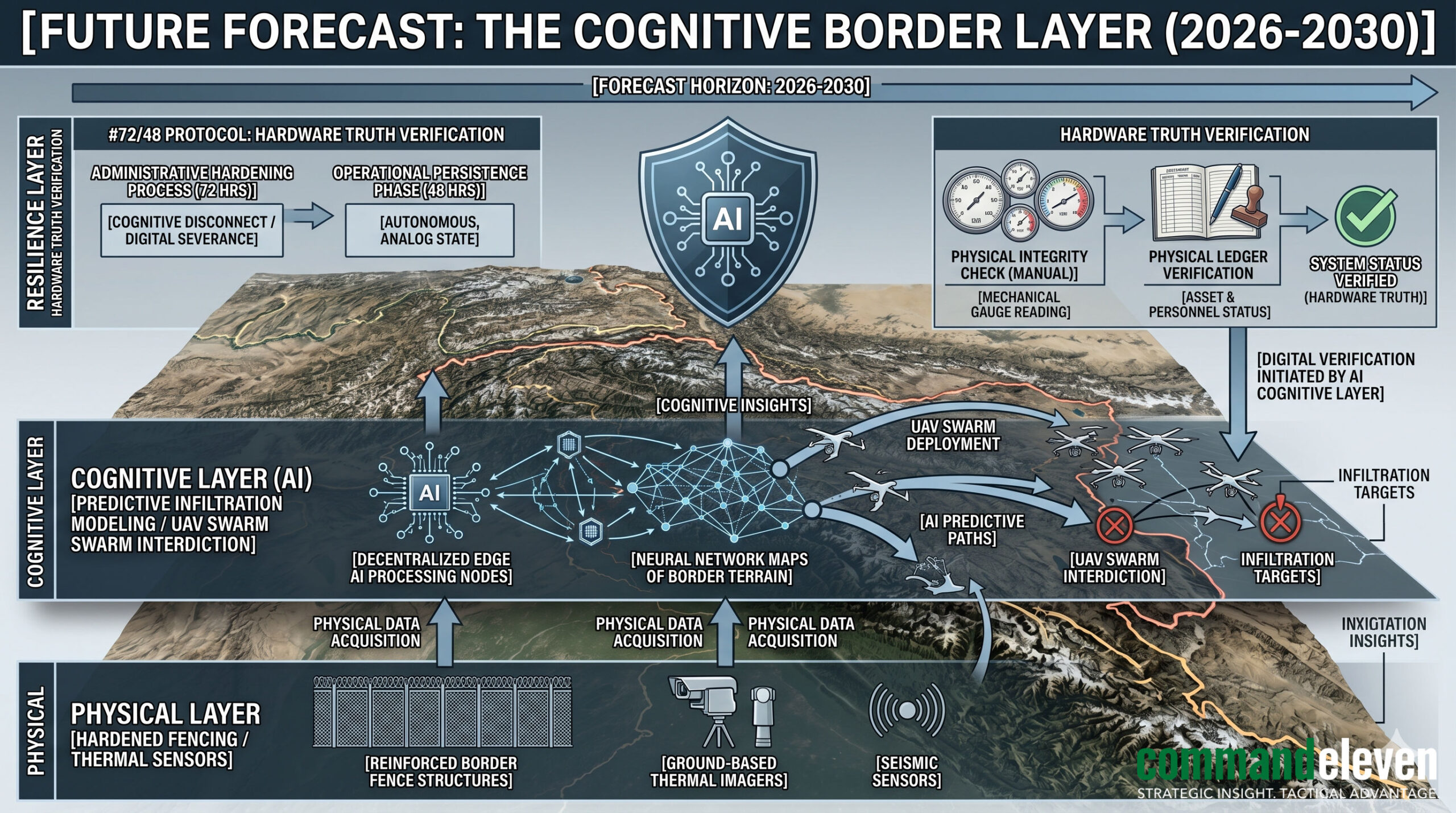
The NCTC Pabbi is the institutional cornerstone that converted twenty-five years of “painful lessons” into a permanent strategic advantage. It ensures that the shift toward a domestic COIN posture was not a temporary reaction to a crisis, but a permanent institutional overhaul. The center remains the primary engine for maintaining the Institutional Synthesis required to counter an ever-mutating threat landscape.