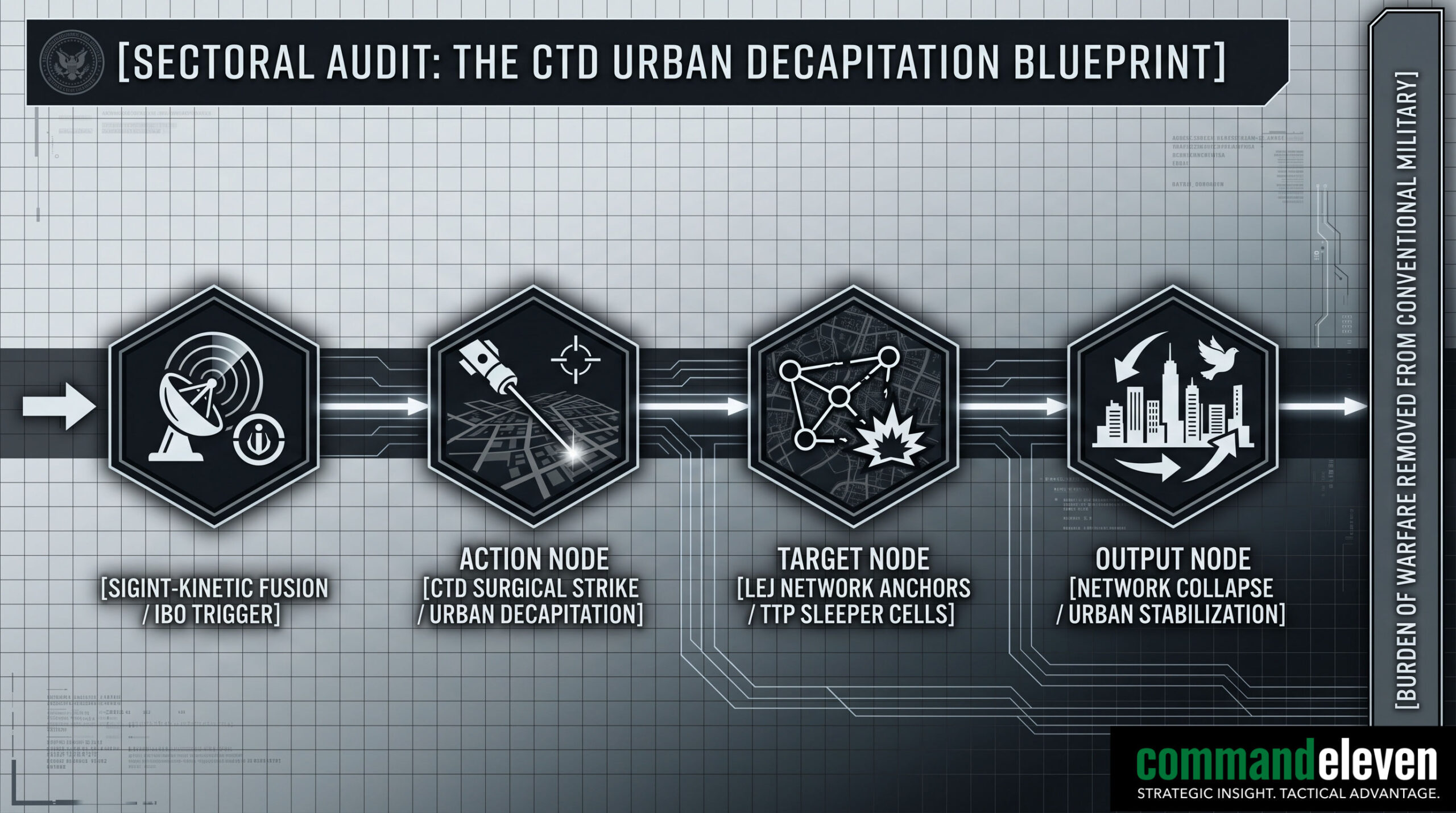
BLUF: The evolution of the Counter Terrorism Departments (CTDs) represents the most successful structural shift within civilian law enforcement. By transitioning from standard policing to executing Intelligence-Based Operations (IBOs), the CTDs offloaded the burden of urban warfare from the military and achieved the systematic dismantlement of the Lashkar-e-Jhangvi (LeJ) networks.
The Structural Shift: From Policing to Intelligence-Led Kinetic Raids
The transition of provincial police into a specialized CT grid required a total departure from legacy policing models.
- Intelligence Autonomy: CTDs were granted independent intelligence wings, allowing them to bypass the slow administrative bureaucracy of general policing.
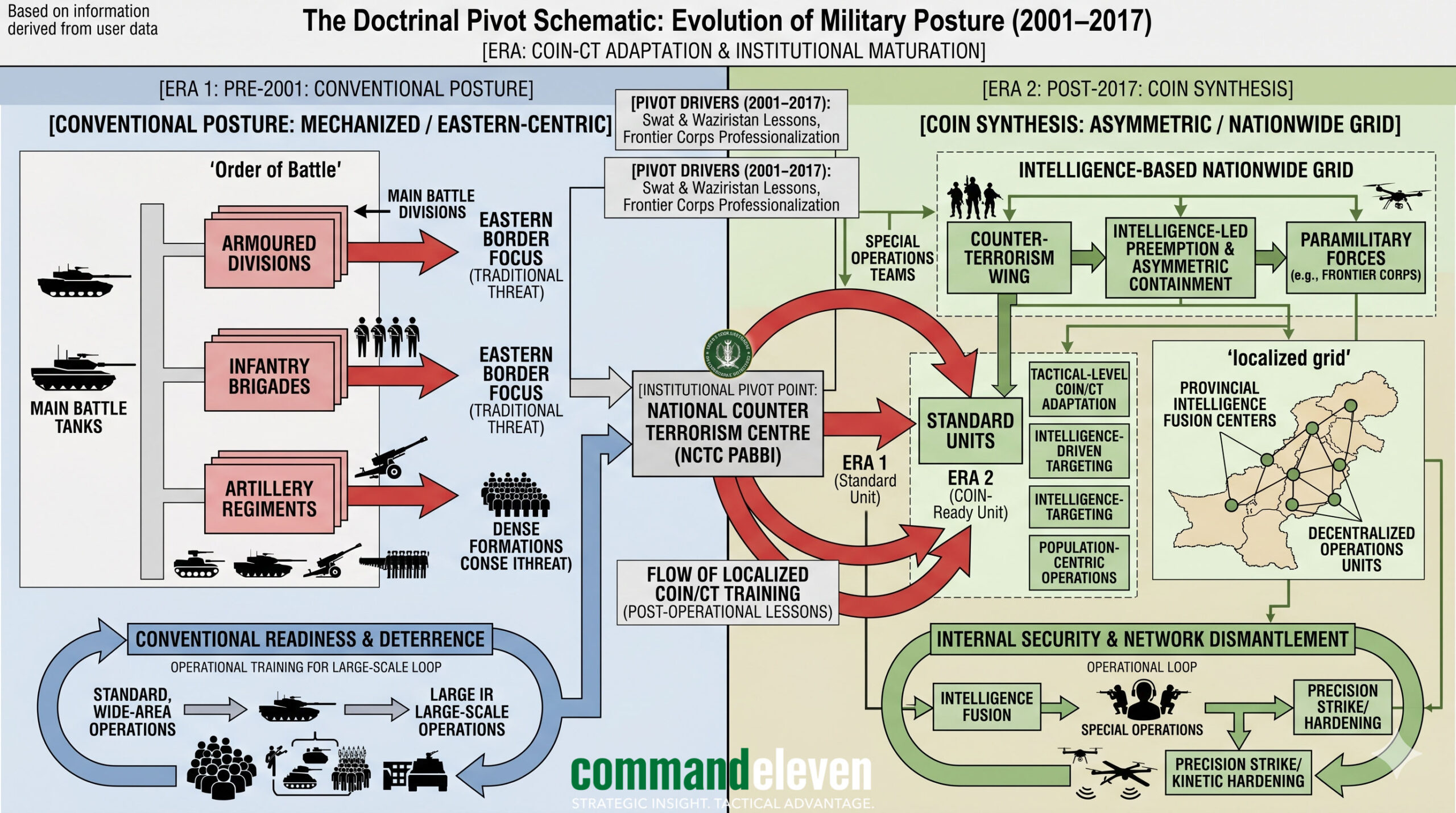
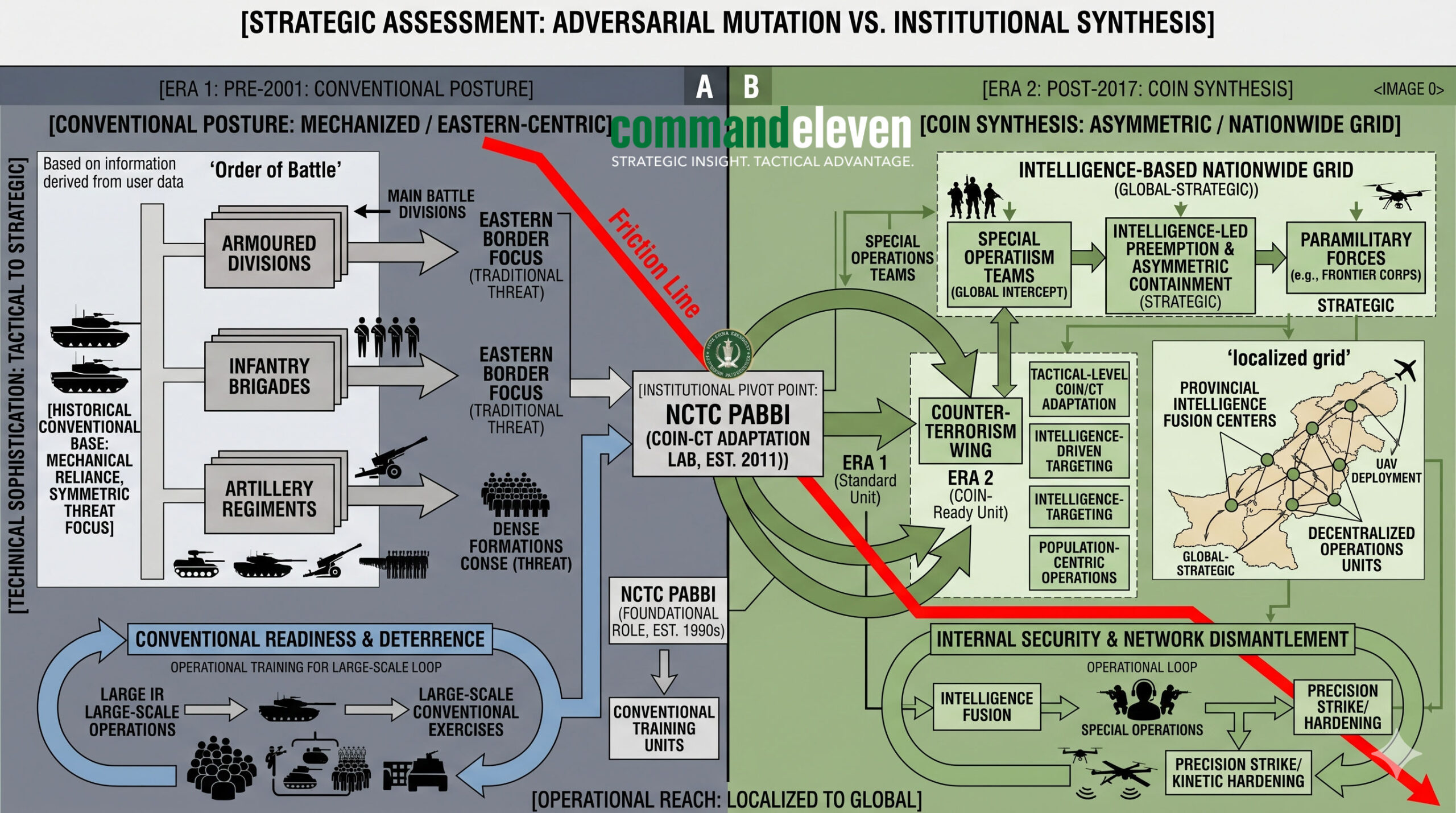
- Specialized Training: Cadres were retrained in urban combat, signal tracking, and forensics, often in coordination with the National Counter Terrorism Centre (NCTC).
- The Urban Decapitation Strategy: The focus shifted from mass arrests to the high-value targeting of “Network Anchors”—the mid-to-senior level commanders who facilitated logistics and sectarian radicalization.
Case Study: Dismantling the LeJ Ecosystem (2015–2016)
Lashkar-e-Jhangvi represented the most significant urban challenge due to its deep-rooted sectarian infrastructure and ties to the Transnational Nexus.
- The 2015-2016 Crackdown: Utilizing SIGINT-Kinetic Fusion, CTD Punjab launched a sustained offensive against the LeJ leadership.
- The Neutralization of Malik Ishaq: The 2015 operation that resulted in the death of LeJ chief Malik Ishaq marked the “decisive blow” to the organization’s operational command.
- Severing the Pipeline: By targeting financial and logistical nodes, the CTDs successfully severed the link between urban sectarian cells and the TTP’s mountain sanctuaries.
Technical Impact on the Counter-Terrorism Grid
Metric | Legacy Police Model | CTD Maturation Model |
Operational Trigger | First Information Report (FIR) | Intelligence-Based Trigger (IBO) |
Capability | Static Patrol / Public Order | Surgical Kinetic Strike |
Focus | Localized Criminality | Structural Network Dismantlement |
Outcome | High Friction / Low Conviction | Urban Decapitation / Network Collapse |
Clinical Conclusion
The maturation of the CTDs remains the decisive factor in stabilizing metropolitan centers. By professionalizing the “Urban Decapitation” phase, the state successfully contained the insurgency’s attempt to colonize the cities. The dismantlement of LeJ serves as the operational blueprint for how specialized, intelligence-led police units can achieve strategic victories that were previously thought to require conventional military intervention.