BLUF: Volume VII — Institutional Maturation
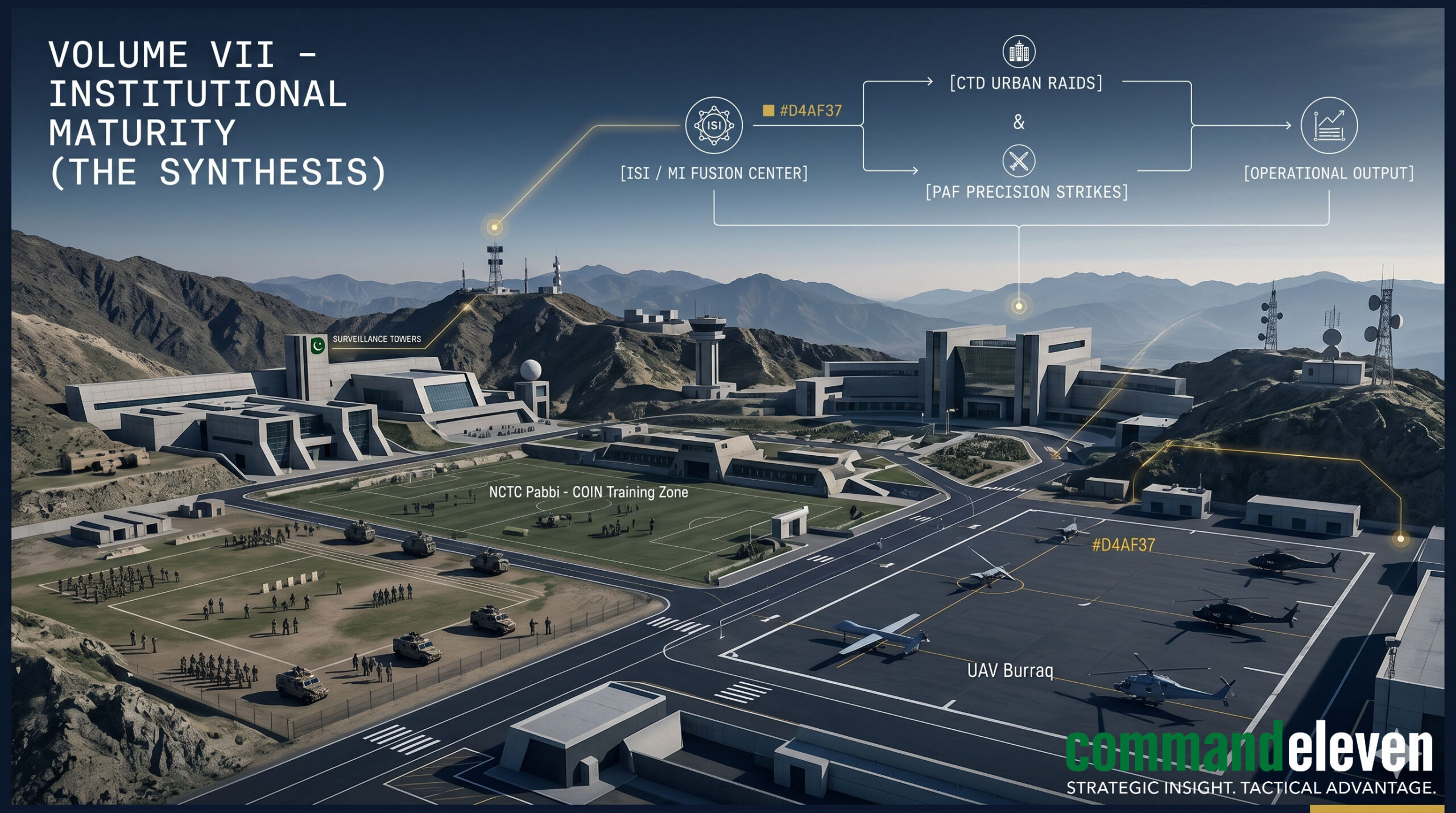
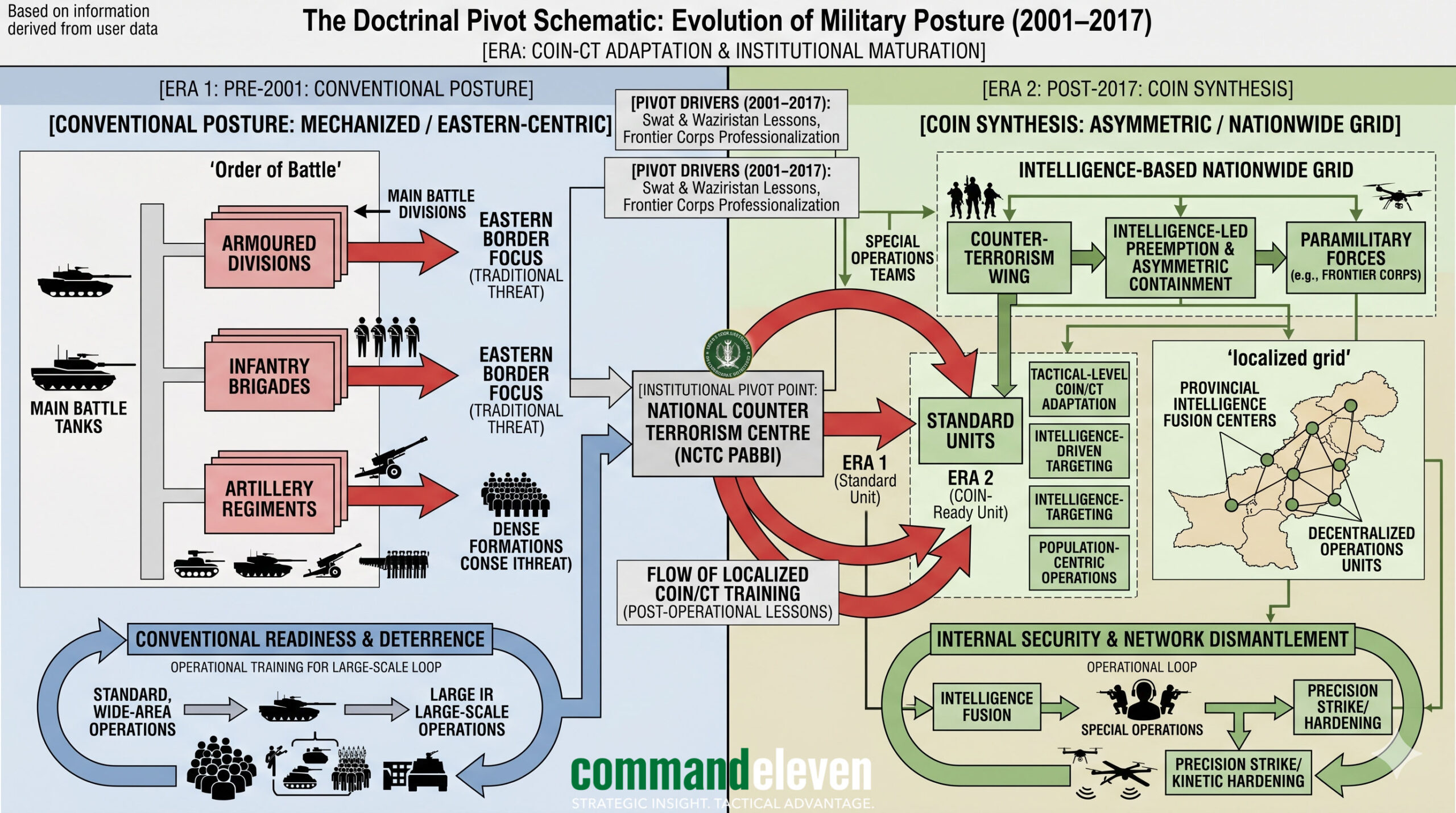
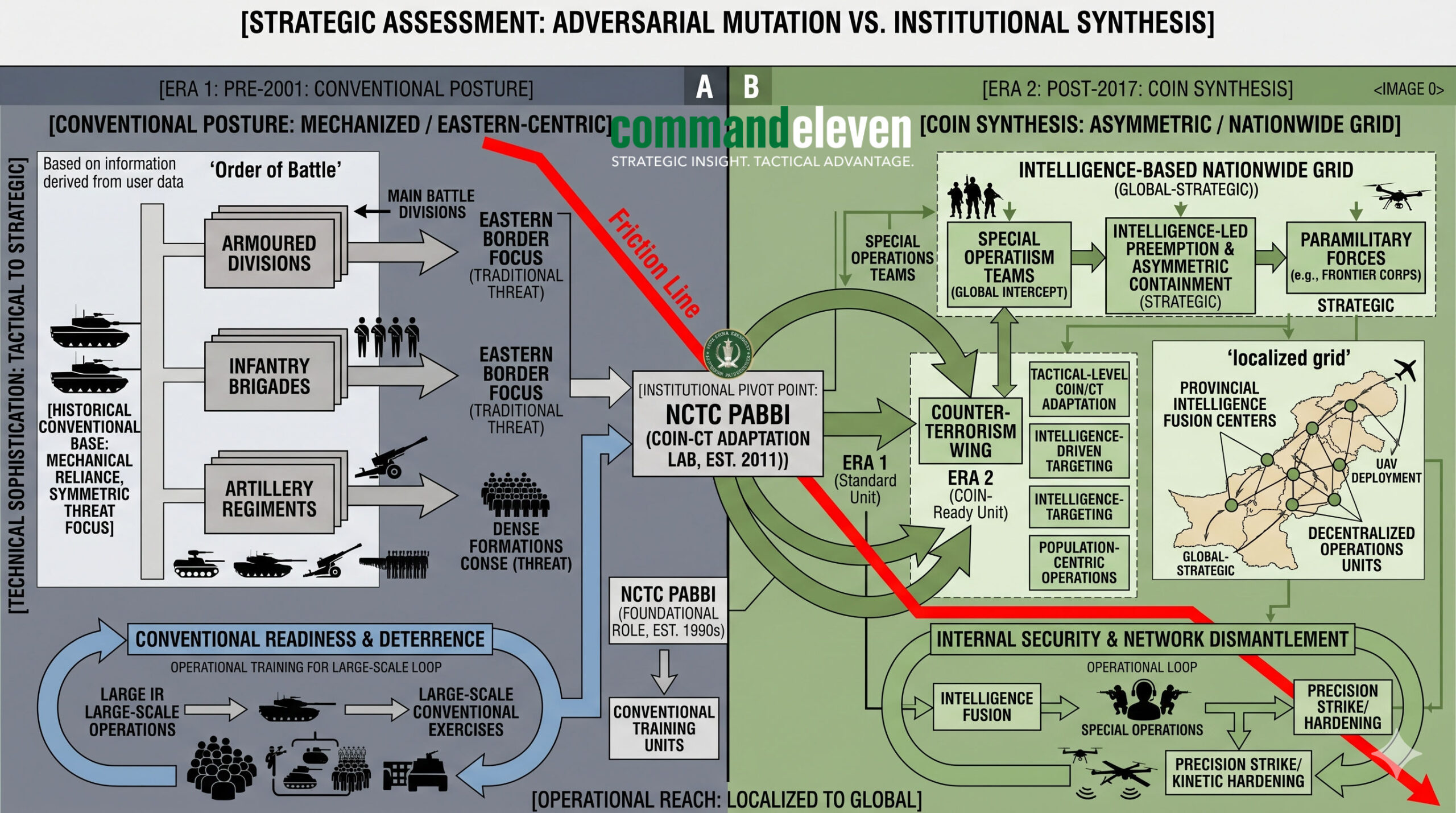
The shift from a conventional, India-centric military doctrine to a domestic Counter-Insurgency (COIN) and Counter-Terrorism (CT) footing required a painful, decades-long institutional overhaul. This volume tracks the evolutionary synthesis of military, intelligence, and law enforcement branches as they adapted to an ever-mutating asymmetric threat landscape.
We move beyond the tactical sweeps of the past to analyze the Munir-era synthesis of digital and kinetic force. This phase is defined by the collapse of the “Sanitization Gap” and the birth of a proactive deterrence model that recognizes the western border as a permanent frontline. Volume VII audits the critical evolution of the Counter-Terrorism Departments (CTDs) and the Joint Special Operations Command (JSOC) as they navigate a landscape of technological overmatch and cross-border safe havens.
Key Analytical Pillars:
- The Death of Strategic Depth: A clinical assessment of the formal shift toward “Regional Accountability” and the implementation of preemptive cross-border strikes.
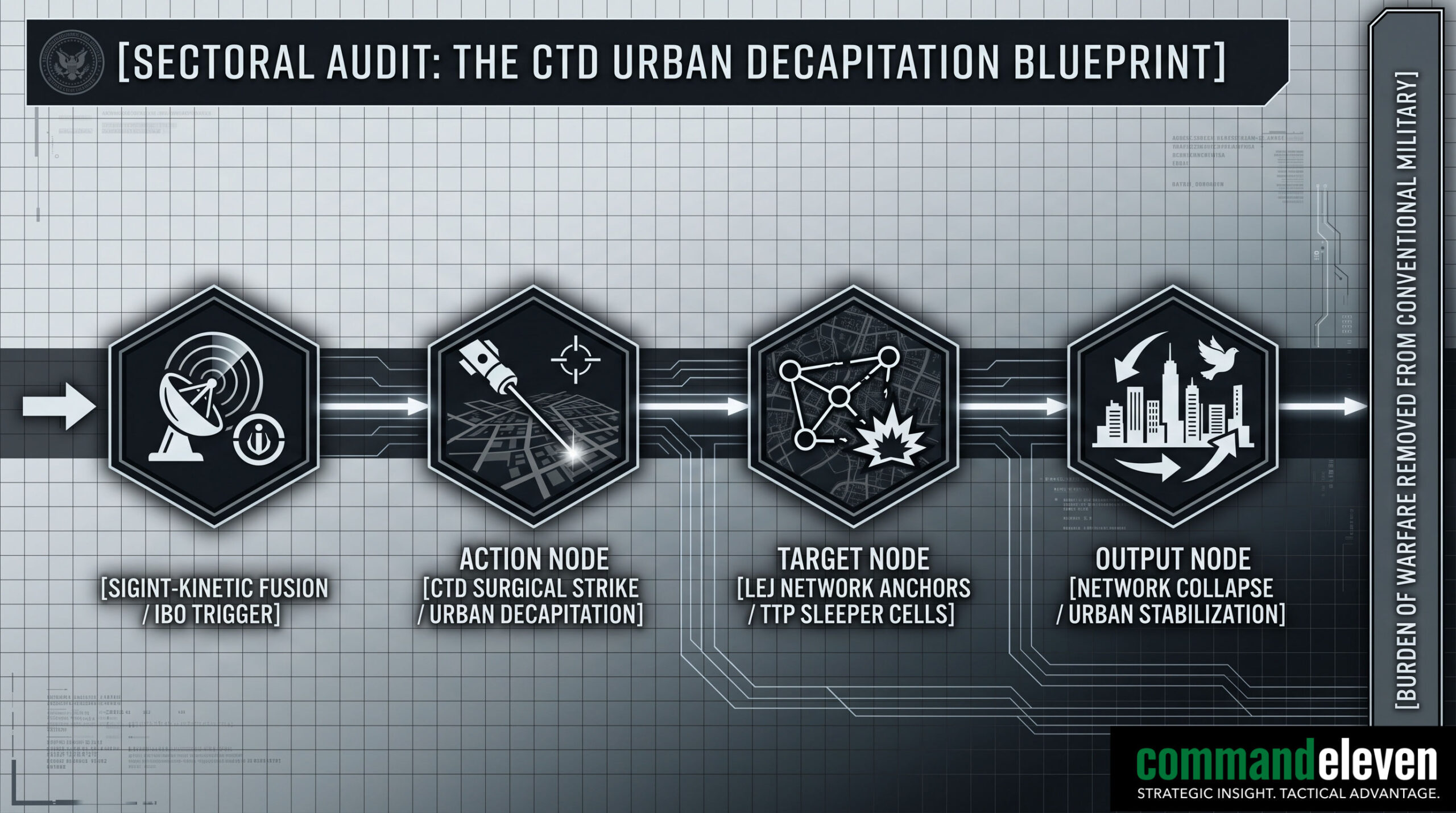
- Cyber-Kinetic Convergence: The integration of algorithmic SIGINT with Tier-1 strike teams to neutralize the “Burst & Burn” communication architecture of the resurgent TTP and ISKP.
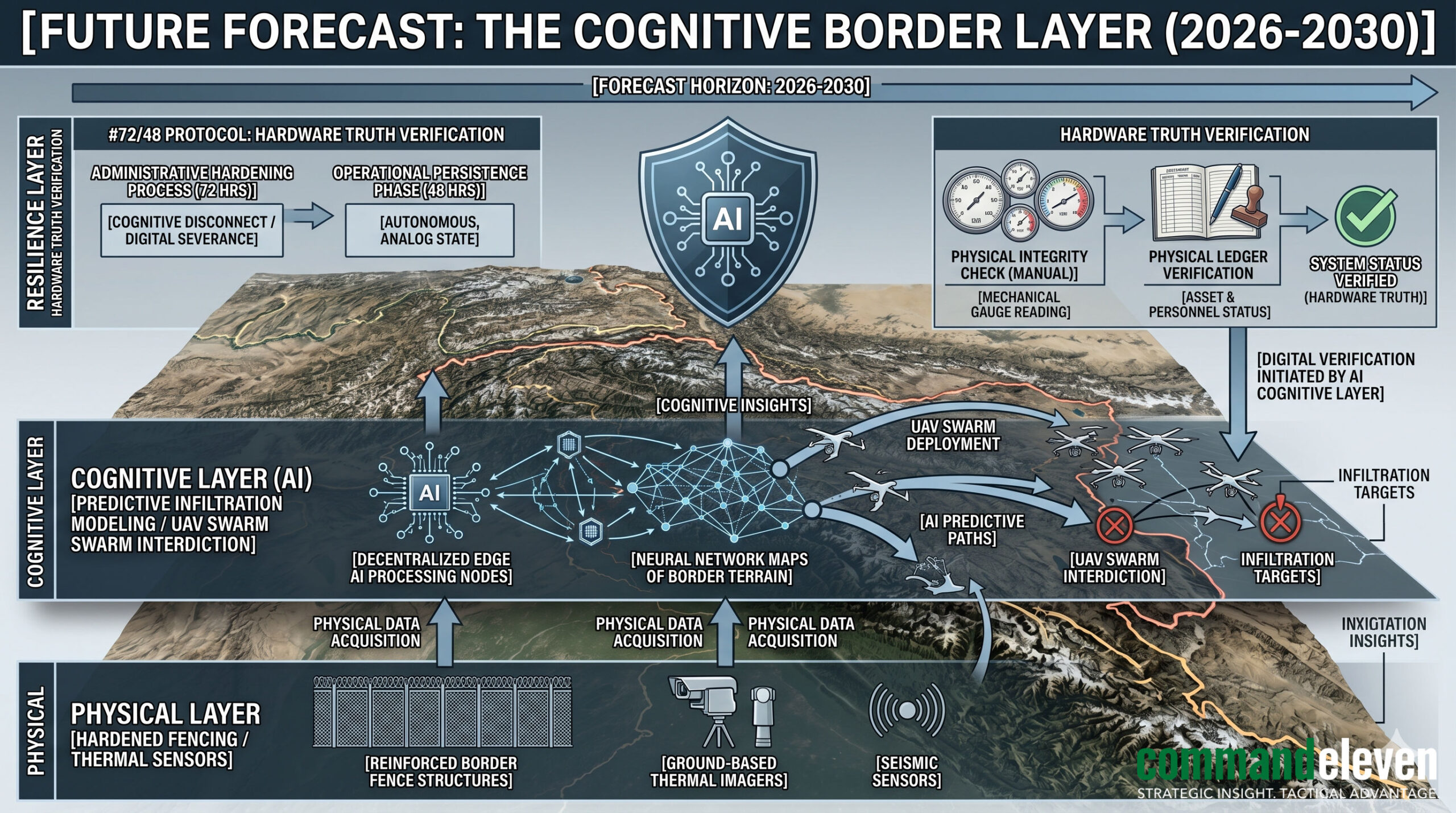
- The #72/48 Protocol: Auditing the future-state mandate for physical verification and tactical resets in a digitally compromised battlespace.
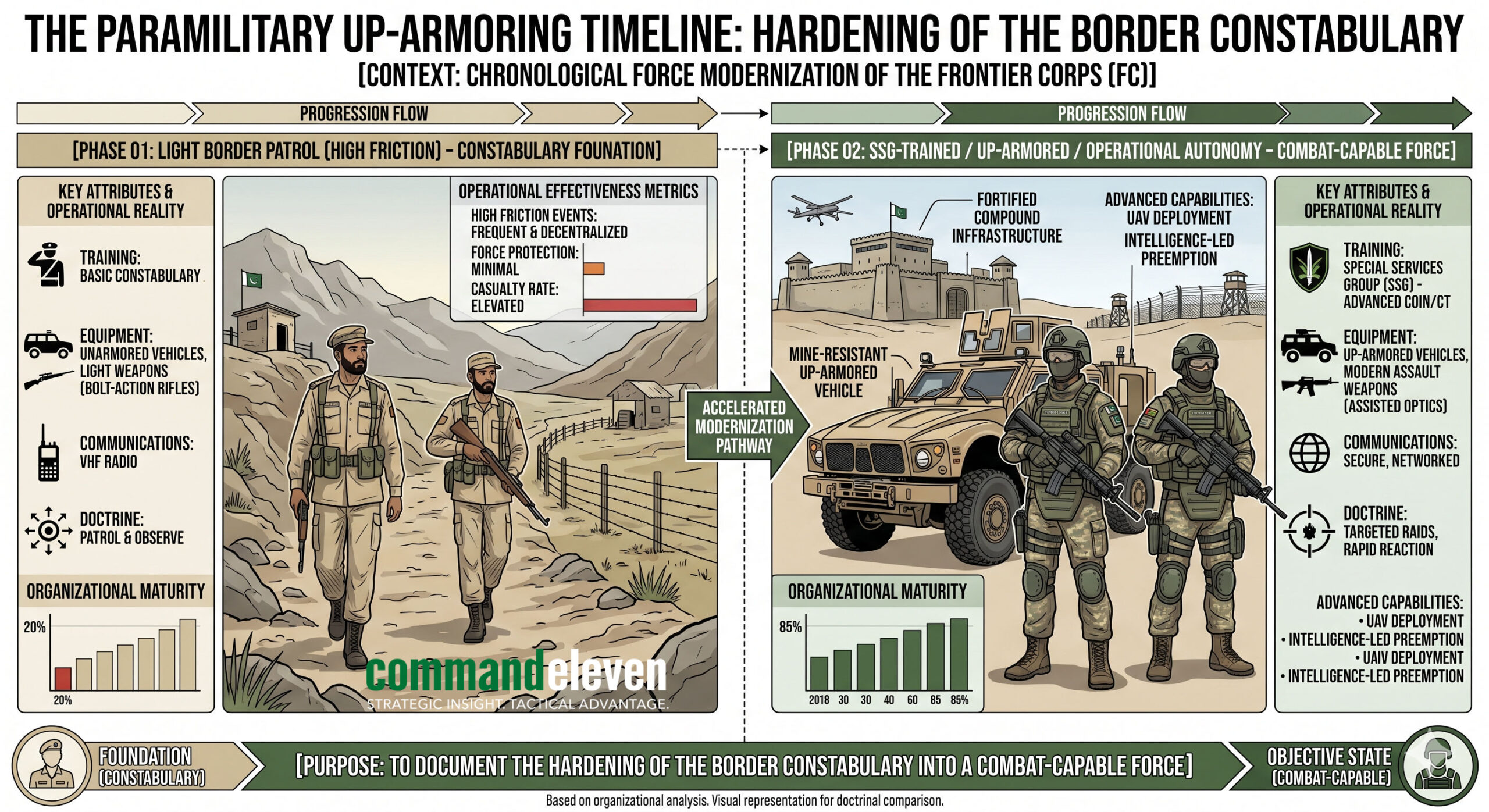
- Institutional Hardening: The transition from reactive fencing to the “Hard Border” doctrine, integrating permanent infrastructure with over-the-horizon surveillance.
This volume provides the strategic verdict on Pakistan’s capability to survive a long-war environment defined by time compression, foreign sanctuary, and the mutation of the transnational threat.
Evolution of the Armed Forces (Army & PAF)
The Army’s Doctrinal Pivot
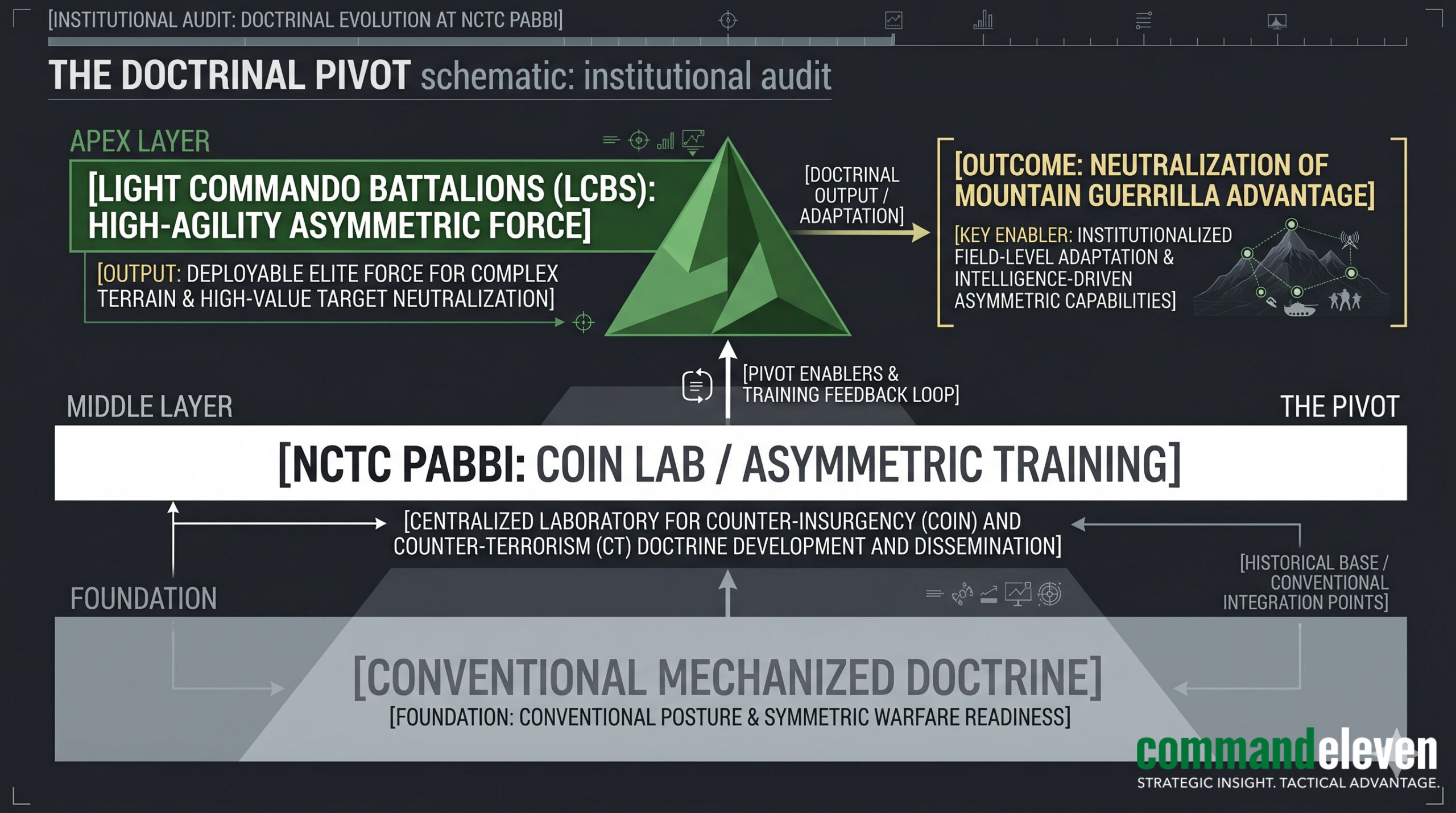
Initial deployments into the tribal regions exposed severe vulnerabilities in regular infantry trained for mechanized warfare.
- Institutionalization of COIN: The Army fundamentally overhauled combat training at the National Counter Terrorism Centre (NCTC) in Pabbi.
- Specialized Augmentation: Standard infantry divisions were augmented with Light Commando Battalions (LCBs) designed for agility and autonomy in asymmetric mountain and urban engagements.
The PAF’s Precision Reorientation
The Pakistan Air Force (PAF) shifted from high-altitude dogfight training to precision ground-attack roles.
- The Kinetic Hammer: Integration of targeted strikes using F-16s and indigenous armed drones, such as the Burraq, allowed for the destruction of hardened subterranean depots with minimal ground casualties.
Evolution of Intelligence (ISI, MI, & Fusion Centers)
Prior to 2001, the intelligence apparatus was structured almost exclusively for external proxy management and conventional espionage, leading to massive domestic failures.
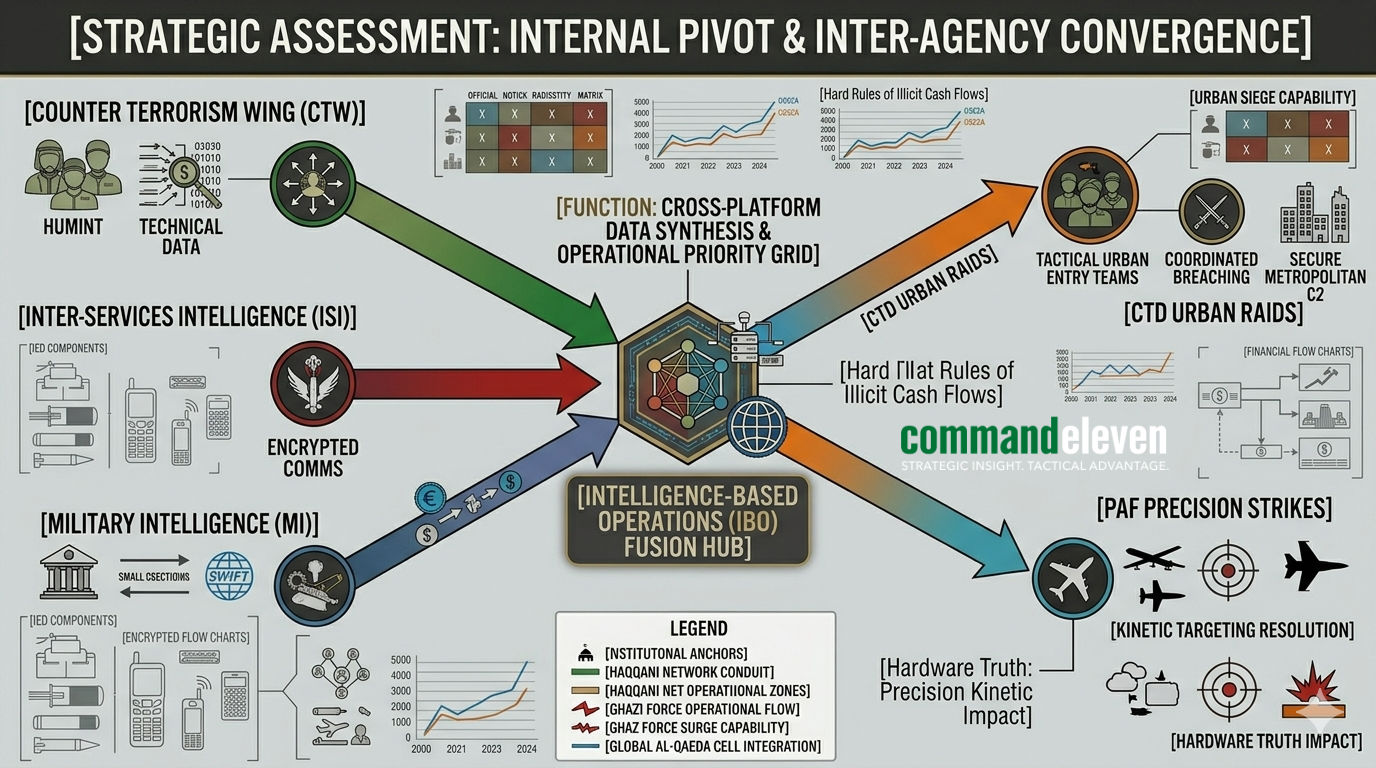
- The Counter Terrorism Wing (CTW): Specialized units were established to focus exclusively on internal network dismantlement, treating terrorism as a structural threat.
- SIGINT and Convergence: Structural upgrades enhanced signal intelligence (SIGINT) capabilities to track traffic across the tribal belts.
- Intelligence-Led Doctrine: This maturation culminated in Operation Radd-ul-Fasaad, where fusion centers guided precision raids against urban sleeper cells.