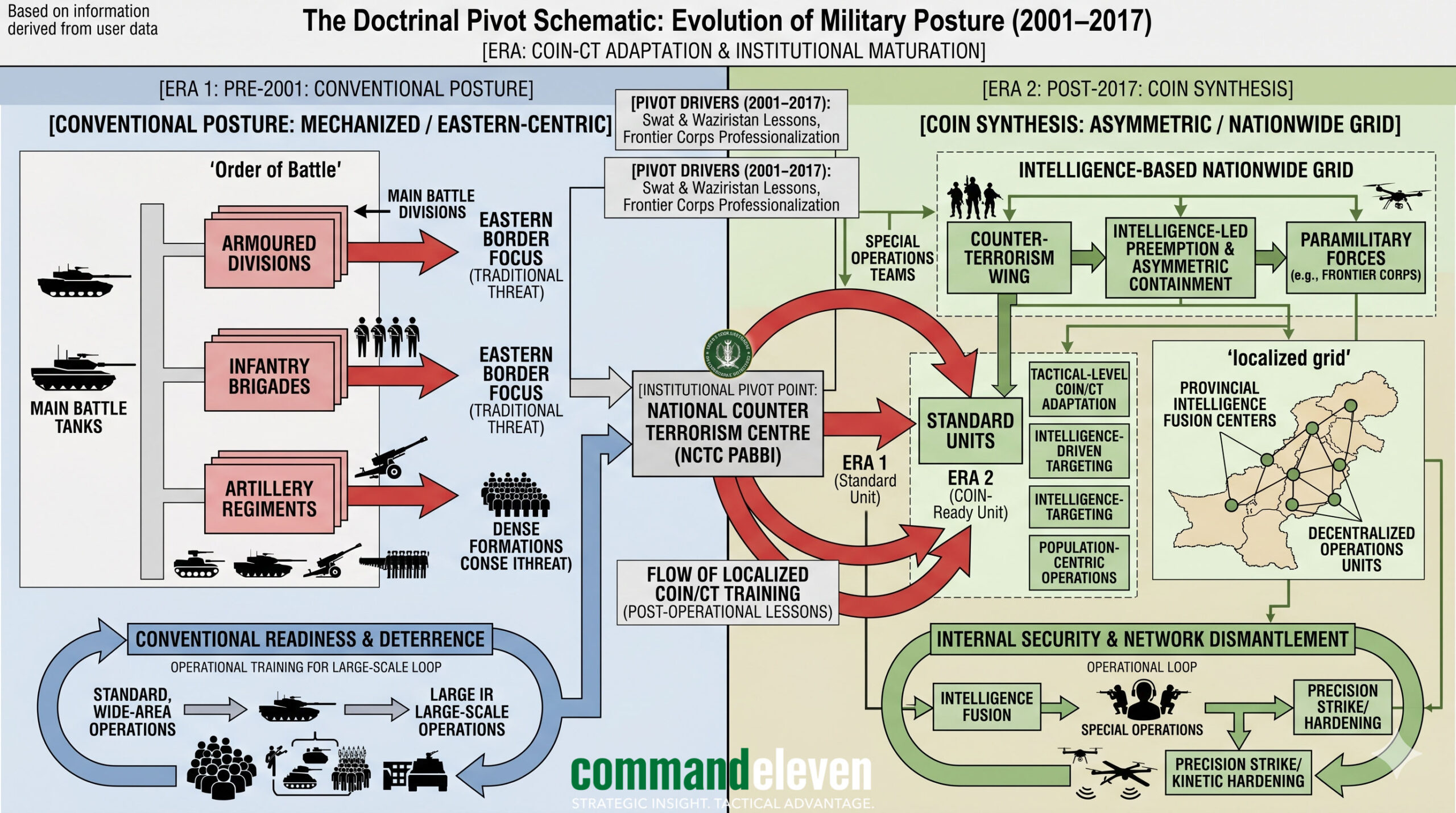
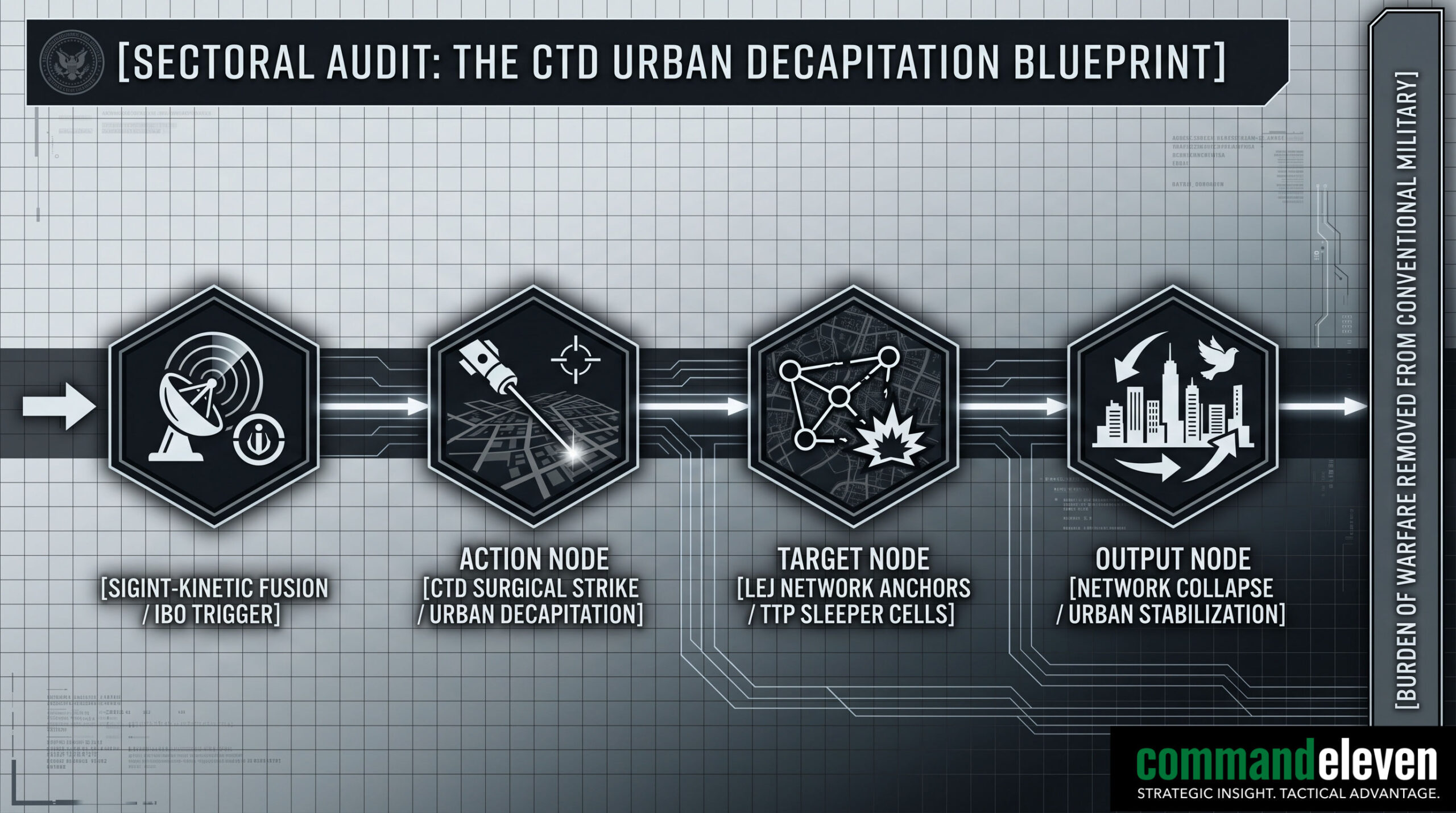
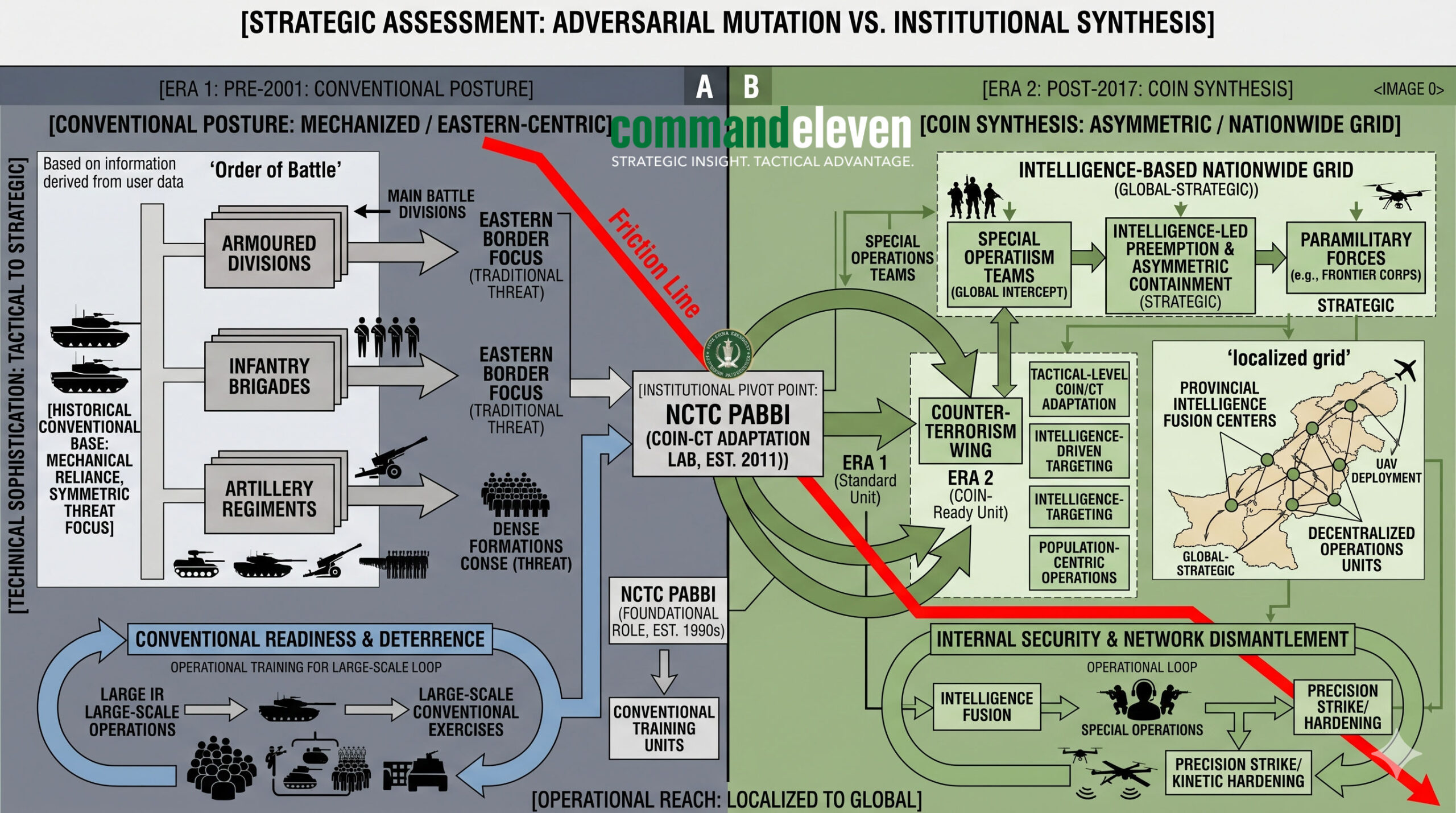
BLUF: The final phase of institutional maturation marks a transition from reactive defense to predictive, technology-led sovereignty. By integrating Artificial Intelligence (AI) into the Counter-Terrorism Grid and formalizing the #72/48 Protocol, the state aims to bridge the gap between digital signaling and kinetic reality. This system ensures the Pakistan-Afghanistan border remains a “Hardened Perimeter” capable of neutralizing high-lethality threats before they reach urban centers.
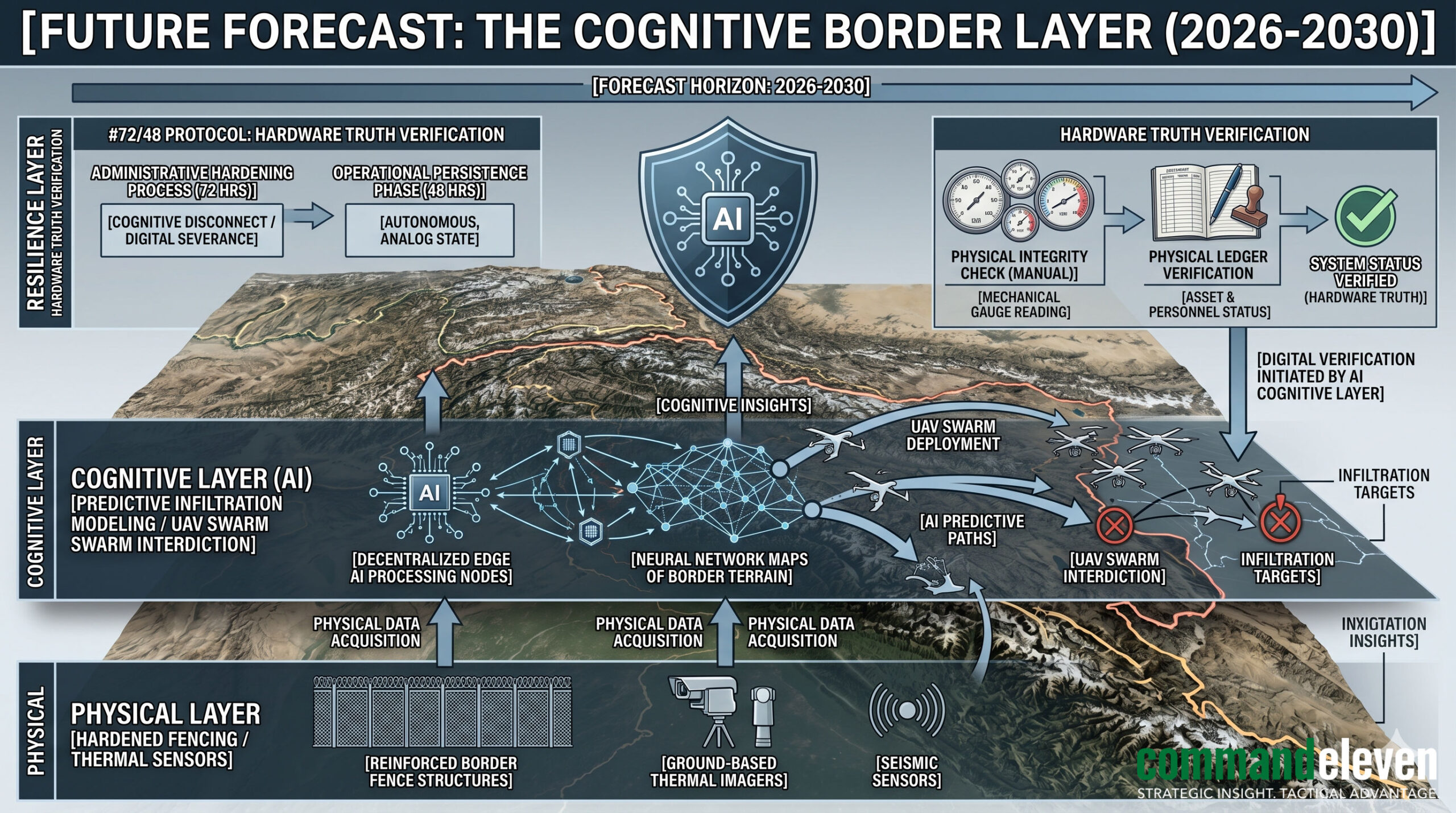
The #72/48 Protocol: Hardware Truth and Resilience
As digital environments face increasing compromise from deepfakes and adversarial signal manipulation, the state is prioritizing Hardware Truth over vulnerable digital dependencies.
- The 72-Hour Verification Window: This strategic buffer is designed to neutralize “Sensory Rupture”—coordinated digital disinformation campaigns that typically accompany kinetic strikes. The protocol mandates that all high-level kinetic impacts be verified via physical hardware and HUMINT within a 72-hour window before any strategic response is finalized.
- The 48-Hour Tactical Reset: Following any major security incident, the Counter-Terrorism Grid undergoes an automated 48-hour reset. This includes rotating encryption keys, signal frequencies, and drone patrol patterns to prevent adversarial exploitation of any potentially captured data.
- Operational Resilience: By prioritizing “Analog Liquidity,” this protocol ensures the command structure remains functional even during a total digital blackout.
AI-Integrated Border Surveillance
Physical border hardening is being augmented by a “Cognitive Layer” of surveillance designed to eliminate human latency in threat detection.
- Predictive Infiltration Modeling: AI algorithms analyze historical movement patterns, thermal signatures, and topographic data to predict “High-Probability Ingress Points” along the mountainous frontier.
- Autonomous Sensor Fusion: SIGINT, thermal imaging, and acoustic sensors are integrated into a unified AI dashboard. The system can autonomously distinguish between local nomadic movement and disciplined militant maneuvers, triggering automated drone pre-emption.
- UAV Swarm Interdiction: Indigenous, AI-linked drone swarms maintain a 24/7 “Visual Ceiling” over geographical blind spots. This technology effectively closes the Anvil Gap that was historically exploited by militant leadership to evade capture.
Strategic Forecasting Matrix (2026–2030)
Component | Current State (2026) | Future State (2030) |
Border Control | Physical Fencing / Manual Patrol | AI-Gated Perimeter / Autonomous UAV Swarms |
Intelligence | SIGINT-Kinetic Fusion | Predictive AI Behavioral Modeling |
Response Logic | Reactive Intelligence-Based Ops (IBOs) | Proactive Pre-emptive Neutralization |
Resilience | Digital-Primary Systems | #72/48 Protocol (Hardware Truth) |
Clinical Conclusion
The future of the republic’s security lies in the institutional synthesis of human intelligence and autonomous technology. While the Transnational Nexus continues to mutate, the implementation of the #72/48 Protocol ensures the military and intelligence apparatus maintains Tactical Supremacy. By prioritizing “Hardware Truth,” the state can insulate itself from the psychological and kinetic shocks of next-generation asymmetric warfare.