BLUF: The systemic Regulatory Failure concerning religious seminaries constitutes a critical vulnerability in the state’s counter-terrorism posture. By failing to mandate rigorous financial audits and registration, the state has permitted the evolution of an unquantifiable and invisible War Economy that serves as the primary Administrative Oxygen for the regional insurgency.
The Registration Gap: Data Invisibility
The discrepancy between official state metrics and ground reality represents a major intelligence blind spot.
- Official Metrics: Government records typically identify between 7,000 and 10,000 registered seminaries.
- Actual Estimates: Independent audits and intelligence assessments place the actual total tens of thousands higher.
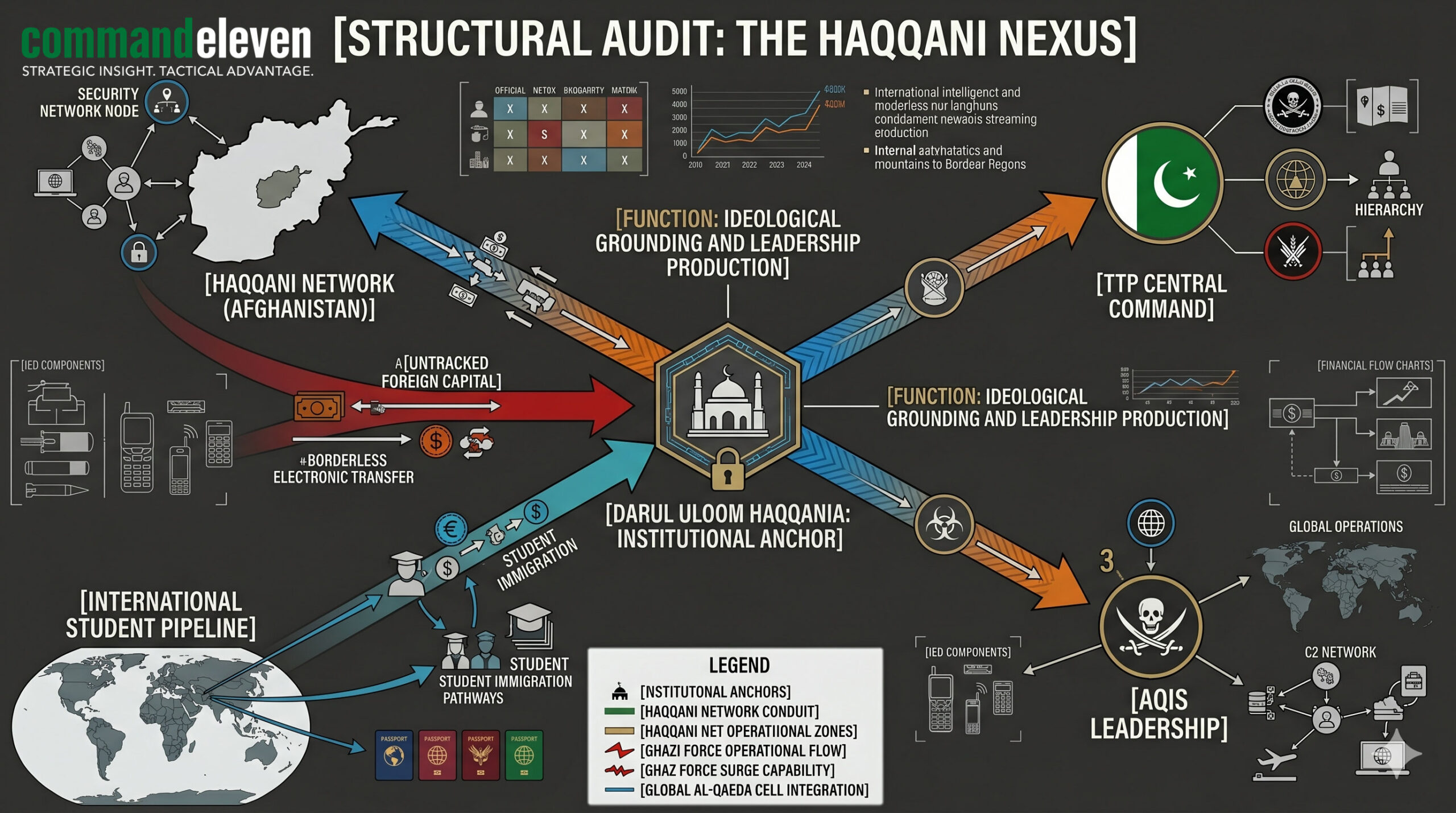
- Operational Impact: This void allows thousands of foreign students to reside within the Madrassa Pipeline without visa oversight or biometric tracking, providing a rotating pool of manpower for the Transnational Nexus.
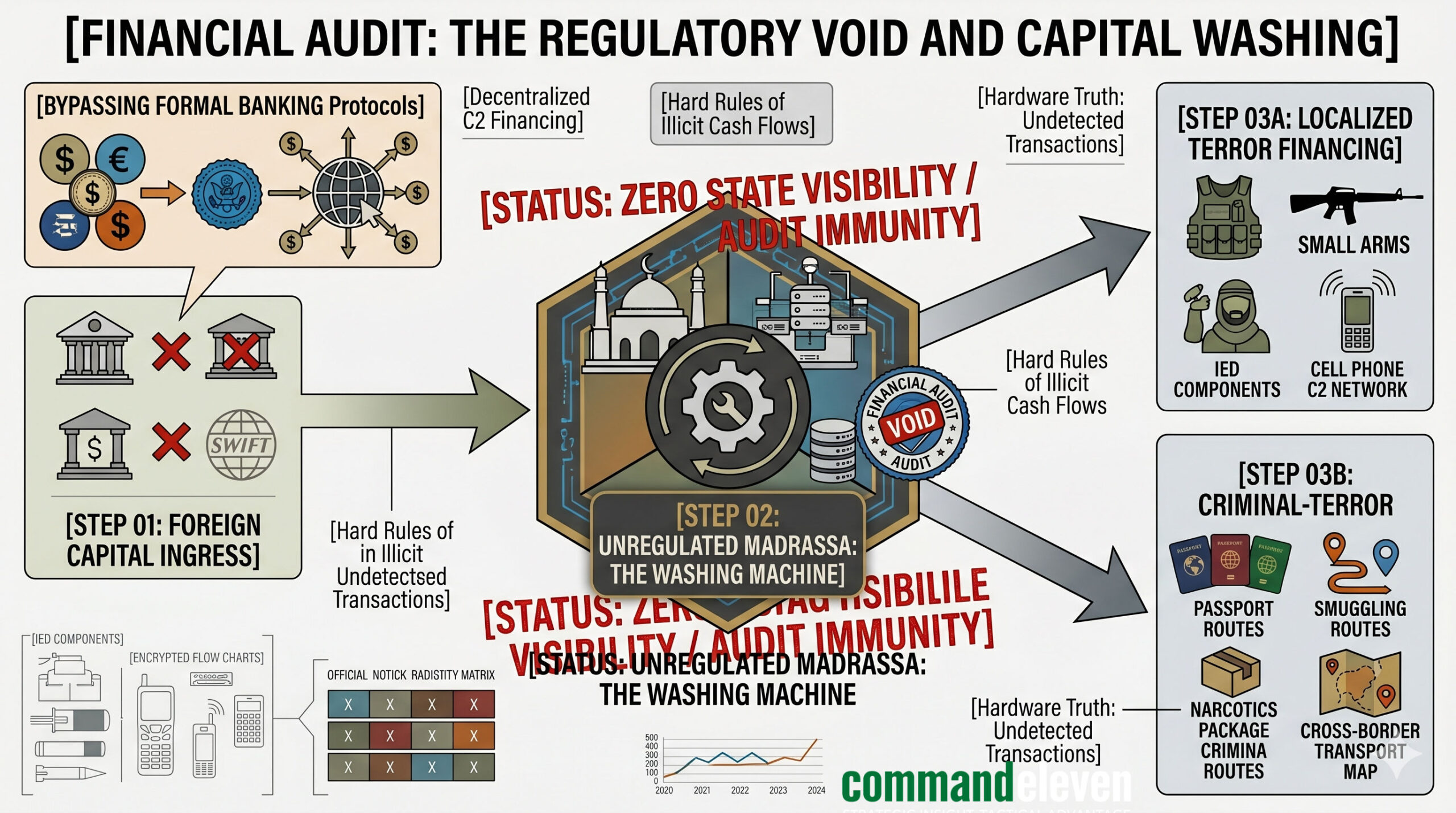
Mechanics of Foreign Capital Washing
Militant networks have demonstrated immense adaptability in converting religious infrastructure into sophisticated financial laundering hubs.
- The Donation Mask: In the absence of bank audits, foreign capital is characterized as “charitable contributions” or zakat.
- The Inward Pipeline: Infrastructure previously used for international proxy capital has been repurposed to stabilize domestic “religious donations”.
- Invisibility: Because these funds bypass the formal banking sector, the militant war economy remains beyond the reach of state intelligence, making it impossible to economically starve the insurgency.
Transition to the Criminal-Terror Nexus
As global sanctions tightened on traditional “billionaire-donor” models, insurgent financing shifted toward localized criminal enterprises.
- Economic Diversification: Madrassa infrastructure is now used to manage domestic extortion rackets and kidnapping-for-ransom rings.
- Self-Sustaining Liquidity: This model ensures the TTP and allied sectarian groups maintain operational liquidity even if external supply lines are disrupted.
Clinical Conclusion
The Regulatory Void is a strategic enabler that ensures the administrative survival of militant networks. Strategic victory requires a transition to a “Zero-Trust” financial oversight model for all religious institutions. Without forcibly registering all madrassas and auditing their financial lifelines, the state will remain unable to dismantle the invisible ecosystem that subsidizes asymmetric warfare.