BLUF: Volume VI — The Transnational Nexus
BLUF: Volume VI analyzes the ideological, tactical, and financial influence of foreign terror networks on the domestic insurgency. The resilience of the networks operating within Pakistan is the product of a deeply entrenched Transnational Nexus that transformed localized tribal fighters into a highly lethal, self-sustaining terror ecosystem.
- Operational Context: The domestic insurgency was not a localized phenomenon but a subsidized terror ecosystem. It was heavily accelerated by international mentorship and the internal repurposing of the madrassa network.
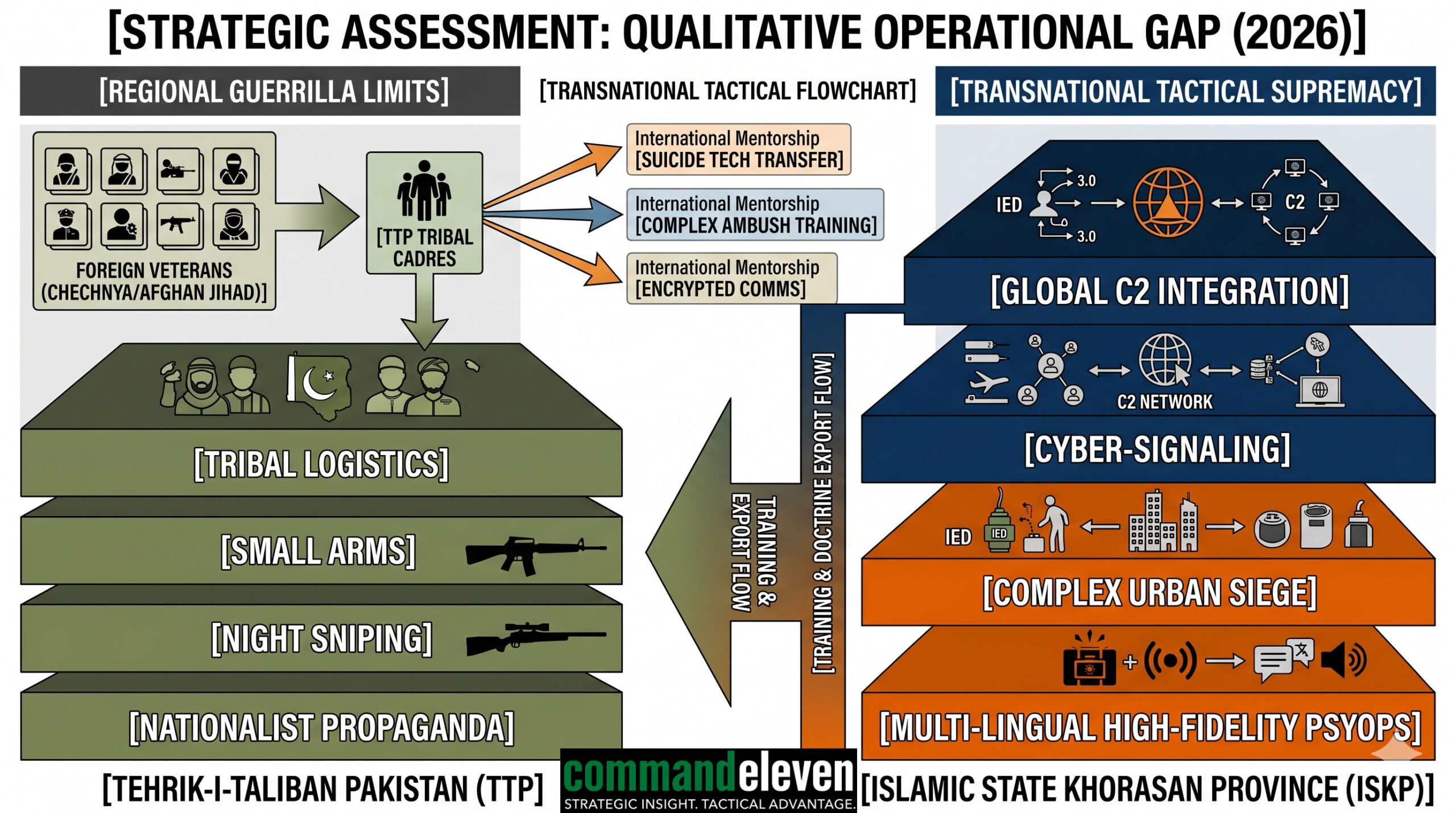
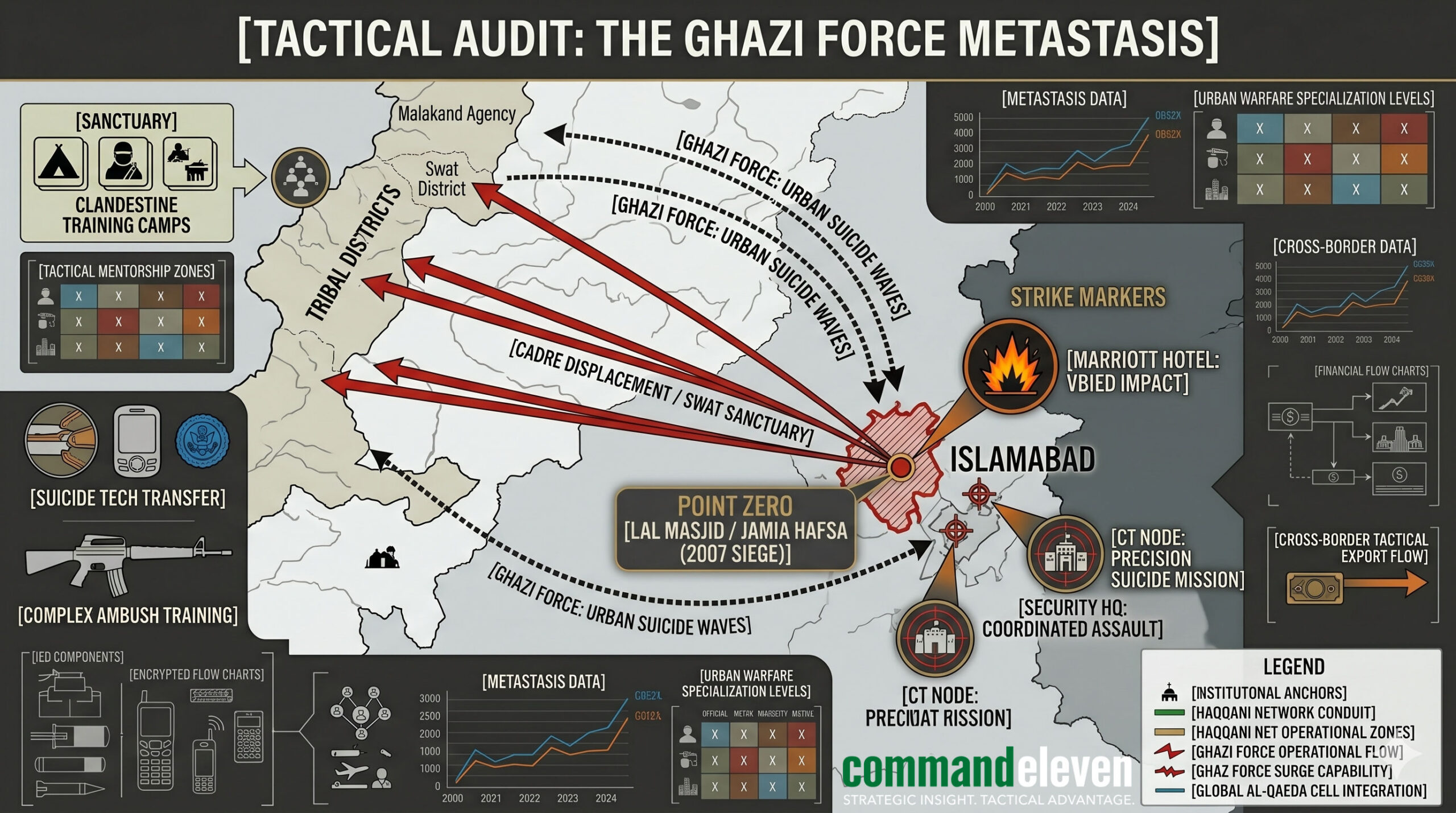
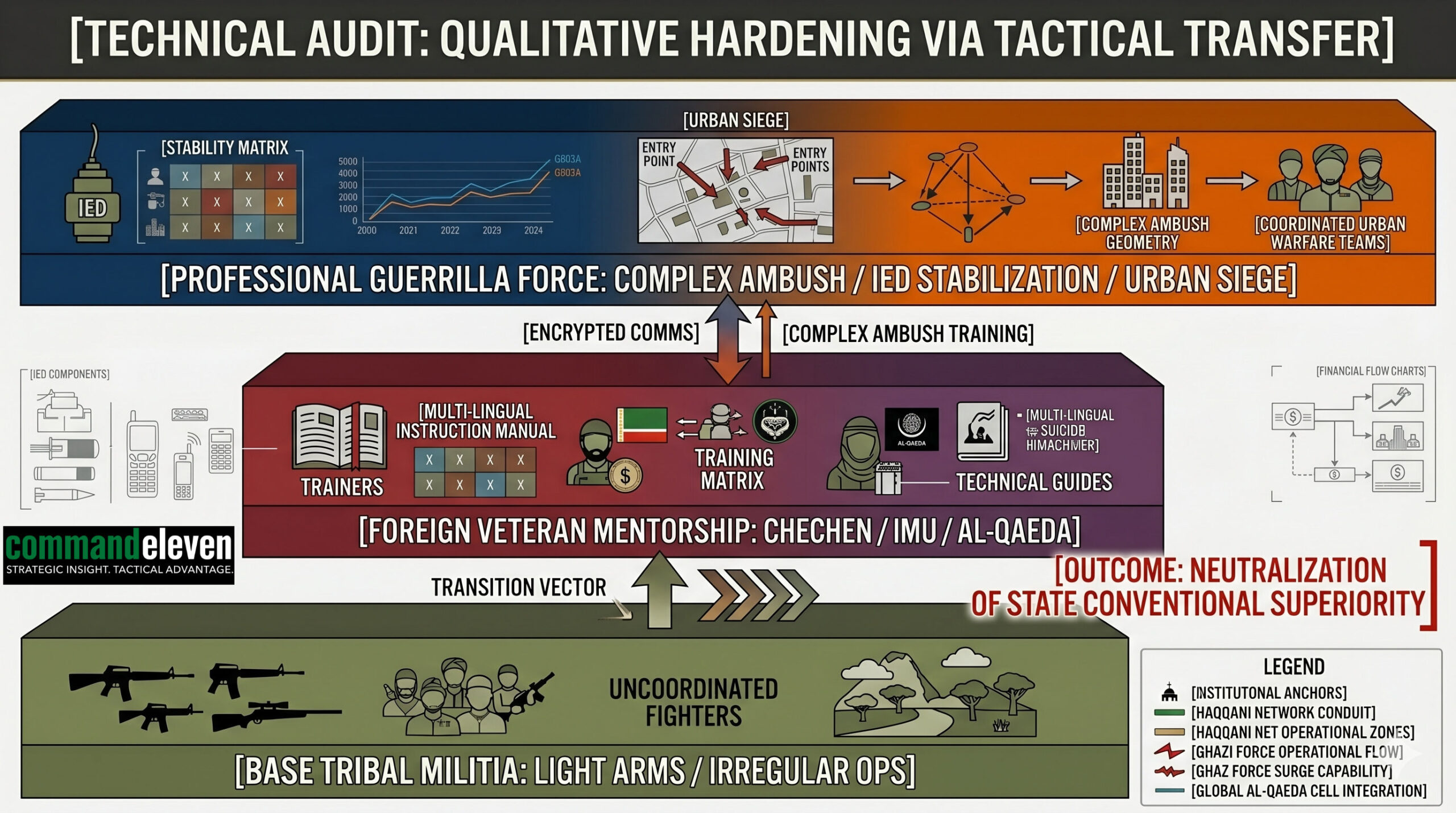
- Tactical Acceleration: Foreign veterans provided the critical transfer of advanced asymmetric tactics, enabling tribal militias to strike hardened state military installations like the GHQ and PNS Mehran.
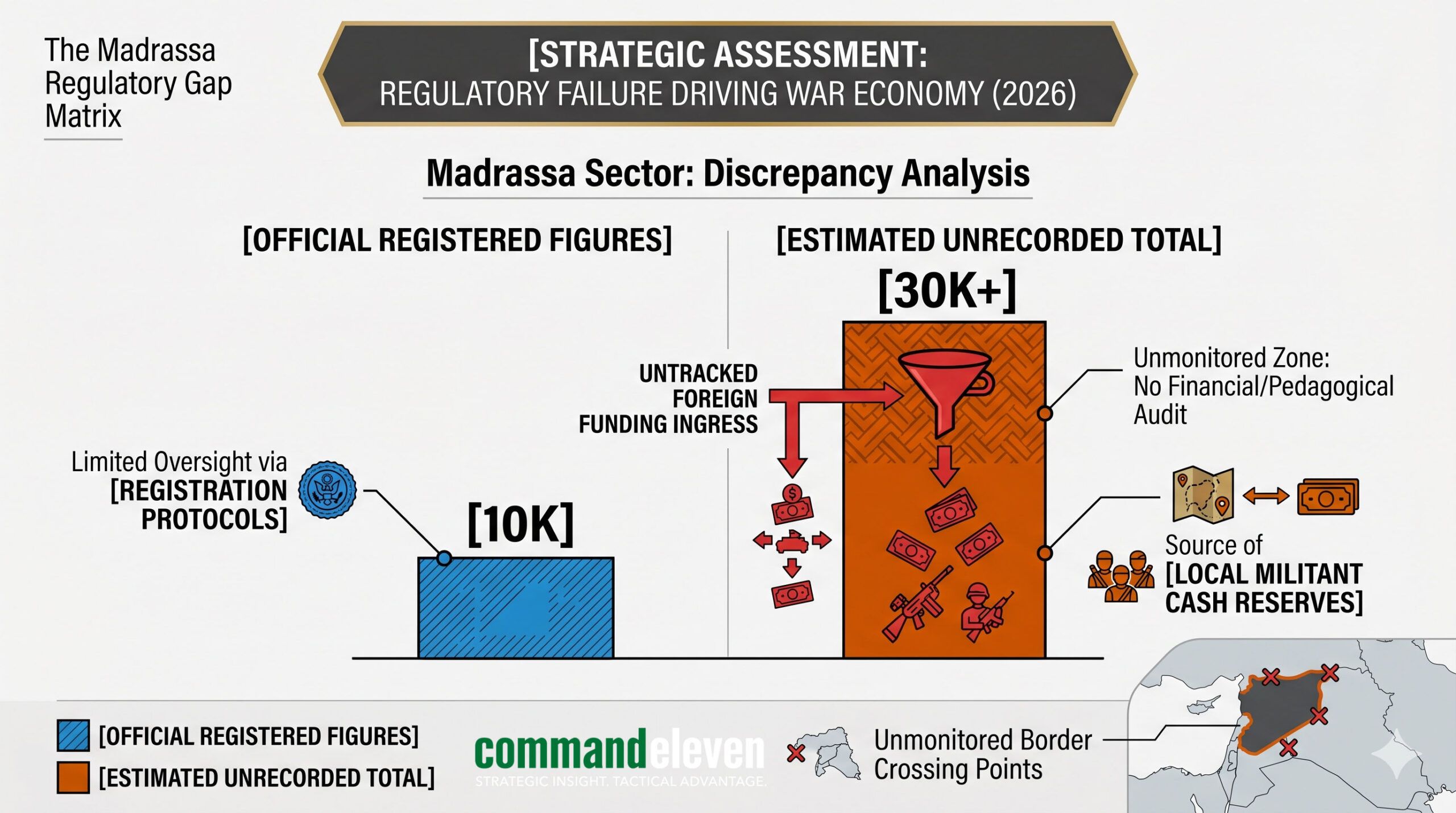
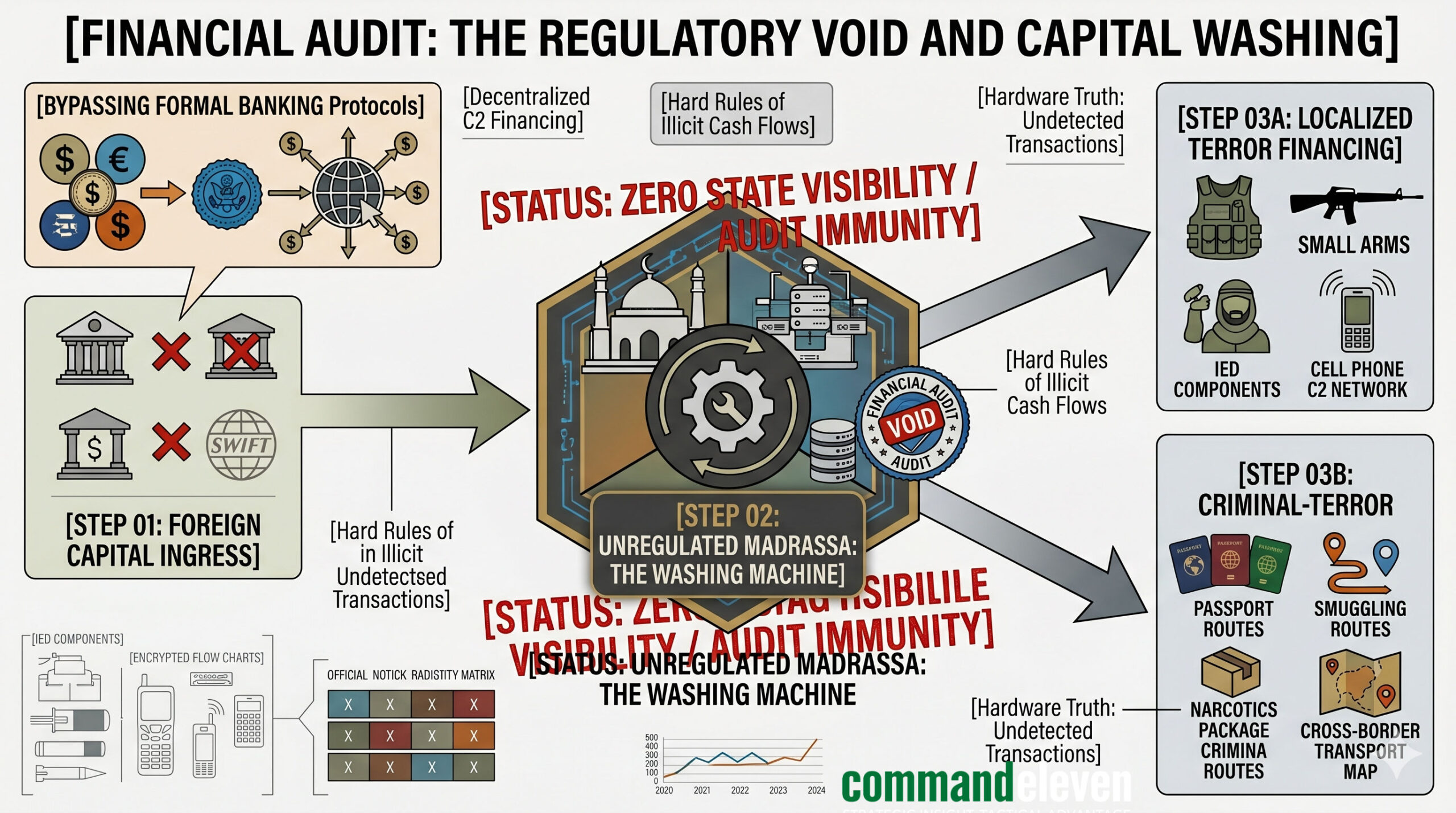
- The Regulatory Void: A systemic failure to audit and register seminaries has created an unquantifiable war economy. Actual estimates suggest unrecorded madrassas outnumber registered ones by tens of thousands.
- Financial Innovation: As external funding faced sanctions, the nexus pivoted to a self-sustaining criminal-terror model, utilizing extortion, kidnapping, and “washed” religious donations to maintain liquidity.
The Afghan Sanctuary & International Mentorship
The insurgency did not develop its advanced tactical capabilities in isolation. It was accelerated by international terror syndicates utilizing the porous western border.
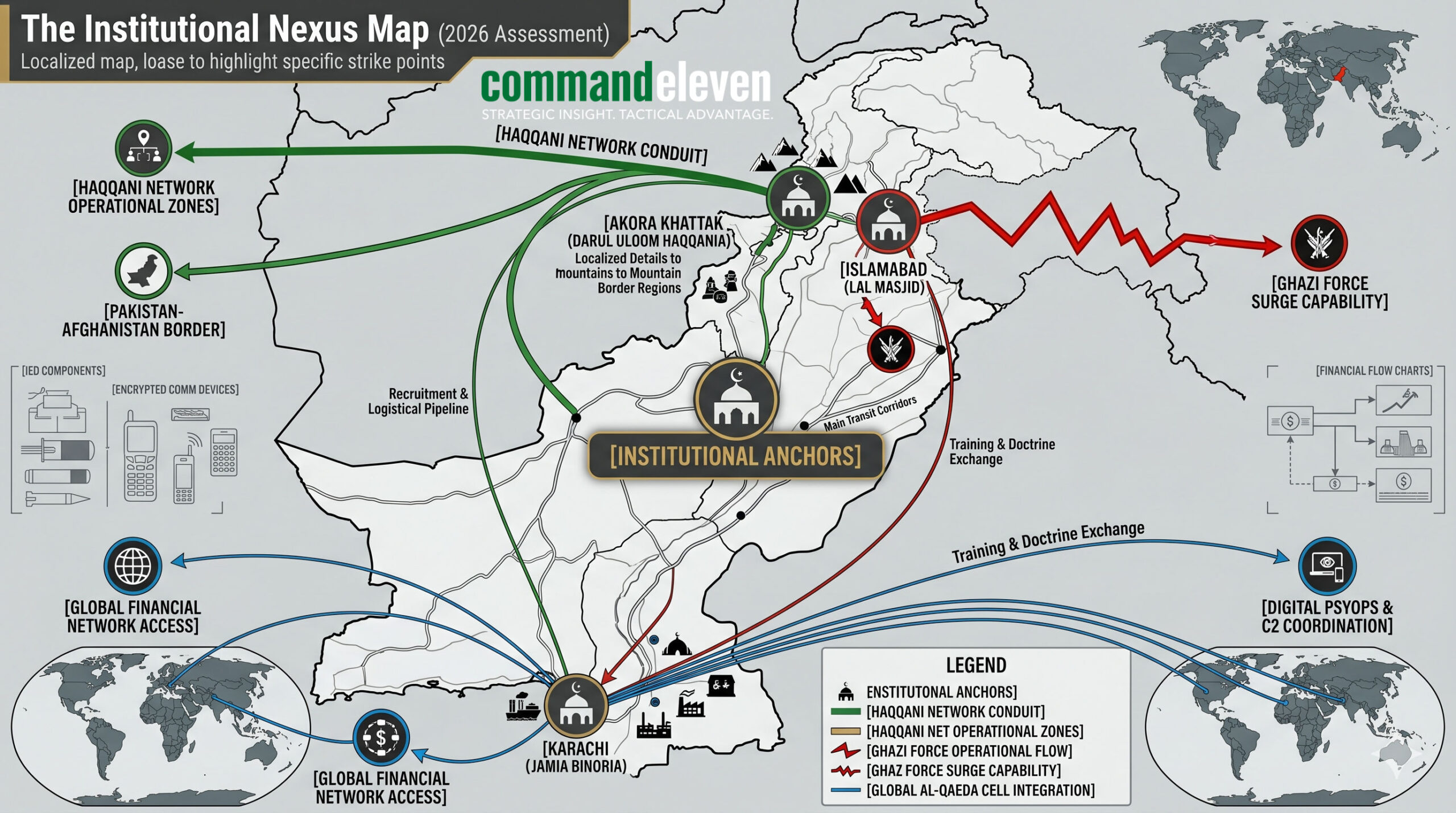
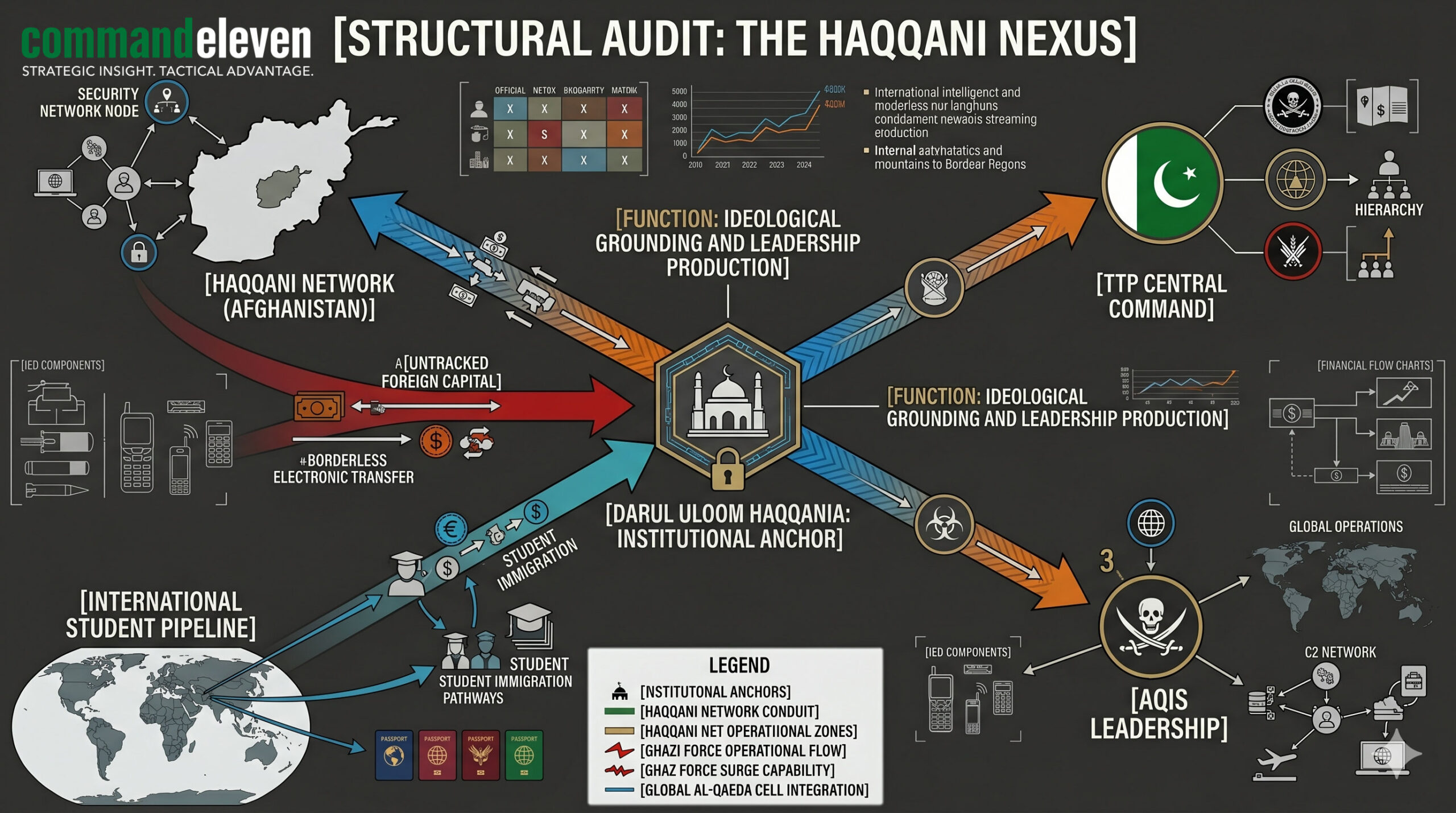
- The Symbiotic Relationship: The tribal belt functioned as a melting pot for global militancy. Local factions provided sanctuary and manpower, while transnational groups (Al-Qaeda Central, IMU, ETIM) provided strategic direction and global connectivity.
- Tactical Transfer: Foreign veterans from Chechnya and the Afghan Jihad trained local TTP factions in Complex Ambush Execution and suicide bombing technologies. This mentorship enabled attacks on hardened military installations like GHQ and PNS Mehran.
The Madrassa Pipeline: Radicalization & Indoctrination
The ideological engine of the insurgency is sustained by a specialized network of madrassas that function as recruitment hubs.
- Ideological Staging Grounds: Institutions such as Darul Uloom Haqqania (the “University of Jihad”) and Jamia Binoria have provided the theological framework for the insurgency.
- The Haqqani Connection: Haqqania has trained generations of Afghan Taliban and TTP leaders, fostering an ideological bond that transcends tribal and national boundaries.
- Global Outreach: These institutions function as entry points for radicalized international youth, creating a global reservoir of potential recruits.
The Terror-Dollar & Domestic War Economy
The survival of the insurgency relies on an innovative and self-sustaining economic model.
- The Evolution of Funding: As external proxy funding faced global sanctions, the networks transitioned to a localized, criminal-terror enterprise.
- Criminal-Terror Nexus: Infrastructure previously used for international funds was converted into domestic extortion rackets, kidnapping-for-ransom rings, and localized “zakat” collections.
- Untraced Financial Ecosystems: The lack of madrassa bank audits allowed massive sums of foreign capital to be washed as “religious donations,” making it nearly impossible for intelligence agencies to starve the insurgency economically.
Clinical Conclusion
Volume VI proves that the domestic insurgency is a component of a much larger global machine. To dismantle this network, the state must look beyond the mountains of Waziristan and address the Madrassa Pipeline and the Untraced War Economy. Kinetic operations only address the “symptoms”; strategic victory requires a total audit of the financial and ideological infrastructure that provides the insurgency with its Administrative Oxygen.