BLUF: The Ghazi Force represents a specialized, hyper-lethal splinter group that emerged from the 2007 siege of Lal Masjid. Functioning as a technical and ideological bridge between the Madrassa Pipeline and the Transnational Nexus, the group transformed a localized grievance into a sustained urban suicide campaign targeting the state’s security apparatus in the capital.
Genesis: The 2007 Siege as a Catalyst
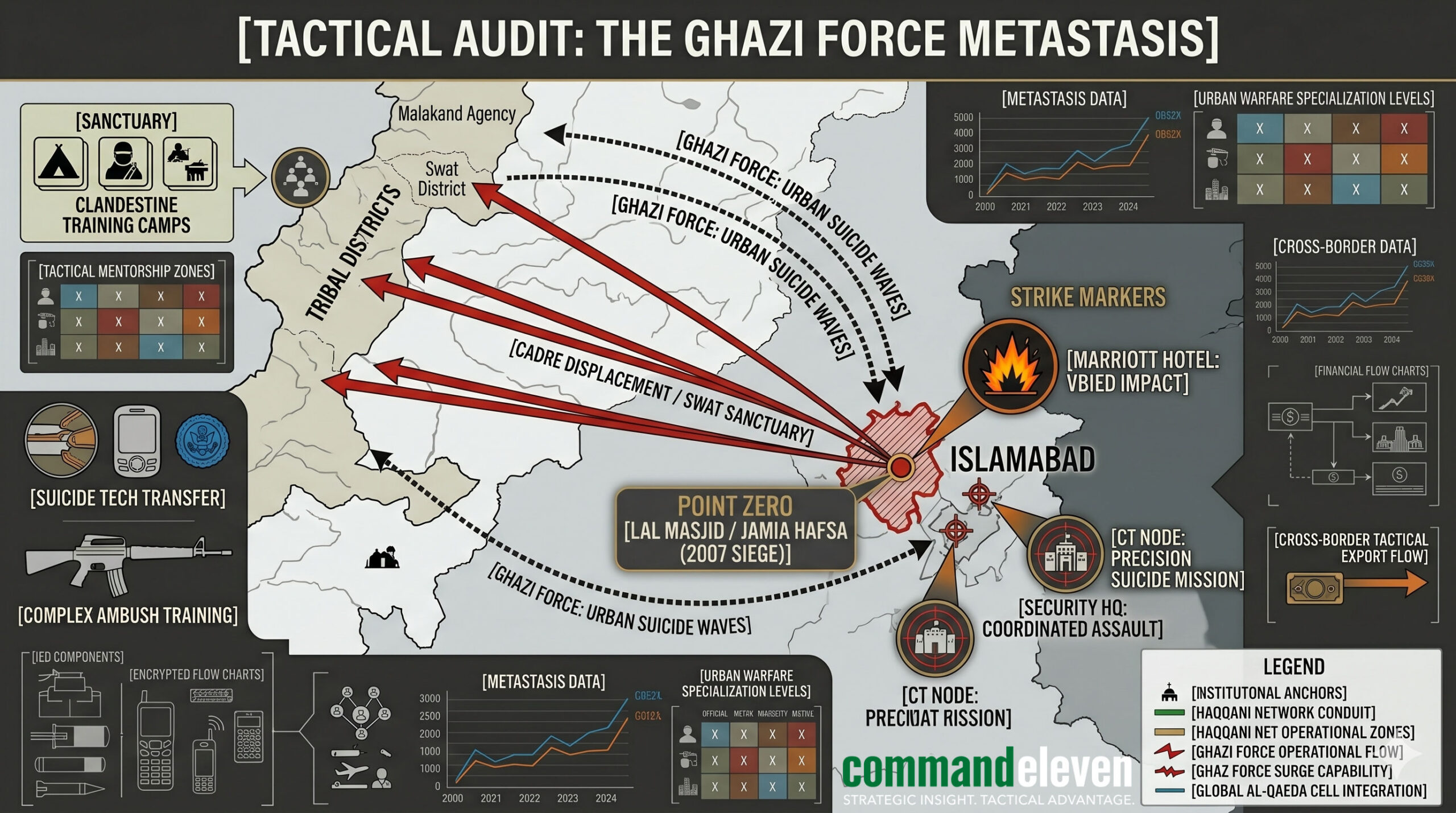
The formation of the Ghazi Force was a direct result of the perceived “sanctity violation” during Operation Silence (the military siege of Lal Masjid).
- The Vengeance Doctrine: Following the death of Abdul Rashid Ghazi and the destruction of the Jamia Hafsa seminary, radicalized students and surviving cadres fled to the tribal belt.
- The Swat Link: The group found immediate sanctuary and ideological alignment with Maulana Fazlullah in Swat. Fazlullah utilized the Ghazi Force as his primary urban strike arm, specializing in attacks within the capital city.
- Targeted Recruitment: The group leveraged the vast network of male and female students associated with Lal Masjid to establish deep-cover sleeper cells in Islamabad and Rawalpindi.
Operational Mechanics: Urban Suicide Waves
The Ghazi Force introduced a level of precision in urban suicide operations that had previously been absent from the domestic insurgency.
- Focus on the Security Core: Unlike de-territorialized groups that targeted civilians, the Ghazi Force focused almost exclusively on high-value military and intelligence targets.
- The 2007-2009 Escalation: The group is assessed to be responsible for the high-frequency suicide bombings at the Tarbela Ghazi Airbase, the 2008 Marriott Hotel bombing, and multiple strikes on the offices of the SSG and military intelligence.
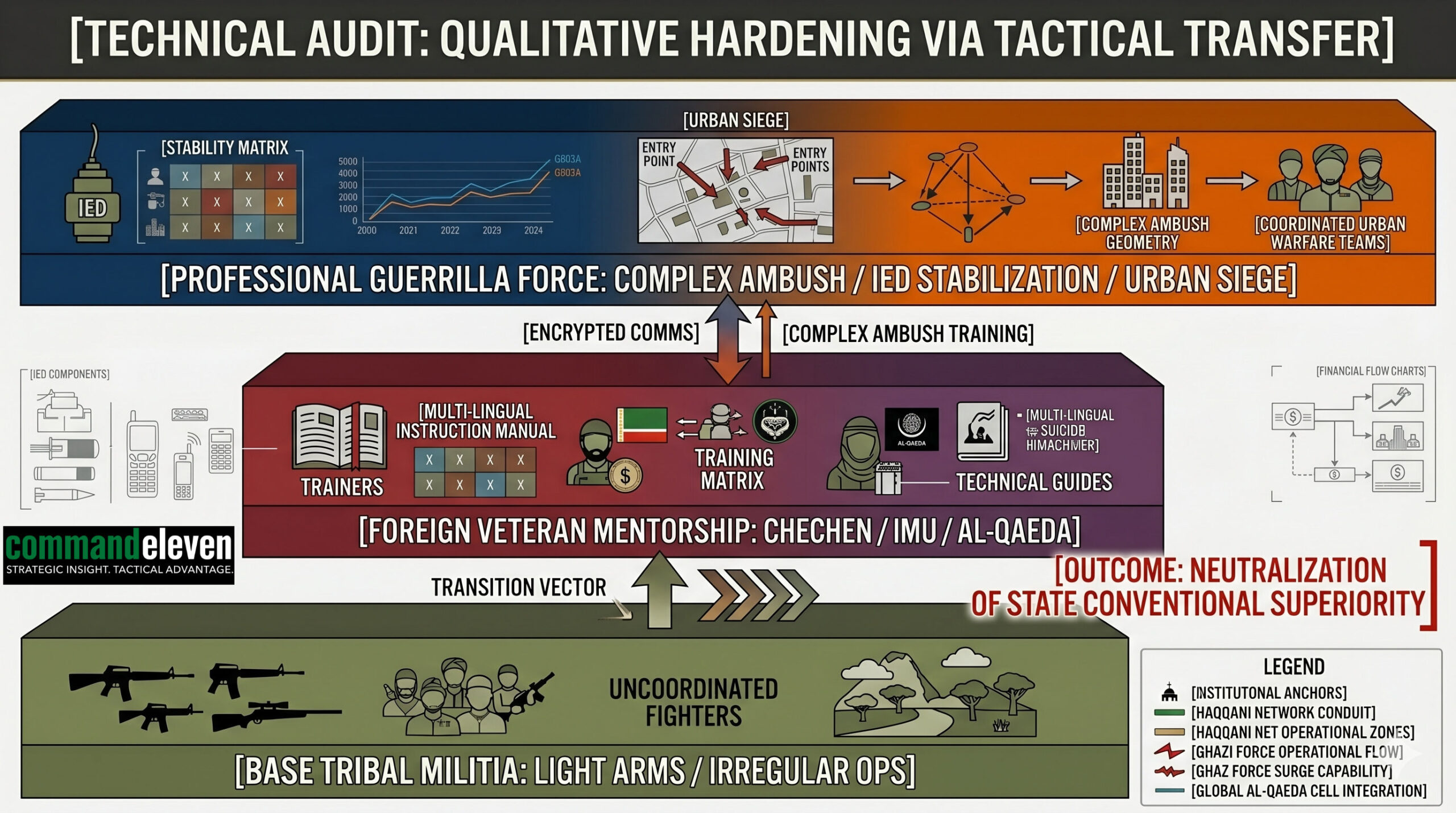
- Tactical Innovation: They utilized “revenge-based recruitment,” where family members of those killed in the 2007 siege were conditioned as suicide operatives, creating a cycle of violence that was difficult for traditional HUMINT to penetrate.
The Transnational Connection
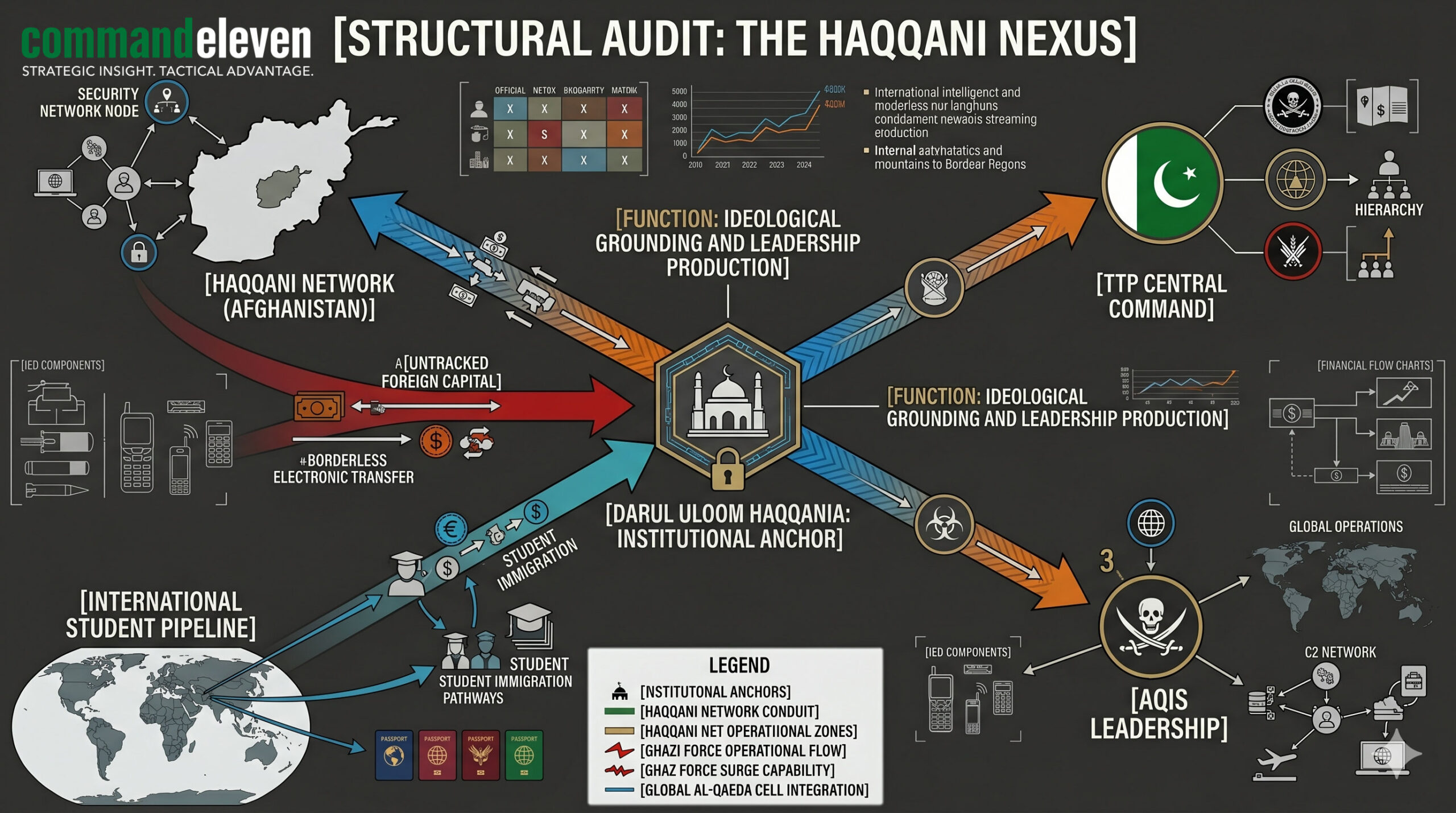
The Ghazi Force functioned as an institutional anchor for foreign operatives within the capital’s periphery.
- Al-Qaeda Mentorship: Foreign veterans provided the Ghazi Force with technical expertise in explosive stabilization and secure urban communication.
- Operational Fusion: By 2010, the group had largely integrated into the TTP’s central command structure but maintained its unique identity as the “Avenging Hand” of the Lal Masjid movement.
Clinical Conclusion
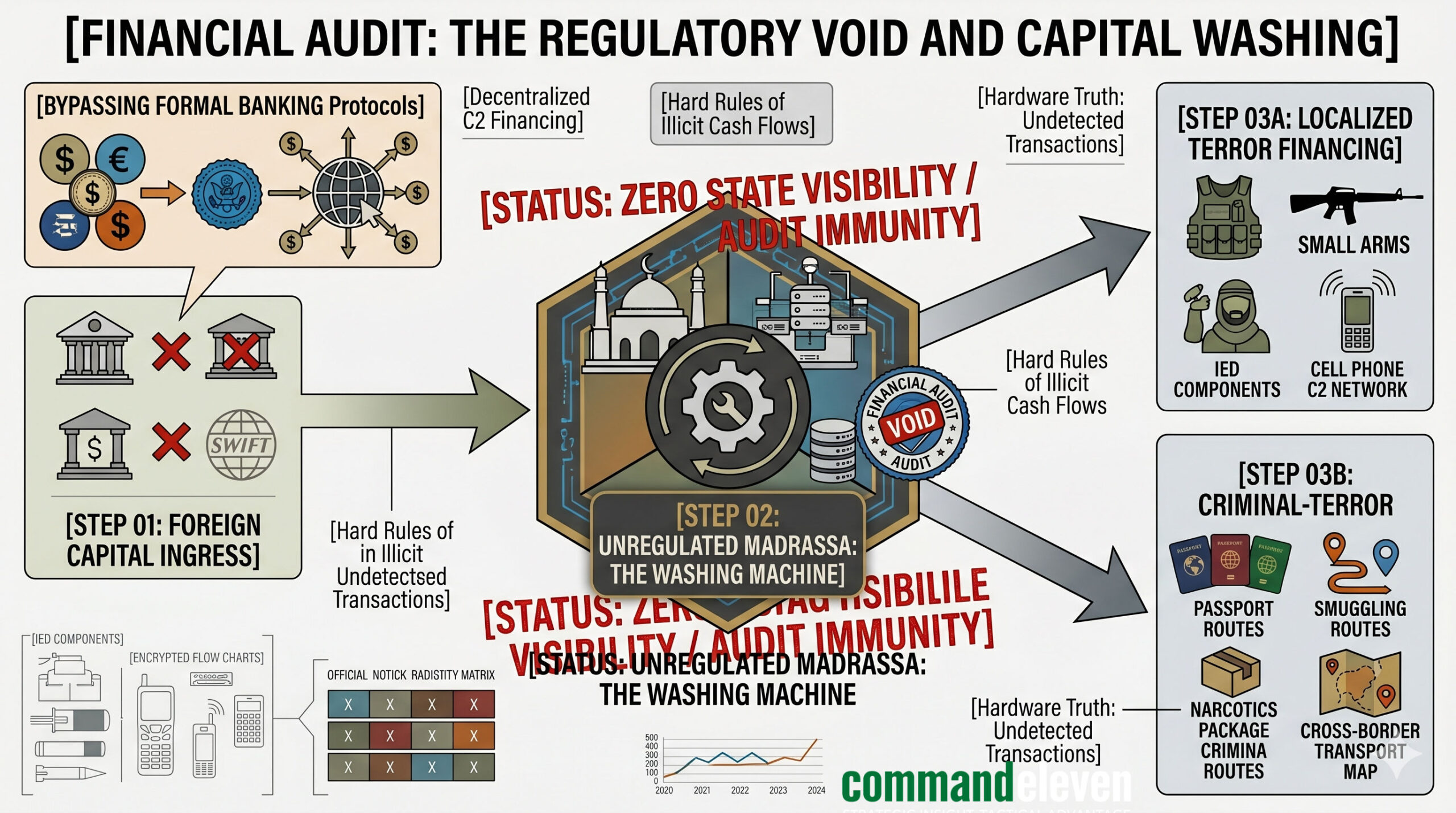
The Ghazi Force serves as a primary example of how Regulatory Failure in the capital’s religious infrastructure can metastasize into an existential kinetic threat. The 2007 siege did not end the threat; it merely decentralized it, transforming a localized staging ground into a nationwide suicide campaign. The group effectively proved that ideological conditioning within the Madrassa Pipeline remains the most potent fuel for urban asymmetric warfare.