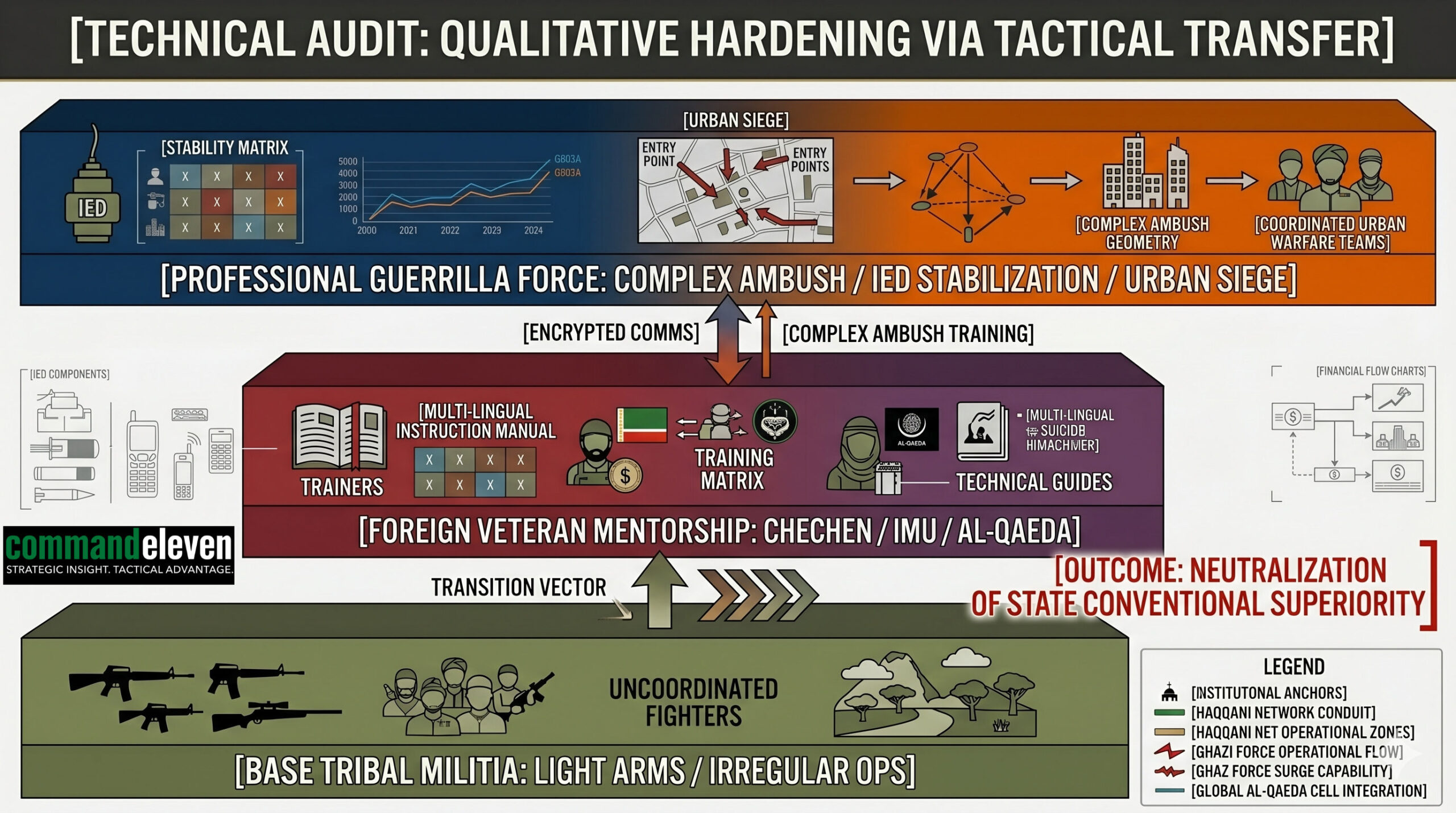
BLUF: The rapid transition of the TTP from a localized tribal militia to a professional guerrilla force capable of challenging state military institutions was the direct result of a specialized Tactical Transfer from foreign veterans. Fighters with combat experience in Chechnya, Central Asia, and the early Afghan Jihad utilized the Pakistan-Afghanistan border sanctuaries to provide the “Technical Bridge” that neutralized conventional military superiority in localized engagements.
Key Mentorship Entities
The Transnational Nexus introduced specific, high-end skill sets through three primary foreign components:
- The Chechen Cadre: Renowned for expertise in Urban Siege Tactics, high-precision sniping, and IED stabilization. Their involvement was a primary driver in the increased lethality of the “Long War.”
- Islamic Movement of Uzbekistan (IMU): Specialized in Complex Ambush Execution and secure, low-signature communications. The IMU was instrumental in the planning and execution of the PNS Mehran and GHQ assaults.
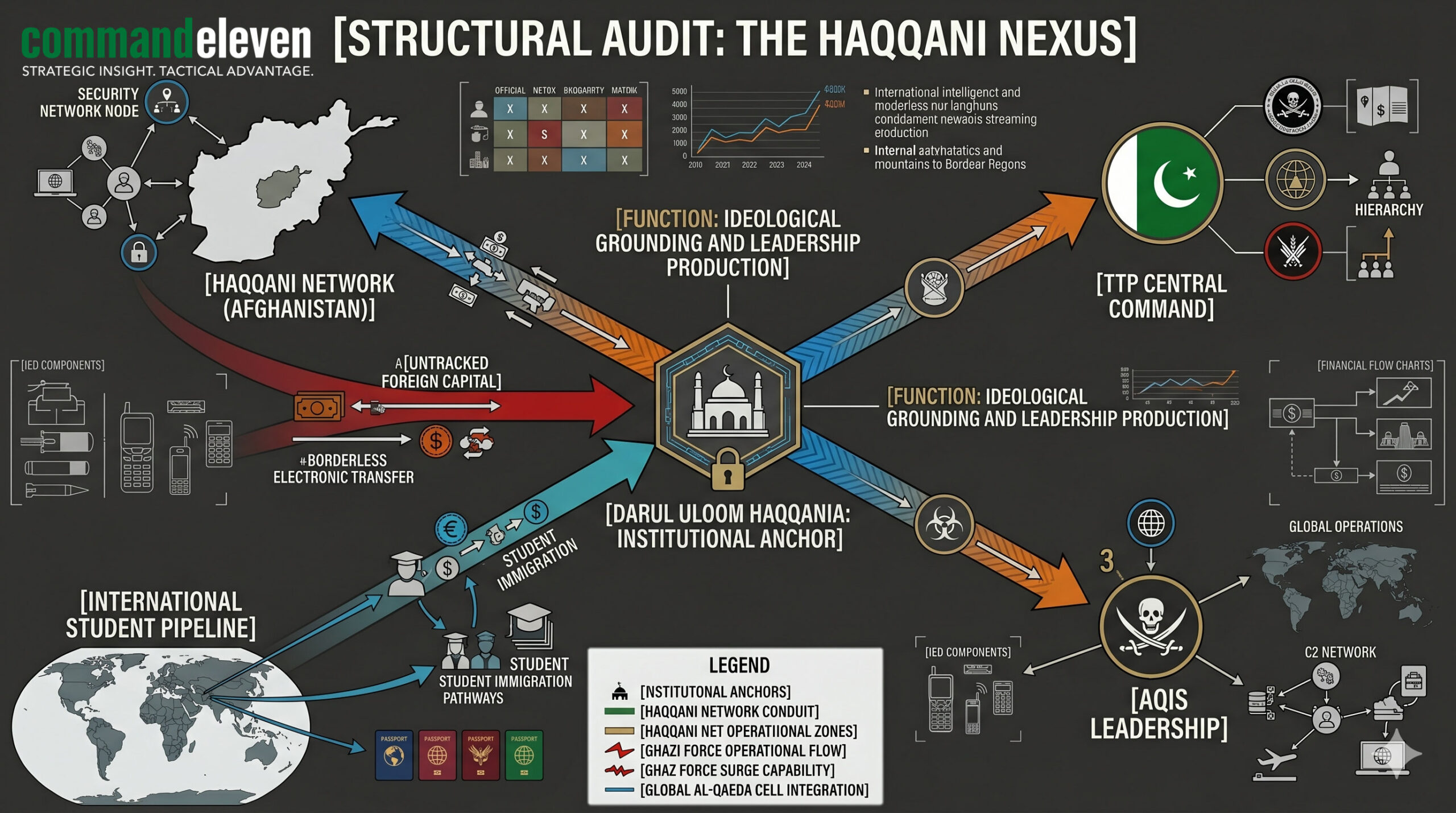
- Al-Qaeda Central (AQC): Provided the strategic and organizational framework, training TTP leadership in bureaucratic command structures and global media projection.
Technical Domains of Transfer
Advanced Asymmetric Combat
Mentorship from foreign veterans taught local cadres how to execute multi-dimensional strikes that overwhelmed traditional security postures.
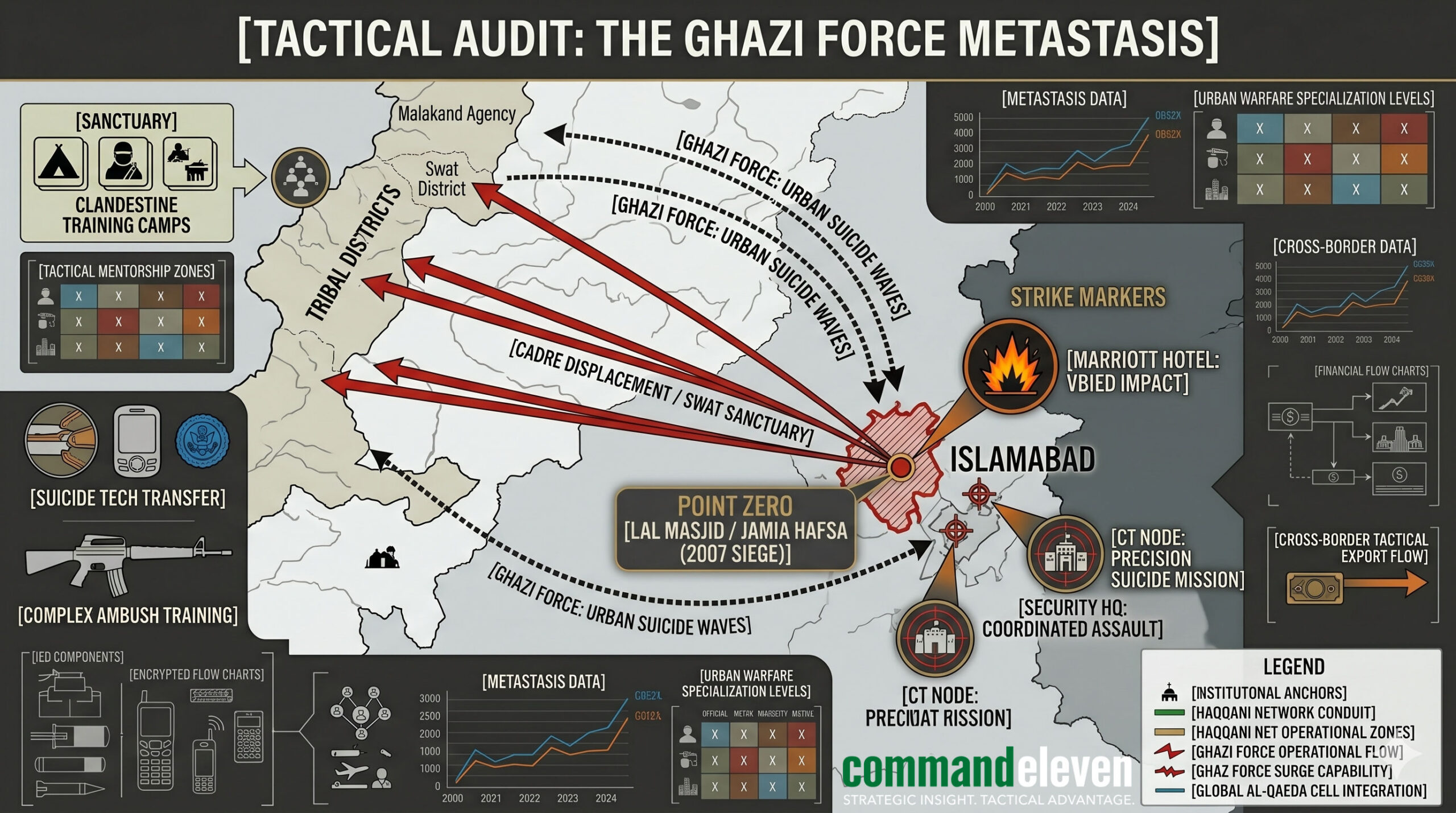
- Complex Ambush: Integrating synchronized suicide diversions with heavy automatic fire, a tactic later perfected during the urban phases of the insurgency.
- Suicide Technology: Foreign experts assisted in the miniaturization of suicide vests and the integration of ball bearings for maximum fragmentation, leading to the devastating Urban Suicide Waves.
Secure Signaling and Evasion
Foreign cadres provided the technical instruction required to evade state detection.
- Electronic Counter-Measures: Instruction on evading military SIGINT and the use of specialized, low-frequency radios for secure communication in mountainous terrain.
- Operational Resilience: Training allowed militant nodes to survive Scorched Earth operations by teaching them when to disperse and how to re-form into lethal strike units.
Strategic Outcome: The Qualitative Edge
This mentorship effectively ended the “Military-Insurgent Gap.” By 2009, the TTP was no longer a ragtag group of tribesmen but a professional guerrilla force with the confidence to strike the “Heart of the Republic,” including the GHQ in Rawalpindi.
- Confidence in Attrition: The transfer of these tactics gave the insurgency the capability to sustain a long-term war of attrition against a much larger conventional force.
- Internationalized Combat Force: Every military operation was no longer facing a local rebellion but an internationally subsidized combat force that had mastered the art of asymmetric attrition.
Clinical Conclusion
The Tactical Transfer from foreign veterans acted as a force multiplier for the domestic insurgency. While the Madrassa Pipeline provided the raw manpower, the Transnational Nexus provided the expertise. For the state, this means that kinetic success requires more than just territorial control; it requires the systematic dismantling of the international expertise and logistical handshaking that sustains the insurgency’s qualitative edge.