Technical Takeaways
- Automation of Transpacific Supply Loops: Mexican TCO networks have integrated their logistics pipelines with East Asian front companies to secure a steady supply of dual-use electronic components and chemical precursors, transforming traditional smuggling lines into a highly technical supply network.
- Migration to Advanced DeFi Ecosystems: The wholesale adoption of non-custodial digital asset networks and privacy tokens (XMR) has decoupled cartel finances from the formal international banking system, rendering legacy sanctions models completely ineffective.
- Weaponization of Cartel Supply Corridors: Hostile extra-regional intelligence networks can exploit established criminal smuggling pathways to insert personnel and hardware into North America, allowing them to map critical infrastructure vectors without triggering national security alert networks.
Bottom Line Up Front (BLUF)
The convergence of Tier-1 Mexican Transnational Organized Crime (TCO) networks – specifically the Cartel de Jalisco Nueva Generación (CJNG) and the Sinaloa Cartel (CDS) – with transpacific illicit logistics networks has evolved into a strategic national security threat targeting the Western Hemisphere. Moving beyond basic narcotics trafficking, this convergence integrates advanced cyber-kinetic laundering frameworks, dual-use drone sub-component procurement pipelines, and chemical precursor supply lines managed by East Asian criminal syndicates. By exploiting these established networks, hostile extra-regional intelligence actors can conduct low-signature asymmetric reconnaissance and access critical infrastructure vectors inside North America entirely undetected.
The Transpacific Logistics Pipeline
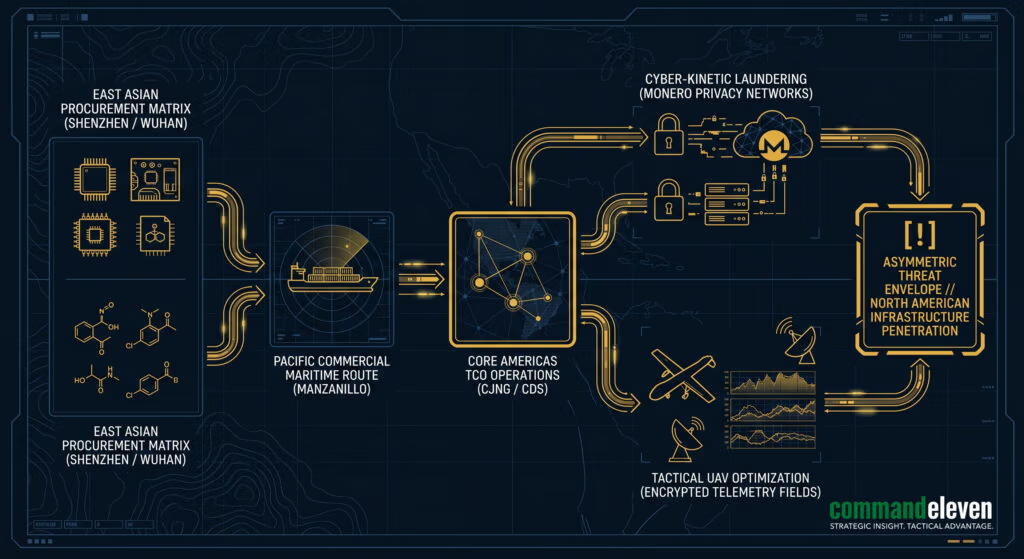
The operational capacity of contemporary Americas-based TCOs relies on a highly structured, transpacific supply loop. Advanced chemical precursors and specialized mechanical components do not move through ad-hoc smuggling vectors; instead, they are routed through commercial maritime transport networks connecting manufacturing hubs in East Asia directly to primary Pacific port entries in Mexico, specifically Manzanillo and Lázaro Cárdenas.
This pipeline is managed through front companies operating out of industrial logistics hubs in Shenzhen, Wuhan, and Guangzhou. These fronts misdeclare commercial cargo manifests, labeling high-concentration chemical precursors and dual-use hardware components as standard consumer goods, agricultural fertilizers, or commercial electronics.
Once these shipments enter Mexican maritime ports, they are received by armed cartel logistics cells. These units leverage compromised local customs infrastructure to bypass inspection grids and rapidly distribute the cargo to specialized conversion labs and tactical workshops near the United States southern border.
Technical Integration: Cyber-Kinetic Laundering & Tactical Weaponization
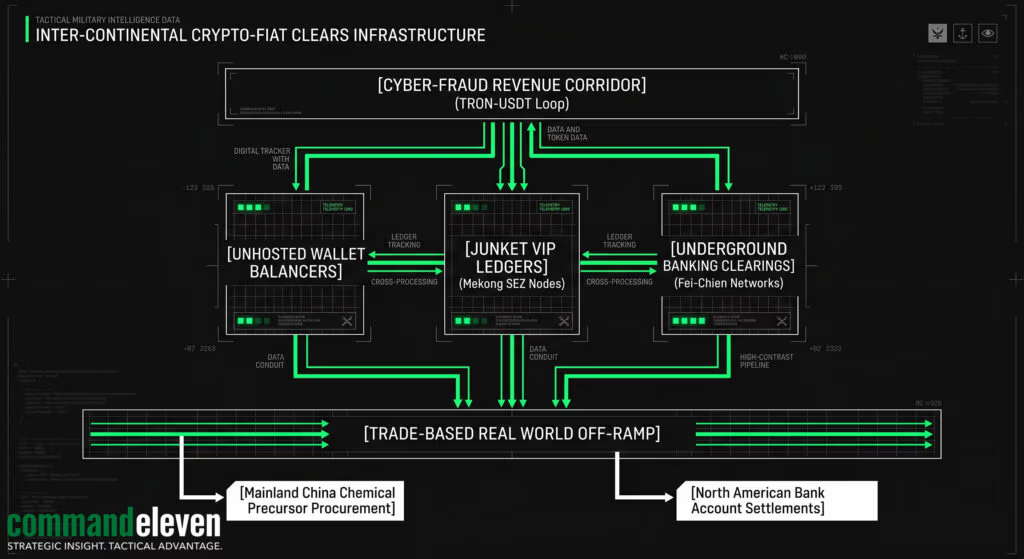
The transpacific convergence has significantly upgraded the technical capabilities of Mexican TCOs, allowing them to transition their daily operations into the cyber-kinetic realm. This upgrade is visible across two primary operational layers:
Decoupled Cyber-Laundering Matrices
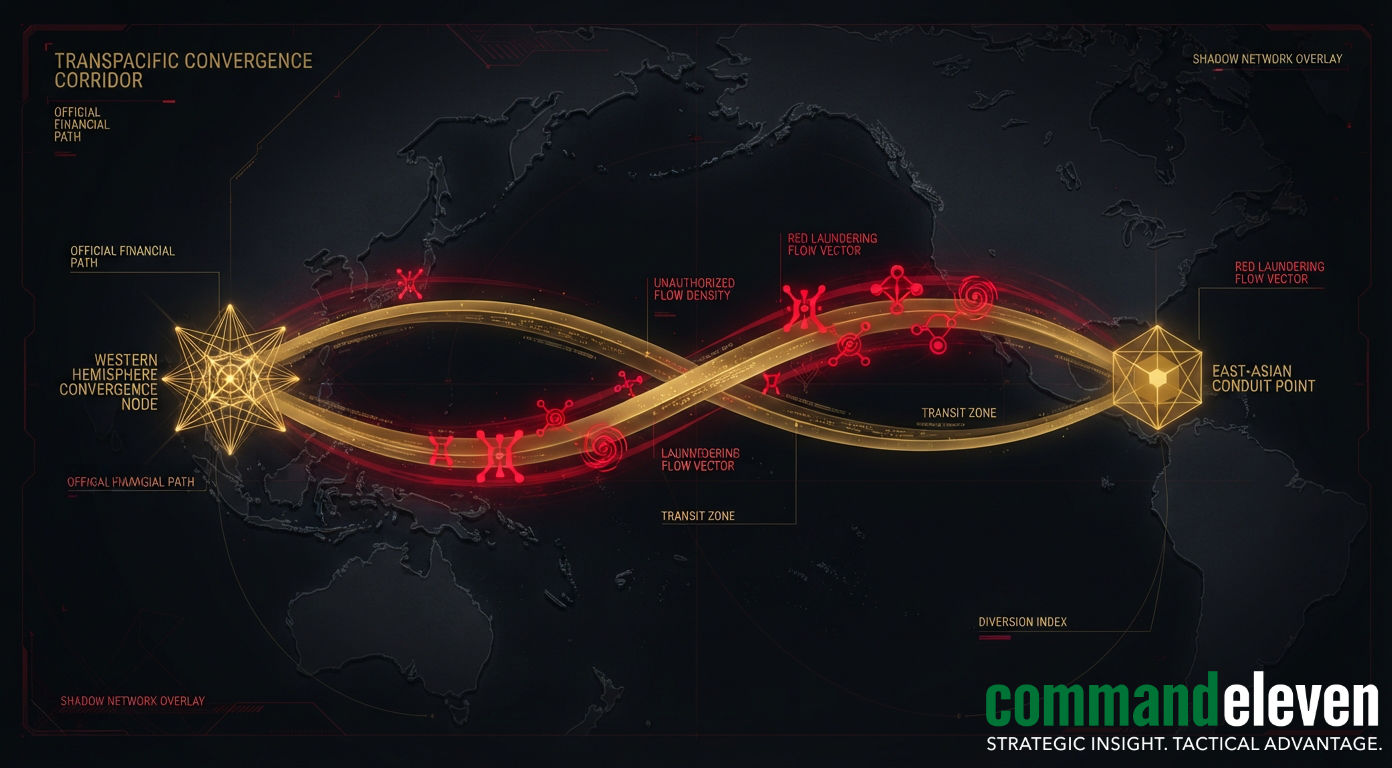
To insulate their financial reserves from state asset-seizure initiatives and Western banking sanctions, cartels have entirely abandoned traditional cash-smuggling models and legacy banking setups. Working with technical cells tied to East Asian shadow banking syndicates, cartels route illicit capital through complex networks of decentralized finance (DeFi) systems.
Using mirror-trading strategies, non-custodial digital asset mixers, and privacy-focused tokens (XMR), cartels instantly convert cash liquidity into untraceable digital assets. These assets are then liquidated directly into legitimate commercial real estate, agricultural assets, and technological ventures across the globe, creating a seamless, self-funding operational cycle.
Systemic Uncrewed Systems Optimization
Leveraging dual-use electronic sub-components procured through transpacific networks, cartels have successfully automated their tactical strike capabilities. Both CJNG and CDS deploy custom, weaponized unmanned aerial vehicles (UAVs) equipped with long-range telemetry range-extenders, encrypted control modules, and impact-triggered explosive payloads.
These weaponized COTS drones are deployed defensively to protect cartel-held territory from state military incursions, and offensively to target rival command elements, execute stand-off attacks against security outposts, and conduct aerial reconnaissance along primary trafficking corridors.
Extra-Regional Intelligence Exploitation & Infrastructure Blindspots
The ultimate danger of this convergence lies in the ease with which hostile extra-regional intelligence actors can exploit established cartel logistics corridors. Because cartels have built highly reliable networks to bypass customs inspections, penetrate physical borders, and secure safe houses near major North American population centers, these corridors can be repurposed to transport state-sponsored threat assets.
Hostile intelligence operatives can move seamlessly through these established cartel pipelines under deep cover, completely bypassing traditional biometric border verification networks.
Once positioned inside North America, these state-backed cells focus their efforts on mapping critical infrastructure networks, including electrical substations, water treatment facilities, telecommunications switching centers, and rail transport lines.
Because Western domestic security apparatuses are currently focused on identifying state-level peer competition via high-visibility digital and economic indicators, the quiet, localized signatures of a state-backed intelligence cell moving through a standard criminal smuggling channel represent a major national security blindspot.