Bottom Line Up Front (BLUF)
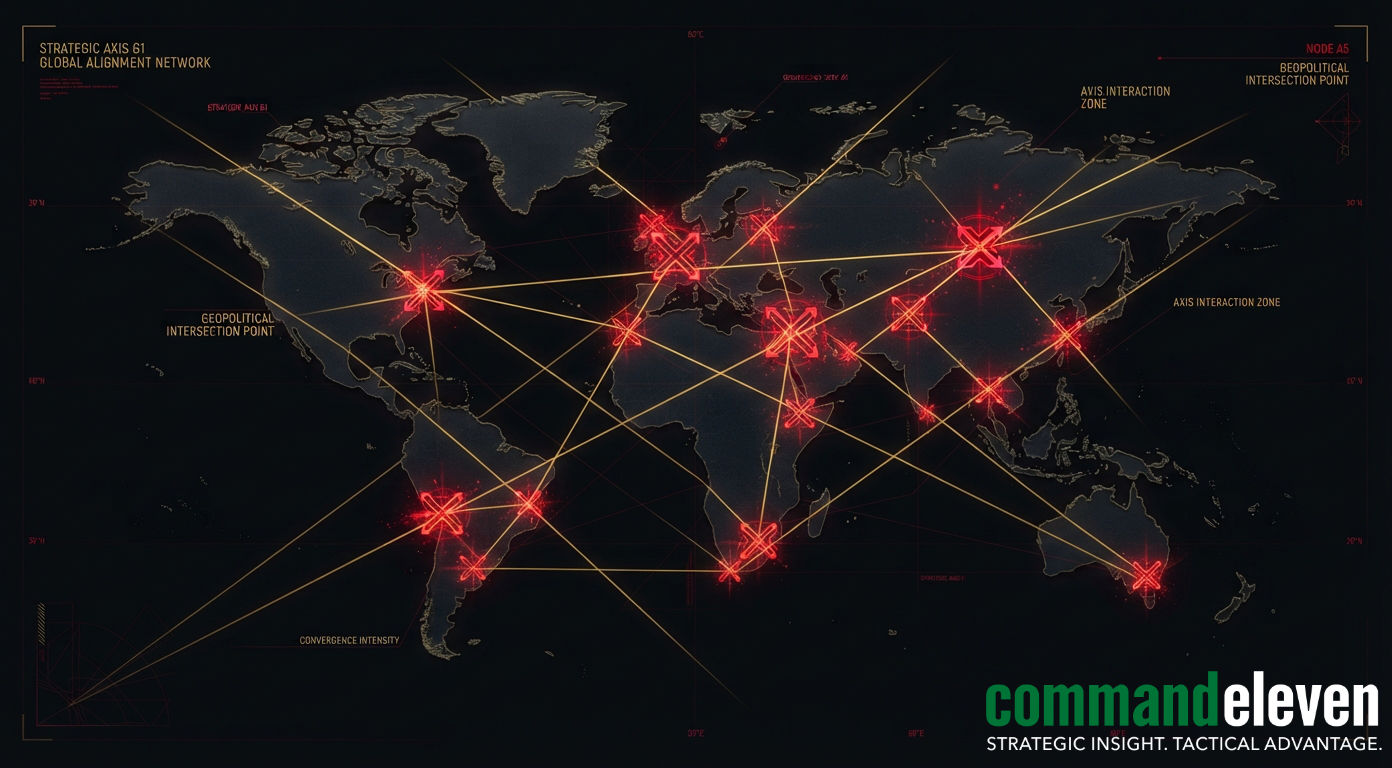
The intersection of non-state kinetic operations with state-sponsored proxy architectures has dissolved traditional regional threat boundaries. Contemporary kinetic axes no longer operate as isolated insurgencies; instead, they function as interdependent logistics and tactical networks spanning South Asia, the Middle East, East Africa, and the Western Hemisphere.
This Strategic Preface establishes the analytical framework for the Kinetic Axes updates, mapping the systemic convergence of weapon proliferation, state-level proxy manipulation, and transnational organized crime networks that directly undermine Western and regional security perimeters.
Executive Summary of Operational Theaters
To navigate the fluid shifts within the global kinetic landscape, this series deconstructs the theater into five specialized operational modules:
- The Regime-Structure Evolution Blueprint: The core structural matrix mapping the institutional shifts, command decentralization, and systemic realignments of regional threat actors moving away from legacy insurgent models into permanent asymmetric parallel states.
- Indian Subcontinent Regional Security Seams: A granular look at the volatile cross-border friction points, localized safe havens, and the structural vulnerabilities currently being exploited by non-state actors along the critical frontier zones.
- Western Weapons Proliferation (TTP & BLA): A technical telemetry audit detailing the leakage, diversion, and tactical integration of advanced Western-origin military hardware, night-vision optics, and encrypted communication systems into the frontline arsenals of regional militant syndicates.
- Middle East and East Africa Kinetic Axes: An analysis of the cross-theater logistics corridors, maritime smuggling lines, and tactical symbioses linking Levant-based factions with expanding militant networks across the East African littoral.
- The Americas Core TCOs & Transpacific Convergence: The series capstone documenting the highly technical nexus where Tier-1 Mexican cartels interface with East Asian industrial front networks to deploy cyber-kinetic laundering frameworks and weaponized uncrewed aerial vehicles (UAVs) near the North American homeland.
- Module A – Transnational Threat Architecture: The Inter-Continental Junket Network: This module maps the operational mechanics of state-sponsored and non-state illicit mobility pipelines that exploit legal friction points across contiguous and non-contiguous borders. By tracking the logistics of high-value asset relocation, iterative safe-haven traversal, and the illicit utilization of commercial transport infrastructure, the framework exposes how adversarial networks achieve strategic depth. This inter-continental architecture relies on systemic corruption, asymmetric jurisdictional enforcement, and complex proxy networks to maintain continuous personnel and material pipelines, directly challenging conventional border interdiction models.
- Module B – Maritime Security Sub-Module: Transregional Maritime Logistics Nodes: This sub-module isolates choke points, maritime transshipment hubs, and coastal logistics nodes that serve as the primary force multipliers for both legitimate commerce and illicit projection. The strategic focus centers on the dual-use vulnerability of deep-water ports, automated cargo-handling facilities, and coastal littoral pathways where gray-zone maritime activity blends with global supply chains. Identifying disruptions, flag-of-convenience manipulation, and AIS (Automatic Identification System) evasion patterns within these nodes allows analysts to forecast interdiction vectors and mitigate systemic vulnerabilities within transregional maritime corridors.
- Module C – Governance & Territorial Control Sub-Module: Parallel Governance Metrics: This sub-module establishes a quantitative and qualitative matrix to assess areas where sovereign state control has been displaced or co-opted by non-state armed actors, criminal syndicates, or insurgent coalitions. By analyzing alternative service delivery, informal dispute resolution mechanisms, illicit taxation frameworks, and local population compliance, these metrics gauge the institutional depth of competing authority structures. The objective is to identify the tipping points at which parallel governance achieves de facto legitimacy, neutralizing formal state authority and establishing enduring zones of competitive control.
Primary Assessment Integration
The tactical updates compiled within this series expand upon the core metrics initially established in our primary global review. To access the foundational datasets, long-range predictive models, and comprehensive regional baseline matrices that underpin these modern kinetic adjustments, analysts must review the primary document.