Executive Summary
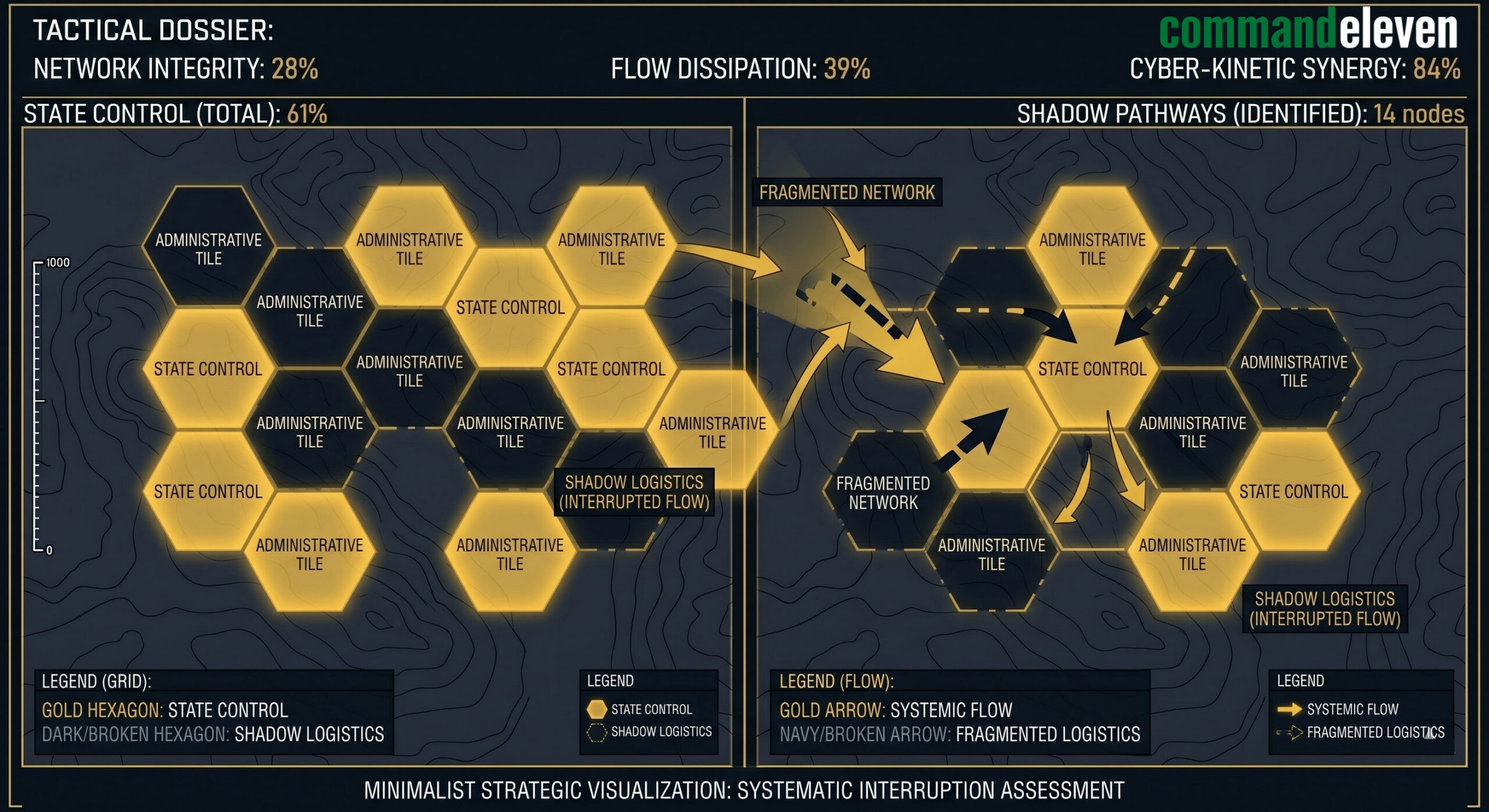
The 2007–2009 Malakand conflict serves as a clinical demonstration of the Persistence Gap. While the state pursued territorial displacement through conventional maneuvers, insurgent elements (TNSM/TTP) secured administrative control via Utility Interdiction. By establishing shadow power grids and localized jurisprudence, the insurgency filled the vacuum left by the state’s logistical failure. Sovereignty in this theater was defined by physical persistence and service delivery, not symbolic kinetic clearance.
3 Key Takeaways
- Logistical Oxygen Dominance: Insurgents prioritized control over energy and justice to create total population dependency, rendering state authority obsolete.
- Administrative Tile Agility: The state’s centralized legal and administrative model could not compete with the high-velocity execution of localized shadow courts.
- Conflict Premium Manipulation: Insurgents taxed legal trade corridors to subsidize their shadow administrative infrastructure, creating a self-sustaining insurgent economy.
Strategic Summary
The 2007–2009 Malakand conflict serves as a clinical example of the Persistence Gap. While the state focused on conventional military maneuvers, insurgent elements (TNSM/TTP) successfully executed a strategy of Utility Interdiction. By seizing control of the logistical oxygen – electricity, water, and dispute resolution – the insurgency rendered the state’s kinetic presence irrelevant.
The Mechanics of Utility Interdiction
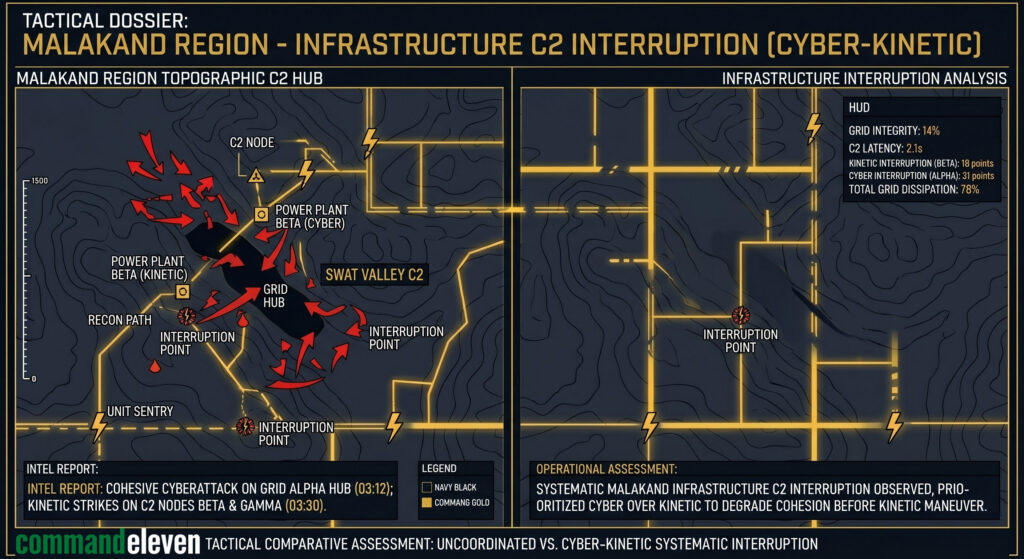
Insurgency is not merely a violent disruption; it is a competitive administrative tile. In Malakand, the insurgency targeted the state’s inability to provide functional justice and basic services.
- Grid Exploitation: Insurgents disrupted official power distribution and established a shadow grid. This forced the population to rely on insurgent “permits” for energy access.
- Shadow Jurisprudence: The state’s slow, centralized legal system created a vacuum. Insurgents filled this with high-velocity, localized “Qazi courts,” establishing immediate administrative persistence.
- Logistical Capture: By interdicting the N-45 corridor, the insurgency controlled the Conflict Premium. They taxed legal trade while subsidizing shadow logistics.
The Failure of Kinetic Dominance
Standard infantry maneuvers in the north failed to address the underlying structural deficit. Tactical clearance operations provided temporary territorial gains but lacked the Administrative Persistence required to hold the tile. Once kinetic units withdrew, the shadow logistics remained.
Doctrinal Lessons for Mosaic Defense
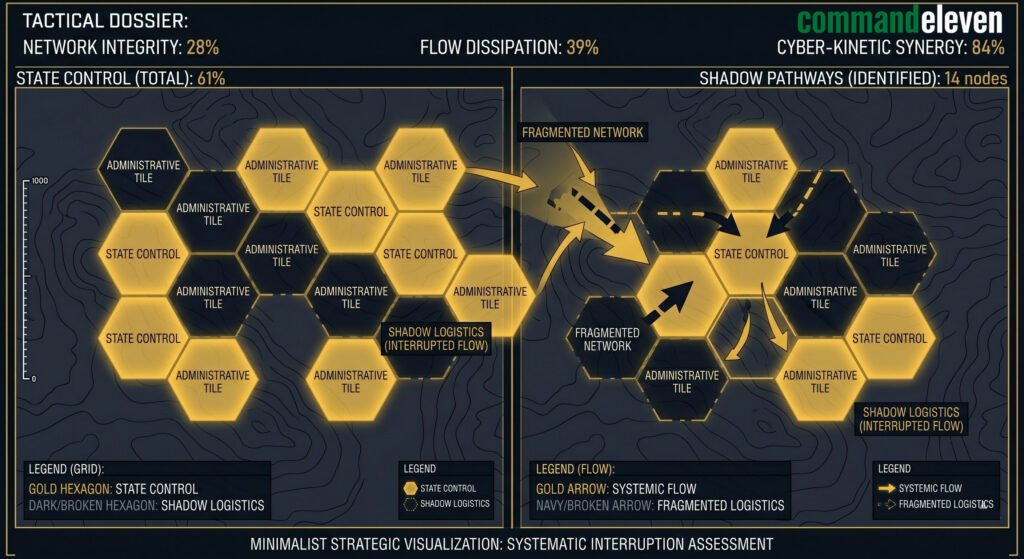
The Malakand siege proves that sovereignty is physical persistence. To counter shadow logistics, the state must adopt a Mosaic Defense model.
- Administrative Tiles: Governance must be decentralized to match the agility of the adversary.
- Logistical Oxygen: The state must prioritize the physical delivery of utilities over symbolic territorial control.
- Hardware Truth: Administrative durability requires hardened infrastructure that cannot be easily interdicted by non-state actors.
Conclusion
The Malakand Utility Siege was not a military defeat; it was a logistical surrender. Future operations along the Pakistan-Afghanistan border must recognize that the delivery of a kilowatt-hour is often more strategically significant than a kinetic strike.