Executive Summary
The surge in TTP ingress post-2021 was a predictable mechanical outcome of the Anvil Gap created by the US withdrawal from Afghanistan. CommandEleven accurately forecasted that the removal of US aerial overwatch would restore the TTP’s logistical depth and lead to the Technological Parity Crisis. This audit confirms that territorial clearance operations are unsustainable without a sealed border and that the current pivot to Operation Ghazb lil Haq was an inevitable necessity to counter the proliferation of NATO-grade hardware within the insurgent ecosystem.
3 Key Takeaways
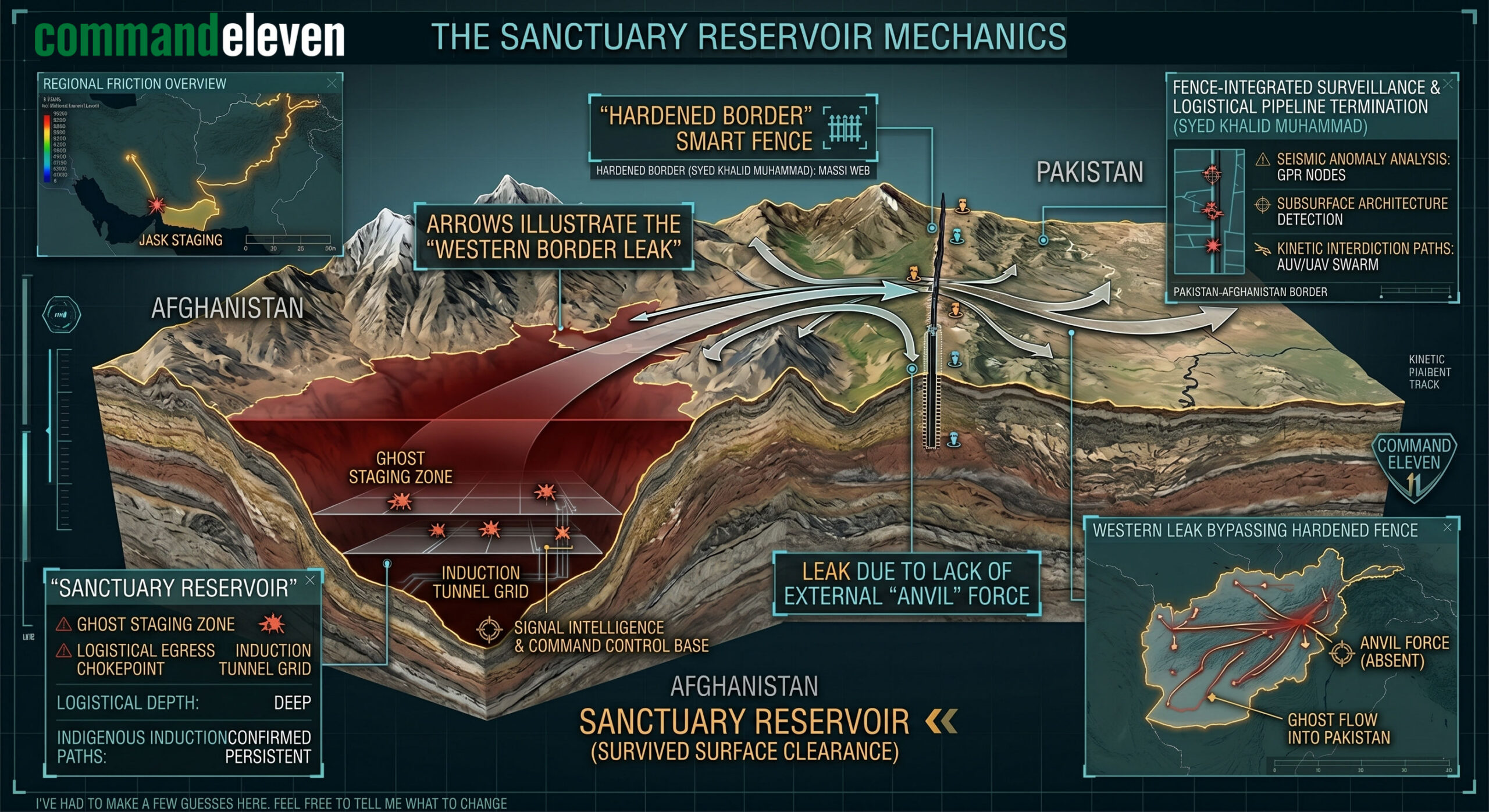
- The Hammer/Anvil Failure: Territorial clearance within the state (The Hammer) is rendered temporary if the neighboring state provides an unmonitored sanctuary (The Anvil Gap).
- Hardware Truth over Narrative: The acquisition of NATO thermal and night-vision optics by the TTP shifted the tactical physics of the border, forcing the military to abandon legacy night-combat doctrines.
- Ideological Symbiosis: The Afghan Taliban view the TTP as a “Strategic Force Multiplier,” providing them with the administrative oxygen required for sustained cross-border friction despite diplomatic assurances.
BLUF: The surge in Tehreek-e-Taliban Pakistan (TTP) ingress and the subsequent “Ghazb lil Haq” operational phase were the predictable mechanical outcomes of the Anvil Gap created by the 2021 US withdrawal. CommandEleven accurately forecasted that the removal of US aerial overwatch in Afghanistan would restore the TTP’s logistical depth and lead to a “Technological Parity Crisis” on the western border.
The “Anvil Gap” Prediction
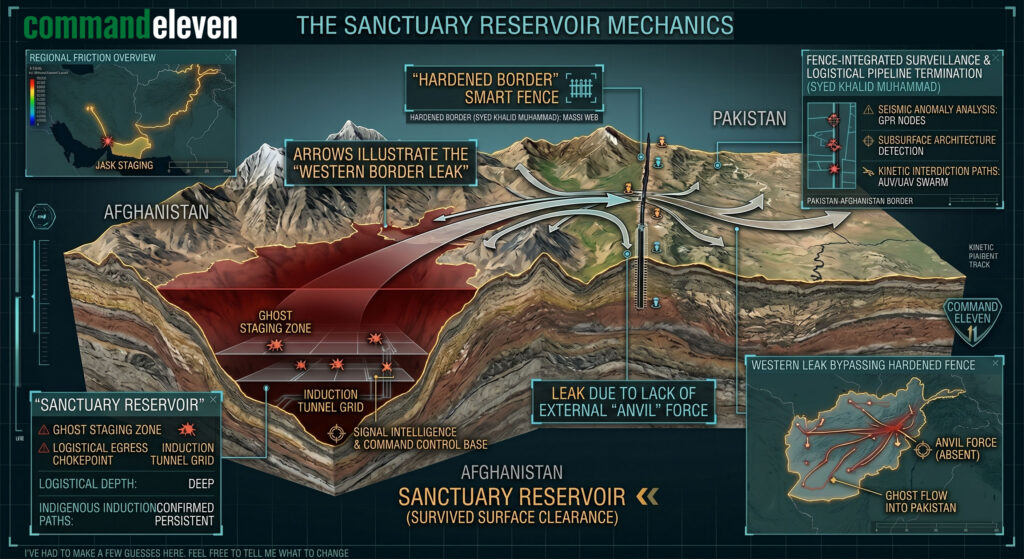
In late 2020, CommandEleven issued a series of warnings regarding the planned US exit from Afghanistan. The core of the assessment was the Hammer and Anvil failure.
- The Logic: While the Pakistani military acted as the “Hammer” (clearing territory during Zarb-e-Azb and Radd-ul-Fasaad), the Afghan state and US/NATO forces were required to act as the “Anvil” (blocking egress).
- The Foresight: We predicted that a unilateral US withdrawal would not only remove the “Anvil” but would transform Afghanistan into a “Sanctuary Reservoir.” The 2022–2024 surge in cross-border attacks, specifically in North and South Waziristan, validated this forecast with clinical precision.
The Technological Parity Crisis
CommandEleven was among the first to flag the “Hardware Catastrophe” resulting from the abandoned NATO arsenal in Kabul.
- The Forecast: We warned that the influx of night-vision goggles (NVGs), thermal optics, and M4 carbines into TTP hands would erode the state’s Night-Dominance.
- The Manifestation: By 2023, security force checkposts were being targeted by TTP sniper cadres using thermal scopes,a capability previously reserved for elite military units. This “Technological Parity” is what necessitated the pivot to Operation Ghazb lil Haq and the deployment of indigenous drone pre-emption.
Ideological Symbiosis vs. State Interest
A common geopolitical fallacy was the belief that the Afghan Taliban would “restrain” the TTP once in power. CommandEleven’s foresight countered this, identifying the Ideological Handshake between the two groups.
- The Strategic Depth Fallacy: We assessed that the TTP is viewed by the Afghan Taliban as a “Force Multiplier” and a strategic insurance policy against Islamabad’s influence.
- The Outcome: The Afghan Taliban have consistently provided the TTP with the “Administrative Oxygen” (logistics, housing, and operational freedom) predicted in our 25-year audit, leading to the current state of sustained cross-border friction.
Clinical Conclusion
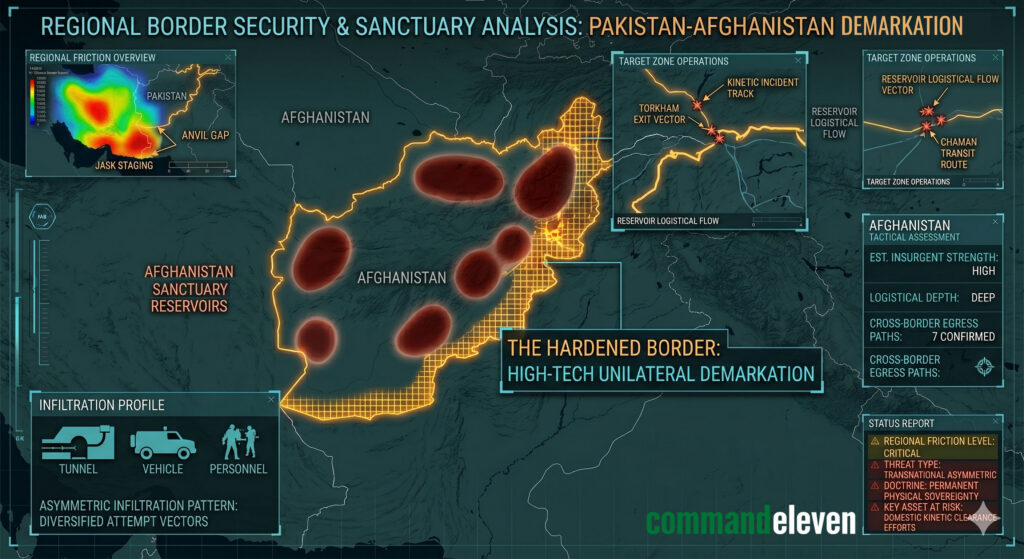
The current border ingress crisis is not a “new” problem; it is the physical realization of the structural vulnerabilities identified in our audit. The transition from the “Hardened Border” to “Proactive Pre-emption” (Ghazb lil Haq) was a forecasted necessity. This audit confirms that intelligence accuracy depends on recognizing the mechanical inevitability of sanctuary-driven insurgencies when the “Anvil” is removed.