
Key Judgments
- Groups that survive sponsorship shocks are those that diversify revenue early, before financial stress forces rushed and detectable adaptation (ASSESSED, high confidence).
- Kidnapping for ransom and transit extortion have overtaken external donation as the primary liquidity source for at least three of the insurgent movements examined in this assessment (CONFIRMED for named cases; see Section V).
- Financial interdiction regimes built for state-sponsored terrorism are poorly calibrated against hybrid criminal-insurgent financing, which increasingly resembles organized crime more than political violence (ASSESSED, moderate-high confidence).
- Cryptographic settlement layered on top of legacy hawala networks is expanding the geographic reach of ransom laundering faster than regulatory frameworks are adapting (ASSESSED, moderate confidence).
Executive Summary
Ideology no longer predicts an insurgent group’s financial behavior; territorial control does. Where a group holds ground, it taxes it. Where it cannot hold ground, it extracts value from what passes through it , people, goods, and capital. Counter-terrorism financing frameworks built around interdicting state sponsors and diaspora donation networks are addressing a funding model that many of the groups under examination have already outgrown. Effective interdiction now requires financial intelligence capability aimed at domestic extraction economies, not only cross-border remittance and formal banking channels.
This assessment examines the structural evolution of ideologically motivated insurgent organizations into self-sustaining criminal extraction networks. It traces the financial transition from external state sponsorship and diaspora fundraising toward domestic monetization models built on kidnapping for ransom, systemic extortion, and commodity smuggling. The geographic focus spans contested and peripheral zones across the Sahel, the Horn of Africa, South Asia, and the MENA periphery, drawing on precedent from groups operating under varying degrees of territorial control.
The long-term viability of a modern insurgent organization is a function of its capacity to institutionalize criminal enterprise. As external patronage weakens, whether through sanctions pressure on state sponsors, donor fatigue, or battlefield attrition that severs supply lines, ideological groups do not simply collapse. They adapt. Command structures that once subordinated economic activity to doctrinal objectives increasingly reverse that hierarchy, treating ideology as a legitimizing narrative for what is, in practice, a territorial criminal cartel. Political grievance persists as branding; systemic economic extraction becomes the organizing logic.
Sourcing and Analytical Confidence
This assessment is compiled from open-source reporting, sanctions and prosecution records, financial-crime typology reporting from FATF and regional FATF-style bodies, and NGO and multilateral field reporting on affected communities. No classified or intercepted material informs this document, and no source claims otherwise. Judgments are graded using the tiered system below; where a claim in this document is not explicitly labeled, treat it as ASSESSED.
| Tier | Definition | Application in This Assessment |
| CONFIRMED | Corroborated by two or more independent open-source reporting chains, court records, or sanctions designations. | Used for documented KFR incidents, sanctions listings, and prosecuted trafficking cases. |
| ASSESSED | Analytical judgment derived from pattern analysis, financial-flow indicators, and single-source reporting weighed against known group behavior. | Used for organizational intent, revenue-share estimates, and forward projections. |
| SPECULATIVE | Plausible but unverified; included only where it materially affects risk posture. | Flagged explicitly wherever it appears in this document. |
Analysts should note a structural limitation common to this entire subject area: financial flows tied to criminal-terror hybrids are, by design, obscured. Absence of reporting on a given group’s involvement in a given revenue stream is not evidence of absence. Where this assessment is silent on a specific group or corridor, that silence reflects a gap in open-source visibility rather than a judgment that the activity does not occur.
Doctrinal Shift: Ideology to Enterprise

The Economics of Insurgency
Non-state armed groups follow a broadly recognizable financial lifecycle. In the founding phase, funding is patronage-driven: state sponsors, diaspora committees, and sympathetic private donors underwrite operations in exchange for strategic alignment or ideological affinity. This model is efficient but fragile, since it depends on the continued political calculation of a small number of external actors. A change in sponsor-state leadership, a sanctions regime, or a shift in donor-community sentiment can sever funding with little warning.
The second phase begins when a group recognizes this fragility and begins generating revenue independent of sponsor goodwill. This is rarely announced as a strategic decision. It typically starts small: a checkpoint tax here, a kidnapping there, opportunistic rather than institutional. What distinguishes groups that survive the transition from those that fracture is whether local commanders are permitted, or compelled, to formalize these revenue streams into repeatable systems with defined roles, cash-handling procedures, and internal accountability. Groups that formalize early outcompete rivals for territory precisely because they can pay fighters through periods when ideological commitment alone would not hold a force together.
The ideological compromise this requires is significant and is rarely acknowledged within the movement’s own propaganda. Narcotics trafficking, kidnapping of civilians, and human trafficking sit uneasily against most insurgent groups’ stated moral framework, whether nationalist, religious, or Marxist in origin. Organizations manage this dissonance through doctrinal reinterpretation: taxation of drug transit is framed as a tax on an enemy vice rather than participation in the trade itself, kidnapping of foreign nationals is framed as a wartime measure against an occupying or exploitative power, and human trafficking, where it occurs, is frequently obscured internally as labor conscription or smuggling of sympathizers. The financial logic proceeds regardless of the narrative constructed to accommodate it.
Territorial Control and Taxation
Where an insurgent group achieves durable control over territory, financial behavior converges on a recognizable pattern: the establishment of a parallel administrative taxation structure that mirrors, and in areas of state absence effectively replaces, formal government revenue collection. This includes levies on agricultural yield at harvest, fees on market transactions, tolls on transport routes, and charges on infrastructure projects, including those funded by international donors or the host government itself.
These structures are frequently marketed to local populations as a security tax, sometimes styled explicitly as protection rent, in exchange for defense against rival armed actors, criminal predation, or state security force abuse. This framing is not purely propagandistic. In many contested zones, the insurgent tax authority does provide a functioning, if coercive, alternative to an absent or predatory state, which is a significant factor in the durability of these systems and a complicating variable for any interdiction strategy premised on simple delegitimization.
Indicators and Warning: Financial Signatures of the Transition
Analysts monitoring a given insurgent group for signs of the ideology-to-enterprise transition should watch for a cluster of observable indicators rather than any single data point, since individual signals are frequently ambiguous in isolation. An increase in checkpoint density along commercial routes, absent a corresponding increase in reported military activity, often signals a shift from security posture to revenue posture. Similarly, a change in recruitment messaging, from framing membership as ideological duty toward framing it as paid employment with defined compensation, is a reliable early indicator that internal financing has moved from irregular to institutionalized.
A second useful indicator cluster relates to internal governance. Groups transitioning toward criminal enterprise typically develop internal financial administration functions, sometimes styled as a treasury or finance emirate, tasked with standardizing levies, auditing local commanders, and adjudicating disputes over revenue allocation. The emergence of such a function, documented in several of the cases examined in Section VII, is itself an indicator that the organization has moved past ad hoc extraction toward a repeatable business model, and that disrupting any single revenue stream is unlikely to produce lasting financial degradation without addressing the administrative layer that reallocates losses across the network.
A third indicator cluster is external and observable through trade and pricing data rather than direct reporting on the group itself: anomalous price discounts on regionally sourced gold, timber, or agricultural commodities moving through known conflict-adjacent trade nodes, when they persist despite otherwise stable regional supply conditions, frequently reflect the informal risk premium buyers apply to material of uncertain or illicit origin. Financial intelligence units able to correlate these three indicator clusters, checkpoint and taxation behavior, internal financial administration, and downstream pricing anomalies, are better positioned to assess transition risk before a group’s criminal financing model becomes fully entrenched and correspondingly harder to disrupt.
Domestic Monetization Vectors
Kidnapping for Ransom (KFR)
Kidnapping for ransom has become one of the most reliable high-liquidity revenue sources available to territorially embedded insurgent and criminal-hybrid groups. Target selection follows a risk-adjusted logic: foreign nationals, particularly those affiliated with extractive industry, humanitarian organizations, or diplomatic missions, generate the highest per-incident yield but carry elevated risk of international attention and military response. Domestic elites and commercial actors generate lower individual payouts but a higher volume of incidents with comparatively less external scrutiny, making them the preferred target set for groups seeking steady rather than episodic income.
What distinguishes an institutionalized KFR operation from opportunistic banditry is the presence of dedicated negotiation infrastructure: intermediaries insulated from the operational cell, standardized ransom pricing tied to perceived victim value, and increasingly, informal risk assessment that resembles underwriting more than criminal improvisation. Ransom proceeds are frequently moved through hawala networks, which offer settlement finality without a paper trail and function across the informal cross-border remittance corridors that predate the conflict itself. This integration with pre-existing informal finance is a central reason KFR proceeds are difficult to trace once they leave the immediate negotiation channel.
Systematic Extortion and Protection Networks
Extortion at scale operates through mandatory transit levies imposed on commercial transport corridors, resource extraction sites, and, increasingly, telecommunications infrastructure, including cell towers and fiber routes that operators must keep running to maintain service contracts. These levies are enforced through a syndicate model: targeted violence or credible threat against a small number of non-compliant actors establishes a compliance norm that then requires minimal ongoing enforcement, since the business community self-polices to avoid becoming the next example.
This model has a notable second-order effect. Once a business community internalizes extortion as a fixed operating cost, it becomes a stakeholder, however reluctant, in the continuation of the group’s territorial control, since a change in the controlling authority carries its own transition risk and renegotiation cost. This dynamic partially explains why some extortion-funded insurgent territories exhibit more stable, if coercive, local business continuity than the surrounding contested zones.
Commodity Smuggling and Resource Extraction

Mineral and Timber Exploitation
In territories with exploitable natural resources, insurgent-affiliated actors move quickly to capture artisanal and illicit extraction, including gold panning operations, small-scale mining of tin, tantalum, and tungsten ores, and timber logging in forested peripheries. These operations rarely require the group to run the extraction itself. More commonly, the group taxes independent artisanal miners and loggers operating within its territory, or takes a direct equity stake in extraction sites through coerced partnership with local operators.
The critical vulnerability, and the critical interdiction opportunity, sits downstream at the point where illicitly extracted commodities enter formal supply chains. This typically occurs through intermediaries willing to falsify certificates of origin, blend illicit material with legitimately sourced product before export, or exploit weak enforcement of due-diligence regimes such as the OECD minerals guidance. Once blended and exported, tracing extracted value back to the originating conflict zone becomes extremely difficult, which is precisely why downstream supply chain transparency, rather than upstream military interdiction alone, is increasingly identified by financial intelligence practitioners as the more tractable point of intervention.
The revenue arithmetic behind artisanal exploitation also explains why it has proven such a durable funding source relative to other illicit streams. Gold in particular offers a favorable combination of high value density, near-universal liquidity, and minimal need for onward laundering once it reaches a willing buyer, since physical gold changes hands with none of the documentation friction that accompanies banked capital. Timber and lower-value ores require more logistics and generate thinner margins, but their taxation base is broader, spread across a larger number of smaller-scale operators, which makes the revenue stream harder to disrupt through action against any single site or actor.
Cross-Border Corridors and Smuggling Contradictions
Historical smuggling routes, many predating the current conflict by generations and originally used for licit cross-border trade among communities split by colonial-era borders, have been weaponized for the movement of contraband, weapons, and dual-use components. These corridors persist because they are embedded in local economic life; the same routes and the same facilitator networks that move subsidized fuel, cigarettes, or livestock across a border are readily repurposed for higher-value and higher-risk cargo when the opportunity and the buyer are present.
A recurring and analytically significant pattern is the fiscal synergy between ideological factions and localized criminal networks that predate and are independent of the insurgency. Rather than absorbing these networks outright, insurgent groups more commonly enter into transactional arrangements: safe passage or reduced taxation in exchange for a revenue share or logistical support. This arrangement allows the ideological group to benefit from established smuggling expertise and cross-border relationships without bearing the operational cost of building parallel infrastructure, while the criminal network gains a level of territorial protection it could not otherwise secure.
This transactional model has a further consequence worth flagging for policy planners: it means border-security interventions aimed narrowly at the ideological group will frequently miss the majority of the actors operating the corridor, since the criminal network’s personnel, vehicles, and facilitator relationships are typically indistinguishable from routine cross-border trade until the specific cargo or client changes. Corridor-level interdiction therefore depends more on customs and trade-data analysis capable of flagging anomalous shipment patterns than on the kind of direct-action targeting that has historically dominated counter-insurgency planning for this problem set.
Regional Case Studies

The following cases illustrate the doctrinal shift described above. They are drawn from open-source and sanctions-record material and are included to ground the analytical framework in observed precedent rather than to serve as an exhaustive survey.
Sahel , JNIM and artisanal gold. Reporting from UN Panel of Experts assessments and regional financial-crime monitoring bodies has documented the taxation of artisanal gold sites and transport corridors across Mali and Burkina Faso by al-Qaeda-affiliated militants, alongside livestock levies imposed on herding communities transiting contested zones (CONFIRMED for the general pattern; specific revenue figures remain ASSESSED given the informality of the artisanal sector).
Horn of Africa , al-Shabaab’s taxation architecture. Al-Shabaab has sustained one of the most institutionalized informal taxation systems among contemporary insurgencies, extending into areas nominally under Somali federal government control through checkpoint levies, business registration fees, and a functioning zakat-styled collection system that in some assessments generates revenue comparable to or exceeding that of the federal government in affected regions (ASSESSED, high confidence, based on multiple corroborating UN Monitoring Group reports).
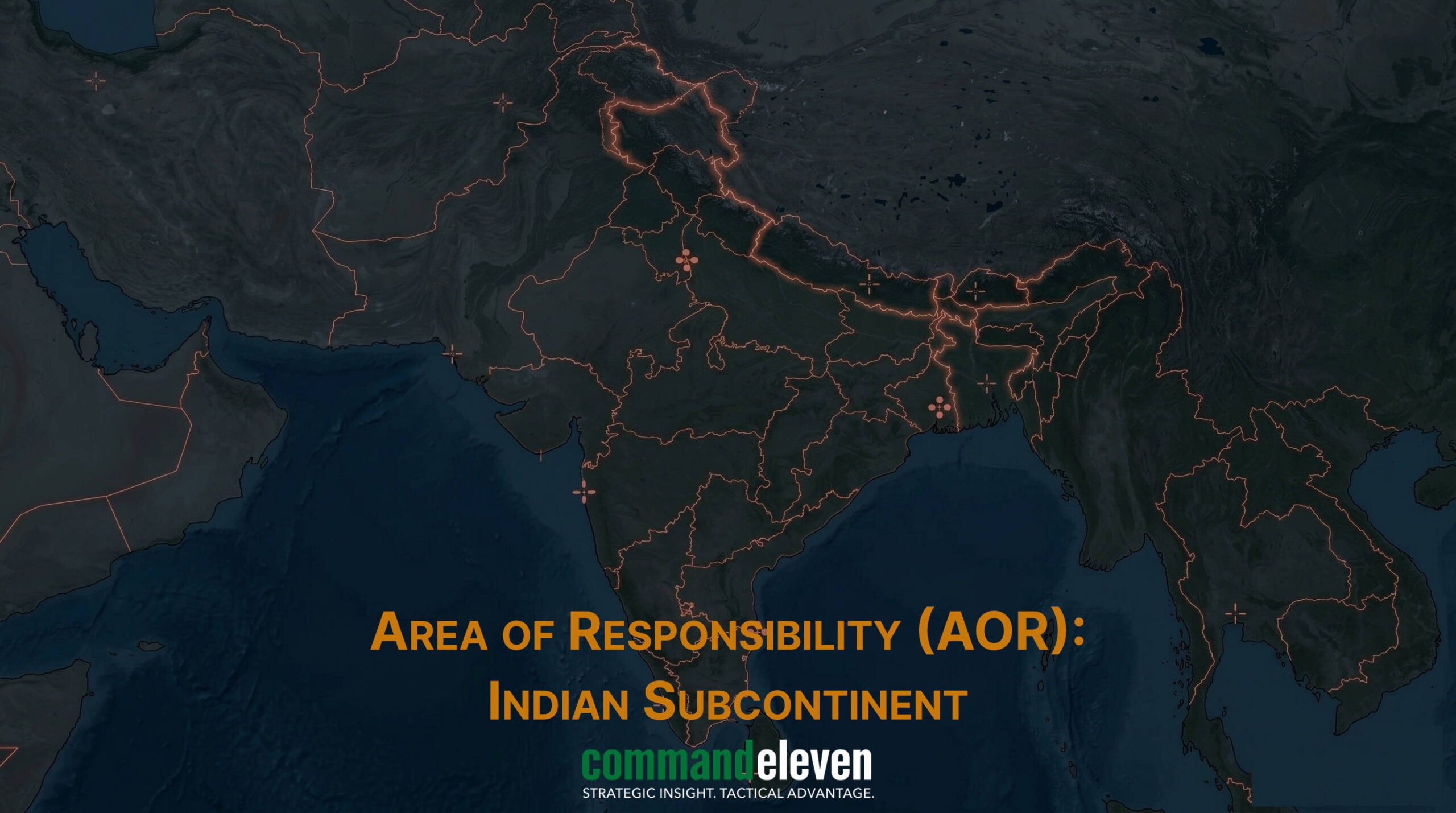
South Asia , kidnap-for-ransom economies. Militant and criminal-hybrid networks operating along the Afghanistan-Pakistan periphery and in parts of India’s northeast have sustained KFR as a core revenue stream targeting local business communities, with ransom settlement frequently routed through regional hawala networks that also service licit remittance flows from diaspora labor, complicating financial interdiction without disrupting legitimate household income transfers (ASSESSED, moderate-high confidence).
West Africa , Lake Chad Basin timber and fishing levies. Boko Haram-affiliated factions have imposed levies on fishing access and taxed informal timber trade around the Lake Chad basin, integrating resource control with population-control objectives by regulating access to the lake’s shrinking economic resources (ASSESSED, moderate confidence).
Taken together, these cases span a wide range of geography, ideology, and organizational maturity, yet converge on the same underlying pattern: durable territorial presence produces a taxation architecture, and constrained sponsorship produces a shift toward high-liquidity vectors such as kidnapping. The consistency of this pattern across otherwise dissimilar movements is the strongest evidence available for treating the criminal-terror nexus as a structural phenomenon rather than a set of unrelated regional anomalies.
Financial Architecture and Counter-Terrorist Financing Evasion

The financial resilience of the criminal-terror hybrid rests on a deliberate move away from centralized, traceable settlement toward decentralized and cash-dominant systems. Hawala remains the backbone of this architecture across the regions examined, offering near-instant settlement, no physical movement of cash across borders, and settlement finality that does not depend on formal banking rails vulnerable to sanctions screening. Because hawala networks are deeply integrated into licit remittance economies serving migrant labor communities, wholesale disruption carries a significant humanitarian cost, which is precisely why groups exploiting these networks continue to do so with relatively low detection risk.
Cryptocurrency has emerged as a complementary rather than a replacement layer. Rather than displacing hawala, digital assets are increasingly used to bridge distance: a ransom or extortion payment collected in one jurisdiction can be converted to a stablecoin, moved across borders with minimal friction, and converted back to cash or local currency through an over-the-counter broker at the destination, often the same facilitators who historically ran informal currency exchange for the hawala network. This hybridization is expanding the effective geographic reach of ransom and extortion laundering faster than most national financial intelligence units have built the capability to monitor it, particularly in jurisdictions where virtual asset service providers remain unregistered or unsupervised.
Resistance to counter-terrorist financing frameworks stems less from technical sophistication than from structural integration. A financing model built on formal wire transfer or correspondent banking is vulnerable to sanctions screening at identifiable choke points. A financing model built on informal value transfer embedded in a community’s daily economic life has no equivalent choke point, because interdicting it means interdicting the informal economy itself, which most states are unwilling or unable to do at scale.
Regulatory response has been uneven across the jurisdictions most exposed to this problem. Some regional financial intelligence units have made meaningful progress registering money service businesses and building typology-based detection for suspicious hawala transaction patterns, generally in partnership with FATF-style regional bodies. Others, often the jurisdictions where exposure is highest, lack the supervisory capacity or political will to bring virtual asset service providers and informal remittance operators under any meaningful oversight regime. This unevenness itself becomes a strategic variable: proceeds tend to route through the least-supervised node available in a given corridor, which means interdiction capacity in any single jurisdiction is only as effective as the weakest link in the broader regional network through which funds ultimately move.
Strategic and Counter-Insurgency Implications
Traditional counter-insurgency doctrine, built around denying territory, degrading command structures, and countering the ideological narrative, is poorly matched to an adversary whose durability increasingly derives from criminal business logic rather than ideological cohesion. Military operations that successfully degrade a group’s fighting capacity frequently leave its financial infrastructure, embedded in local taxation and smuggling relationships, largely intact and available for absorption by a successor group or a splinter faction with a different ideological label but an identical revenue model.
This has a direct implication for threat assessment methodology: analysts and policymakers should track the durability of the underlying extraction economy as a leading indicator, independent of the nominal ideological affiliation of whichever group currently controls it. A territory’s kidnapping economy, taxation architecture, or smuggling corridor frequently outlasts the specific organization that built it, transferring to whichever successor actor is best positioned to inherit the infrastructure.
There is also a governance dimension that conventional counter-insurgency assessment tends to underweight. In territories where the insurgent taxation structure has operated long enough to become the de facto administrative authority, local populations often develop a working relationship with it that resembles, however uneasily, a state-citizen relationship: predictable levies in exchange for predictable, if limited, security and dispute-resolution services. Military campaigns that remove the insurgent authority without a credible and immediately available governance replacement frequently create a vacuum that a criminal successor, rather than the state, is best positioned to fill, since the successor inherits both the physical extraction infrastructure and the population’s conditioned expectation of paying someone for order.
Policy and Interdiction Recommendations
The recommendations below are sequenced by feasibility rather than by impact alone, recognizing that financial intelligence capacity building takes years to mature while corridor-level customs analysis can be operationalized against existing trade data within a shorter planning horizon.
- Reorient financial intelligence collection toward domestic extraction economies, including artisanal mining taxation and transit-corridor extortion, rather than concentrating primarily on cross-border remittance and formal banking screening.
- Build supply chain due-diligence capacity at the downstream blending and export points identified in Section VI.A, where illicitly extracted commodities are most traceable before entering formal international trade.
- Develop virtual asset service provider registration and monitoring capacity in jurisdictions currently serving as informal on/off ramps for ransom and extortion proceeds, prioritizing corridors already flagged in FATF-style regional body reporting.
- Support, rather than attempt to dismantle, the licit remittance function of hawala networks while building targeted typology-based detection for the ransom-linked subset of transactions, to avoid the humanitarian cost of blanket disruption.
- Treat extraction-economy continuity, not organizational branding, as the primary unit of analysis when assessing successor-group risk following a counter-insurgency campaign.
- Pair any territorial denial operation with a pre-positioned governance and dispute-resolution capability, since removing the insurgent taxation authority without a credible replacement tends to hand the extraction infrastructure to the next-best-positioned criminal actor rather than to the state.
Strategic Outlook and Analytical Conclusions
The trajectory across the cases examined points toward continued hybridization rather than a return to purer ideological financing models. Groups that have institutionalized criminal enterprise show little incentive to abandon it even where external sponsorship becomes available again, since the domestic extraction economy offers a degree of financial autonomy that reduces dependence on any single sponsor’s political calculations. Analysts should expect this trend to deepen through 2028, with digital settlement layers continuing to expand the geographic reach of proceeds laundering faster than most national and multilateral financial intelligence architectures are currently positioned to counter.
The practical consequence for international law enforcement and defense planning is a requirement to treat these organizations less as insurgencies that happen to engage in criminal activity and more as criminal enterprises that retain an ideological identity for recruitment, legitimacy, and external messaging purposes. Interdiction strategy calibrated to that reality, built on financial intelligence, supply chain transparency, and targeted asset seizure rather than territorial denial alone, offers the more durable path to disrupting the criminal-terror nexus.