Executive Summary
The 2004 Kalosha operation identifies the collapse of “India-Centric” conventional doctrine when applied to decentralized guerrilla networks. This audit details the mechanical mismatch of massed infantry maneuvers in high-friction, mountainous terrain. The resulting kinetic overextension led to capitulatory accords, granting the insurgency the logistical oxygen required to reorganize and expand along the Pakistan-Afghanistan border.
3 Key Takeaways
- Tactical Incompatibility: Conventional assets- armor and heavy artillery- were neutralized by mountainous geography and “Flash-Dark” guerrilla tactics.
- Intelligence Depth Deficit: A lack of HUMINT prevented the force from distinguishing indigenous tribal structures from foreign combatants, leading to strategic alienation.
- The Reactionary Loop: Kinetic strikes absent an administrative follow-through increased the Conflict Premium, driving local displacement and insurgent recruitment.
Overview
The 2004 operation in Kalosha, South Waziristan, represents the primary point of failure for conventional military doctrine in asymmetric environments. This audit identifies the mechanical breakdown that occurs when a conventional force, trained for high-intensity interstate conflict, engages a decentralized, indigenous guerrilla network. The failure at Kalosha was not a lack of lethality but a lack of tactical agility.
The Conventional Mismatch
Conventional doctrine relies on centralized command, massed fires, and territorial clear-hold-build models. Kalosha proved these metrics irrelevant against a non-state adversary.
- Intelligence Blindness: The force relied on OSINT and top-down intelligence. It lacked the HUMINT depth required to distinguish between local tribal structures and foreign combatants (Al-Qaeda/IMU).
- Logistical Rigidity: Heavy infantry maneuvers required a massive logistical tail. Guerrilla networks exploited this by interdicting supply lines, turning the force’s size into its primary liability.
- Terrain Neutralization: Mountainous geography neutralized armored assets and heavy artillery. The adversary utilized “Flash-Dark” tactics, engaging only when tactical superiority was guaranteed.
The Cycle of Kinetic Overextension
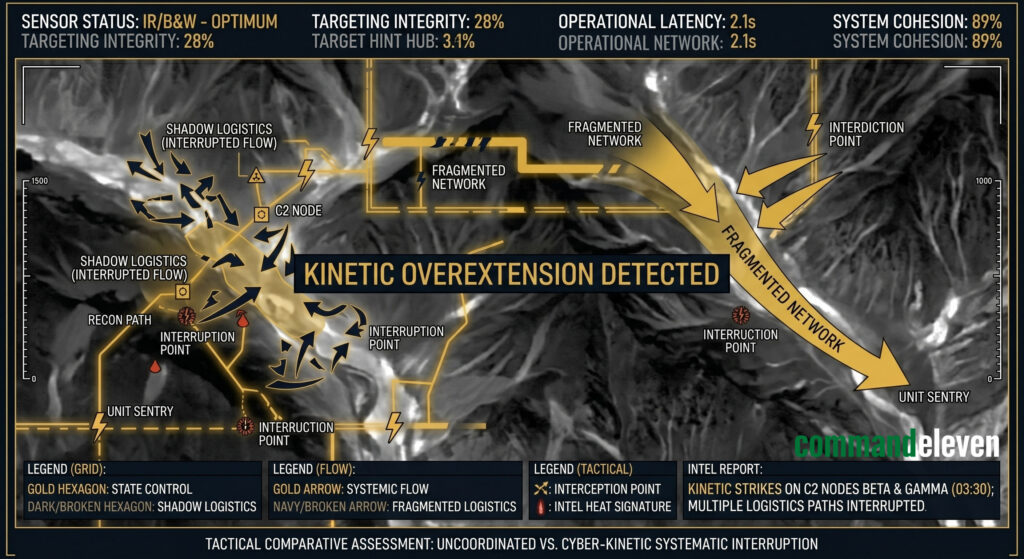
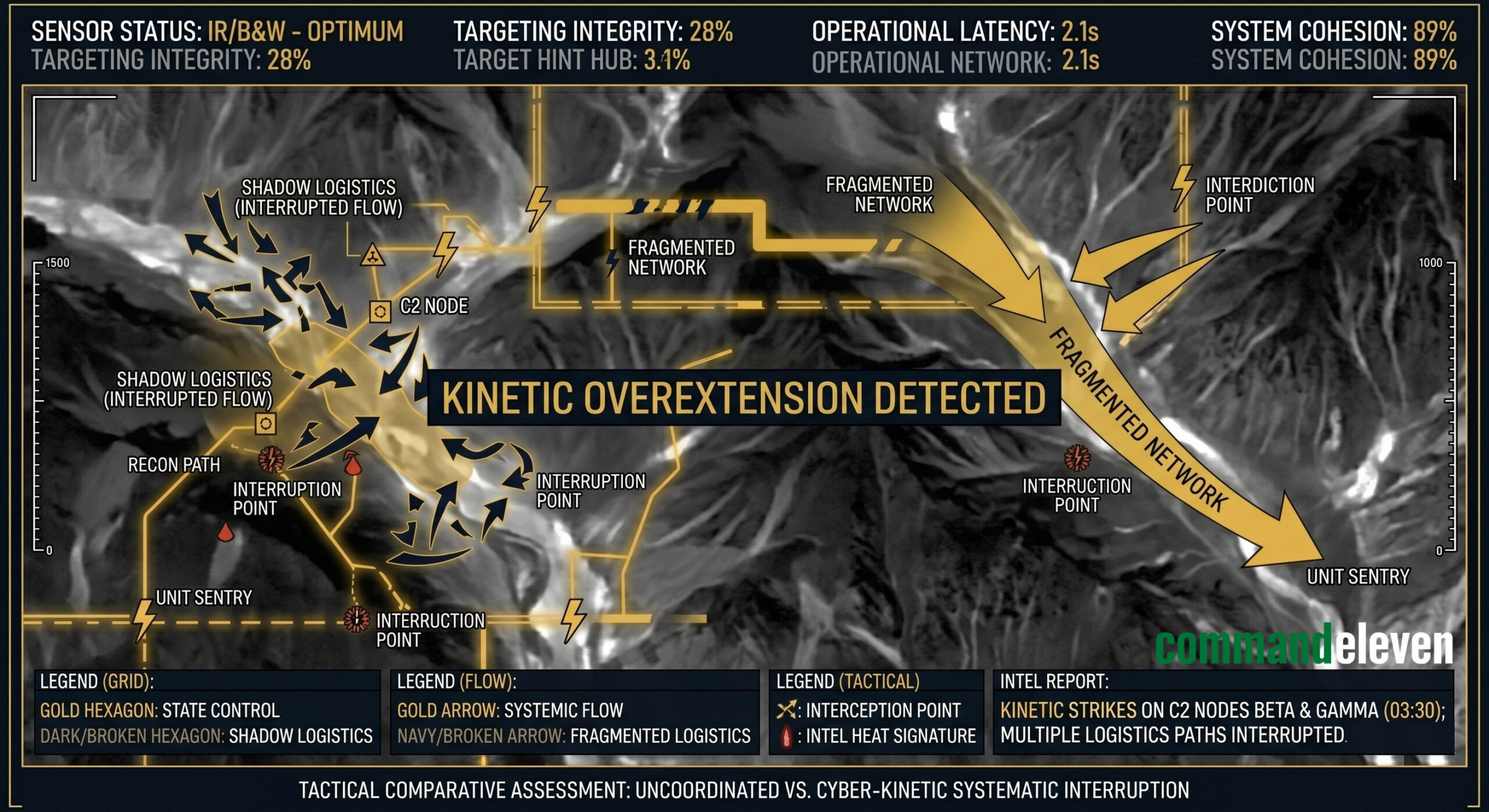
The Kalosha operation initiated a pattern of “Kinetic Overextension.” High-intensity clearance led to temporary displacement but no administrative durability.
- The Reactionary Loop: Kinetic strikes produced collateral damage, which lowered the state’s legitimacy and increased the Conflict Premium.
- The Capitulatory Accord: Failure to hold the territory led to the 2004 Shakai Agreement. This accord effectively conceded administrative sovereignty to the insurgency, providing them the “Logistical Oxygen” to reorganize.
Audit Findings: Hardware Truth
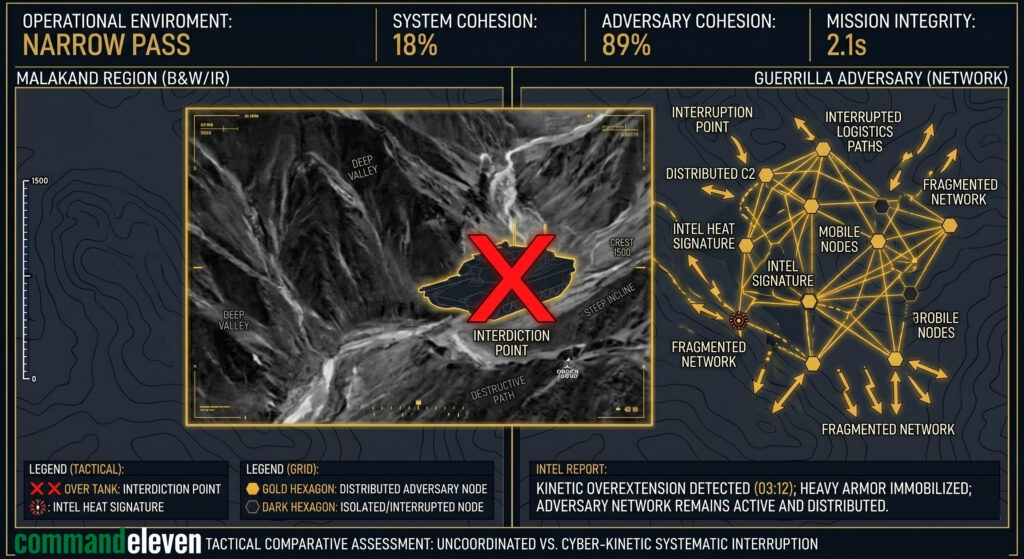
The primary lesson of Kalosha is that conventional dominance is a strategic hallucination in a “Mosaic” environment.
- Weaponry Inefficiency: Standard-issue assets were too cumbersome for high-altitude pursuit.
- Communication Breakdown: Centralized radio networks were easily jammed or bypassed by the adversary’s indigenous communication signals.
- Administrative Deficit: The military could clear the ground but could not provide the infrastructure necessary for physical persistence.
Strategic Conclusion
Kalosha was the “Strategic Whiplash” that forced a slow, painful re-evaluation of security doctrine. It proved that kinetic dominance without Administrative Persistence is a wasted effort. Future operations along the Pakistan-Afghanistan border must prioritize the “Tile Guardian” model – decentralized, autonomous units capable of independent persistence without a conventional logistical tail.