
Executive Summary
Operation Radd-ul-Fasaad (2017–2024) redefined the state’s counter-terrorism posture by prioritizing the consolidation of territorial gains over high-intensity clearance. The doctrine utilized a nationwide web of Intelligence-Based Operations (IBOs) to dismantle urban sleeper cells and implemented the Hardened Border project to physically terminate insurgent logistical pipelines. This shift from reactionary force to structural hardening represents the maturation of the state’s resolve to close the “Western Border Leak” and restore permanent sovereignty.
3 Key Takeaways
- Shift to Urban Intelligence: The abandonment of mass infantry sweeps in favor of surgical IBOs effectively neutralized the de-territorialized threat within major metropolitan cores.
- Termination of the Anvil Gap: The border fencing project turned a porous frontier into a high-tech barrier, ending the era of unregulated militant egress and making domestic clearance sustainable.
- Institutional Hardening: Success in asymmetric warfare is predicated on follow-up institutional and physical persistence; kinetic force alone is insufficient to prevent the re-emergence of sanctuaries.
BLUF: Operation Radd-ul-Fasaad (2017–2024) represented the state’s transition from localized kinetic clearance to a nationwide doctrine of permanent consolidation. By shifting the operational weight to Intelligence-Based Operations (IBOs) and the physical termination of the “Anvil Gap” through the multi-billion rupee border fencing project, the state established a framework for “Physical Sovereignty” that aimed to make domestic security gains sustainable for the first time in the 25-year conflict.
Strategic Objective: From Clearance to Consolidation
By early 2017, the tactical success of Operation Zarb-e-Azb had created a new strategic dilemma. While the “Scorched Earth” phase had leveled militant infrastructure in North Waziristan, it had inadvertently triggered a metastasis of the threat. Displaced militant nodes had filtered into major metropolitan centers, and high-value targets (HVTs) had utilized the Anvil Gap to relocate to protected sanctuaries across the western border.
Operation Radd-ul-Fasaad (Elimination of Discord) was launched as the doctrinal solution to this dispersal. Its mandate was not to “clear land” but to “secure society.” The shift moved the military posture from a reactionary force to a consolidation force, focused on the unconditional elimination of residual sleeper threats and the permanent hardening of the republic’s borders.
Operational Mechanics: The Intelligence Shift
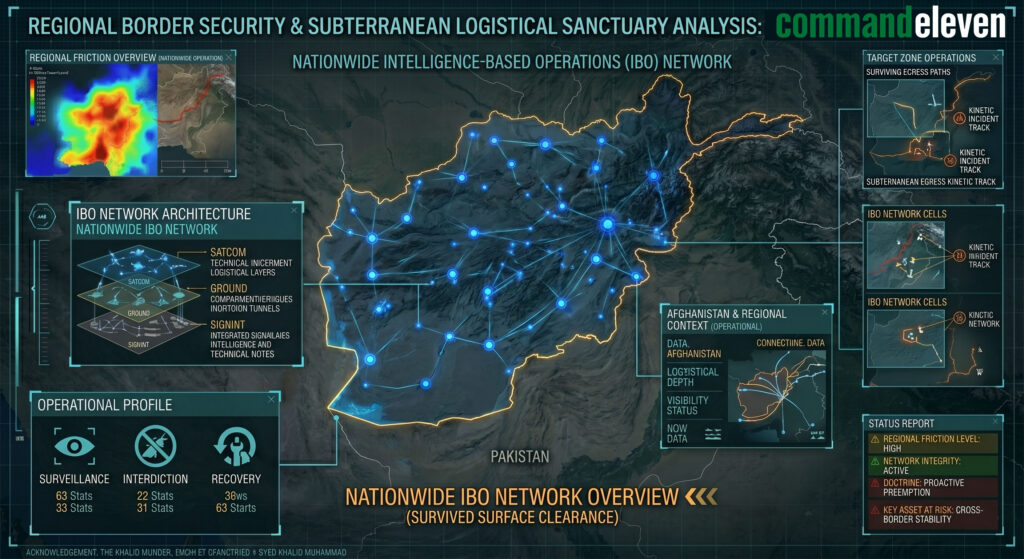
Radd-ul-Fasaad marked the definitive end of high-intensity infantry sweeps in favor of Intelligence-Based Operations (IBOs).
- Surgical Neutralization: The state deployed a “Fusion Model” where Counter-Terrorism Departments (CTDs), the Rangers, and military intelligence centers operated under a unified tactical umbrella. This allowed for thousands of localized, high-precision raids that dismantled urban sleeper cells in Lahore, Karachi, and Islamabad without the massive societal displacement associated with previous mountain campaigns.
- Asset Synergy: The operation relied on the seamless integration of real-time Signals Intelligence (SIGINT) with localized Human Intelligence (HUMINT). By mapping the digital and social footprints of logistical facilitators,financiers and couriers,the state began to systematically lower the Conflict Premium, starving militant cells of their operational oxygen.
The Hardened Border: Terminable Sovereignty
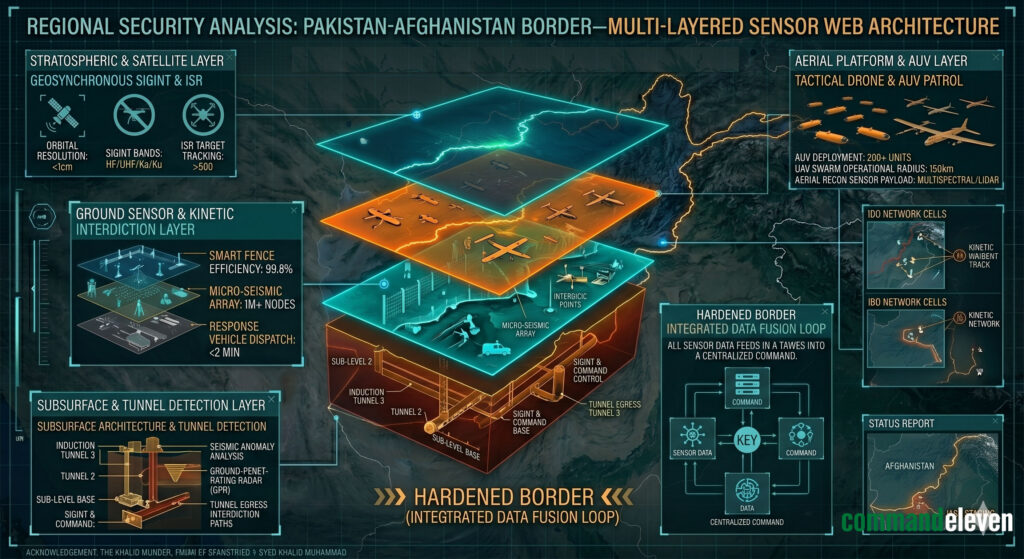
The most critical structural component of Radd-ul-Fasaad was the implementation of the Hardened Border project. This was the physical manifestation of the state’s refusal to allow the “Western Border Leak” to continue.
- Choking the Logistical Pipeline: The construction of a high-security fence along the 2,600km Pakistan-Afghanistan border aimed to physically terminate the transnational pipelines that allowed groups like the TTP and ISKP to retreat, refit, and return.
- Technological Fortification: The fence is not merely a wire barrier; it is an integrated sensor web. Augmented with high-definition surveillance cameras, thermal imaging nodes, and motion detectors, it transformed a historically porous line into a controlled, high-security environment.
- Strategic Outcome: For the first time, domestic kinetic operations were shielded from the “Anvil Gap.” By managing the border, the state made its domestic clearance efforts terminable rather than cyclical.
Technical Assessment: Successes and Residual Challenges
- The Success of Normalcy: The IBO-centric approach successfully restored a sense of normalcy to urban centers, breaking the momentum of the urban terror campaigns seen between 2008 and 2014. It proved that conventional military force must be followed by institutional hardening to be effective.
- The Post-2021 Vacuum: While Radd-ul-Fasaad established the “Hardened Border,” the 2021 US withdrawal from Afghanistan injected new hardware and momentum into the insurgency. This created the Technological Parity Crisis, requiring the current evolution into pre-emptive drone doctrines.
Clinical Conclusion
Operation Radd-ul-Fasaad represents the maturation of the state’s counter-terrorism response. It shifted the focus from “clearing land” to “securing society” and “managing borders.” By implementing physical sovereignty through the fence and surgical precision through IBOs, it provided the structural anchor necessary to sustain the Long War. The doctrine established that kinetic success is a temporary state unless reinforced by the permanent hardening of the state’s administrative and physical boundaries.