Executive Summary
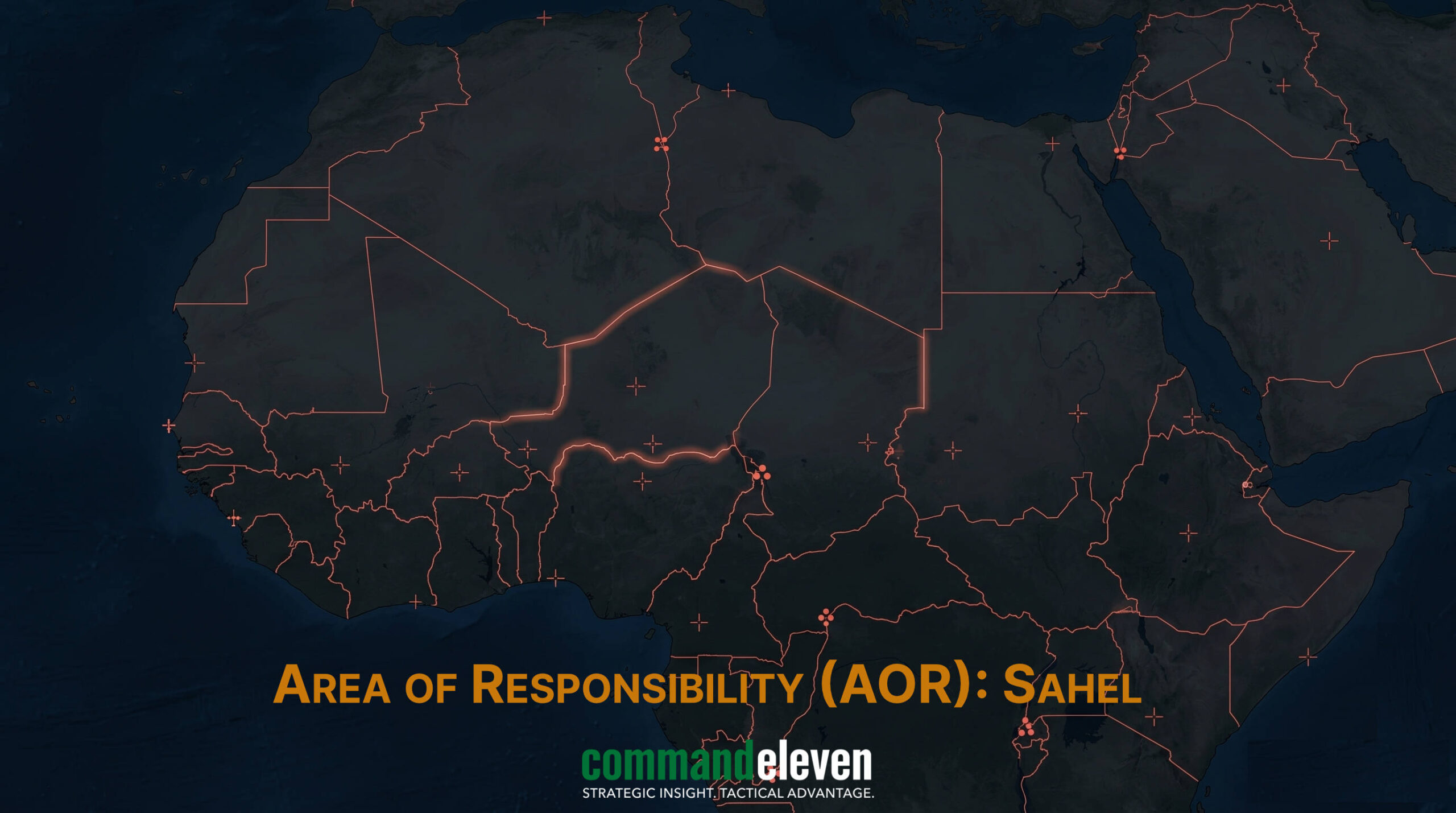
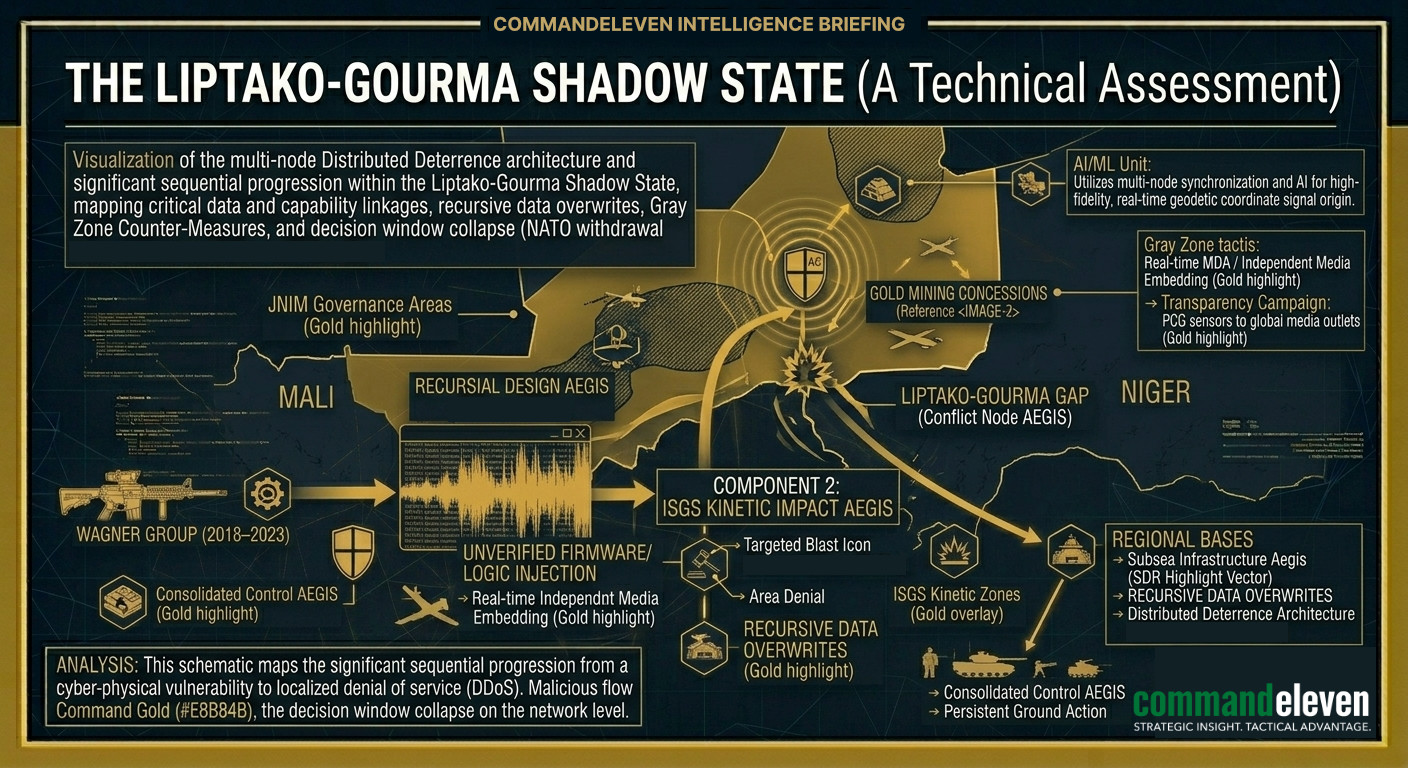
As of May 2026, the Liptako-Gourma region – the tri-border convergence of Mali, Burkina Faso, and Niger – has solidified into the primary theater for “inter-jihadi” warfare. Following the withdrawal of Western counter-terrorism missions, a violent competition for territorial hegemony has erupted between the Islamic State in the Greater Sahara (ISGS) and the Al-Qaeda-affiliated Jama’at Nusrat al-Islam wal-Muslimin (JNIM). This conflict has transitioned from an anti-state insurgency into a zero-sum war for control over artisanal gold mines, trans-Saharan trade corridors, and the “taxation rights” of pastoralist populations. With the state largely retracted to urban centers, these non-state actors have established parallel judicial and fiscal systems, effectively governing the rural Sahelian heartland.
This dossier analyzes the strategic shift from anti-state insurgency to a “zero-sum” territorial war between these two entities. CommandEleven assesses that the current conflict is no longer merely ideological; it is a fight for the control of transit corridors, artisanal gold mines, and the “taxation rights” over pastoralist populations. The resulting governance vacuum has effectively rendered the “Alliance of Sahel States” (AES) borders purely nominal, as non-state actors now dictate the socio-economic reality of the central Sahel.
3 Key Takeaways
- Transition to Proto-State Competition: The ISGS-JNIM conflict is no longer purely ideological; it is a strategic war for economic assets, including gold mines and illicit trade routes, which fund their respective standing armies.
- State Governance Vacuum: In the rural “Three Borders” region, jihadi shadow administrations provide more consistent (albeit brutal) judicial and taxation services than the formal governments of the Alliance of Sahel States (AES).
- Counter-Productive Kinetic Focus: The reliance of regional juntas on Russian paramilitary “Africa Corps” assets for high-attrition clearance operations continues to drive local recruitment for JNIM, which capitalizes on state-led violence and communal grievances.
Strategic Drivers of the Inter-Jihadi Conflict
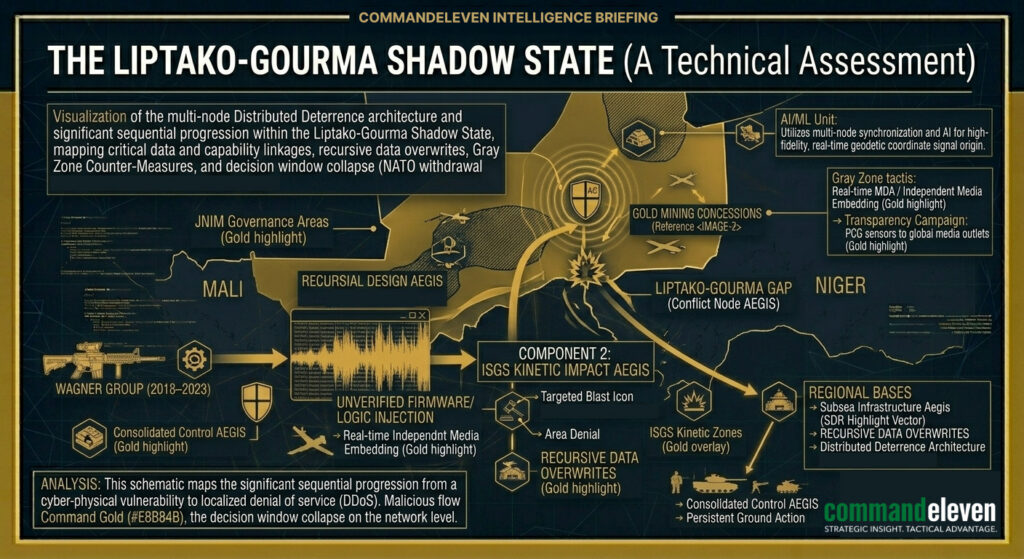
The “Sahelian Exception” – a period where ISGS and JNIM maintained a tactical non-aggression pact – ended in 2020. By 2026, the conflict has reached a stage of total war, driven by three primary vectors:
Territorial and Logistical Hegemony
- The “Three Borders” Pivot: Liptako-Gourma is the logistical heart of the Sahel. Control over this region grants a group the ability to tax trans-Saharan trade routes and manage the flow of illicit goods (weapons, fuel, and narcotics) from the Gulf of Guinea toward North Africa.
- Gold as a Kinetic Fuel: Both groups have moved aggressively to seize artisanal gold mining sites in northern Burkina Faso and western Niger. These sites provide the hard currency required to procure advanced weaponry and sustain a permanent standing force of fighters.
Ethnic Mobilization and Social Arbitrage
The conflict has successfully weaponized pre-existing communal tensions.
- ISGS (The Salafi-Jihadi Vanguard): Historically, ISGS has found a recruitment base among the nomadic Dawsahak and segments of the Fulani population, utilizing a “protection racket” model. They offer security to marginalized groups in exchange for loyalty and manpower.
- JNIM (The “Big Tent” Strategy): Under the leadership of Iyad Ag Ghaly, JNIM positions itself as a more “moderate” alternative to the brutality of ISGS. By integrating local grievances and respecting traditional chieftaincy structures (where they align with Sharia), JNIM has successfully established a deeper, more resilient social presence.
Operational Footprint and Governance Models
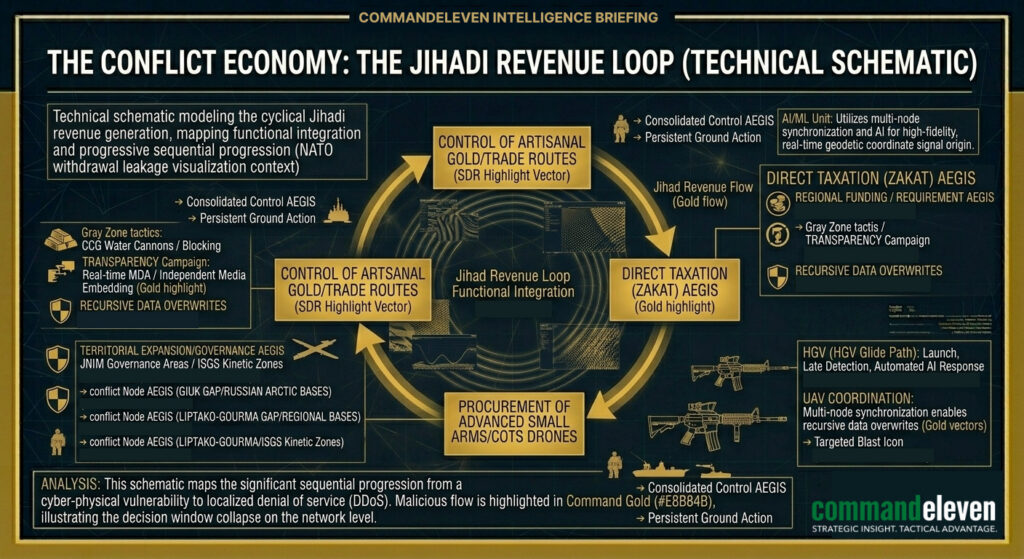
Both ISGS and JNIM have transitioned from mobile guerrilla units into proto-state administrators.
Parallel Taxation (Zakat)
In regions such as Menaka (Mali) and Tillabéri (Niger), the formal state has no presence. Residents pay “Zakat” directly to jihadi shadow governors.
- Revenue Collection: Taxation is levied on livestock, transit vehicles, and market stalls.
- Enforcement: Failure to pay results in summary execution or the total seizure of assets, creating a cycle of forced dependency.
The Judicial Shadow State
The collapse of the formal judiciary has allowed these groups to implement “Sharia Courts.”
- Conflict Resolution: In many pastoralist communities, JNIM courts are preferred over state courts for resolving land and water disputes due to their speed and the absence of corruption. This “judicial service delivery” is a primary vector for JNIM’s long-term legitimacy.
Impact of the “Alliance of Sahel States” (AES) Integration
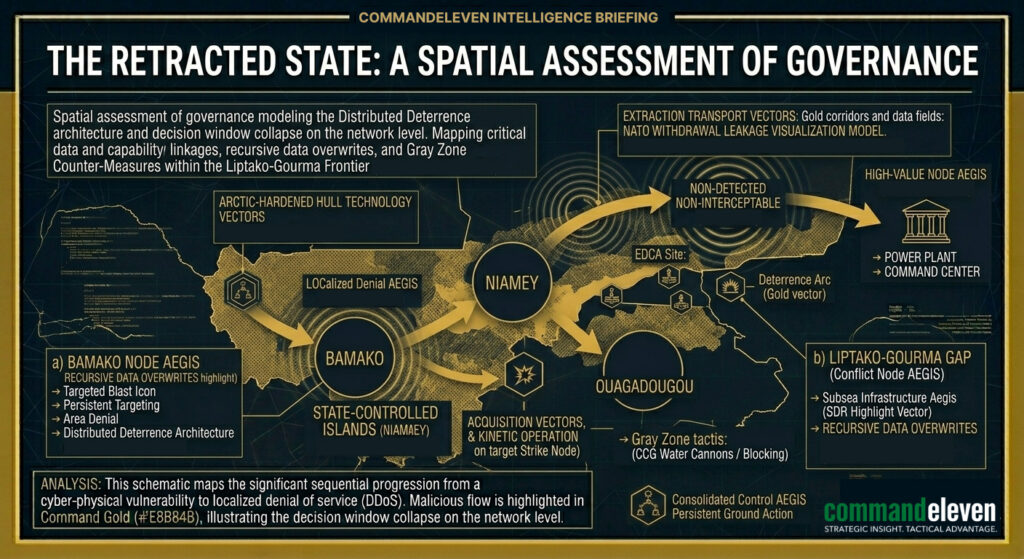
The formation of the AES (Mali, Burkina Faso, Niger) in late 2023 was intended to provide a unified military response. However, 2026 data indicates significant operational friction.
- Sovereignty Sensitivity: Despite the “mutual defense” pact, military juntas remain hesitant to allow foreign troops (even from neighboring AES states) to operate deep within their territory without restrictive oversight.
- The PMC Variable: The reliance on Russian “Africa Corps” assets (formerly Wagner) has introduced a new kinetic element. While effective in “clearance” operations, the high rate of collateral damage during PMC-led strikes has historically acted as a recruitment windfall for JNIM.