
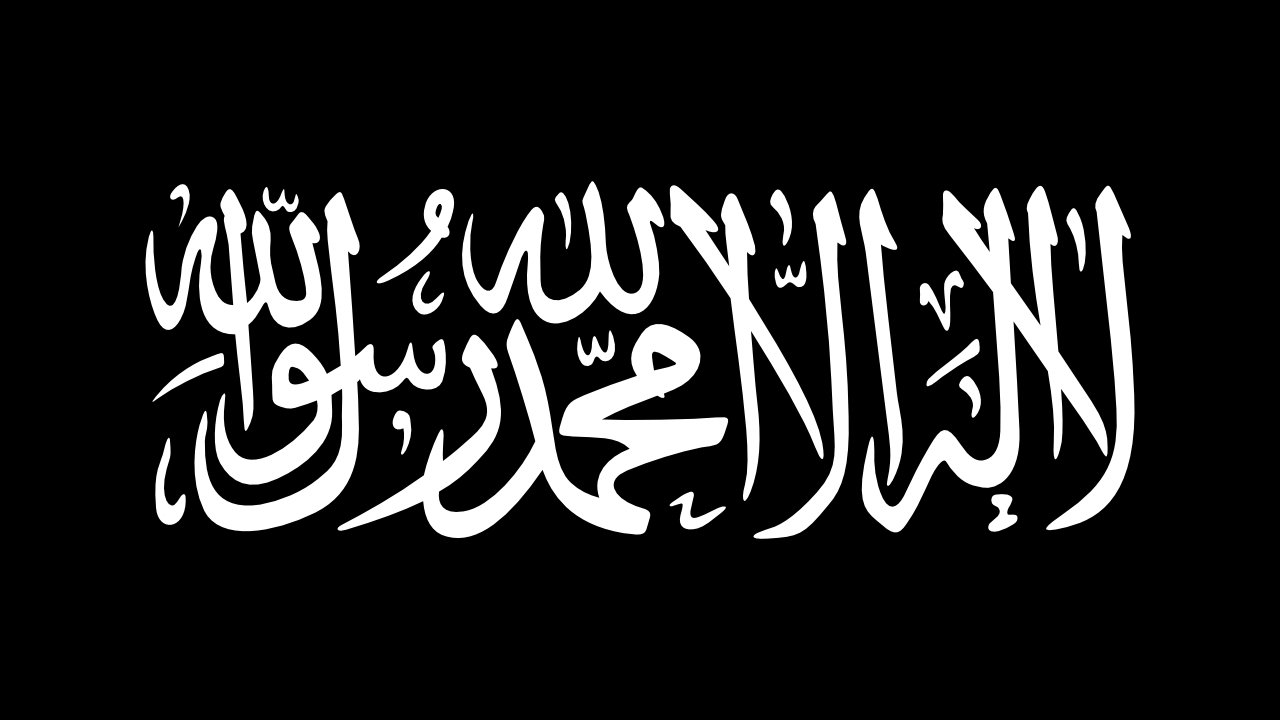
Intelligence Command Center // Terror group profile //

Jama’at Nusrat al-Islam wal-Muslimin (JNIM)

Jama'at Nusrat al-Islam wal-Muslimin

area of operation

Sahel

Specific AOR

Mali, Burkina Faso, Niger; expanding into littoral West African states (Benin, Togo)

Volatility Index

VI-5 – Critical

Ideological Alignment

al-Qaeda Central

force strength

4,000-6,000

Leadership

Decentralized coalition led by Iyad Ag Ghaly

Headquarters

Timbuktu Region

SIGNATURES //

TECHNICAL PROFILE
Tier 2 - High-Tier / Professionalized
OPERATIONAL SIGNATURE
Hybrid Warfare / Guerrilla Ops
SPATIAL PROFILE
Rural / Contested Governance

Operational Brief //

An al-Qaeda affiliate at the absolute apex of its geopolitical power.

Operating under the strategic command of veteran Tuareg jihadist Iyad Ag Ghaly and Macina Liberation Front (Katiba Macina) chief Amadou Koufa, JNIM has evolved from a decentralized coalition into the dominant non-state power across the central Sahel. JNIM is orchestrating the largest, most highly coordinated territorial offensive in the region since the 2012 rebellions. Initiated on April 25, 2026, a synchronized vanguard operation launched alongside the Azawad Liberation Front (FLA) has fundamentally fractured the Malian state. In a series of devastating, multi-pronged assaults targeting the military core of the ruling junta in Bamako and the strategic garrison town of Kati, JNIM elements successfully detonated a vehicle bomb inside the residence of Malian Defense Minister Sadio Camara, killing him and paralyzing state command coordination. With Russian paramilitary forces (Africa Corps) routed from key northern outposts like Kidal, JNIM has effectively cut off the capital, turning its localized shadow governance into an active campaign for complete state collapse.

Leadership & Command Structure

  • Command Element: Operating under the continuous strategic command of Iyad Ag Ghaly, a veteran Tuareg militant commander. The core decision-making body functions as a unified Majlis al-Shura (Leadership Council) that coordinates an umbrella coalition of four major foundational militant groups.
  • Leadership Doctrine: Pragmatic, coalition-based vertical command structure combined with localized operational autonomy. The leadership excels at balancing a centralized commitment to al-Qaeda Core with a deeply localized, ethnically tailored approach to governance and military operations.
  • Composition & Sub-Units: Functions as an integrated front comprising four primary sub-factions:
    • Ansar Dine (Tuareg-led core driving political strategy in northern Mali)
    • The Macina Flank / Katiba Macina (Led by Amadou Koufa, acting as the primary kinetic driver in central Mali and the southern expansion sectors)
    • Al-Mourabitoun (Veteran transnational cadres specializing in complex urban attacks and logistics)
    • Emirate of the Sahara (Al-Qaeda in the Islamic Maghreb – AQIM’s historical southern wing)

Regional Center-of-Gravity (Current Focus)

  • Primary Growth Theater: The broader Sahel region, systematically expanding from central and northern Mali into Burkina Faso and western Niger. The group’s primary strategic focus has shifted toward executing a multi-axis “choke-hold” encirclement strategy around major urban capitals, most notably Ouagadougou and Bamako.
  • Operational Hub: The rural hinterlands of central Mali (Mopti and Ségou regions) and the volatile eastern and northern provinces of Burkina Faso. These regions provide dense rural sanctuaries where the group enforces parallel judicial courts, extracts resource taxes, and runs large-scale training bases.
  • Coastal Expansion: Active development of forward-deployed logistics pipelines and operational cells pushing southward into the northern frontiers of littoral West African states, specifically targeting the border parks and rural zones of Benin, Togo, and Ghana.

Intelligence Behavioral Matrix (TRAP-18/VERA-2R)

  • Volatility Index: High (Calculated/Strategic). The group avoids indiscriminate mass-casualty attacks on local Muslim civilian populations, opting instead to present itself as a stable alternative to state governance, protecting local communities in exchange for absolute administrative compliance.
  • High-Risk Indicators: Proven capacity to impose complete physical and economic blockades on major provincial cities; systematic orchestration of high-yield ambushes utilizing advanced explosive ordnance (IEDs) against state military convoys and private security organizations; and an active, high-intensity kinetic rivalry with the Islamic State Sahel Province (ISSP).

Disruption Vector Matrix //

vector //

vulnerability //

disruption strategy //

logistics //

Dependence on fluid, unmonitored overland movement across the sprawling, non-demarcated border seams of Mali, Burkina Faso, and Niger to shift weapons and reinforce frontline units.

Border Corridor Denial & Aerial Interdiction: Deploy persistent technical overwatch (ISTAR platforms) along critical transit junctions, combining real-time tracking with mobile interdiction arrays to segment active combat zones.

financial //

High reliance on localized extraction—including the systematic taxation of artisanal gold mining sites across Burkina Faso and Mali, transit tolls on commercial trucking corridors, and kidnapping for ransom (KFR).

Resource Supply-Chain Auditing: Enforce rigorous tracing mechanisms on regional artisanal gold markets, squeeze informal cash-clearance operations, and disrupt front companies handling logistics machinery.

leadership //

Underlying ethnic and strategic friction between the northern Tuareg/Arab political leadership core and the predominantly Fulani frontline fighters driving the kinetic campaign in the south.

Information Operations: Run targeted cognitive warfare campaigns to exploit resource-allocation disparities and ethnic fault lines between the central Shura and regional field units to degrade coalition solidarity.

Threat Matrix //

OPERATIONAL REACH: 4 – High (National/Cross-Border Infiltration)
KINETIC CAPABILITY: 5 – Critical (Complex VBIED/Mass-Casualty/CBRN Posturing)
LOGISTICAL RESILIENCE: 5 – Critical (State-Permissive Sanctuary/Deep Financial Infrastructure)
INFORMATION INFLUENCE: 5 – Critical (Global Information Operations/Dominant Strategic Narrative)

OVERALL THREAT INDEX
4.75

operational reach //

Theater/Regional (Choking Strategic Arteries). JNIM’s absolute combat core encompasses northern, central, and increasingly southwestern Mali, alongside massive swaths of Burkina Faso and southwestern Niger. However, its operational reach has systematically externalized beyond the Sahel interior. The group has engineered a highly sophisticated, permanent expansion southward, establishing active insurgent fronts, clandestine recruitment cells, and cross-border kinetic corridors penetrating deep into the northern border regions of coastal West African states, specifically Benin and Togo.

kinetic capability //

Conventional Convergence (Wartime High). Wielding an expanded army of approximately 10,000 active combatants, JNIM has achieved conventional parity against fractured regional militaries. Following its decisive historical victory at Tinzaouaten and the ongoing 2026 offensive, the group’s arsenal is highly advanced. They deploy massive vehicle-borne IEDs (VBIEDs) to collapse hard military headquarters, utilize sophisticated drone architectures for tactical target tracking, and field heavily armed mobile infantry blocs capable of conducting synchronized assaults across multiple cities simultaneously.

logistical resilience //

Self-Sustaining / Comprehensive Siege Infrastructure. JNIM has built an exceptionally resilient, multi-layered war economy. Its current “siege strategy” is engineered to systematically exploit Mali’s landlocked geography. By taking absolute control over the mining region of Kayes and primary transit corridors connecting Bamako to Senegal, Mauritania, and Guinea, JNIM effectively chokes off national fuel imports and commerce. This infrastructure is funded independently via the systematic extraction of millions of dollars from artisanal gold mining operations, high-yield kidnapping-for-ransom (KFR) syndicates, and a highly organized, rule-based parallel taxation (zakat) network on transnational smuggling pipelines.

information influence //

Strategic Narrative Dominance. Operating through its official, centralized media organ, Al-Zallaqa, JNIM commands the regional ideological landscape. Following the al-Qaeda blueprint, the group avoids the hyper-violent, indiscriminate sectarianism of its bitter rival, the Islamic State Sahel Province (ISSP). Instead, JNIM positions itself as a pragmatic, community-embedded alternative to corrupt state authorities. By mediating complex tribal and land disputes—particularly among Fulani and Tuareg segments—and providing predictable justice via parallel courts, it secures a massive, self-renewing baseline of local legitimacy and intelligence compliance.

analytical note //

JNIM represents the realization of al-Qaeda’s long-term blueprint for revolutionary state capture. By intentionally combining high-end kinetic violence with a sophisticated economic stranglehold on critical state supply lines, the group has neutralized the operational capacity of both local junta forces and Russian expeditionary elements. The targeted assassination of the Defense Minister in Kati in late April 2026 underscores that JNIM no longer operates as a peripheral rural insurgency, but as a peer military entity capable of selectively decapitating state infrastructure to dictate the geopolitical future of the Sahel.

Kinetic and Multi-domain capabilities //

Primary adversary//

FAMa (Mali), Wagner Group, G5 Sahel

weaponry focus

Small Arms
Pkm
Rpg
Ppied

Geopolitical and Logistics //

financial vectors

Kfr
Gold Tax
Smuggling Protect

RESTRICTED: STRATEGIC DISRUPTION //

Interdiction of gold-supply chains and neutralization of middle-management tribal liaisons

affiliated entities //