The withdrawal of international forces from Afghanistan left behind an estimated $7 billion in military hardware, primarily drawn from the inventories of the dissolved Afghan National Defense and Security Forces (ANDSF). This hardware has fundamentally altered the tactical efficacy of the Tehreek-e-Taliban Pakistan (TTP) and the Balochistan Liberation Army (BLA), upgrading them from traditional guerrilla forces into highly equipped asymmetric adversaries.
From ANDSF Depots to Insurgent Hands: The $7 Billion Hardware Vacuum
The volume of materiel left behind has effectively subsidized the technical and kinetic capabilities of regional militant networks. Advanced combat systems previously restricted to state militaries are now decentralized across the regional black market, eroding the conventional technological advantage of state security forces.
Supply Lines, Brokers, and Corridors: The Logistics of Proliferation
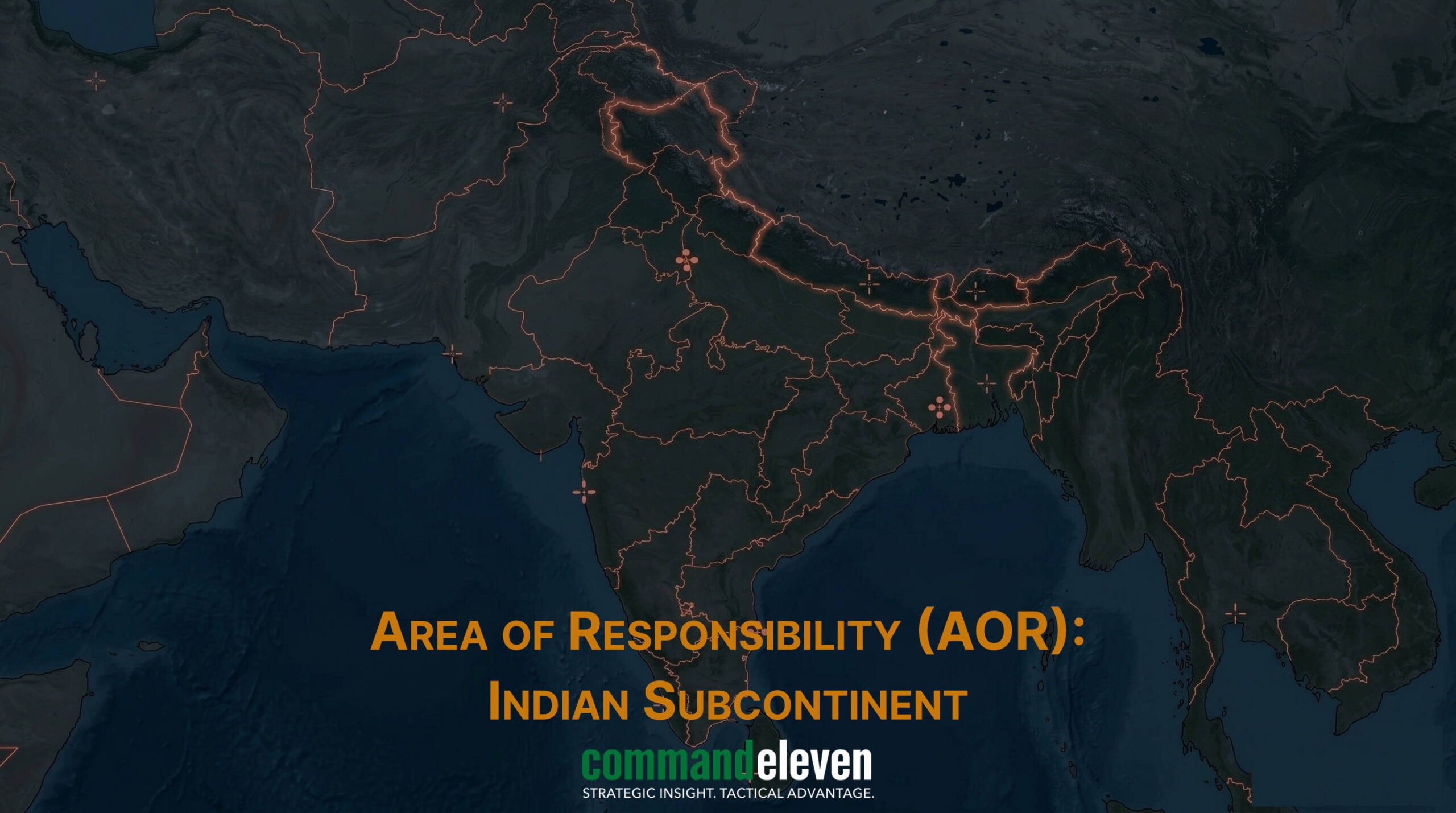
The movement of hardware relies on highly decentralized, localized corridors along the porous border geography. Rather than massive convoys, weapons are broken down, hidden within commercial trade, and trafficked in small, high-frequency increments.
Case Study: The Northern Influx (TTP Supply Lines)
- The Nangarhar-to-Khyber Axis: High-value optical gear, specialized ammunition, and assault rifles are moved from hubs in Jalalabad through the mountain passes of Torkham and Landi Kotal. This line directly feeds the TTP’s Peshawar and Malakand Territorial Commands.
- The Khost-Paktia-Paktika Triangle: This corridor serves as the primary route for heavier ordnance, including anti-armor systems and heavy machine guns, flowing into North and South Waziristan.
Case Study: The Southern Influx (BLA/BRAS Supply Lines)
- The Kandahar-Garmsir Pipe: Storage sites in Helmand and Kandahar serve as the departure point for hardware bound for the southern sector. Weapons pass through the Spin Boldak-Chaman border interface.
- The Balochistan Desert Transit: Once past the border, the hardware is routed through the desert expanses of Nushki and Chaghi, moving deep into southern Balochistan. This pipeline supplies BLA Majeed Brigade cells operating along the Makran coast and the Gwadar economic axis.
The Brokerage Network & Tribal Facilitators
The trade is sustained by a dual-layered brokerage ecosystem comprising specialized commercial dealers and complicit local command nodes.
- The De Facto Intermediaries: While the supreme leadership in Kandahar has issued decrees to centralize arms control via the General Directorate of Intelligence (GDI), local provincial commanders and rank-and-file fighters frequently treat captured ANDSF armories as a source of informal revenue.
- Tribal Smuggling Syndicates: The actual transit across the border is executed by cross-border tribal syndicates who have run contraband routes for generations. These networks are largely ideology-neutral, operating strictly on a profit-margin basis.
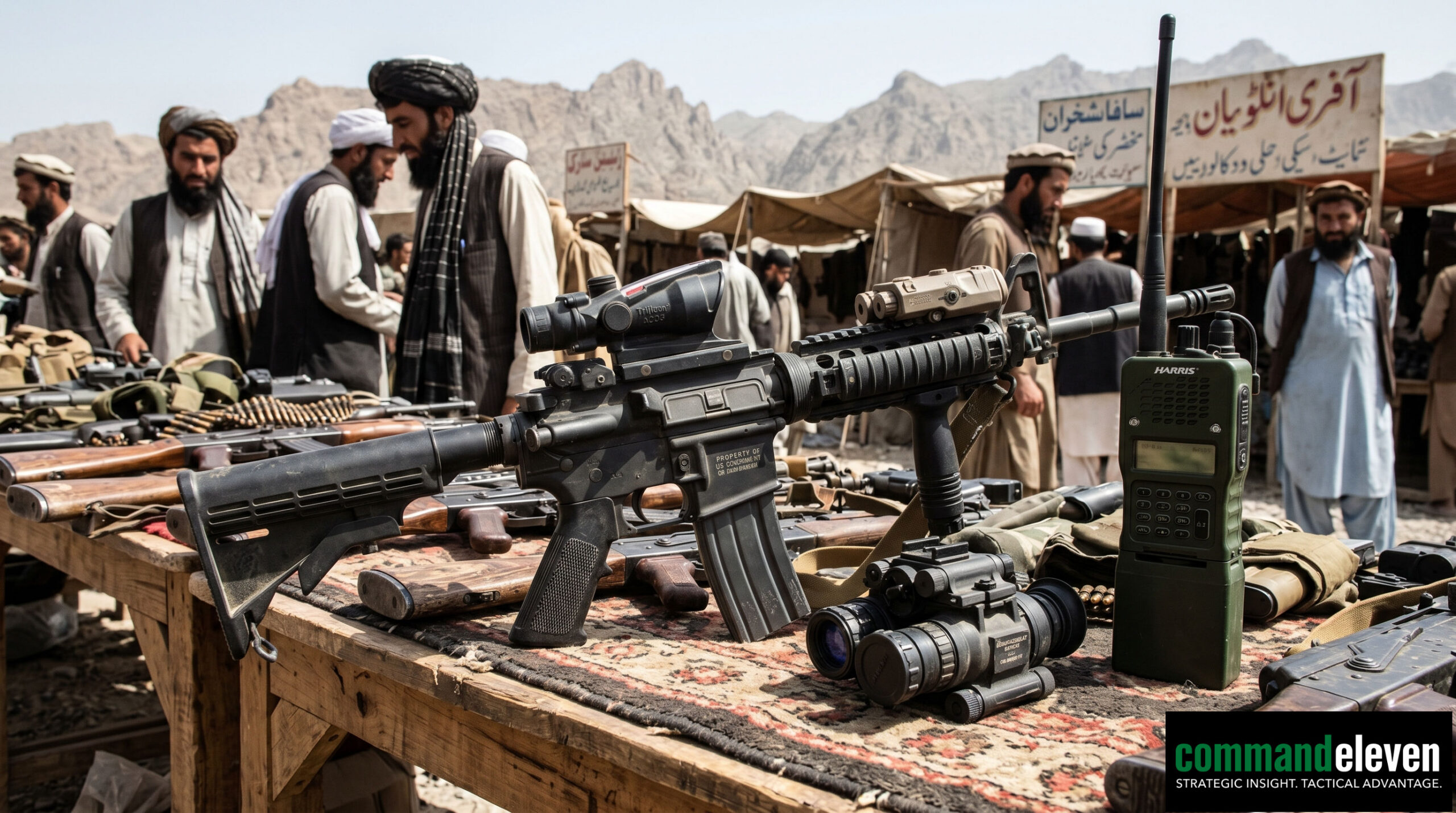
- The In-Country Arms Bazaars: Traditional open-air weapons markets have evolved. Due to increased scrutiny, high-end Western gear is rarely displayed in open stalls in places like Miran Shah or the border districts of Balkh. Instead, trading has transitioned to localized private residences acting as closed, invitation-only digital clearing houses. Brokers use encrypted messaging applications to coordinate sales, verify serial numbers via video, and secure escrow before physical collection.
Black Market Economics: Valuation of Western vs. Soviet-Legacy Gear
Prices for Western-pattern materiel experienced a sharp drop immediately following the collapse of the Afghan Republic due to sudden market oversaturation. However, prices have stabilized and risen significantly as the de facto authorities consolidated stockpiles, making high-end items scarce and highly sought after.
Western-pattern rifles and thermal optics command a premium, valued at roughly two to three times the price of standard Soviet-legacy hardware.
| Materiel Classification | Baseline Technical Description | Estimated Black Market Value (USD) | Primary TTP/BLA Tactical Application |
| Colt M4 / Fn M16A4 | 5.56x45mm NATO assault rifles with flat-top rails for modular attachments. | $1,500 – $2,500 (Depending on barrel wear and origin) | Replaces legacy AK-47 variants; standardizes front-line kinetic strike cells with tighter grouping capabilities. |
| M24 Sniper / M110 SASS | Specialized 7.62mm precision sniper platforms. | $3,500 – $5,000 | Long-range targeted assassinations of border security personnel and command structures. |
| AN/PVS-14 & Thermal Sights | Night-vision monoculars and advanced thermal imaging weapon scopes. | $2,500 – $4,000 | Provides complete asymmetric superiority during nocturnal raids against un-scoped frontier outposts. |
| 9M113 Konkurs / Milan | Wire-guided Anti-Tank Guided Missiles (ATGM) sourced from old ANDSF strategic reserves. | $8,000 – $12,000 (Per launch unit + missile) | Used selectively by elite cells to neutralize fortified checkposts and armored personnel carriers. |
Tactical Implications: Asymmetric Upgrades and the Nocturnal Deficit
The influx of this specific inventory has structurally upgraded the threat profile in South Asia:
Case Analysis: Thermal/Night-Vision Dominance
- Overcoming the Night-Vision Deficit: Historically, state security forces held a decisive advantage during night operations. The proliferation of Western thermal sights and night-vision goggles (NVGs) has neutralized this gap, allowing TTP and BLA units to execute complex, zero-light ambushes against border posts.
- Enhanced Precision Fire: The shift from smooth-bore, worn Soviet-era rifles to rifled M4 carbines firing standardized NATO ammunition has increased the effective engagement range of insurgent cells, significantly raising casualty rates during skirmishes.
Part I of this series – The Regime-Structure Evolution Blueprint
Part II – Indian Subcontinent Regional Security Seams
Part III – Western Weapons Proliferation – TTP & BLA
Part IV – Middle East & East Africa Kinetic Axes: Asymmetric Threat Dossier