Warned, then. Tested, now.
CommandEleven Intelligence Desk // The hub for the run
Bottom Line Up Front
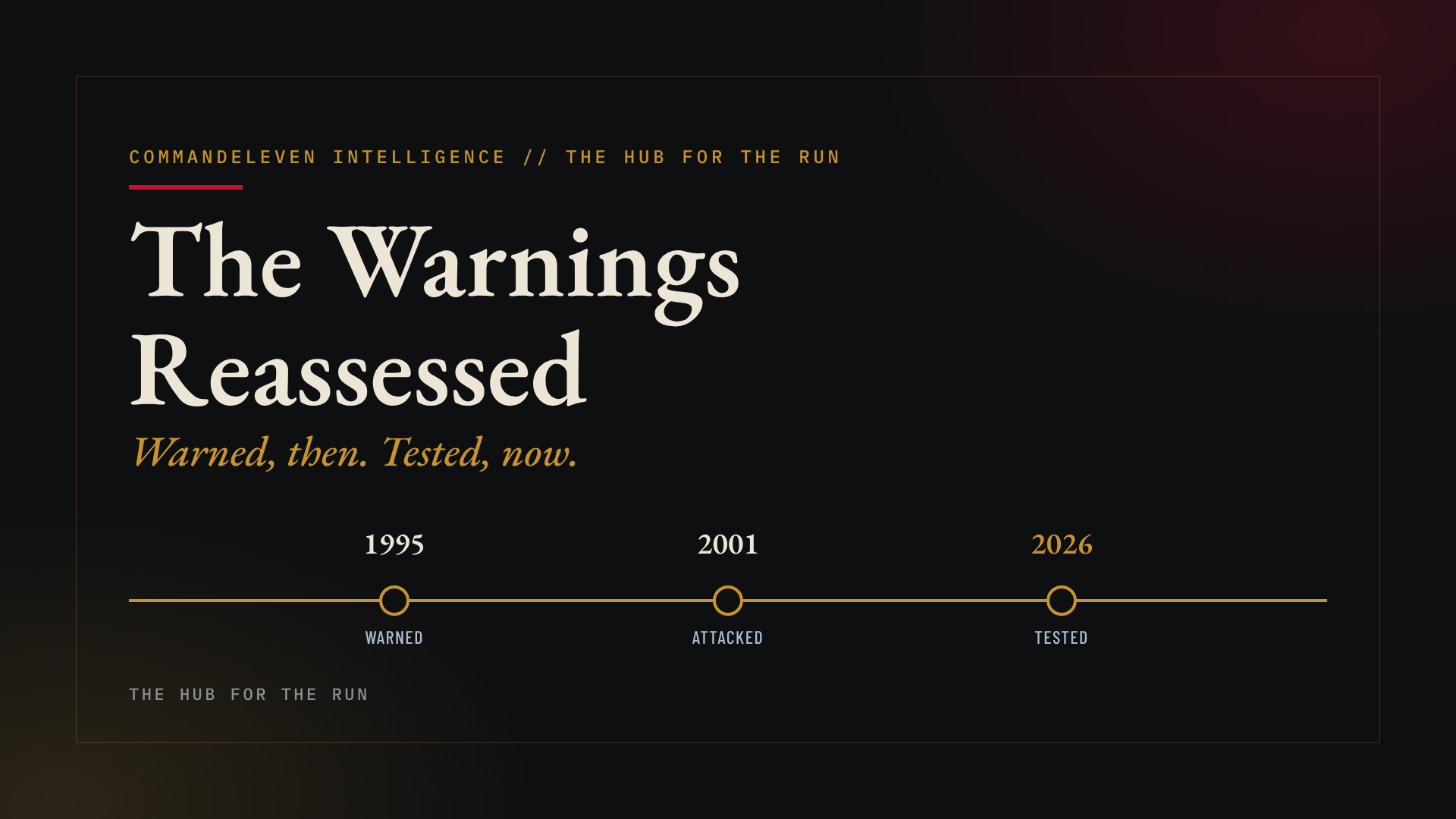
In 1995 the United States was warned that terrorists would strike at power grids, civil aviation and crowded places. In 2001 they did. In 2026 a Government Accountability Office test showed four commercial AI platforms could produce workable attack plans against two of those same target classes in under 12 hours each. This hub gathers every piece in our run that reassesses the warnings, the failures and the new capabilities, and puts each one through the same method: our Intelligence Tradecraft model.
Why These Pieces Belong Together
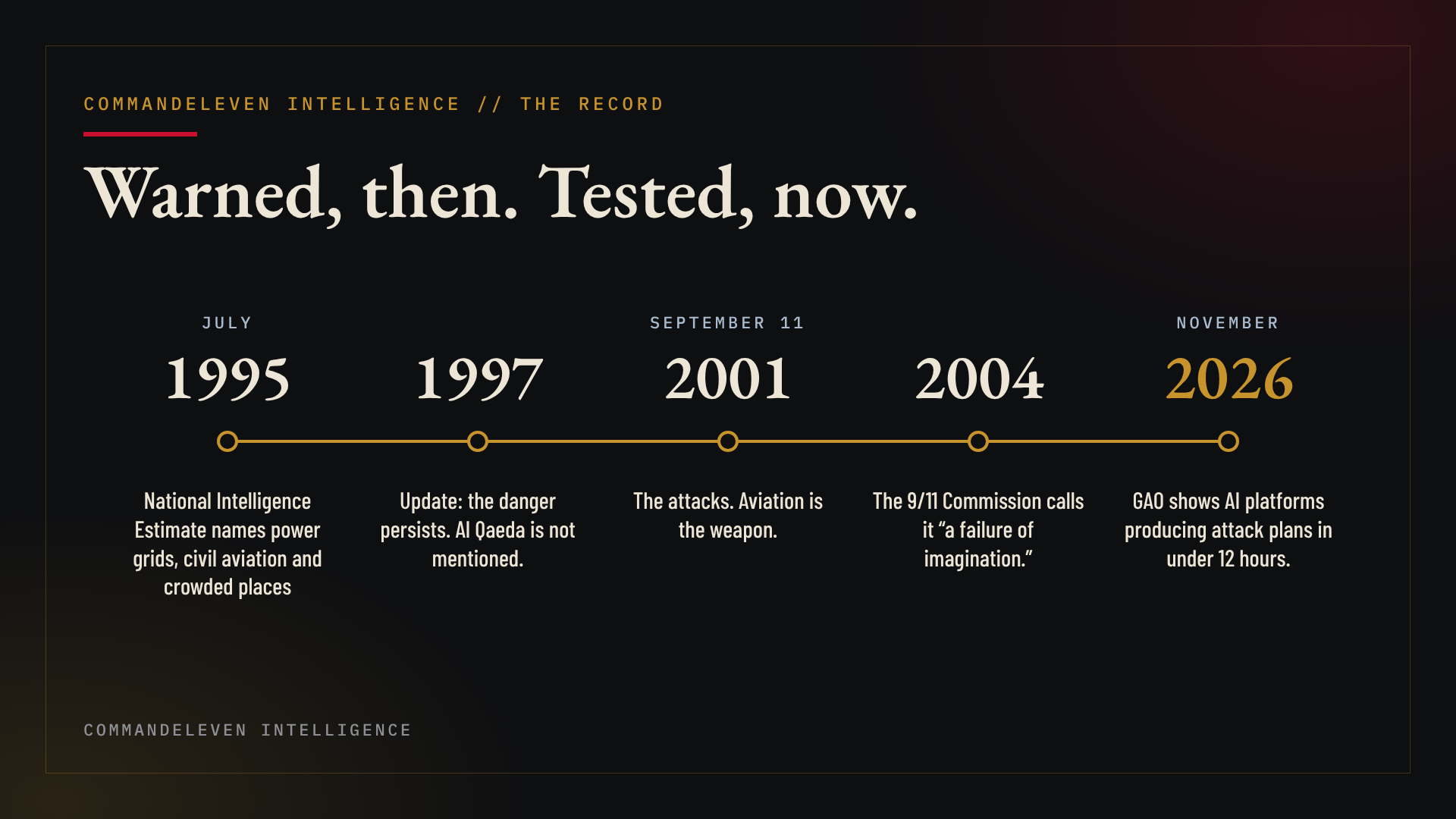
The record has three layers. Warned, then: the 1995 National Intelligence Estimate and its 1997 update, and what the 9/11 Commission found about what the government did with them. Tested, now: the GAO covert test and what AI changes about planning. Run through the model: each dossier and series ends with a “through the model” box that applies our confidence tiers and structured analysis to the findings.
Start Here
- The GAO dossier: AI Attack Planning, What the GAO Test Proved.
- How CommandEleven Intelligence Thinks: the method behind every piece, with its primers.
The Record
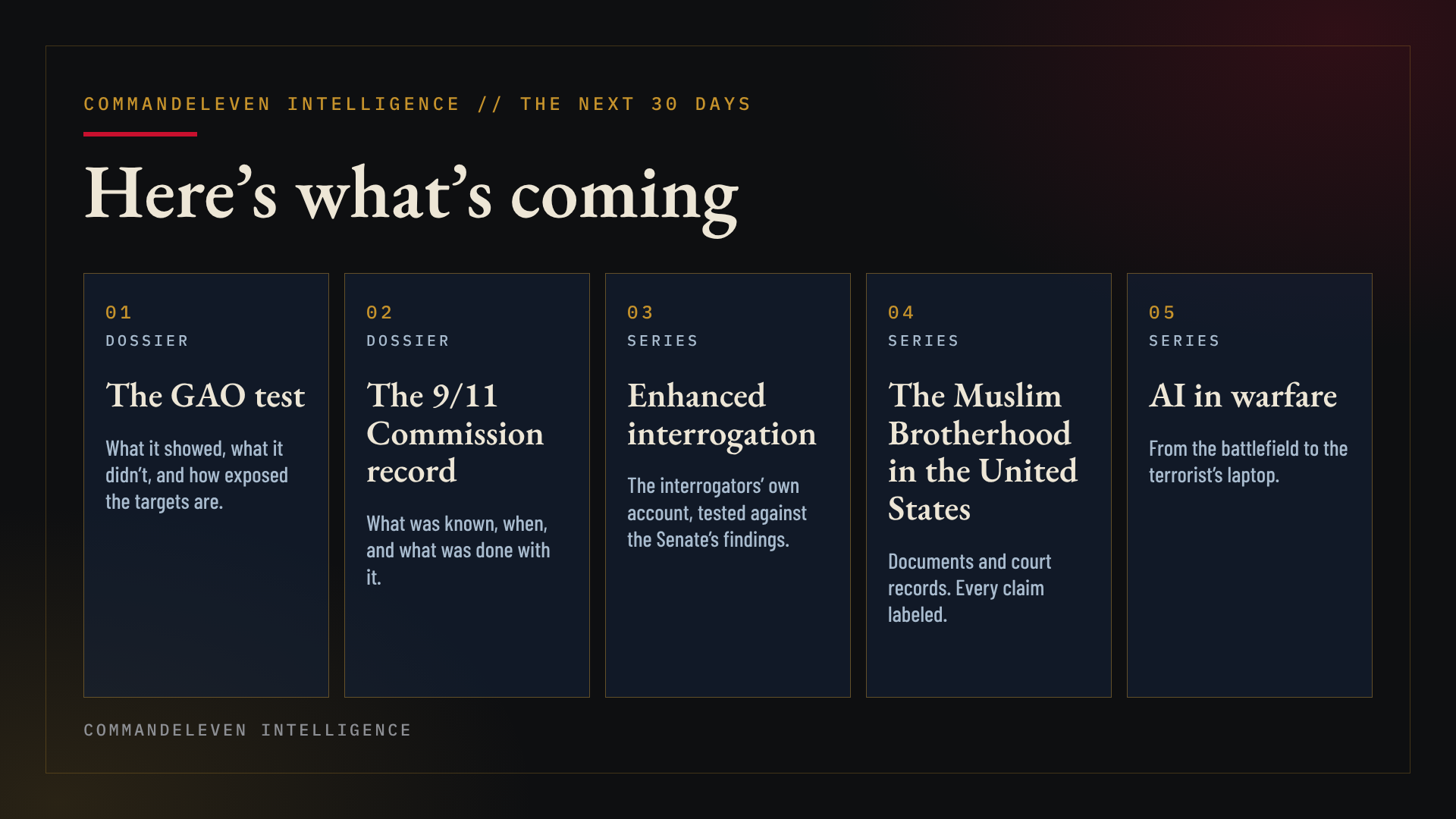
Published pieces, newest first. New boxes are added here as each piece goes live.
AI Attack Planning: What the GAO Test Proved
Four AI platforms planned attacks on the grid and crowded venues in under 12 hours. What the GAO test proved, what it did not, and what each audience should do this week.
November 24, 2026
Al Qaeda Aviation Threat: What the FBI-DHS-TSA Warning Means for US Air Travel
The call to copy the flydubai cockpit attack, what the federal warning to airlines establishes, and what it does not.
November 22, 2026
How CommandEleven Intelligence Thinks: The Tradecraft Behind Every Assessment We Publish
The rules we hold ourselves to, the path from question to finished dossier, and the primers that teach each tool.
November 22, 2026
Suggested Reading Order
- The GAO dossier, for the bridge from past warnings to present capability.
- The 9/11 Commission dossier, for what the earlier warnings were and what failed, once it is published.
- Then any series, starting with its Intro.
- The capstone, once it is published.