
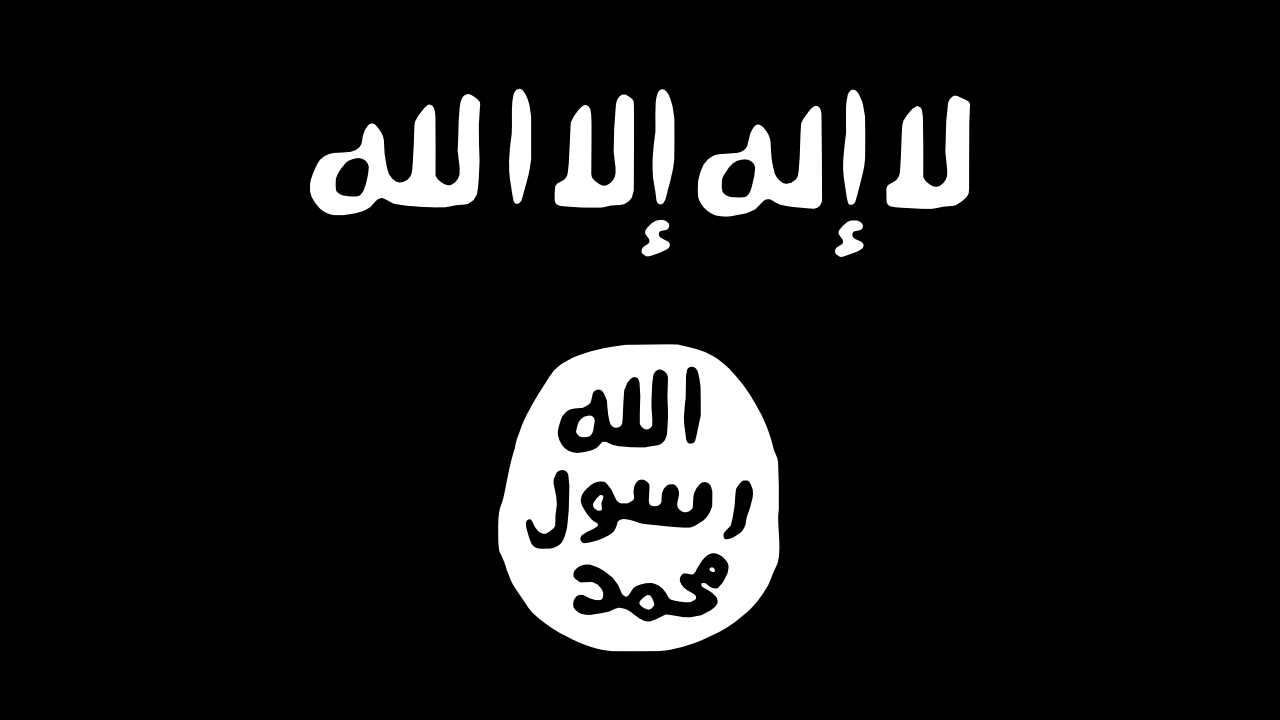
Intelligence Command Center // Terror group profile //

Islamic State Central (ISIS-Core)

Islamic State

area of operation

Global, Middle East & North Africa (MENA), Central Asia, Southeast Asia, Sahel

Specific AOR

Badiya Desert (Syria); Anbar/Diyala (Iraq)

Volatility Index

VI-3 – Moderate

Ideological Alignment

Salafi-Jihadism (Global Jihad)

force strength

6,000-10,000

Leadership

Abu Hafs al-Hashimi al-Qurashi (Caliph)

Headquarters

Badiya Desert

SIGNATURES //

TECHNICAL PROFILE
Tier 2 - High-Tier / Professionalized
OPERATIONAL SIGNATURE
Clandestine / Intelligence-Cell Model
SPATIAL PROFILE
Subterranean / Tunnel-Network Infrastructure

Operational Brief //

Operating under the current, highly secretive global Caliph, Abu Hafs al-Hashimi al-Qurashi, ISIS-Core has surrendered the management of frontline, high-volume kinetic campaigns to its increasingly dominant global affiliates (most notably ISKP in Khorasan and ISWAP/ISSP in Africa). Instead, the Core operates out of the remote desert interior of the Syrian Badia and the fractured borderlands of western Iraq, functioning as an elite ideological oversight council, strategic guidance node, and financial registry.

Leadership & Command Structure

  • Command Element: Formally led by the elusive fifth caliph, Abu Hafs al-Hashimi al-Qurashi. However, day-to-day strategic management, external plots, and financial distributions are governed by the General Directorate of Provinces and the Delegated Committee (Al-Lajnah al-Mufawadah). Following intense counter-terrorism operations, the global operational hierarchy has decentralized away from the Levant, shifting significant coordinating power to external regional offices (Al-Arkan),most notably the Al-Furqan Office in Africa and the Al-Siddiq / Al-Karrar pipelines.
  • Leadership Doctrine: Strict, dogmatic, top-down bureaucratic control paired with a highly dynamic approach to decentralized survival. The Core relies on anonymous, highly insulated figureheads to maintain theological and symbolic legitimacy, while distributing actual tactical and operational management to specialized technocratic directors across global regional command nodes.
  • Regional Management: Executed via the General Directorate of Provinces, which maintains financial, media, and security pipelines connecting the core to its global network of affiliates (Wilayat). The strategic center-of-gravity for global logistics has noticeably shifted toward the African continent and Central/South Asian cells to maintain international operations. This reality was starkly demonstrated by the targeted neutralization of top-tier global operators like Abu-Bilal al-Minuki, the Core’s global second-in-command who was hunted and eliminated in the Lake Chad Basin while managing inter-provincial networks.

Regional Center-of-Gravity (Current Focus)

  • Primary Growth Theater: The Levant (Syria and Iraq Badiya/desert corridors), maintaining approximately 3,000 highly disciplined insurgent fighters. The Core leverages localized instability to run an attritional, subterranean guerrilla warfare campaign focused on structural reconstitution.
  • Operational Hub: The vast, under-governed desert expanses of central Syria (Homs/Palmyra sectors) and the Anbar/Saladin borderlands in Iraq. These zones serve as primary fallback sanctuaries for running clandestine training cells, launching opportunistic hit-and-run ambushes against state forces, and targeting prison infrastructure to free thousands of incarcerated veteran cadres.
  • Secondary/Support Theaters: Global operational pipelines directing finances and technical assistance to high-yield external affiliates,specifically the Islamic State Khorasan Province (ISKP) for external international messaging and attacks, and the Somalia/Sahel/West Africa (ISWAP) complexes for raw territorial and financial consolidation.

Intelligence Behavioral Matrix (TRAP-18/VERA-2R)

  • Volatility Index: Extreme. While the Core lacks the conventional military strength to seize and hold massive, open urban landscapes as it did during its peak era, it maintains a lethal, highly calculated capability to coordinate multi-axis external operations, trigger localized sectarian friction, and deploy advanced technological solutions.
  • High-Risk Indicators: Advanced integration of emerging consumer technologies into asymmetric tradecraft,including the deployment of artificial intelligence (AI) tools for rapid, multilingual propaganda campaigns; the systematic use of uncrewed aircraft systems (UAS) and drones for local reconnaissance and tactical strikes; and an aggressive reliance on digital currencies and complex shell entities to manage global liquidity pools.
Disruption Vector Matrix //

vector //

vulnerability //

disruption strategy //

logistics //

Critical dependence on subterranean networks, porous border corridors, and the exploitation of localized detention facility vulnerabilities (e.g., in Hasakah) to rebuild fighter pipelines.

Integrated Cordon & Prison Target-Hardening: Enforce strict technical and physical security over active detainee facilities, deploy persistent aerial overwatch (ISTAR) over desert transit channels, and eliminate smuggling rings inside local displacement camps.

financial //

High reliance on the transnational flow of digital currencies, decentralized cryptocurrency wallets, gray-market hawala rings, and wealth generation from advanced regional hubs like the Al-Karrar office.

Algorithmic Crypto Interdiction: Deploy deep blockchain analytics to identify and permanently freeze Core-linked digital wallet clusters, while executing targeted secondary compliance sanctions on regional informal financial clearinghouses.

leadership //

Vulnerability to high-level technical tracking and persistent precision kinetic strikes targeting its decentralized coordinating offices (Al-Arkan) globally.

Global Command Interdiction: Exploit signal and cyber intelligence (SIGINT) to trace communications running between the Levant core and external regional offices, launching precision kinetic responses against traveling coordinators to permanently break global command continuity.

Threat Matrix //

OPERATIONAL REACH: 3 – Medium (Regional Network)
KINETIC CAPABILITY: 3 – Medium (IED/Targeted Assassinations)
LOGISTICAL RESILIENCE: 4 – High (Sustained Cross-Border Safe Havens/Diversified Revenue)
INFORMATION INFLUENCE: 4 – High (Centralized Media Wing/Multi-Lingual High-HD Video)

OVERALL THREAT INDEX
3.50

operational reach //

Theater/Regional (Command Interface). While its direct physical footprint is localized to the rugged, contiguous deserts spanning eastern Syria (Deir ez-Zor, Homs) and western Iraq (Anbar), its structural command reach remains globally linked. The Core acts as the ultimate arbitrating authority, validating new provincial governors and distributing strategic guidance to distant franchises. However, its own kinetic reach in the Levant is tightly constrained by surrounding hostile state actors.

kinetic capability //

Advanced Asymmetric (Rebound Posture). The era of massive conventional offensives, motorized columns, and urban siege defenses has passed. Wielding an estimated force of 1,500 to 3,000 active cadres in the Levant, ISIS-Core operates as a decentralized guerrilla army. It specializes in hit-and-run ambushes, complex IED corridors, and sniper operations primarily targeting the Syrian Democratic Forces (SDF). Its core kinetic objective is structurally narrow: orchestrating prison breaks to liberate thousands of veteran jihadists detained in high-security facilities like Al-Hol and Hasakah.

logistical resilience //

Structured (Subterranean Depth). Despite relentless counter-terrorism pressure from international coalitions, the Core maintains an incredibly durable survival matrix. It utilizes an expansive, deeply fortified underground network of natural caves and clandestine bunkers in the Badia desert, which shields its remaining technical assets from aerial detection. Financially, it has successfully evolved past territorial asset capture, liquidating its assets into sophisticated, mobile cryptocurrency networks, investments in legitimate regional commerce via front companies, and decentralized hawala syndicates.

information influence //

Institutionalized (Strategic Oversight). Operating through its foundational media pillars—the Al-Furqan Media Foundation and the weekly Al-Naba newsletter—the Core continues to set the overarching ideological tone for the global movement. While global digital recruitment operations have largely been decentralized to ISKP’s media wings, the Core’s centralized output remains the sole mechanism for distributing structural decrees and verifying oaths of allegiance (bay’ah), maintaining a highly authoritative, institutionalized influence over the broader transnational grid.

analytical note //

ISIS-Core presents a classic “strategic anchor” threat model. By shedding the immense administrative liabilities of direct territorial governance, the central command has successfully insulated its remaining leadership from decisive neutralization. The persistent geopolitical instability in Syria—characterized by ongoing friction between the transitional government in Damascus and Kurdish-led factions in the east—provides the exact operational terrain the Core requires to steadily rebuild its numbers and wait for an opportunistic security collapse.

Kinetic and Multi-domain capabilities //

Primary adversary//

SDF, Iraqi Security Forces, Global Coalition, Russia, Iran

weaponry focus

Nato Std
Atgm
Svbieds

Geopolitical and Logistics //

financial vectors

Extortion
Oil Smuggling
Crypto
Hawala
Local Funding

RESTRICTED: STRATEGIC DISRUPTION //

Multi-domain attrition; biometric tracking of former fighters

affiliated entities //