

Intelligence Command Center // Terror group profile //

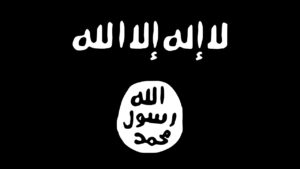
Islamic State – Pakistan Province (ISPP)

Islamic State

area of operation

Indian Subcontinent

Specific AOR

Balochistan (Mastun/Quetta), KP (Bajaur), and urban nodes in Sindh

Volatility Index

VI-5 – Critical

Ideological Alignment

IS Central

force strength

600-1,000

Leadership

Operating under a provincial Wali appointed by IS-Khorasan’s regional oversight.

Headquarters

Mastung District

SIGNATURES //

TECHNICAL PROFILE
Tier 3 - Mid-Tier / Standard Insurgent
OPERATIONAL SIGNATURE
Asymmetric / Terror-Focused
SPATIAL PROFILE
Rural / Contested Governance

Operational Brief //

Formally established as a distinct administrative branch in May 2019 via a split from the Islamic State – Khorasan Province (ISKP), ISPP spent years operating under the strategic and logistical shadow of its Afghan-based counterpart. However, through 2025 and into mid-2026, the group’s operational footprint has undergone a deliberate expansion.

As ISKP centralizes its resources to function as a pan-regional, transcontinental external operations (ExOps) syndicate, it has systematically devolved theater-level kinetic responsibilities within Pakistan to ISPP. Operating primarily across Balochistan, Sindh, Punjab, and urban federal territories,while leaving Khyber Pakhtunkhwa largely under ISKP’s direct purview,ISPP has transitioned into a highly aggressive, self-contained sectarian and anti-state vanguard.

Leadership & Command Structure

  • Command Element: Operating under a highly insulated, compartmentalized regional shura that answers structurally to the broader ISKP core command leadership based in the region. Following targeted counter-terrorism operations, leadership has shifted away from high-profile figures toward specialized operational networks led by veteran urban operatives.
  • Leadership Doctrine: Strict horizontal cell management combined with decentralized tactical execution. The group relies on autonomous, self-activating urban cells and localized networks to survive intensive state-level intelligence pressure.
  • Regional Management: Managed through specialized provincial sectors (primarily focused on Balochistan, Khyber Pakhtunkhwa, and urban centers in Sindh and Punjab). The command element maintains strict, encrypted digital communications to synchronize operations without exposing the central leadership core.

Regional Center-of-Gravity (Current Focus)

  • Primary Growth Theater: The border regions and the rugged, non-demarcated frontiers of Balochistan and Khyber Pakhtunkhwa. The group exploits the security vacuums along the Pakistan-Afghanistan border to establish hidden staging facilities and run cross-border movement corridors.
  • Operational Hub: The urban fringes and clandestine safe houses of Quetta, Peshawar, and Karachi. These highly populated urban and semi-urban centers are utilized for low-profile recruitment, bomb assembly, financial processing, and target surveillance.
  • Secondary/Support Theaters: Digital propaganda networks and virtual safe spaces utilized to target educated, middle-class youth in urban capitals, alongside remote logistical fallback tracks crossing the interior desert corridors of Balochistan.

Intelligence Behavioral Matrix (TRAP-18/VERA-2R)

  • Volatility Index: High. The entity exhibits an aggressive, high-yield kinetic profile, prioritizing mass-casualty sectarian bombings, suicide operations against political rallies, and targeted assassinations of state personnel and religious scholars.
  • High-Risk Indicators: Masterful implementation of the “Sectarian Out-bidding” model,executing highly lethal attacks to challenge the operational dominance of rival groups; rapid acquisition of advanced explosive components; and a calculated focus on recruiting technically proficient operatives to launch cyber-kinetic or complex urban plots.
Disruption Vector Matrix //

vector //

vulnerability //

disruption strategy //

logistics //

Complete dependence on porous transit tracks along the Pakistan-Afghanistan border and vulnerable urban safe houses to move operatives and explosive precursors.

Integrated Border Denial & Urban Sweeps: Expand real-time biometric tracking at border interfaces, reinforce intelligence-led raids on municipal fringes, and deploy persistent technical surveillance over cross-border corridors.

financial //

High reliance on decentralized digital asset streams (cryptocurrency routing), informal hawala networks, and small-scale local extortion pipelines.

Algorithmic Asset Tracking: Deploy advanced financial intelligence and blockchain analytics to trace digital wallet addresses, monitor informal currency exchanges, and freeze proxy accounts laundering capital.

leadership //

Vulnerability to extreme counter-intelligence pressure, structural isolation from the global core, and intense operational friction with both state forces and rival insurgent networks.

Information Operations & SIGINT Exploitation: Maximize signal intelligence (SIGINT) to intercept and compromise encrypted command links, while running aggressive counter-narrative campaigns to amplify internal strategic rifts and trigger localized defections.

Threat Matrix //

OPERATIONAL REACH: 3 – Medium (Regional Network)
KINETIC CAPABILITY: 4 – High (Advanced SALW/Thermal Optics/Coordinated Ambushes)
LOGISTICAL RESILIENCE: 3 – Medium (Localized Taxation/Smuggling Links)
INFORMATION INFLUENCE: 4 – High (Centralized Media Wing/Multi-Lingual High-HD Video)

OVERALL THREAT INDEX
3.50

operational reach //

Theater/Regional (Urban Infiltration). ISPP’s geographic footprint dominates the rugged, ungoverned expanses of central and northern Balochistan (Mastung, Bolan, Sibi, and Quetta) and has established persistent operational lines into southern Punjab and Karachi. Crucially, the group has demonstrated an expanded capability to strike deep within Pakistan’s core federal security zones. This was starkly demonstrated on February 6, 2026, when an ISPP suicide bomber penetrated the capital to detonate an explosive device inside a Shia Imambargah on the outskirts of Islamabad, causing 31 fatalities and over 169 injuries.

kinetic capability //

Advanced Asymmetric (Hyper-Sectarian Spectaculars). Wielding an estimated force of several hundred clandestine operatives organized into highly compartmentalized urban cells, ISPP specializes in high-casualty mass-casualty attacks and targeted assassinations. The group utilizes highly sophisticated IED architectures, as seen in their recurring targeting of security force transport buses in Mastung, alongside a potent suicide bombing apparatus. Their kinetic strategy targets three distinct pillars: state security infrastructure, minority Shia/Hazara populations, and secular political parties.

logistical resilience //

Structured (Crime-Terror / Subterranean Relocation). Following intensive state counter-insurgency pressure under Operation Azm-e-Istehkam, ISPP has faced significant physical degradation, including high-attrition skirmishes in Mastung. In response, the group has deepened its logistical integration with local sectarian remnants (such as rogue factions of Lashkar-e-Jhangvi). Financially, ISPP operates independently of territory, sustaining its operations via local extortion networks, small-scale kidnapping syndicates, and sophisticated cryptocurrency networks tied to facilitators operating across the South Caucasus and the Gulf.

information influence //

Institutionalized (Digital Weaponization). Backstopped by ISKP’s Al-Azaim Media Foundation and releasing localized Urdu and Balochi programmatic documentation, ISPP runs an aggressive ideological campaign. Its narrative framework is unique: it explicitly condemns Baloch ethnonationalism and secular civil movements as un-Islamic, leading to a direct digital and kinetic campaign targeting nationalist figures and rights activists. By framing local ethnic grievances as a subset of global pan-Islamist alignment, ISPP actively tries to capture and radicalize disenfranchised youth out of secular separatist movements.

analytical note //

ISPP represents a highly volatile “spoiler” within Pakistan’s internal security matrix. While its operational volume is statistically surpassed by the Tehrik-i-Taliban Pakistan (TTP) through mid-2026, ISPP poses a qualitatively distinct threat due to its uncompromising hyper-sectarian logic. The February 2026 Islamabad bombing underscores that as the Pakistani state remains preoccupied with cross-border kinetic friction along the Durand Line against the Afghan Taliban and the TTP, ISPP will continually exploit these strained state resources to stage high-impact urban operations designed to shatter multi-sectarian social cohesion.

Kinetic and Multi-domain capabilities //

Primary adversary//

CTD Pakistan, TTP (Ideological rivals), Afghan Taliban (as the de facto neighbor)

weaponry focus

Small Arms
Svest
Ieds Efp

Geopolitical and Logistics //

financial vectors

Extortion
Crypto
Local Funding

RESTRICTED: STRATEGIC DISRUPTION //

Signal intelligence (SIGINT) on decentralized communications and community-led deradicalization

affiliated entities //