
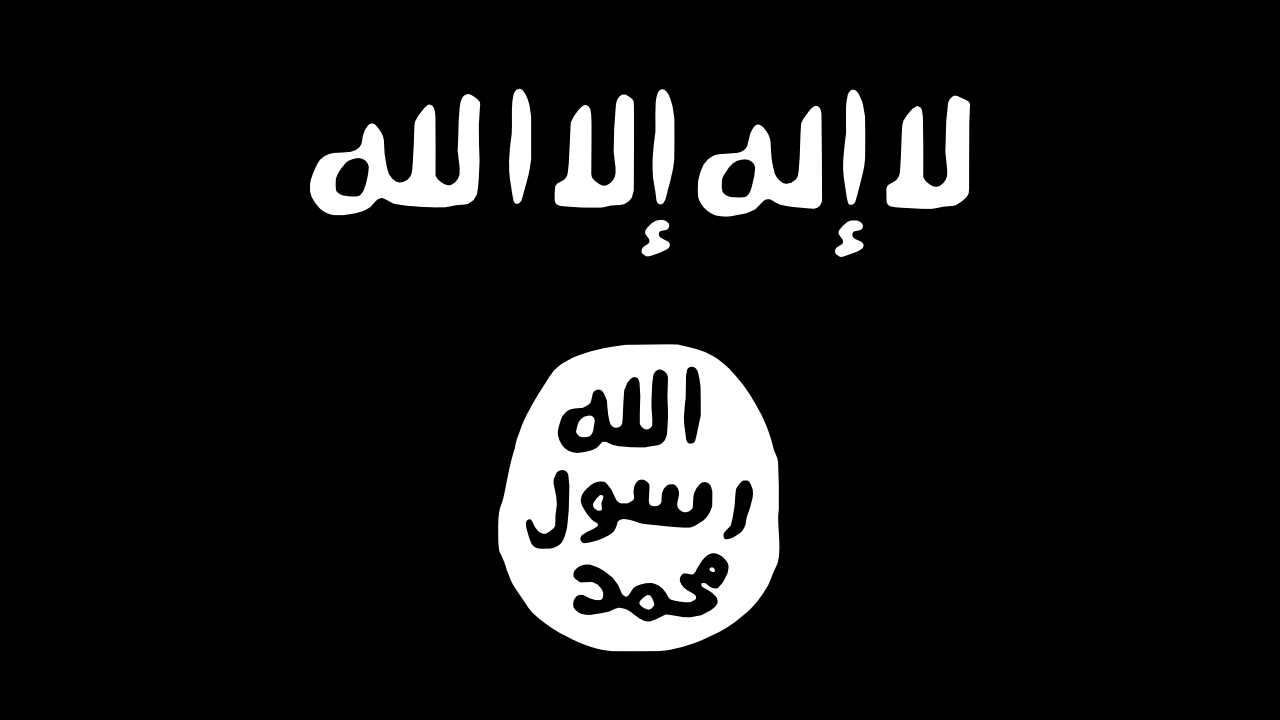
Intelligence Command Center // Terror group profile //

Islamic State – East Asia / Philippines Province

Islamic State

area of operation

Southeast Asia

Specific AOR

Mindanao (Sulu Archipelago, Lanao del Sur, Maguindanao)

Volatility Index

VI-3 – Moderate

Ideological Alignment

IS Central

force strength

300-600

Leadership

Decentralized; regional emirs acting under the IS East Asia umbrella.

Headquarters

Jolo, Sulu

SIGNATURES //

TECHNICAL PROFILE
Tier 4 - Low-Tier / Asymmetric / Cells
OPERATIONAL SIGNATURE
Asymmetric / Terror-Focused
SPATIAL PROFILE
Jungle / Equatorial Rainforest Camps

Operational Brief //

The Islamic State East Asia (ISEA),internally recognized by Daesh central as Wilayat al-Sharq Asiya (East Asia Province) and comprised of fractured remnants of the Maute Group, the Hassan/Torayfe factions of the Bangsamoro Islamic Freedom Fighters (BIFF), and pro-ISIS remnants of the Abu Sayyaf Group (ASG),requires analyzing an affiliate that has transitioned from an open, city-capturing army into a highly fragmented, underground network of survivalist cells.

Following its historical high-water mark during the five-month conventional siege of Marawi City in 2017, ISEA has faced relentless, multi-year decapitation campaigns by the Armed Forces of the Philippines (AFP). The neutralization of successive emirs,ranging from its initial leader Isnilon Hapilon to its later administrative chiefs, Owaida Marohombsar (Abu Dar) and Jer Mimbantas (Abu Zacharia, killed in June 2023),effectively shattered the group’s centralized operational cohesion. Through 2025 and into mid-2026, despite claims by regional commands that the threat had been completely dismantled, ISEA has adopted a strict subterranean posture in the marshlands and dense island jungles of the Bangsamoro Autonomous Region in Muslim Mindanao (BARMM). They focus on low-overhead asymmetric survival while waiting for institutional lapses in state counter-insurgency pressure.

Leadership & Command Structure

  • Command Element: Directed by a designated regional emir,historically descending from figures like Isnilon Hapilon and Hatib Hajan Sawadjaan,who coordinates a fluid council composed of individual faction leaders from the Abu Sayyaf Group (ASG), Maute Group splinters, and Bangsamoro Islamic Freedom Fighters (BIFF).
  • Leadership Doctrine: Employs a highly decentralized, factional command model. While swearing formal allegiance to the global IS core, local leadership dynamics are heavily influenced by traditional Moro clan structures, kinship ties, and localized maritime alliance frameworks.
  • Regional Management: Operationally distributed across the autonomous zones of the Mindanao region, with distinct sub-commands managing territorial enclaves across the Sulu Archipelago (Sulu, Basilan, Tawi-Tawi) and the marshlands of central Mindanao.

Regional Center-of-Gravity (Historical Focus)

  • Primary Growth Theater: The southern Philippines, specifically leveraging the archipelagic geography, historical separatist grievances, and weak federal governance grids of Mindanao.
  • Operational Hub: The dense, volcanic jungle interiors of Basilan and Jolo islands, alongside the complex, waterlogged terrain of the Liguasan Marsh in Maguindanao. These sectors provide excellent defensive sanctuaries against heavy armor and conventional artillery.
  • Strategic Isolation: Moderately Low. Avoids total isolation by exploiting the tri-border maritime zone connecting the southern Philippines, Sabah (Malaysia), and North Kalimantan (Indonesia) to move foreign fighters, logistical supplies, and financial assets.

Intelligence Behavioral Matrix (TRAP-18/VERA-2R)

  • Volatility Index: Volatile / High Lethality. Maintains a dangerous, highly opportunistic tactical profile focused on high-impact asymmetric strikes and urban disruption.
  • High-Risk Indicators: Proven capacity to orchestrate complex, multi-stage suicide bombings targeting civilian infrastructure and religious sites; deployment of sophisticated maritime piracy and kidnapping-for-ransom campaigns; expert utilization of commercial drones for tactical surveillance; and persistent execution of jungle ambush maneuvers against Armed Forces of the Philippines (AFP) units.

Disruption Vector Matrix //

vector //

vulnerability //

disruption strategy //

logistics //

Complete dependence on maritime supply lines via small watercraft to move weapons and fighters between isolated island enclaves.

Joint Maritime Cordon Operations: Execute continuous, synchronized naval and coast guard patrols under the Trilateral Cooperative Arrangement (TCA) to seal the Sulu and Celebes seas.

financial //

Reliance on high-yield kidnapping-for-ransom payouts, systematic extortion of local agricultural enterprises, and international IS crypto-transfers.

Anti-Ransom Enforcement & Crypto Blocks: Enforce strict federal zero-tolerance policies on corporate ransom payments, paired with targeted financial intelligence tracking of digital wallets linking Southeast Asia to global IS hubs.

leadership //

Vulnerable to structural disruption when localized clan-based alliance configurations are broken or individual faction leaders are eliminated.

Targeted Special Operations: Deploy specialized counter-terrorism forces (such as the AFP Scout Rangers) backed by real-time aerial intelligence to systematically neutralize core faction emirs.

Threat Matrix //

OPERATIONAL REACH: 2 – Low (Provincial/Disrupted)
KINETIC CAPABILITY: 2 – Low (Basic SALW/Sabotage)
LOGISTICAL RESILIENCE: 2 – Low (Basic Extortion/Transient Safe Havens)
INFORMATION INFLUENCE: 2 – Low (Localized Printed/Audio Leaflets)

OVERALL THREAT INDEX
2.00

operational reach //

Highly Localized / Fragmented. ISEA’s physical footprint is structurally confined to traditional maritime and jungle insurgent pockets in the southern Philippines—principally the Sulu Archipelago (Basilan, Jolo) and the Lanao del Sur and Maguindanao marshlands of central Mindanao. The group’s historical capacity to draw massive waves of regional foreign terrorist fighters (FTFs) from Malaysia and Indonesia or project unified command infrastructure across Southeast Asia has been broken. Its operations are characterized by insular, highly compartmentalized local cells acting semi-autonomously.

kinetic capability //

Low-Tech Asymmetric / Latent. The group no longer commands the tactical assets required to stage urban conventional offensives or hold terrain against state forces. Its active fighting strength is estimated at fewer than 150 to 200 distributed cadres. However, its specialized sabotage capabilities remain a potent hazard. Following an extended operational lull, ISEA formally broke its tactical silence on January 30, 2026, claiming a lethal, well-coordinated rural ambush that neutralized four AFP regular soldiers in Mindanao. Its offensive baseline relies entirely on isolated improvised explosive device (IED) emplacements targeting military transit lines, low-tier grenade spectaculars, and opportunistic hit-and-run assassinations.

logistical resilience //

Fragile / Opportunistic. The group’s survival matrix has suffered deep financial disruption. Financial flows from ISIS-Core via the global General Directorate of Provinces have narrowed significantly, forcing IEA cells to operate with low operational overhead. To sustain their hidden camps in remote jungle terrains, remaining commanders rely heavily on primitive, localized illicit financing models. These include small-scale extortion syndicates targeting regional transport operators, local drug trafficking links, and opportunistic maritime piracy or kidnap-for-ransom (KFR) plotting across the porous Sulu and Celebes Sea borderlands.

information influence //

Rudimentary / Subterranean. The high-end, centralized propaganda channels that once fueled pan-regional radicalization across the Malay Archipelago—exemplified by the historical Katibah Nusantara media cells—are non-functional. ISEA’s current digital output is constrained, relying on encrypted messaging networks to distribute localized video pledges and claims. Ideologically, the group has struggled to find narrative traction following the implementation of the BARMM regional governance model, as local political integration has steadily drained their pool of grievance-driven recruits, forcing them to rely on narrow clan networks or the radicalization of orphan cadres within isolated family pods.

analytical note //

ISEA presents a classic “latent residue” threat model. While its structural capacity has been successfully pushed below the threshold of a strategic regional threat by sustained military attrition, the January 2026 ambush serves as a definitive warning that the group retains its baseline asymmetric lethality. The core security risk through mid-2026 does not stem from an imminent territorial resurgence, but from the potential for these unintegrated, highly radicalized cells to act as local execution nodes for more capable external actors—such as ISKP’s global networks—seeking to exploit the region’s complex geography to orchestrate symbolic maritime or urban spectaculars.

Kinetic and Multi-domain capabilities //

Primary adversary//

AFP (Armed Forces of the Philippines), PNP

weaponry focus

Nato Std
Svest Pbied
Naval Mines

Geopolitical and Logistics //

financial vectors

Extortion
Kfr
Is Funding

RESTRICTED: STRATEGIC DISRUPTION //

Trilateral maritime patrols (Philippines-Malaysia-Indonesia) and community-based deradicalization.

affiliated entities //