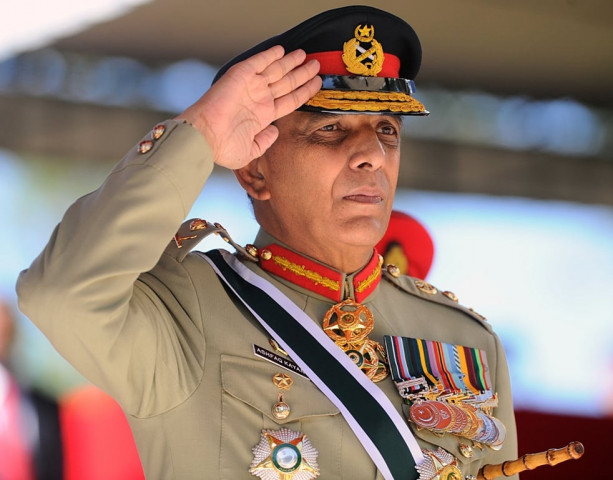
Phase II: The Kiyani Era (2007-2013) (The COIN Evolution)
Primary Doctrine: The COIN Evolution (Clear-Hold-Build)
Kiyani redefined the Army as a specialized Counter-Insurgency (COIN) force. He oversaw the rewrite of the military’s “Green Book” to prioritize the internal threat over the traditional eastern front.
Strategic Verdict: Kiyani successfully institutionalized COIN tradecraft but entrenched the “Good vs. Bad” Taliban distinction by leaving North Waziristan as a sanctuary.
At A Glance: Kiyani Era
Operation
Status
Strategic Verdict
Rah-e-Rast (Swat)
SUCCESS
Decisive recapture of settled districts; restored state writ.
Rah-e-Nijat (S. Waz)
SUCCESS
Invaded the Mehsud heartland; shattered TTP cohesion.
Sher-e-Dil (Bajaur)
SUCCESS
Maturation of the FC as a lead kinetic force.
Operation Rah-e-Haq (Phases I, II, & III)
The “Appeasement Trap” and the failure of graduated escalation.
Timeframe: October 2007 – February 2009
Theater: Swat Valley and Shangla District.
Lead Command: Gen. Naser Janjua (Initial Phase).
Strategic Objective: Counter the territorial expansion of Mullah Fazlullah’s TNSM/TTP faction and neutralize illegal FM radio broadcasts.
Assets & Tactics: Static defensive posturing; graduated escalation utilizing Frontier Constabulary before regular Army divisions.
Technical Outcome:
Success: Prevented the immediate collapse of the provincial government in Peshawar.
Friction: The “FM Mullah” Failure. Static posturing allowed militants to bypass outposts. Repeated peace accords (Nizam-e-Adl) allowed the TTP to re-arm and execute pro-state tribal elders during ceasefires.
Operation Sher-e-Dil (Lion’s Heart)
The operational maturation of the Frontier Corps (FC).
Timeframe: August 2008 – February 2009
Theater: Bajaur Agency (specifically the Loe Sam crossroads).
Lead Command: Gen. Tariq Khan (IGFC KP).
Strategic Objective: Sever TTP supply lines from Afghanistan’s Kunar province into the tribal belt.
Assets & Tactics:
Trench warfare
Up-armored FC paramilitary elements supported by AH-1 Cobra gunships.
Technical Outcome:
Success:
Captured Loe Sam, effectively cutting the TTP’s logistics artery
Proved the FC could lead major kinetic offensives.
Friction: Reliance on civilian Lashkars (tribal militias) left local elders vulnerable to insurgent reprisals once military momentum shifted.
Operation Rah-e-Rast (Black Thunderstorm)
The absolute kinetic recapture of the Swat Valley.
Timeframe: April – July 2009
Theater: Swat, Buner, Lower Dir, and Shangla.
Lead Command: Gen. Masood Aslam (XI Corps).
Strategic Objective: Total annihilation of Fazlullah’s “Shadow Government” in Malakand.
Assets & Tactics:
Vertical Envelopment (SSG night-time heliborne insertions at Peochar)
House-to-house CQB in Mingora
Massive aerial bombardment.
Technical Outcome:
Success:
Decisive state victory
Restored writ in settled districts
Decimated the TNSM/TTP command structure.
Friction: The Humanitarian Crisis. Required the displacement of ~3 million civilians (IDPs). While kinetically successful, the “Mass Displacement” model was deemed unsustainable for long-term repeat operations.
Operation Rah-e-Nijat (Path to Salvation)
The invasion of the Mehsud heartland in South Waziristan.
Timeframe: October 2009 – 2010
Theater: South Waziristan (Makeen, Sararogha, Ladha).
Lead Command: spearheading by 7th and 9th Infantry Divisions.
Strategic Objective: Decapitate the unified TTP leadership following the attack on GHQ Rawalpindi.
Assets & Tactics:
Three-Pronged Pincer (advancing from Razmak, Jandola, and Shakai)
Armor-supported mountain infantry sweeps.
Technical Outcome:
Success:
Fractured TTP territorial cohesion
Destroyed primary IED and suicide bomber manufacturing hubs.
Friction: The “Balloon Effect.” The lack of a simultaneous seal in North Waziristan allowed the TTP core leadership to relocate rather than face total elimination.
Operation Koh-e-Sufaid (White Mountain)
Breaking the siege of Parachinar.
Timeframe: July – August 2011
Theater: Kurram Agency.
Lead Command: 14th Infantry Division and Frontier Corps.
Strategic Objective: Reopen the Thall-Parachinar road and expel TTP elements facilitating cross-border sectarian movement.
Assets & Tactics:
Mechanized infantry pushes to break road blockades
Joint operations with Shia Turi and Bangash Lashkars.
Technical Outcome:
Success: Reopened the vital road link and ended a three-year humanitarian siege of the Shia population.
Friction: Highlighted the inseparability of counter-terrorism and sectarian mediation, requiring a permanent heavy military footprint to prevent re-ignition.