
Technical Takeaways
- Manifest Manipulation Subverts Automated Port Security: The Triad-Sinaloa alliance has neutralized traditional port screening by executing cyber-infiltration of terminal databases. By utilizing automated manifest tampering software and corrupted customs brokerage fronts, the syndicates systematically reclassify high-risk chemical precursors as benign industrial solvents, bypassing automated risk-profiling flags.
- Decentralized Distribution Insulates Profit Margins: The shift from bulk maritime transport to thousands of low-volume, automated e-commerce postal vectors has built systemic resilience into the global distribution chain. This multi-modal fragmentation ensures that localized state customs seizures do not cause macro-supply chain disruptions or compromise core capital flows.
- Institutional Subversion Restricts International Enforcement: The creation of permanent sovereign evasion hubs within uncooperative or weak nation-states protects the syndicate’s physical infrastructure and digital financial ledgers. By embedding corrupted actors within national customs, naval patrols, and judicial sectors, the network completely neutralizes international legal cooperation and extradition frameworks from within.
Executive Summary
The operational convergence between East Asian chemical syndicates and North American narcotics cartels establishes a resilient, decentralized supply chain that threatens global maritime security. These transnational criminal organizations optimize the procurement and transport of synthetic precursor chemicals through a highly coordinated structural alliance. This chemical pipeline leverages vulnerabilities in commercial maritime shipping to bypass national inspection regimes and international trade controls systematically. By using sophisticated mislabeling protocols, hidden storage facilities, and advanced logistical software, the networks ensure the uninterrupted flow of industrial raw materials. This strategic handshake converts dual-use chemical compounds into high-potency illicit assets, generating massive, untraceable profit margins that fund parallel shadow administrations. Legitimate commercial maritime infrastructure becomes a passive vector for this traffic because the syndicates manipulate automated cargo tracking systems and exploit customs blind spots. Traditional state law enforcement and naval forces fail to disrupt this supply chain due to the decentralized nature of the networks and their sophisticated digital counter-measures. Countering this transnational threat requires an aggressive, data-driven interdiction posture that integrates real-time container tracking with synchronized maritime law enforcement operations. This dossier evaluates the technical components, digital manipulation tactics, and sovereign enclaves that sustain the precursor trade pipeline.
Precursor Chemical Procurement and Port Manifest Manipulation

East Asian chemical syndicates manipulate industrial manufacturing supply chains to procure mass volumes of unregulated dual-use precursor compounds. These networks target specific chemical manufacturing zones where local state oversight is minimal, fragmented, or corrupt. The procurement cells coordinate large-scale orders under the cover of legitimate pharmaceutical, agricultural, or textile front companies. This structural integration with legal commerce allows the syndicates to purchase restricted materials without triggering regional export flags or automated industry alerts. Once secured, the chemical cargo moves immediately to major deep-water ports for international maritime transit.
- Industrial chemical synthesis plants manufacture massive quantities of unscheduled aniline derivatives and piperidone building blocks under false commercial production licenses.
- Corrupted customs brokerage operations manipulate the automated electronic export declaration registries to misclassify hazardous precursors as benign industrial cleaning solvents.
- Reinforced intermediate bulk containers feature specialized high-density polyethylene walls designed to prevent chemical leakage and suppress telltale thermal signatures during port storage.
- Automated manifest tampering software alters the digital shipping logs within terminal databases to bypass automated high-risk container screening criteria.
This procurement phase directly feeds the global maritime logistics pipeline with illicit chemical assets. Concurrently, tracking data reveals that syndicates execute these manifest manipulations by infiltrating port authority local area networks. The physical movement of containers through terminal checkpoints depends entirely on the digital compliance history established by these front companies. Once a container receives automated clearance, it transitions to the open ocean transit phase. This phase relies on the systematic exploitation of commercial maritime trade routes to cross international boundaries unhindered.
The syndicates select high-traffic commercial shipping lanes to dilute the visibility of their illicit container shipments within global maritime trade flows. The cargo vessels carrying the precursor chemicals follow complex, multi-port routing schedules to obscure the actual point of origin. This maritime routing strategy generates a fragmentation of the supply chain history, frustrating the efforts of international maritime intelligence units to trace specific container paths. The vessels operate under international flags of convenience to minimize the probability of aggressive state flag-state interdiction actions.
- Multi-stage transshipment routing involves transferring containers across multiple intermediate global hub ports to sever the clear audit trail back to the primary export port.
- Flags of convenience registrations utilize maritime corporate registries in weak sovereign states to avoid stringent regulatory inspections and naval boardings on the high seas.
- Inert cargo shielding protocols place precursor chemical containers deep within the interior vertical stacks of mega-container ships to block physical inspection access.
- Dual-use industrial front bills present falsified cargo destination profiles that match the historical purchasing records of legitimate regional manufacturing firms.
The manipulation of maritime logistics ensures that the chemical payloads survive the long-distance oceanic crossing without interdiction. This secure transit corridor delivers the raw materials directly to regional offloading zones controlled by North American cartels. Once the cargo approaches these maritime entry points, the syndicates coordinate the final offloading sequence with local operational cells. This operational handshake transitions the materials from international transport systems to localized distribution networks.
Border Enclave Infiltration and Maritime Logistics Intercepts
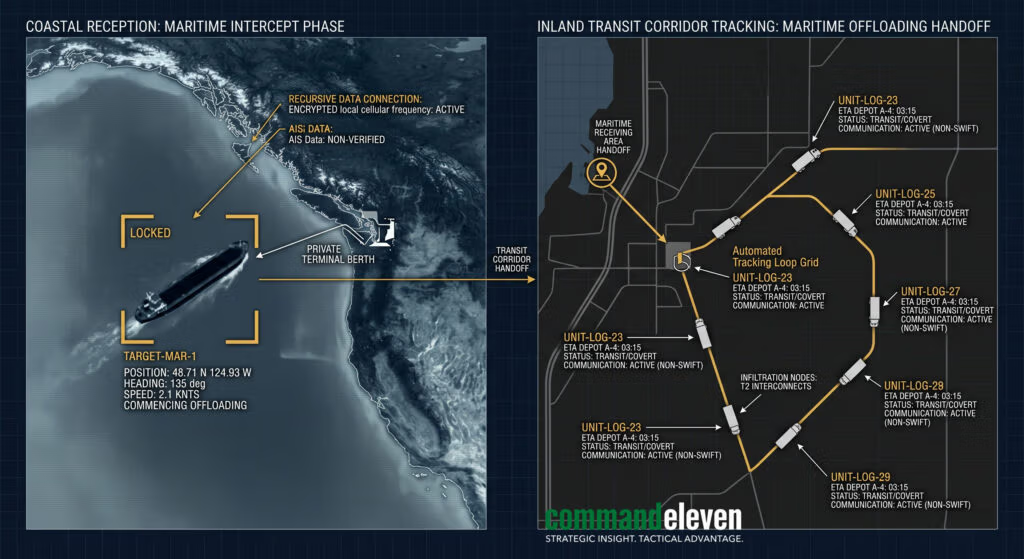
North American cartels operate specialized maritime reception cells along Pacific coastal entry points to secure incoming precursor shipments. These operational nodes establish control over unmonitored coastal infrastructure and corrupted private port terminals to execute rapid container offloading sequences. The cartels synchronize these arrivals with local shipping anomalies, exploiting gaps in coastal patrol coverage to minimize state law enforcement exposure. The offloaded chemical assets are immediately transferred to secure inland transit corridors, preventing the state from executing timely physical seizures.
- Modified high-speed transport vessels utilize low-radar-cross-section hull designs to ferry chemical containers from offshore mother ships to remote coastal drop zones.
- Corrupted terminal operations managers clear designated docking berths and disable local surveillance arrays during clandestine night offloading windows.
- Automated container tracking modules monitor the exact positioning of chemical assets within the port yard using encrypted local cellular networks.
- Pneumatic fluid transfer systems extract liquid chemical precursors from bulk containers directly into customized transport trucks to accelerate terminal exit times.
This localized reception infrastructure guarantees the rapid assimilation of international cargo into the cartel’s internal supply chain. Concurrently, operational analysis indicates that the networks utilize tactical reconnaissance cells to monitor regional state security movements. This intelligence coverage allows the cartels to adjust transport schedules dynamically in response to sudden changes in state law enforcement postures. The secure reception of the chemical precursors initiates the conversion process, transforming raw industrial compounds into weaponized illicit substances.
The cartels route the offloaded precursors through decentralized overland transport networks to hidden processing laboratories located in remote geographic regions. These transport cells use fleets of commercial freight vehicles equipped with hidden compartments and electronic counter-measures to bypass highway security checkpoints. The logistical movement is coordinated via encrypted satellite communications networks, ensuring constant tracking without exposing operational nodes to state digital surveillance. This overland transit corridor bridges the gap between maritime entry points and interior chemical processing facilities.
- Customized commercial freight liners feature hydraulically operated false walls and lead-lined chemical storage tanks to defeat physical and x-ray inspection systems.
- Encrypted satellite positioning units transmit real-time transit data to centralized cartel command centers via secure, private server networks.
- Localized radio scanners intercept state law enforcement communications along the transport corridor, providing early warning of active mobile checkpoints.
- Falsified domestic transport manifests list legitimate chemical distribution companies as the destination points to justify the overland movement of industrial materials.
The execution of secure overland transport isolates the chemical assets from state interdiction efforts during the domestic distribution phase. This logistical security ensures that the precursor materials arrive at the hidden laboratories with zero inventory loss. Once inside these secure processing zones, the cartels initiate mass-scale chemical synthesis operations. The production cycle operates continuously, converting the imported precursors into high-potency synthetic narcotics destined for global consumption markets.
Industrial Scale Laboratory Synthesis and Process Optimization
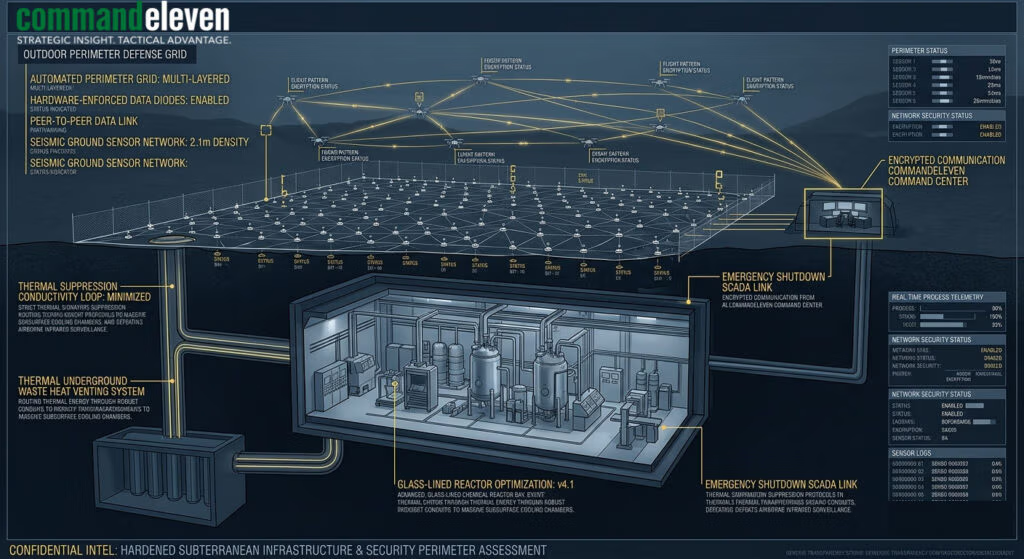
The cartels construct industrial-scale clandestine synthesis laboratories inside deep geographic enclaves to execute the final conversion of precursor chemicals. These facilities feature advanced chemical processing equipment and redundant utility systems to sustain high-volume production cycles without interruption. The laboratories are staffed by specialized chemical technicians who optimize the synthesis formulas to maximize product yield and potency. The remote positioning of these manufacturing hubs insulates the production cycle from state tactical raids and aerial surveillance.
- Industrial-grade glass-lined reactors withstand the corrosive chemical reactions required to synthesize complex synthetic narcotics from basic precursor components.
- Automated chemical dosing pumps regulate the flow of volatile reagents precisely to prevent thermal runaways and maximize conversion efficiency.
- Advanced chemical filtration arrays extract impurities from the synthesized batches, ensuring consistent high-potency metrics for the final product output.
- Thermal signature suppression systems route waste heat through subterranean cooling chambers to defeat airborne forward-looking infrared surveillance arrays.
The stabilization of these industrial manufacturing hubs allows the cartels to achieve self-sustaining production independence. Concurrently, environmental intelligence reveals that the laboratories deploy sophisticated waste management protocols to mask the chemical footprint of the facilities. By neutralizing acidic chemical byproducts prior to disposal, the networks prevent state environmental monitoring systems from detecting the production zones via water table analysis. This defensive engineering ensures the long-term operational durability of the processing infrastructure.
The laboratories operate under strict cell-based security protocols managed by dedicated cartel enforcement units. These security cells deploy localized counter-surveillance grids, including ground sensors and drone surveillance arrays, to detect state reconnaissance initiatives early. The laboratory staff and security personnel communicate via peer-to-peer encrypted radio networks, eliminating dependencies on vulnerable public telecommunications infrastructure. This defensive perimeter ensures that any state tactical approach is identified long before intercept units reach the facility boundary.
- Seismic ground sensor perimeters detect foot traffic and vehicular movement along all approach paths leading to the hidden laboratory complex.
- Tactical drone surveillance platforms execute continuous aerial sweeps of the facility boundary to detect state reconnaissance teams and low-flying aircraft.
- Peer-to-peer encrypted radio handsets communicate tactical updates across localized frequencies using automated channel-hopping protocols to prevent state interception.
- Subterranean escape tunnel networks permit the rapid evacuation of key technical personnel and chemical documentation during active tactical compromise scenarios.
The implementation of advanced physical and electronic security grids converts the laboratory enclaves into hardened operational fortresses. This defensive posture minimizes the risk of production disruptions caused by state kinetic intervention. The uninterrupted manufacturing cycle generates a continuous flow of high-potency illicit assets ready for international distribution. The cartels transition these finished products from the manufacturing phase to the global distribution phase, utilizing the same optimized logistics networks.
Global Distribution Logistics and Supply Chain Resilience

The finished synthetic narcotics enter global distribution channels through highly optimized, multi-modal transport networks managed by the cartel’s logistical arm. The networks use sophisticated data analytics and supply-chain software to balance inventory levels across international distribution nodes dynamically. This technological integration removes structural bottlenecks from the distribution chain, maximizing delivery velocity to target markets. The distribution operations are masked within legitimate international e-commerce and express freight systems, reducing the visibility of individual shipments.
- Predictive supply-chain optimization software models international law enforcement deployment patterns to calculate the lowest-risk transit paths for finished assets.
- Decentralized e-commerce front operations manage thousands of low-volume postal shipments daily, diluting the impact of individual state customs seizures.
- Automated package tracking interfaces monitor the real-time status of international express freight deliveries via encrypted, public network mirrors.
- Moisture-resistant vacuum sealing hardware prevents chemical off-gassing and detection by specialized canine units at international mail sorting facilities.
The deployment of automated, low-volume distribution models allows the cartel to scale its market penetration while minimizing exposure to mass interdiction events. Concurrently, financial intelligence indicates that this logistical resilience protects the syndicate’s profit margins from regional enforcement spikes. By spreading risk across thousands of independent transit vectors, the cartel ensures that localized seizures do not disrupt the macro-supply chain. The financial liquidity generated by these global sales flows immediately into decentralized money laundering networks.
The syndicates deploy advanced financial manipulation cells to launder the proceeds of global narcotics sales back into the chemical procurement loop. These cells use combinations of trade-based money laundering, mirror trading, and digital asset networks to move capital across international borders instantly. This financial fluidness ensures that procurement cells in East Asia receive continuous funding to secure fresh precursor chemical inventories. The integration of financial automation with physical supply chains creates a closed-loop economic system that resists traditional state sanctions.
- Decentralized cryptocurrency network nodes execute high-volume, automated token mixers to anonymize the digital transaction history of narcotics proceeds.
- Trade-based mirror company networks manipulate import-export invoicing for legitimate commodities to justify large capital transfers between North America and East Asia.
- Automated micro-structuring banking software distributes large cash reserves across thousands of low-value personal accounts to evade automated financial flags.
- Offshore corporate shell structures obscure the ultimate beneficial ownership of financial assets through complex, multi-jurisdictional legal registrations.
The execution of automated money laundering networks completely neutralizes the state’s capacity to execute disruptive asset seizures. This financial shielding ensures that the transnational alliance maintains the liquidity required to fund continuous procurement operations. The capital loop directly feeds the next iteration of the chemical supply chain, sustaining the operational velocity of the syndicate. This self-funding economic model requires a synchronized, multi-national intelligence response to achieve structural disruption.
Transnational Threat Convergence and Sovereign Evasion Hubs
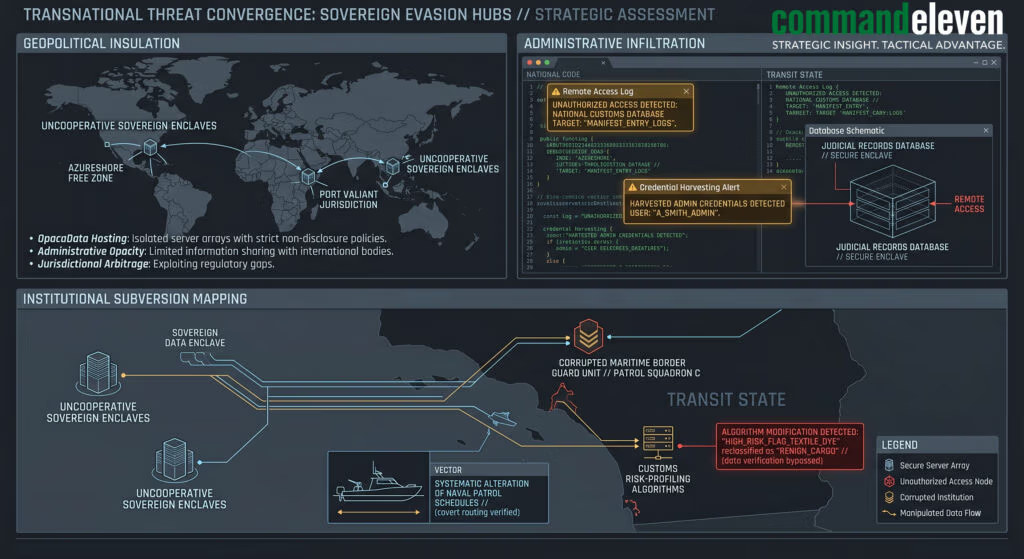
The maturation of the Triad-Sinaloa alliance establishes permanent sovereign evasion hubs inside weak or uncooperative nation-states. These geopolitical enclaves provide the transnational network with safe havens where international law enforcement cannot execute warrants, digital seizures, or kinetic raids. The syndicates exploit the political friction between competing global powers to secure implicit protection for their logistics centers and financial infrastructures. This geopolitical insulation elevates the network from a standard criminal syndicate to a permanent transnational national security threat.
- Hardened data storage facilities operate inside non-cooperative jurisdictions, hosting the primary logistical and financial ledgers of the global syndicate.
- Diplomatic pouch cargo routes are exploited via corrupted state officials to move critical communication hardware and financial tokens across international borders.
- State-sanctioned corporate banking shields prevent international financial intelligence units from auditing the transaction histories of cartel front companies.
- Localized political corruption networks provide advance warning of international diplomatic pressure or changes in regional enforcement postures.
The stabilization of these sovereign evasion hubs grants the transnational network long-term operational durability against international legal initiatives. Concurrently, strategic analysis reveals that these enclaves serve as the primary nodes for inter-syndicate technology transfers. By sharing advanced encryption protocols, cyber exploitation tools, and chemical synthesis methods, the allied networks accelerate their mutual technological evolution. This collaborative development directly degrades the relative qualitative advantage historically maintained by state security agencies.
The syndicates use their technological and financial dominance to infiltrate and co-opt the administrative structures of transit states along the supply chain. By embedding corrupted actors within national customs agencies, naval border guards, and judicial systems, the networks neutralize the state’s enforcement capacity from within. This institutional subversion converts sovereign state infrastructure into passive facilitators of the precursor trade pipeline. The state’s internal breakdown ensures that the physical and digital operations of the cartel face zero friction within the compromised territory.
- Infiltrated customs inspection cells provide the syndicate with real-time data on container inspection parameters and automated risk-profiling algorithms.
- Co-opted naval border units alter maritime patrol schedules to create predictable, unmonitored transit corridors for smuggling vessels.
- Compromised judicial administrative sectors delay or suppress international extradition requests and arrest warrants targeting core syndicate leadership.
- Corrupted telecommunications infrastructure nodes permit the cartel to monitor state law enforcement digital positioning data and communication traffic.
The institutional subversion of transit states makes classic international law enforcement cooperation models entirely ineffective. The transnational network operates with absolute impunity inside these compromised zones, leveraging state authority to protect its illicit supply chain. This convergence of political corruption, advanced technology, and chemical industrialization creates a resilient threat matrix that cannot be defeated through isolated local operations. The state must transition to a unified, multi-theater operational doctrine to reclaim sovereign control over its institutions and borders.
Integrated Maritime Interdiction and Supply Chain Disruption Frameworks
The systematic convergence of East Asian chemical syndicates and North American cartels within the precursor trade pipeline demands an immediate, structural overhaul of international maritime security doctrine. Traditional enforcement models that rely on localized border checks and isolated container seizures fail to disrupt an adversary operating with automated logistics and geopolitical insulation. To achieve strategic containment, the state must implement a unified, sensor-fused interdiction framework that targets the chemical procurement nodes and digital financial systems simultaneously. The institutionalization of the #72/48 Protocol is mandatory to protect national command grids from the digital manipulation and sensory ruptures executed by the syndicate’s cyber units. Furthermore, states must eliminate the regulatory blind spots within international customs databases by enforcing strict, automated verification protocols for dual-use chemical manifests. Reclaiming sovereign authority requires replacing reactive interdiction postures with persistent, data-driven pre-emptive operations across all maritime and overland transit corridors. The conflict is no longer a standard counter-narcotics challenge; it is a structural competition for control over global commercial logistics and institutional integrity. Victory requires the uncompromising application of hardware truth to permanently dismantle the transnational financial and chemical ecosystem sustaining the Triad-Sinaloa handshake.