Technical Takeaways
- Sponsorship Declines Force Commercial Transformation: The contraction of direct external state proxy funding acts as the primary catalyst for insurgent modernization. To survive, ideological networks structurally merge with transnational criminal syndicates, transforming autonomous militant cells into self-funding corporate extraction units.
- Trade-Based Manipulation Neutralizes Financial Tracking: The criminal-terror nexus has decoupled its capital rotation from formal banking compliance networks. By processing illicit wealth through trade-based money laundering, parallel cash ledgers, and unregulated commodity fronts, the networks insulate their cash flows from automated state financial flags and asset seizure regimes.
- Institutional Subversion Blinds National Verification Engines: The deployment of custom database exploit scripts and localized signal suppression arrays allows hybrid networks to shield their physical supply chains. By gaining remote administrative access to customs registries, the syndicates alter container risk-profiling fields, converting state-managed verification infrastructure into passive facilitators of illicit trade.
Executive Summary
The structural convergence of transnational criminal enterprises and ideological terrorist networks establishes a self-sustaining financial framework that directly challenges state sovereignty. This symbiotic alliance leverages localized instability to build parallel supply chains for illicit commodities, weaponized components, and unregulated currency. As external state proxy funding undergoes systemic contraction, insurgent groups rapidly transition into predatory criminal extractors to achieve long-term material survival. By dominating regional extortion rackets, illicit mining enclaves, and maritime smuggling lanes, these combined entities generate autonomous liquidity. This financial autonomy insulates the networks from traditional state sanctions and international counter-terrorism financing mechanisms. Legitimate transport sectors, commercial trade routing, and loose regulatory frameworks become passive vectors for this hybrid traffic. Traditional security architectures fail to intercept these operations because state agencies separate criminal law enforcement from militarized counter-terrorism campaigns. Countering this integrated threat requires an aggressive, data-driven strategy that treats financial extraction as the primary center of gravity. This dossier evaluates the technical mechanisms of trade-based laundering, illegal infrastructure exploitation, and corporate shell integration that sustain this hybrid nexus. Failing to implement aggressive utility and financial interdiction will allow these self-funding networks to permanently colonize fragile border zones.
Proxy Funding Contraction and Criminal Transition
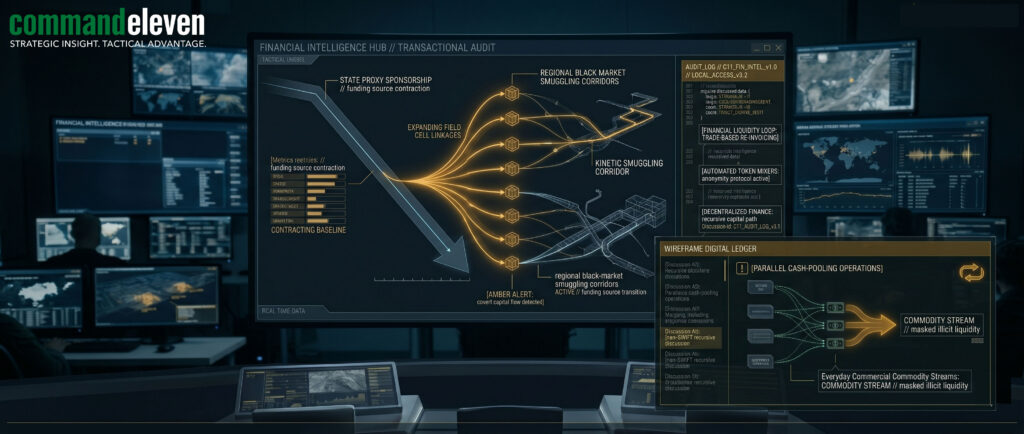
Ideological insurgent networks face critical operational adjustments as direct financial sponsorship from external state actors undergoes systematic decline. This funding contraction forces localized militant groups to restructure their resource procurement models or face organizational collapse. To preserve their material footprints, these networks merge with regional smuggling syndicates and adopt market-driven operational philosophies. The transition converts ideologically driven insurgent cells into predatory criminal extractors that prioritize territorial dominance over political negotiation. This structural convergence marks the birth of a hybrid network designed for maximum economic extraction.
- Decentralized logistical cells establish operational control over regional smuggling routes, replacing ideological selection criteria with transactional competency.
- Specialized procurement units source dual-use tactical hardware from transnational black markets, utilizing illicit commodity cash to settle transactions.
- Corrupted border clearing agents falsify shipping paperwork to move weaponized materials under the cover of legitimate cross-border commerce.
- Encrypted data-sharing linkages connect field commanders with urban black-market brokers, ensuring real-time coordination of commodity distribution.
This commercial conversion allows the hybrid networks to maintain operational continuity despite losing sovereign financial backing. Concurrently, behavioral intelligence reveals that these cells construct shadow administrative frameworks to regularize their criminal revenue streams. The network systematically replaces the state’s economic role by providing parallel access to employment, utilities, and trade corridors. Once the criminal infrastructure achieves local dominance, the territory transitions into a permanent extraction zone. This structural shift ensures that the network generates the baseline liquidity required to fund expansionist campaigns.
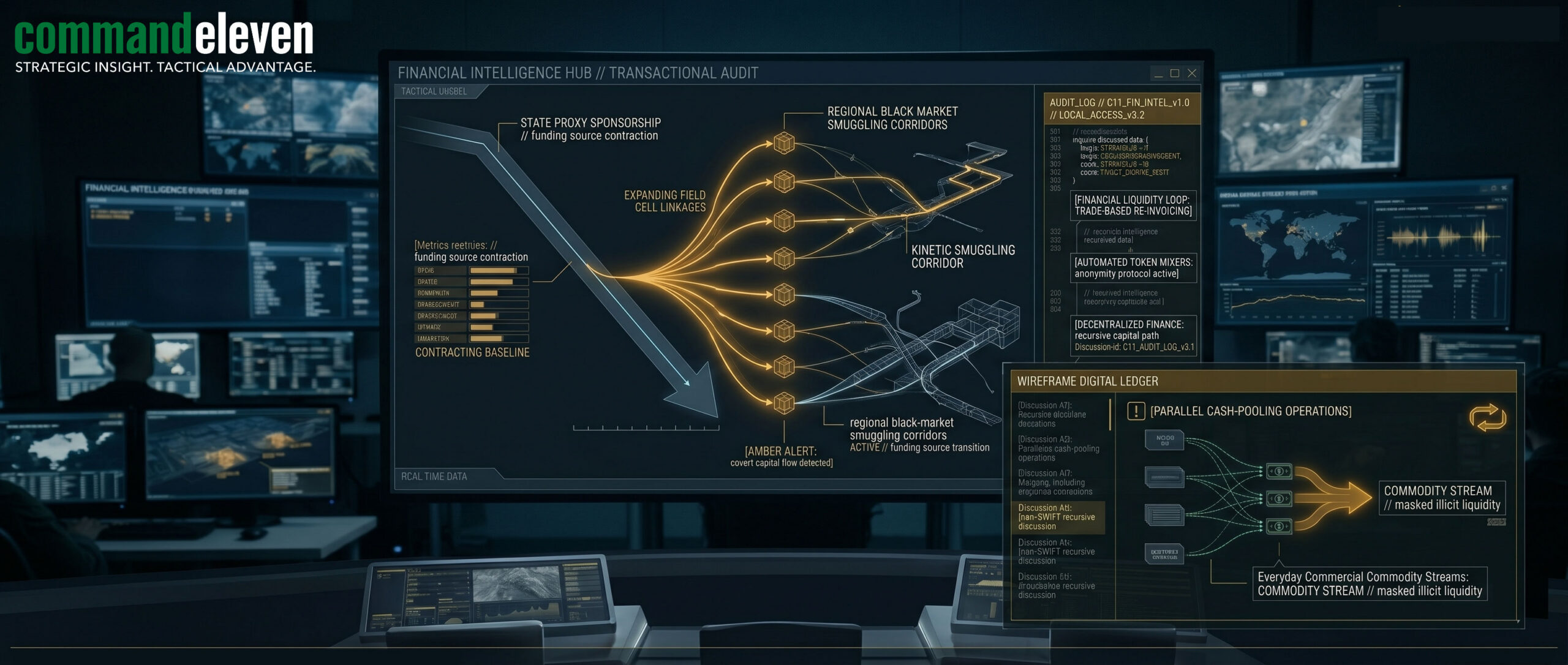
The syndicates deploy advanced financial structures to process the cash generated by their new regional extraction operations. These cells operate outside formal banking channels, relying on trade-based schemes to move value across international boundaries unhindered. This methodology protects the network’s liquidity from the automated monitoring systems utilized by state financial intelligence units. The operations occur within high-volume retail and commodity trading sectors, where bulk cash deposits blend seamlessly into normal commercial cash flows.
- Trade-based mirror transactions involve purchasing legitimate retail goods in one jurisdiction and selling them in another to transfer value covertly.
- Unregulated trade front registries manage corporate documentation for transport fleets, presenting a compliant corporate profile to domestic customs agencies.
- Parallel cash-pooling ledgers track internal credits and debits across multiple border nodes, eliminating the need for physical currency movements.
- Stipend distribution protocols allocate cash payments directly to operational field cells, bypassing automated corporate electronic transfer networks.
The deployment of trade-based financial masking ensures that the network’s operational assets remain shielded from state asset seizure initiatives. This financial buffer allows the hybrid entity to fund continuous tactical deployments along unstable border corridors. The secure flow of capital allows the network to upgrade its kinetic capabilities through the acquisition of advanced weapons platforms. This self-funding loop converts the criminal-terror nexus into a resilient threat matrix that successfully resists standard kinetic containment.
Commodity Extortion and Parallel Tariff Structures
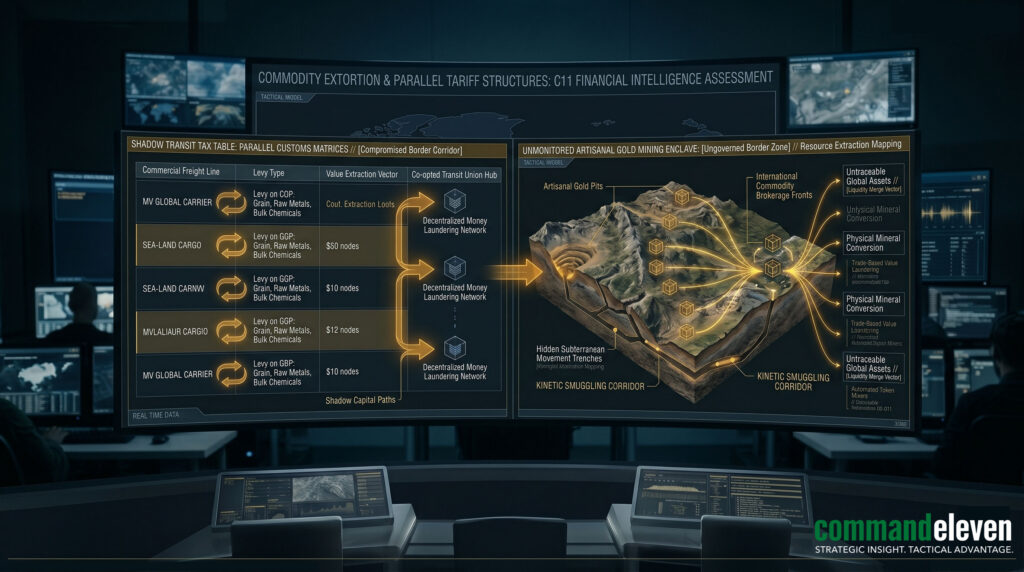
The hybrid networks institutionalize their territorial control by imposing systematic parallel tariff structures on all commercial entities operating within their zones of influence. These extortion syndicates target vital economic sectors, including agricultural transport, commercial freight shipping, and local manufacturing operations. The networks enforce compliance through targeted violence, infrastructure disruption, and the execution of parallel judicial rulings. The revenue generated from these shadow tariffs provides the continuous liquidity required to sustain active militant cells and expand territorial boundaries.
- Shadow transit tax tables dictate specific financial levies for commercial trucks based on cargo value and transport distance.
- Co-opted transit union loops enforce compliance among transport drivers, effectively halting commercial movement if logistics companies refuse payment.
- Counterfeit customs verification tokens are applied to compliant vehicles, signaling downstream checkpoint cells to permit unhindered passage.
- Parallel arbitration tribunals settle contract disputes between local merchants, completely replacing the statutory authority of regional civil courts.
This extortion framework effectively replaces state regulatory agencies within compromised border territories. Concurrently, operational data shows that the networks integrate these parallel taxation systems with physical infrastructure exploitation campaigns. The network utilizes the extracted funds to build localized security structures that protect their extortion corridors from state counter-offensive operations. This institutionalization creates an unquantified parallel economy that undermines the economic sovereignty of the state.
The syndicates expand their parallel taxation frameworks to encompass the extraction of natural resources within ungoverned border enclaves. The networks secure control over artisanal gold mining, logging operations, and mineral processing facilities through armed intimidation. The extracted commodities are smuggled across international boundaries using the network’s established logistical pipelines, where they are sold to complicit international buyers. The cash from these sales flows directly back into the procurement loop to secure advanced military hardware.
- Artisanal mining extraction cells manage forced labor pools at unmonitored gold fields, extracting precious metals without environmental oversight.
- Illicit timber logging rings harvest high-value forestry assets, using forged transport permits to move the logs to maritime ports.
- Complicit international commodity brokers purchase the smuggled minerals, falsifying origin documentation to integrate the assets into global supply lines.
- Encrypted asset tracking logs monitor the real-time weight and value of extracted minerals from the mine site to the point of sale.
The exploitation of natural resources provides the network with an alternative form of liquidity that resists traditional financial tracking. By transforming physical minerals into tradeable global assets, the syndicates ensure that international economic sanctions fail to impact their operational capabilities. This material extraction capability converts the network into a self-sustaining entity independent of localized popular support. The state cannot disrupt this resource pipeline through standard border enforcement measures alone.
Specialized Maritime Smuggling and Fleet Diversification
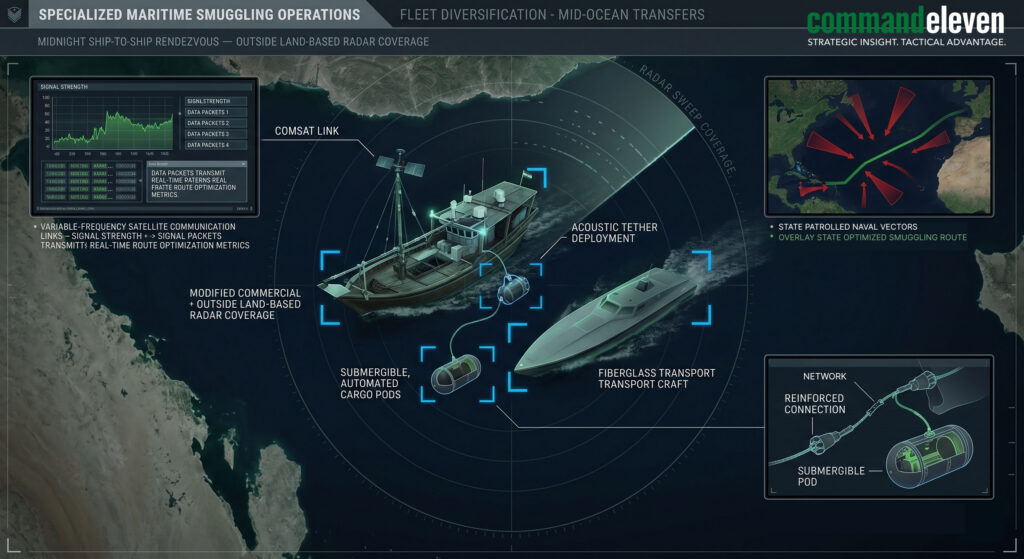
The hybrid networks construct specialized maritime smuggling wings to move high-value contraband and military hardware across international maritime corridors. These maritime cells deploy a diversified fleet consisting of low-profile fiberglass craft, modified commercial fishing vessels, and automated submersible pods. The vessels operate under the cover of legitimate local maritime commerce, blending their movements into normal regional traffic profiles to defeat radar and visual detection. This operational integration makes identification exceptionally difficult for state coastal patrol forces and naval intercept units.
- Low-profile fiberglass hulls feature minimized radar cross-sections and high-output outboard engines to execute rapid night runs across narrow straits.
- Modified commercial dhows hide weapon compartments beneath layers of legitimate cargo, including perishable agricultural products and frozen seafood.
- Automated towable cargo pods submerge completely beneath the surface, carrying heavy payloads behind civilian vessels via reinforced acoustic tethers.
- Encrypted transponder override switches isolate shipboard tracking systems dynamically, allowing operators to disable signals before entering patrol zones.
This diversified maritime capability guarantees the continuous flow of specialized technology and heavy weaponry to regional insurgent cells. Concurrently, maritime tracking data reveals that the syndicates coordinate these transits using real-time information feeds from shore-based intelligence nodes. The smuggling craft adjust their launch windows and route selections based on the observed movements of state naval patrols. This tactical agility minimizes the probability of open-ocean interception by regional security coalitions.
The smuggling cells deploy advanced maritime concealment protocols to maintain the security of their payloads during long-range transit. When operating outside their localized coastal sanctuaries, proxy vessels execute complex ship-to-ship transfer sequences with larger commercial bulk carriers. These transfers occur at designated coordinates outside the coverage zones of land-based coastal radar arrays, leveraging international maritime tracking blind spots. The cargo is rapidly integrated into legitimate international supply lines, neutralizing the original tracking history.
- Hydraulic cargo transfer arrays facilitate the rapid movement of containerized weapons caches between vessels during mid-ocean rendezvous sequences.
- Acoustic release seafloor anchors secure submerged payload pods to the ocean floor, permitting dynamic drop-and-retrieval sequences based on threat levels.
- Variable-frequency satellite communication suites transmit intercept coordination updates between mother ships and localized distribution craft via private servers.
- Falsified international customs seals are applied to shipping containers immediately after transfers to mimic the documentation of compliant global lines.
The execution of mid-ocean cargo transfers creates a deep tracking gap that confounds international maritime intelligence units. By the time a container reaches its destination port, its connection to the hybrid network is completely obscured. This operational laundering process permits the continuous influx of advanced components into regional distribution networks, fueling localized instability. The state cannot counter this high-velocity smuggling mechanic through legacy coastal defense paradigms alone.
Digital Network Penetration and Electronic Shielding
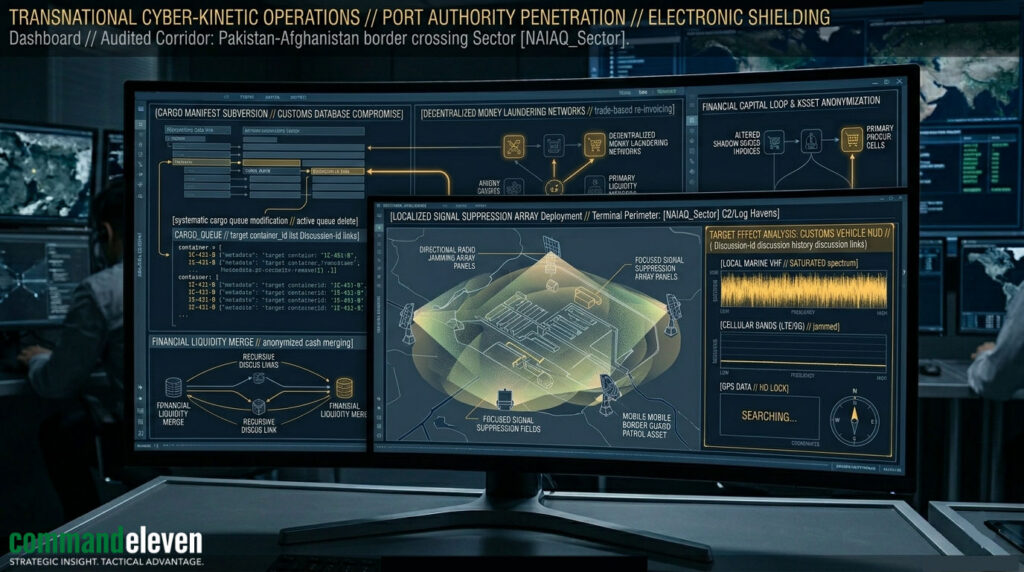
The expansion of parallel trade networks requires the continuous deployment of advanced cyber exploitation tools to compromise national customs tracking databases. The hybrid networks build dedicated electronic warfare cells tasked with penetrating the automated cargo registries managed by regional port authorities. By securing unauthorized access to these databases, the networks manipulate container risk-profiling fields, clear high-risk shipments remotely, and erase tracking logs. This digital dominance establishes an electronic shield over the network’s primary logistical entry points.
- Custom software exploit packages target known vulnerabilities in regional port networks, granting administrative access to container clearance fields.
- Cloned maritime identification signatures replicate the digital profiles of legally compliant commercial vessels, masking smuggling ships within tracking registries.
- Automated database alteration scripts remove specific cargo container numbers from inspection queues, preventing automated flags from triggering alerts.
- Encrypted data exfiltration tunnels pass stolen customs intelligence through legitimate communication protocols, hiding the intrusion from network security monitors.
The compromise of regional customs databases creates a profound structural vulnerability that threatens international shipping security. By manipulating tracking registries, the syndicates ensure that their smuggling fleets can navigate high-risk chokepoints with minimal threat of inspection. This digital manipulation converts state-managed security infrastructure into an unwitting facilitator of the illicit trade pipeline. The state’s failure to secure its digital tracking networks directly subsidizes the expansion of parallel trade systems.
The electronic warfare cells deploy localized signal suppression arrays around critical border crossings to neutralize state intercept initiatives. These arrays emit high-power directional jamming energy designed to disrupt the communications links of visiting customs inspectors and mobile border guards. The jamming operations are tightly synchronized with the transit schedules of high-value smuggling convoys, preventing real-time reporting of border anomalies. This localized electronic block creates a command and control vacuum that isolates the border zone.
- Directional radio frequency jammers saturate localized communication bands, preventing border personnel from contacting national command centers during operations.
- GPS signal spoofing generators broadcast altered positioning data to patrol vehicles, disrupting navigation inside complex border terrains.
- Cellular network isolation modules sever mobile data communication within specific warehouse zones, preventing the digital transmission of inspection logs.
- Acoustic sensor disruption fields generate localized ambient noise to blind ground surveillance sensors deployed along known infiltration paths.
The deployment of localized signal suppression arrays forces state security agencies to operate without real-time coordination during border inspections. This communication barrier increases the operational friction encountered by enforcement teams, rendering tactical intervention highly dangerous. By the time a security unit can re-establish communication with national command elements, the proxy cells have typically shifted the target cargo. This electronic insulation ensures the long-term survival of the network’s land-based logistical infrastructure.
Territorial Exploitation and Financial Node Consolidation
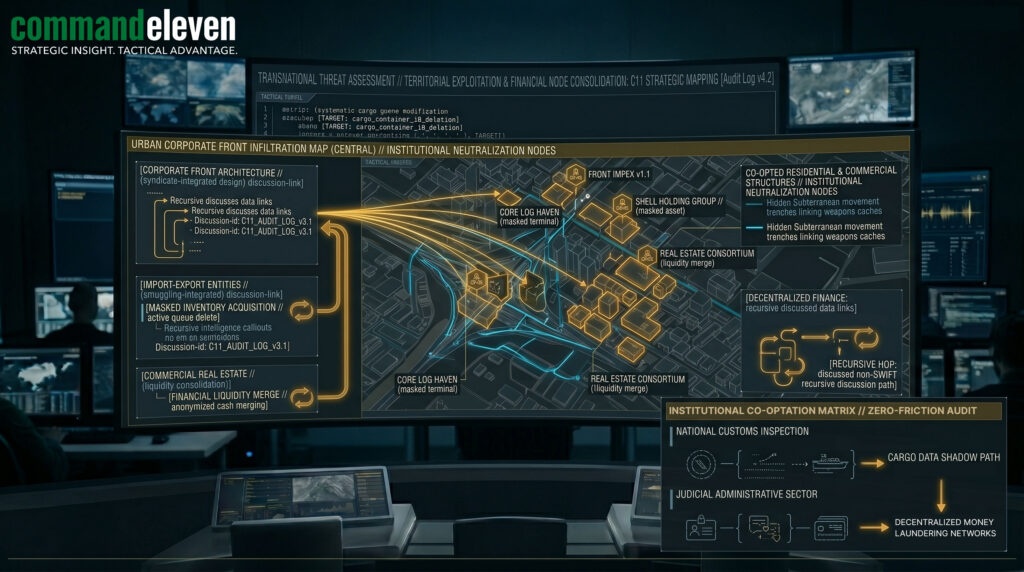
The long-term durability of the criminal-terror nexus depends on the network’s ability to consolidate its financial nodes within stable corporate environments. The syndicates establish complex networks of corporate front companies, import-export entities, and real estate holdings inside urban commercial centers. These legitimate corporate wrappers allow the networks to absorb millions of dollars in criminal revenue and convert it into tradeable commercial assets. This institutional infiltration embeds the network’s financial operations deep within the legitimate corporate architecture of the state.
- Corporate shell holding networks obscure the ultimate beneficial ownership of assets through complex, multi-jurisdictional legal registrations across offshore havens.
- Import-export front companies generate inflated or phantom invoices for consumer goods to justify large capital transfers across international borders.
- Automated micro-structuring software distributes large cash reserves across thousands of low-value personal accounts to evade automated banking flags.
- Commercial real estate holdings absorb bulk cash reserves through property acquisition, converting illicit liquidity into stable long-term revenue assets.
This financial consolidation layer insulates the core leadership of the nexus from international asset seizure initiatives and law enforcement actions. Concurrently, financial tracking reveals that these urban corporate nodes serve as the primary clearing centers for global procurement operations. The speed of this capital rotation ensures that procurement cells receive continuous funding to secure fresh weaponry and electronic components. The integration of corporate front operations with physical smuggling lanes creates a closed-loop economic system.
The syndicates use their financial dominance to co-opt and infiltrate the administrative structures of transit states along the supply chain. By embedding corrupted actors within national customs agencies, border guards, and judicial administrative sectors, the networks neutralize the state’s enforcement capacity. This institutional subversion converts sovereign state infrastructure into passive facilitators of the hybrid trade pipeline. The state’s internal breakdown ensures that the physical and digital operations of the cartel face zero friction.
- Infiltrated customs inspection teams provide the syndicate with real-time data on container inspection parameters and automated risk-profiling algorithms.
- Co-opted border guard units alter patrol schedules to create predictable, unmonitored transit corridors for land-based smuggling convoys.
- Compromised judicial administrative sectors delay or suppress international extradition requests and arrest warrants targeting core network leadership.
- Corrupted telecommunications infrastructure nodes permit the cartel to monitor state law enforcement digital positioning data and communication traffic.
The institutional subversion of transit states makes classic international law enforcement cooperation models entirely ineffective. The transnational network operates with absolute impunity inside these compromised zones, leveraging state authority to protect its illicit supply chain. This convergence of political corruption, advanced technology, and commercial industrialization creates a resilient threat matrix that cannot be defeated through isolated local operations. The state must transition to a unified, multi-theater operational doctrine to reclaim sovereign control over its institutions.
Integrated Financial Interdiction and Sovereign Reclamation
The systematic expansion of the criminal-terror nexus requires an immediate, structural overhaul of national defense and counter-terrorism financing doctrines. Traditional enforcement models that separate criminal policing from militarized counter-insurgency operations fail to disrupt an adversary that functions as a diversified commercial corporation. To achieve strategic containment, the state must implement a unified, sensor-fused interdiction framework that targets the network’s digital infrastructure and corporate financial nodes simultaneously. The institutionalization of the #72/48 Protocol is mandatory to protect national command grids from the digital manipulation and sensory ruptures executed by proxy electronic warfare cells. Furthermore, states must eliminate the structural vulnerabilities within customs databases by enforcing strict, automated verification protocols for all commercial trade manifests. Reclaiming sovereign authority requires replacing reactive enforcement postures with persistent, data-driven pre-emptive operations across both the maritime transit lanes and land border corridors. This conflict represents a critical structural competition for control over national economic infrastructure and the preservation of institutional integrity. Victory requires the uncompromising application of hardware truth to permanently dismantle the parallel economic and tactical ecosystem sustaining the monetization of instability.