

Technical Takeaways
- Signals Dominance Prevents Tactical Assembly: Urban counter-terrorism operations must prioritize hardware emission tracking over human intelligence collection. By aggregating cellular telemetry, metadata timestamps, and IMSI catcher routing logs, state agencies isolate core network anchors and neutralize cell structures during the high-vulnerability transit phase before tactical assets can deploy.
- Economic Liquidation Drives Structural Fragmentation: Sectional insurgent cells cannot survive on ideological cohesion alone. By executing trade-based transaction auditing and physical asset liquidation against commercial fronts and informal currency brokers, the state induces material starvation that forces regional cells into high-risk procurement strategies, significantly increasing their exposure to state tracking arrays.
- Internal Hardening Preserves Operational Surprise: Comprehensive urban decapitation requires aggressive, continuous counter-measures against insider threats. Utilizing data access logging and behavioral anomaly detection engines to monitor administrative personnel eliminates the network’s capacity to purchase early warning data, securing absolute tactical surprise for upcoming law enforcement interventions.
Executive Summary
The operational execution of urban decapitation strategies by the Counter Terrorism Department of Punjab establishes a definitive baseline for dismantling embedded sectarian networks. This defensive framework transitions state security operations from reactive kinetic sweeps to data-driven intelligence pre-emption within high-density metropolitan zones. Specialized tracking units systematically isolate core network anchors, financial clearing nodes, and subterranean logistics structures to collapse the operational command grid of target organizations. By manipulating digital trails and exploiting physical communication lapses, the state induces a structural paralysis that neutralizes insurgent operational capability before tactical assets deploy. Legitimate commercial facades, informal currency exchanges, and dense residential sectors serve as primary camouflage layers for these hostile networks. Traditional militarized counter-insurgency doctrines fail to achieve durability in these environments because they prioritize conventional mass over precise data fusion. Countering this urban threat requires an aggressive, multi-layered interdiction posture that integrates real-time signals intelligence with tactical law enforcement execution. This dossier evaluates the technical mechanisms of network anchor tracking, financial node isolation, and safehouse infiltration that defined the CTD Punjab offensive. Failing to sustain this precision-led strategy will permit the rapid re-infiltration of transnational militant architectures inside critical provincial hubs.
Signals Intelligence and Network Anchor Tracking
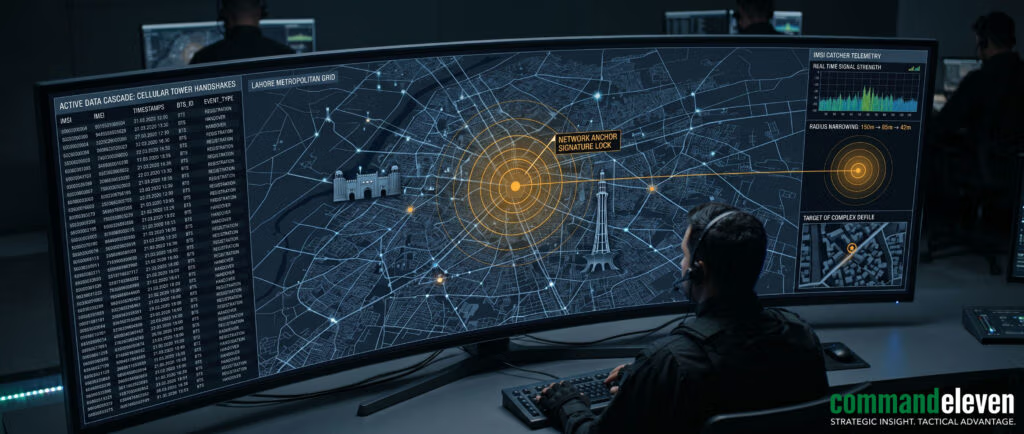
The Counter Terrorism Department of Punjab utilizes advanced signals intelligence to identify and map the physical locations of core sectarian network anchors. Operating cells systematically isolate unique mobile signatures and digital footprints left by insurgent leadership cadres within high-density metropolitan areas. This automated tracking protocol bypasses conventional human intelligence limitations by focusing exclusively on hardware emission realities. The collection cells aggregate cellular telemetry, internet protocol routing logs, and encrypted messaging metadata to construct a comprehensive operational profile of the target network. Once an anchor node is fixed, the department initiates the technical tracking phase.
- Cellular telemetry aggregation platforms intercept raw radio frequency emissions from mobile devices, mapping localized cell tower handshakes to narrow the target search radius.
- Encrypted metadata harvesting tools isolate packet transmission timestamps and routing vectors from secure mobile applications, establishing communication frequency baselines between separate cells.
- International Mobile Subscriber Identity catchers deploy portable signal towers to force target communication hardware to register, revealing hidden hardware identification numbers.
- Automated protocol routing analysis logs internet service provider connection changes to predict when an operative transitions between public and private networks.
This data collection directly feeds the provincial tracking matrix, creating an uncorrupted log of network movements. Concurrently, the operational analysis indicates that tracking units coordinate these electronic interceptions with physical surveillance arrays. The technical identification of an operative remains dependent on the department’s capacity to maintain a clean database of regional communication anomalies. Once the tracking cell locks onto a primary target, the operational focus transitions from monitoring to active isolation. This transition requires the systematic deployment of precise interception protocols to prevent the destruction of evidence.
The department deploys specialized intercept teams to execute discrete tactical captures of fixed network anchors without alerting the broader cell infrastructure. These teams utilize real-time geolocation updates to strike during specific windows of high vulnerability, such as transit phases between urban safehouses. This calculated execution prevents the target from triggering automated data destruction mechanisms or alerting secondary command nodes. The operations occur within tight time parameters, ensuring the immediate preservation of captured hardware for exploitation.
- High-velocity interception vehicles execute tactical roadblocks and vehicle extractions, neutralizing target mobility within complex urban street layouts.
- Tactical signal suppression pods emit localized radio frequency blankets during the capture window, blocking the target device from transmitting emergency wipe commands.
- Hardened mobile Faraday bags isolate seized cellular devices and satellite communication gear from external networks immediately upon physical recovery.
- Biometric field extraction modules harvest fingerprint and facial data from the target at the point of capture to verify identification instantly.
The physical recovery of uncorrupted communication hardware directly enables the second phase of the offensive. This technical acquisition provides the department with direct access to local contact lists, financial ledgers, and operational schedules. By analyzing the extracted data, the tracking cells identify downstream dependencies and secondary targets across the provincial network. This systematic expansion of the target list ensures that the momentum of the offensive is maintained without operational gaps. The captured data flows immediately into specialized financial verification networks to track the group’s economic lifecycle.
Financial Node Isolation and Currency Interdiction
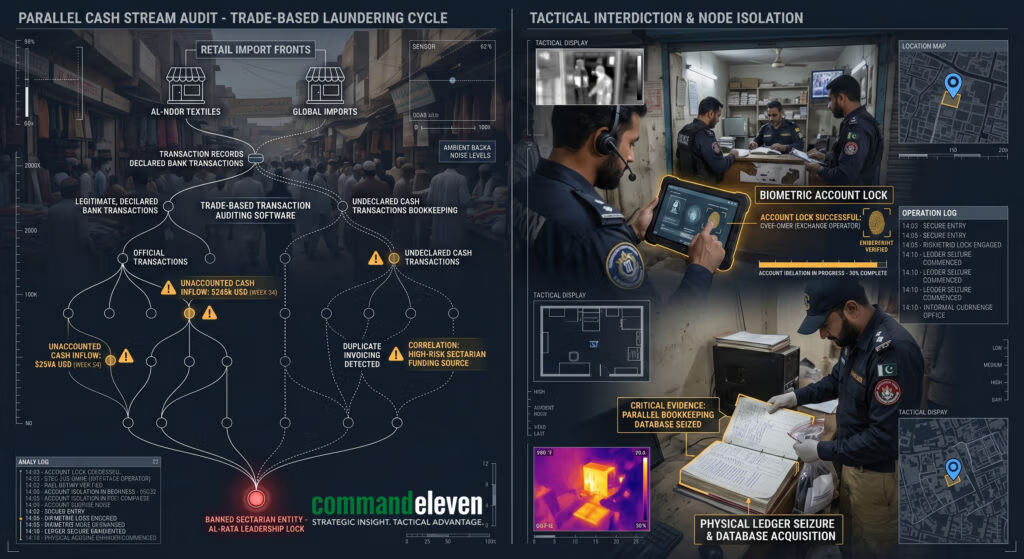
The department isolates the financial engines of urban sectarian networks by targeting informal banking channels and trade-based money laundering fronts. Specialized financial intelligence units audit commercial currency exchanges, retail import businesses, and charitable trusts operating inside urban bazaars. By cross-referencing shipping manifests with localized banking records, the department exposes the parallel cash streams that fund insurgent operations. This financial interdiction focuses on freezing transactional liquidity before it can be converted into physical tactical assets or operational stipends.
- Trade-based transaction auditing software scans provincial customs declarations and business tax registries, flagging anomalies in commodity pricing used to move value.
- Informal ledger analysis systems decrypt parallel book-keeping records seized from rogue currency brokers, mapping matching debits and credits across multiple cities.
- Automated micro-transaction tracking modules monitor high-velocity low-value electronic banking transfers, identifying coordinated cash distribution networks used by support cells.
- Corporate shell identification engines map the beneficial ownership structures of retail front companies, exposing hidden links to banned militant entities.
The execution of automated financial node isolation completely cuts the insurgent network from its domestic resource pipelines. Concurrently, financial tracking reveals that these economic restrictions immediately trigger the internal fragmentation of the target organization. Without continuous liquidity, regional cell commanders cannot maintain safehouse rents, secure fresh logistical support, or distribute operational stipends to active field operatives. The material starvation forces the network into higher-risk procurement strategies, increasing their exposure to state surveillance.
The department reinforces this financial starvation by executing synchronized liquidation operations against verified front businesses inside major commercial centers. Law enforcement teams seize physical ledgers, hard currency reserves, and digital transaction logs, permanently removing capital from the group’s operational pool. The seized assets are transferred to provincial administrative custody, destroying the financial infrastructure that sustained the group’s urban presence. This aggressive liquidation prevents the network from using legitimate commerce to camouflage its resource accumulation.
- Automated asset freezing commands execute instant restriction directives across all provincial banking networks upon verification of a front profile.
- Digital ledger extraction platforms bypass software security measures on seized business servers, harvesting historical transaction files for forensic analysis.
- Physical currency validation hardware quantifies recovered cash reserves at the raid site, logging serial numbers to trace primary funding origins.
- Biometric account lock interfaces restrict the movement of corporate funds by requiring verified physical credentials from authorized front personnel.
The systematic destruction of the commercial interface permanently compromises the insurgent network’s long-term material durability. By removing the corporate shells that protected illicit wealth, the state exposes the core leadership to targeted legal tracking and asset seizure. This economic exposure breaks the self-funding loop that allows sectarian networks to survive traditional kinetic suppression campaigns. Once the financial engine is dismantled, the parallel logistics system collapses under its own operational weight, forcing operatives to rely on insecure safehouses.
Safehouse Infiltration and Tactical Penetration Protocols
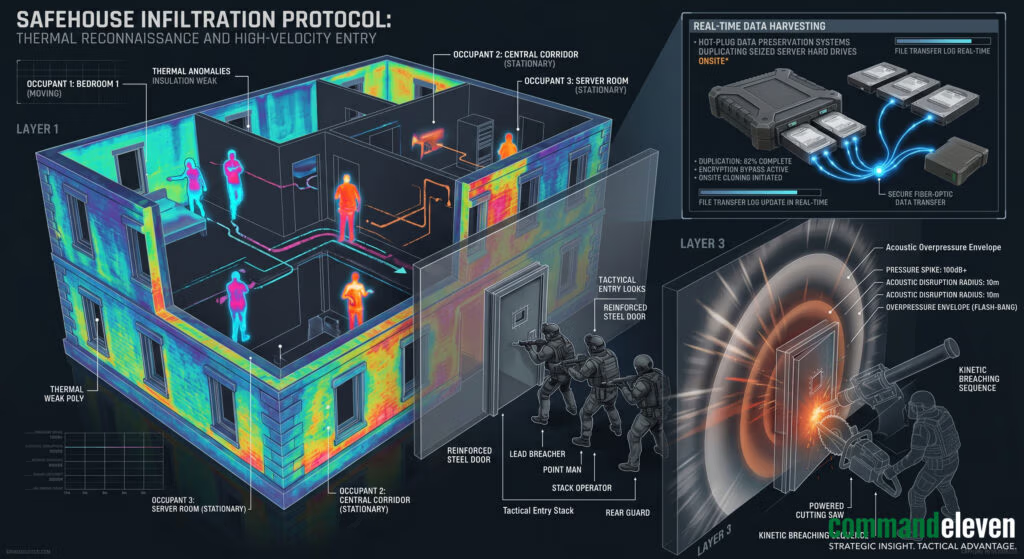
The department executes high-velocity tactical penetration operations against fixed urban safehouses to collapse the network’s remaining physical sanctuaries. Specialized counter-terrorism teams utilize real-time structural blueprints and thermal reconnaissance to map internal room layouts prior to initiating entry. The penetration operations are timed to exploit the physiological vulnerabilities of the target cell, occurring during periods of lowest alertness to minimize state casualties. This tactical phase focuses on the total neutralization of active resistance and the immediate securing of operational intelligence.
- Thermal imaging reconnaissance arrays map the physical placement and movement of occupants inside fortified structures through solid building materials.
- Tactical kinetic breaching tools execute instantaneous structural entry through reinforced steel doors and masonry walls, preserving the element of tactical surprise.
- Flash-bang distraction devices saturate the internal entry environment with high-intensity acoustic and visual overpressure, temporarily paralyzing target defensive reactions.
- Low-signature ballistic shielding units protect the entry stack from incoming small-arms fire while navigating narrow interior stairwells and corridors.
The physical penetration of the safehouse directly eliminates the network’s capacity to maintain localized command centers within the province. Concurrently, operational data reveals that these tactical strikes prevent the target cell from executing planned asymmetric attacks against public installations. The speed of the entry sequence ensures that operatives are neutralized before they can destroy operational documentation or activate suicide devices. The safehouse ceases to function as a sanctuary and becomes a primary data harvesting node for state analysts.
The tactical units coordinate these safehouse breaches with the deployment of specialized electronic extraction tools to harvest digital evidence immediately. Technical personnel onsite secure laptop computers, hard drives, and portable storage media before the target can execute magnetic or software-based wipe commands. This rapid data recovery prevents the loss of critical intelligence regarding upcoming operational timelines and external coordination links. The harvested data is transmitted via secure channels to the central data processing center for immediate exploitation.
- Hot-plug data preservation systems bypass standard login screens on active computers, preventing the activation of self-destruct encryption scripts during power-down.
- Portable hard-drive duplicators execute high-speed bit-stream copies of recovered storage media, creating forensic replicas for immediate analysis.
- Automated software decryption suites process recovered passwords and encryption keys harvested from physical notebooks found at the scene.
- Wireless network isolation blocks jam local signals to prevent external remote access commands from wiping the safehouse servers during the raid.
The recovery of uncorrupted digital ledgers and operational plans provides the department with total visibility into the remaining elements of the sectarian network. This intelligence windfall allows tracking cells to map out the complete hierarchy of the organization, including external handlers and ideological guides. By converting the safehouse into an information source, the state ensures that every tactical raid feeds the next sequence of operations. This systematic clearing of physical sanctuaries forces the surviving operatives to flee the urban centers, fracturing the group’s regional cohesion.
Network Paralysis and Institutional Infiltration Countermeasures

The department induces total structural paralysis within the target organization by systematically targeting its internal communication and command layers. Specialized electronic warfare cells execute coordinated digital injection campaigns, inserting falsified operational orders and conflicting reports into the network’s secure channels. This manipulation generates profound internal distrust, causing the leadership cadre to execute internal purges and sever communication links with active field cells. The resulting command vacuum prevents the network from coordinating multi-city attacks or managing logistical distribution.
- Digital signature replication tools forge the cryptographic identity markers of senior commanders, allowing the department to broadcast falsified operational directives.
- Conflicting report injection scripts saturate the network’s communication channels with synthetic warnings regarding imminent betrayal, triggering internal security paranoia.
- Automated communication routing blocks intercept and delay legitimate messages between cells, creating artificial operational bottlenecks that stall execution timelines.
- Encrypted channel access modules permit passive monitoring of the network’s internal deliberations, harvesting strategic intelligence without revealing state penetration.
The induction of internal paranoia directly breaks the operational synergy between separate cell structures across the province. Concurrently, behavioral analysis indicates that this command collapse reduces the network’s capacity to recruit or deploy tactical assets. Operatives isolate themselves to avoid detection, ceasing all offensive operations against state targets to focus exclusively on survival. This defensive posture effectively neutralizes the threat profile of the organization without requiring continuous kinetic engagement.
The department pairs digital communication manipulation with aggressive internal counter-measures to detect and eliminate insider threats within state infrastructure. Specialized internal audit units utilize advanced behavioral profiling and data access logging to monitor the electronic activities of port authorities, law enforcement personnel, and judicial clerks. This aggressive monitoring identifies corrupted actors who attempt to leak operational blueprints or clear target tracking profiles. The elimination of insider threats preserves the absolute security of upcoming counter-terrorism operations.
- Automated data access logging monitors the registry queries executed by administrative staff, flagging unauthorized searches for high-risk tracking profiles.
- Behavioral anomaly detection engines analyze changes in staff communication patterns and financial transaction histories to flag potential corruption vectors.
- Isolated command data vaults restrict access to upcoming raid parameters using strict multi-factor physical and biometric authentication layers.
- Corrupted actor isolation protocols execute discrete arrests of compromised personnel before they can transmit tactical warnings to target networks.
The systematic hardening of internal state infrastructure ensures that upcoming operational parameters remain completely secure from compromise. By neutralizing the network’s capacity to purchase early warning data, the department preserves the element of total tactical surprise during regional offensives. This institutional security converts the provincial administration into an unbreachable barrier against insurgent penetration. The state’s internal integrity directly accelerates the final degradation of the sectarian architecture across the target theater.
Territorial Stabilization and Sovereign Administrative Integration
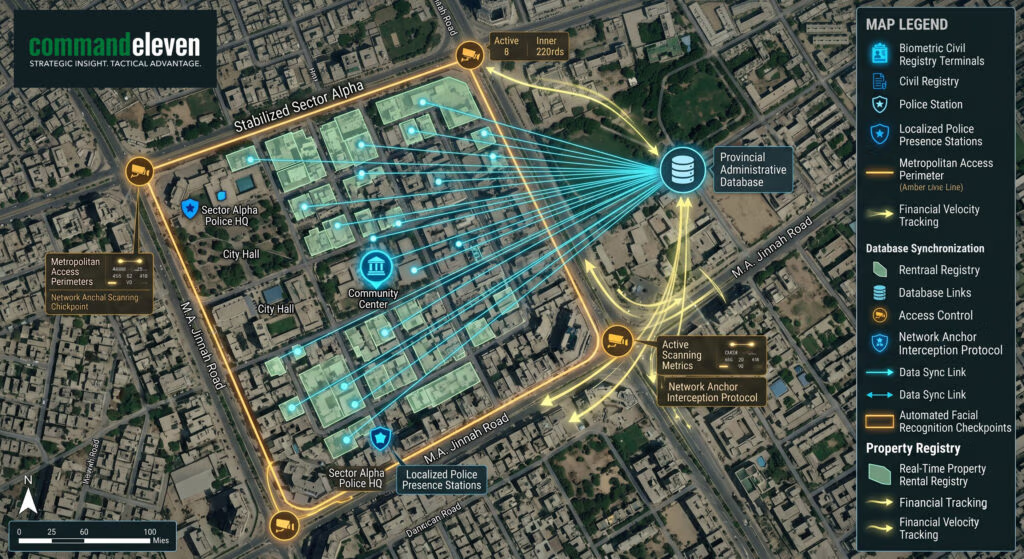
The final stabilization of the urban environment requires the permanent integration of state administrative authority within previously compromised sectors. The department replaces the shadow support networks of sectarian organizations by introducing automated municipal service delivery and biometric data tracking frameworks. By regularizing civil documentation and establishing permanent law enforcement presences, the state fills the administrative vacuum historically exploited by irregular entities. This institutional normalization builds a structural barrier that prevents the re-emergence of sectarian safe havens.
- Biometric civil registry terminals record facial, fingerprint, and iris profiles of residents within formerly high-risk sectors to eliminate anonymous safe havens.
- Automated property ownership registries digitize land records, preventing the illegal occupation of abandoned commercial spaces by militant front groups.
- Localized police presence stations establish permanent, high-visibility security footprints within dense residential blocks to suppress intimidation rackets.
- Community integration data loops provide secure, direct channels for local merchants to report extortion attempts directly to the central command hub.
The regularizing of civil administration permanently removes the logistical oxygen required to sustain urban insurgent nodes. Concurrently, structural analysis reveals that this administrative stabilization transforms the local population from passive facilitators into active components of the provincial security matrix. With secure access to state-backed utilities and transparent legal systems, the community actively rejects the parallel authority of sectarian front groups. This societal alignment seals the urban centers, forcing the remnants of the network to dissolve completely.
The department consolidates this territorial victory by linking all localized municipal data terminals to the central provincial intelligence database. This integration ensures that any sudden emergence of a tracking anomaly or financial irregularity triggers an immediate, automated risk flag. The state maintains permanent administrative persistence across the metropolitan zone, preventing the re-infiltration of transnational militant planners. The urban environment transitions from a volatile conflict zone into a highly secure, stabilized segment of the national administrative grid.
- Centralized tracking database links sync local civil registry updates with national security databases in real time to detect traveling operatives.
- Automated risk flag generators analyze localized changes in property rentals and financial velocities, alerting enforcement cells to potential safehouse creation.
- Permanent surveillance camera perimeters integrate facial recognition capabilities at major city entry points to intercept fixed network anchors.
- Secure commercial trade portals protect local business transactions from parallel tax extraction, securing the provincial revenue base.
The complete stabilization of the metropolitan zone marks the final phase of the urban decapitation doctrine. The territory is permanently closed to insurgent exploitation, ensuring that the province remains insulated from the cascading security shocks affecting adjacent border zones. By combining advanced signals intelligence with unyielding administrative integration, the state preserves its long-term sovereign authority over the urban heartland. This comprehensive operational blueprint stands as the definitive standard for modern counter-terrorism execution within high-density environments.
Doctrinal Synthesis and the Preservation of Urban Sovereignty
The definitive success of the Counter Terrorism Department’s Punjab offensive demonstrates that urban sovereignty is preserved through data-driven persistence rather than conventional kinetic mass. Modern asymmetric threats operating inside high-density metropolitan environments cannot be contained through legacy militarized containment models. To achieve permanent territorial stabilization, the state must implement a unified operational framework that treats signals intelligence, financial node isolation, and administrative integration as interdependent layers of a single defensive architecture. Implementing the #72/48 Protocol is mandatory to shield national command grids from the digital manipulation and sensory ruptures executed by sophisticated proxy electronic warfare cells. Furthermore, the state must aggressively eliminate internal vulnerabilities by enforcing strict counter-measures against insider threats within administrative registries. Reclaiming sovereign authority requires replacing reactive security postures with persistent, automated verification protocols across all commercial and digital transit lanes. The conflict within urban centers represents a critical structural competition for control over institutional integrity and the preservation of civil stability. Victory requires the uncompromising application of hardware truth to permanently dismantle the parallel economic and tactical ecosystems that sustain transnational militant networks.