Subject: The Erosion of Conventional Advantage and the Proliferation of NATO-Grade Hardware
Theater: Pak-Afghan Border / Khyber Pakhtunkhwa (KP) (August 2021 – Present)
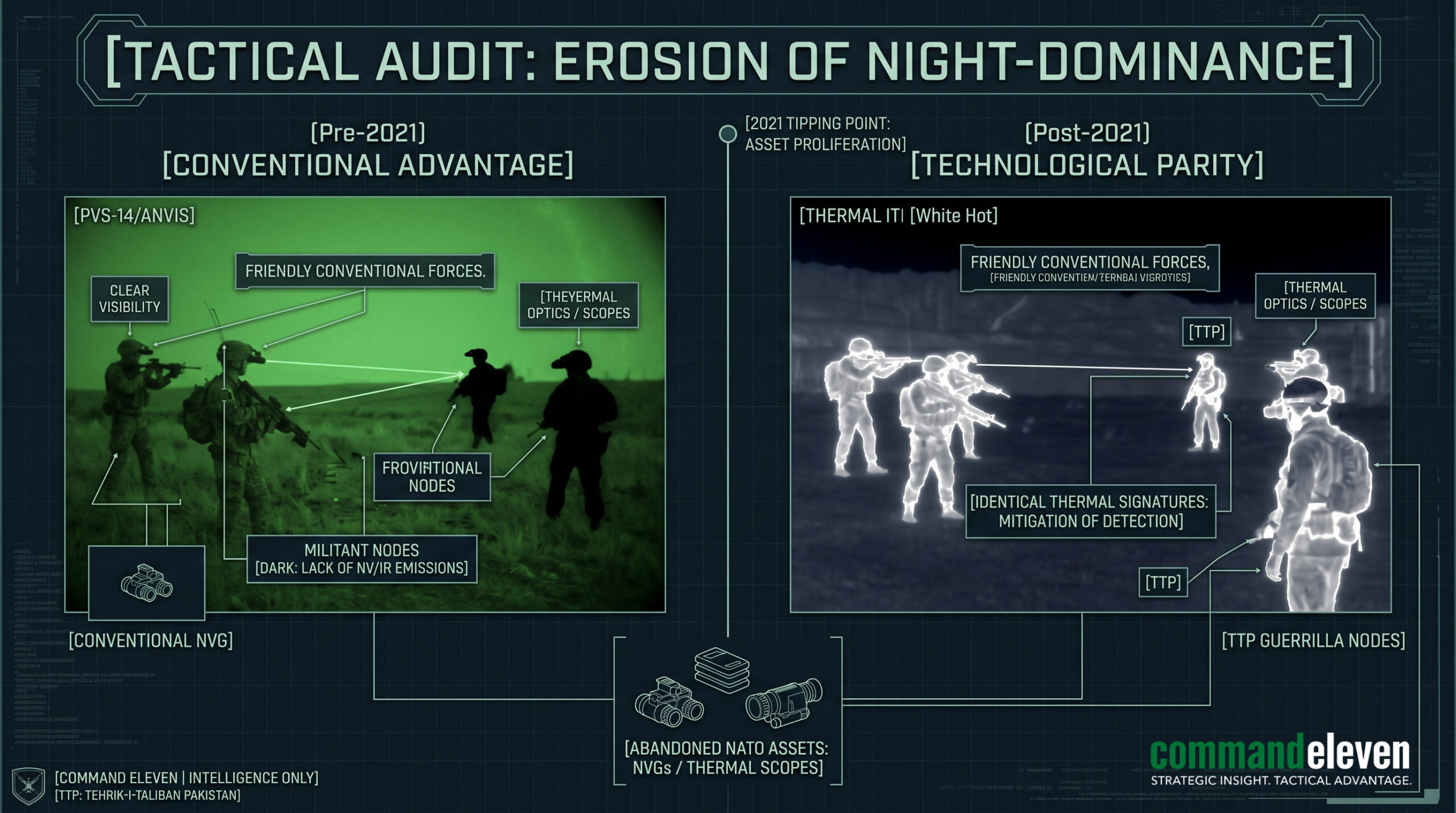
BLUF: The August 2021 US withdrawal from Afghanistan triggered a Technological Parity Crisis in the regional theater. The absorption of abandoned NATO-grade hardware into the insurgent ecosystem has terminated the state’s historical Night-Dominance. This transformation has evolved the TTP from a ragtag militia into a specialized guerrilla force capable of high-precision, high-lethality engagements in total darkness.
The Hardware Catastrophe: Asset Proliferation
The rapid collapse of the Kabul regime resulted in the abandonment of an immense tactical arsenal, which trickled seamlessly across the Pakistan-Afghanistan border.
- Advanced Optics: The proliferation of Night-Vision Goggles (NVGs) and Thermal Scopes is the most devastating factor. Insurgents now possess the capability to target security forces in total darkness—a domain previously owned exclusively by the military and SSG.
- Small Arms Superiority: NATO-standard M4 carbines equipped with ACOG sights and advanced rail systems have largely replaced the traditional AK-47 in TTP “Special Groups.”
- Signal Parity: The acquisition of encrypted communication devices has narrowed the SIGINT advantage formerly held by state intelligence.
Tactical Shift: The Loss of Night-Dominance
Prior to 2021, the state utilized the night as a shield. Today, the night has become a high-friction combat environment.
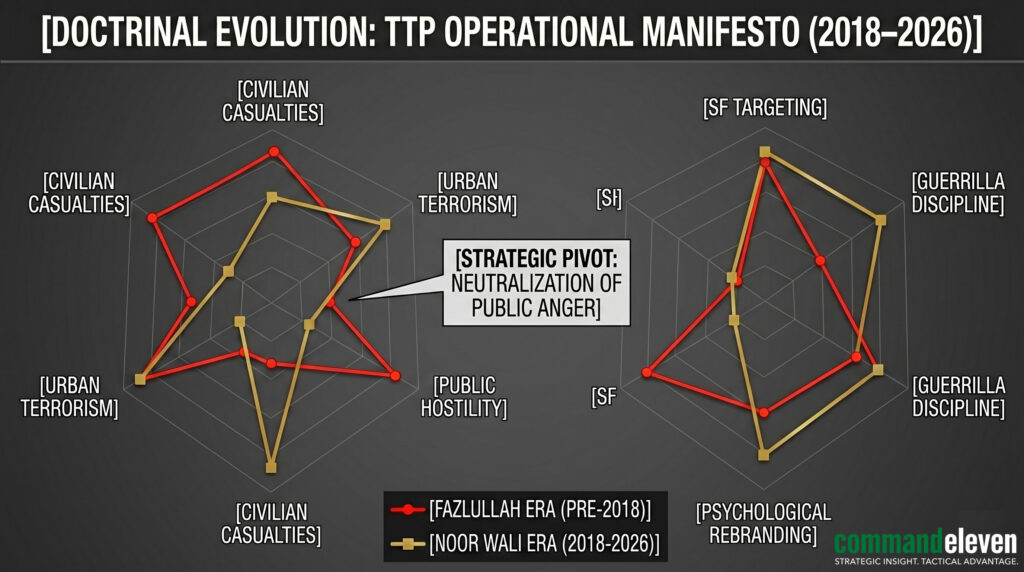
- Guerrilla Refinement: Combined with the Noor Wali Manifesto, this hardware allows for calculated, high-precision strikes.
- The “Thermal Ambush”: Insurgent snipers, equipped with thermal optics, can now engage security checkposts from ranges where they remain invisible to conventional sentries, leading to a spike in casualties among frontline personnel.
Counter-Parity: The State’s Technical Pivot
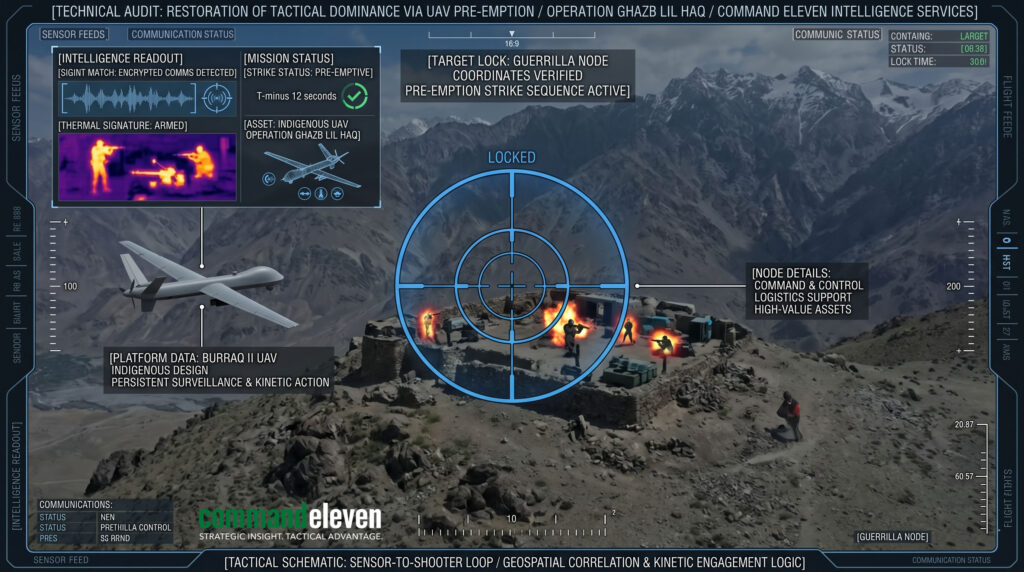
To restore the tactical imbalance, the military has shifted toward Operation Ghazb lil Haq and Mosaic Defense.
- Indigenous Drone Pre-emption: Utilizing locally developed UAVs with superior thermal signatures to identify guerrilla nodes at ranges that exceed insurgent-held optics.
- Specialized Sniper Cadres: Rapid deployment of SSG units equipped with superior-range thermal technology to out-match the TTP’s acquired hardware.
- Advanced SIGINT Fusion: Utilizing electronic warfare assets to jam and intercept the NATO-grade communication devices used by the insurgency.
Clinical Conclusion
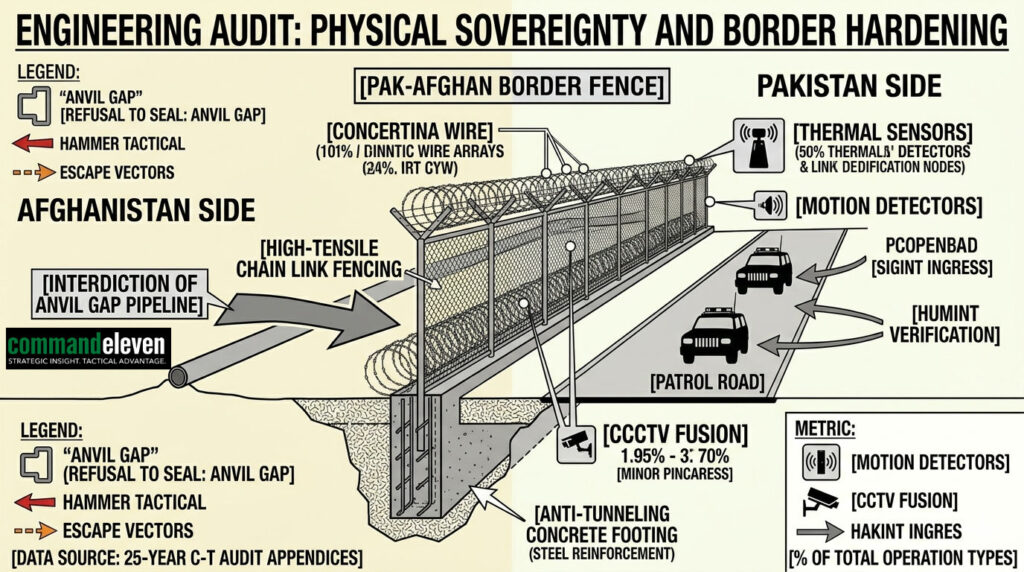
The 2021 withdrawal did not merely create a vacuum; it armed it. The Technological Parity Crisis represents the most significant tactical challenge for the state in 25 years of conflict. Regaining the qualitative edge in the border regions now depends on the successful integration of indigenous drone technology and a sensor-heavy Mosaic Defense that denies the adversary any Logistical Oxygen.