Technical Takeaways
- Signaling Manipulation Neutralizes Conventional Radar: Transnational maritime syndicates have decoupled physical smuggling from visual detection. By utilizing programmable transponder arrays and GPS signal generators, cartels mask illicit vessel transits within high-density commercial shipping lanes, rendering traditional static coastal surveillance ineffective.
- Hawala Networks Bypass Digital Enforcement Asset Seizures: The financial sustenance of maritime insurgencies relies on trade-based money laundering integrated into informal banking systems. By settling transactions via physical cash or unmonitored everyday commodities, the cartels completely isolate their capital flow from international banking compliance networks.
- Electronic and Cyber Dominance Compresses State Response Windows: The tactical deployment of localized radio frequency jammers and the exploitation of port authority databases allow syndicates to predict customs enforcement postures and delay naval interception. This operational latency permits smuggling craft to complete extractions and exit sovereign waters before state forces can coordinate an intercept vector.
Executive Summary
The convergence of transnational criminal organizations and decentralized financial systems along maritime transit corridors threatens regional maritime sovereignty. Transnational networks have successfully weaponized illicit energy siphoning operations across the Strait of Hormuz to generate unmonitored liquidity. This liquid capital flows directly into informal banking structures, bypassing international compliance mechanisms and starvation tactics. By converting stolen energy resources into shadow cash, these syndicates establish parallel logistical systems that provide financial sustenance to insurgent groups. Traditional enforcement methodologies fail to intercept these operations because the syndicates mask their maritime movements through systematic signaling manipulation. This security breakdown permits the expansion of an unquantified illicit economy that directly funds territorial instability. The state must transition to an active interdiction posture that fuses signals intelligence with kinetic maritime law enforcement to disrupt the supply chain. This dossier evaluates the technical mechanisms of fuel extraction, tracking manipulation, and informal financial laundering that enable these syndicates to maintain operational capability. Dismantling this threat requires an exhaustive understanding of the hardware dependencies and signaling protocols used by these networks. Without immediate structural intervention, the expansion of these liquid cartels will continue to erode the sovereign authority of coastal states across the critical maritime corridor.
Mechanical Extraction and Underwater Siphoning Protocols
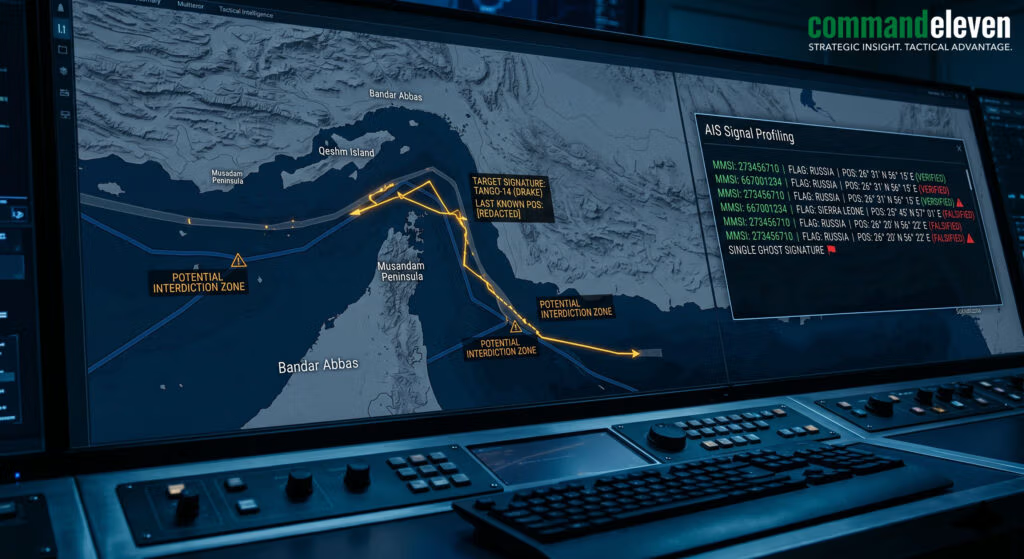
Transnational networks use specialized maritime hardware to extract crude oil and refined petroleum products from undersea pipelines and commercial transport vessels. Syndicates target remote coastal infrastructure where state monitoring is absent or disabled. These extraction nodes operate during specific visibility windows to minimize the probability of aerial or radar detection by maritime security forces. The stolen commodities are immediately transferred to modified low-profile vessels designed to evade standard coastal radar sweeps. This initial extraction phase establishes the baseline volume for the shadow economy, feeding unrefined assets directly into the illicit supply chain.
- High-pressure hot-tapping assemblies permit the illicit tapping of active underwater pipelines without stopping the flow of product or causing sudden pressure drops that trigger automated station alerts.
- Industrial-grade flexible marine hoses feature reinforced steel braiding to withstand extreme underwater pressures and facilitate rapid high-volume fuel transfers between stolen valves and transport vessels.
- Low-signature submersible pumps utilize acoustic dampening enclosures to suppress cavitation noise, preventing detection by localized sonar arrays deployed along the coastal shelf.
- Modified ballast tank configurations allow low-profile smuggling craft to adjust their buoyancy dynamically, maintaining an ultra-low surface profile even when carrying maximum cargo weight.
This hardware deployment directly alters the local maritime environment by creating unmonitored extraction zones. Concurrently, the tracking data reveals that syndicates coordinate these physical extractions with localized cyber operations. The physical theft of energy products remains dependent on the syndicate’s ability to blind the state’s regional monitoring apparatus. Once the cargo is secure inside the modified hulls, the vessels transition from the extraction phase to the transit phase. This transition requires the systematic manipulation of international maritime identification protocols to shield the vessels from regional interdiction forces.
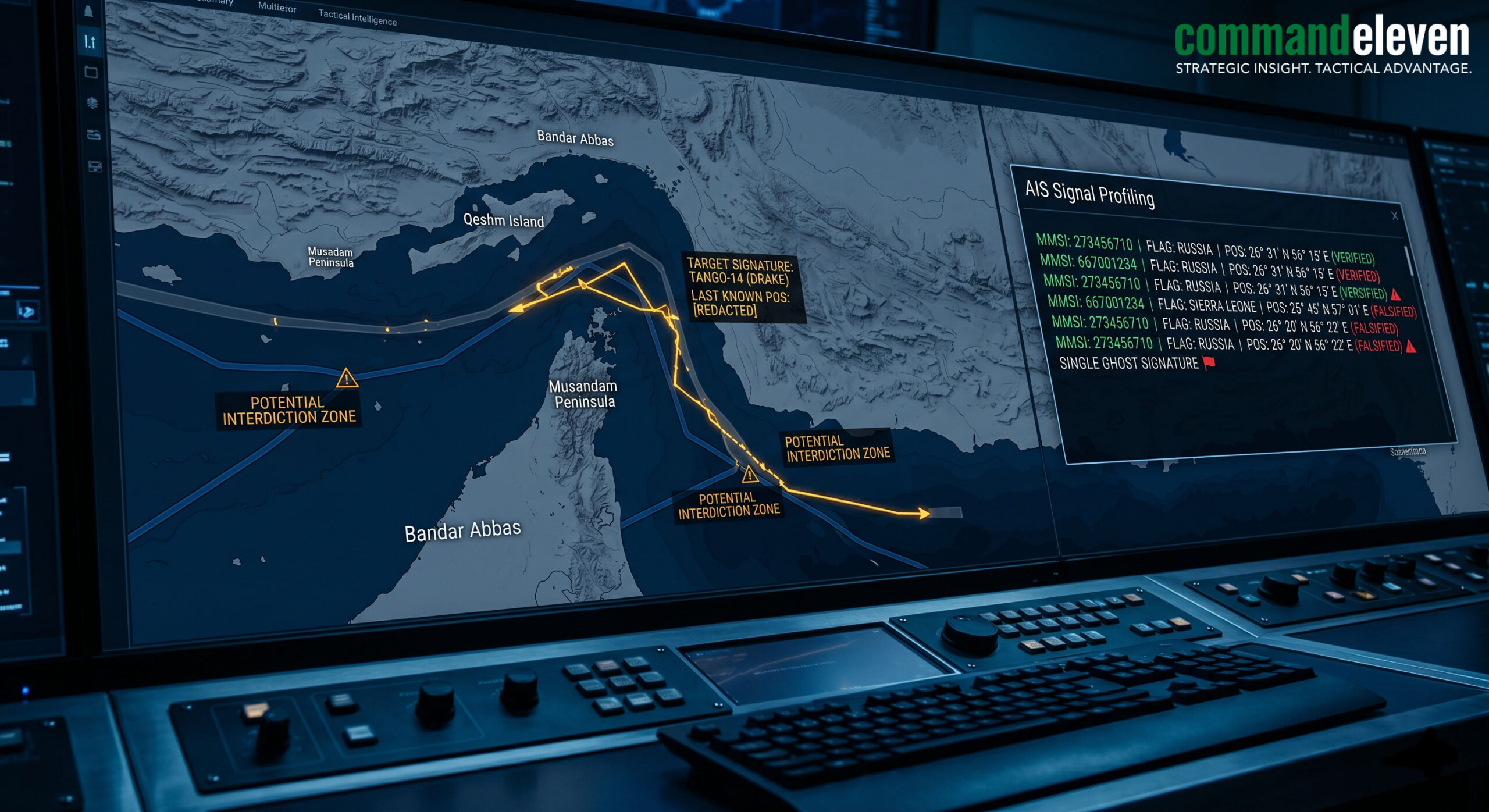
The syndicates deploy custom signaling packages to spoof the Automatic Identification System protocols mandated by maritime authorities. By broadcasting false vessel identities, the cartels insert ghost signatures into the regional maritime tracking matrix. This manipulation obfuscates the actual transit paths of the smuggling fleets, creating a persistent tracking gap that confounds traditional maritime intelligence. The spoofing operations occur in high-traffic shipping lanes where the false signatures blend seamlessly into commercial traffic profiles, reducing the utility of standard anomaly detection algorithms.
- Programmable transponder arrays allow operators to alternate between multiple registration codes and vessel names mid-transit, actively spoofing regional coastal surveillance stations.
- GPS signal generators emit low-power falsified positioning data to overwhelm the shipboard receiver, forcing the tracking system to log static or compliant path coordinates.
- Encrypted satellite communication links transmit real-time route alterations from shore-based command cells to the helmsmen, bypassing local cellular networks entirely.
- Acoustic transponder bypass switches isolate the vessel’s emergency locator beacons, preventing automatic activation if maritime law enforcement boards or disables the craft.
The falsification of tracking data directly facilitates unhindered movement across disputed maritime boundaries. This signaling buffer ensures that the physical cargo reaches off-shore transfer points without triggering automated naval deployment protocols. Once the vessels arrive at these designated coordinates, they execute ship-to-ship transfers with larger commercial tankers. These commercial tankers then commingle the stolen product with legally sourced fuel, effectively neutralizing the tracking history of the energy assets before they reach regional distribution hubs.
Financial Infiltration and Trade Asset Washing Networks
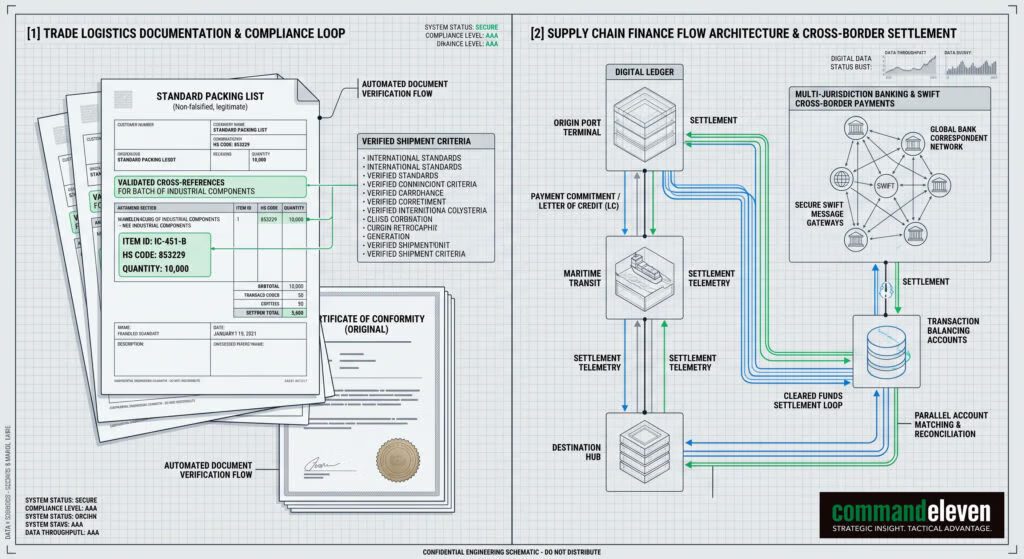
The commingled fuel assets enter legitimate commercial markets through corrupted midstream logistics providers who falsify origin documentation. This white-washing process converts the physical stolen energy into clean, tradeable commodities on the global market. The revenue from these sales does not enter the formal banking sector, where anti-money laundering protocols would trigger suspicious activity reports. Instead, the buyers settle the invoices using physical cash or commodities, which are immediately funneled into the decentralized Hawala networks operating in port cities.
- Falsified bills of lading misrepresent the loading port and country of origin, listing compliant third-party facilities to bypass international customs audits.
- Corrupted laboratory certification documents alter the chemical fingerprint data of the crude oil, matching the profile of legally sanctioned fields.
- Shell company purchasing entities hide the ultimate beneficial owners of the cargo through complex webs of registration across multiple offshore tax havens.
- Cash-pooling trade accounts allow syndicates to merge the proceeds of legal maritime trade with illicit fuel sales, obscuring the audit trail.
This financial masking protocol effectively insulates the cartel’s leadership from international asset seizure mechanisms. Concurrently, the operational analysis indicates that the liquid capital generated by these sales is converted into transactional liquidity within hours of offloading. The speed of this conversion ensures that the cartel maintains constant cash flow to fund ongoing maritime operations. The white-washed fuel provides the financial baseline for the next phase of the cartel’s lifecycle, which involves the distribution of profits through informal financial networks.
The cartels rely on the Hawala system to distribute the liquid capital to insurgent networks and supply chain providers. This informal banking structure operates entirely on trust and ledger balancing, leaving no digital footprint for financial intelligence units to track. The brokers settle balances through trade-based money laundering schemes, using everyday commodities like electronics or vehicles to transfer value across international borders. This methodology eliminates the need for physical currency movements, neutralizing the effectiveness of traditional border currency checkpoints.
- Token-based verification protocols utilize unique digital or physical markers to authenticate clearing requests between international brokers without transmitting identifying personal data.
- Parallel ledger balancing applications run on encrypted, decentralized servers to log debits and credits across multiple jurisdictions simultaneously.
- Trade-commodity invoicing systems generate inflated or phantom invoices for consumer goods to justify large capital transfers between import-export fronts.
- Encrypted clearing networks communicate transaction parameters using steganographic markers embedded within public digital images, hiding the messages from state surveillance.
The deployment of these informal financial networks directly subverts the state’s capacity to economically starve the insurgency. The financial fluidness achieved through these methods permits the cartel to purchase advanced weaponry and surveillance hardware on the black market. This acquisition loop directly enhances the tactical capability of the syndicate’s maritime enforcement arms. The integration of informal banking with physical energy extraction creates a self-sustaining ecosystem that resists external economic shocks.
Tactical Militarization and Electronic Jamming Deployments
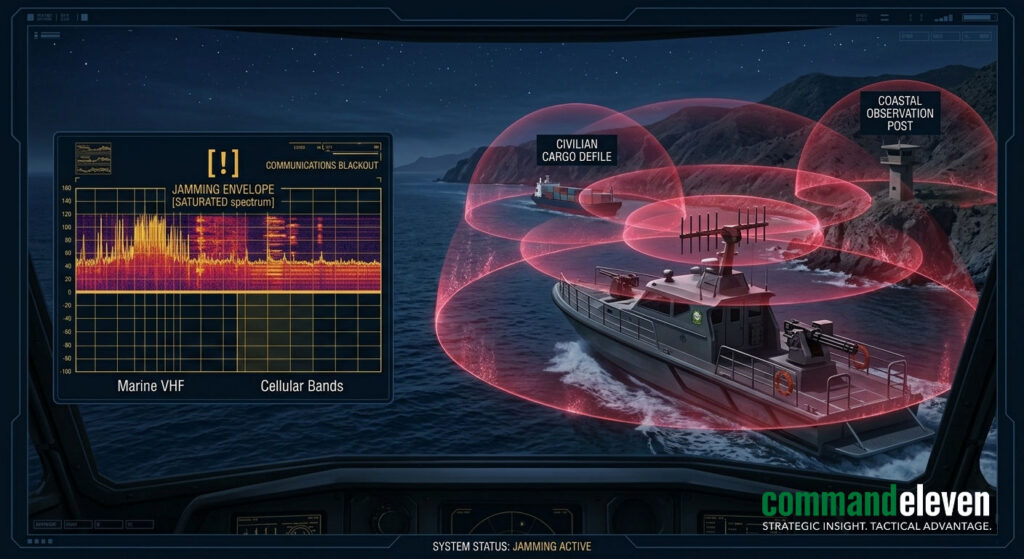
The accumulation of unmonitored capital allows the cartels to build dedicated maritime enforcement cells to protect their extraction corridors. These tactical units operate high-speed interdiction watercraft equipped with crew-served weapons and commercial-grade radar systems. These units actively monitor the patrol schedules of state maritime agencies, executing extractions during gaps in naval coverage. The presence of these armed cells elevates the conflict from a standard smuggling operation to an active auxiliary challenge to state sovereignty.
- Twin-engine tactical watercraft deliver the high-velocity speeds required to outrun standard coastal patrol boats and execute rapid maneuvers in shallow waters.
- Commercial-grade surface radars track the real-time positions of maritime security vessels, providing the tactical cell with early warning capabilities.
- Night-vision electro-optical sensors enable navigation and target acquisition in total darkness, eliminating the need for visible navigation lights during night transits.
- Reinforced weapon mounts secure medium machine guns to the bow and stern, providing defensive firepower during encounters with maritime law enforcement.
This tactical militarization transforms coastal waterways into high-risk operational zones for civilian and state vessels. Concurrently, tracking data reveals that these enforcement cells use advanced electronic warfare equipment to disrupt local communications during interdiction operations. By jamming the radio frequencies used by coastal authorities, the syndicates delay the coordination of state response forces. This localized electronic dominance ensures that the extraction vessels can complete their transfers and exit the area before naval assets arrive.
The syndicates use localized electronic jamming arrays to sever the communications link between coastal observation posts and responding naval vessels. This tactical jamming prevents the real-time transmission of coordinates and intercept vectors, creating a localized command vacuum. The jamming operations are precisely timed to coincide with the vulnerability window of the extraction fleet, maximizing the probability of a successful getaway. The equipment used by the cartels is often sourced from black-market military suppliers, providing capabilities that rival regular state forces.
- Portable radio frequency jammers saturate the standard marine VHF frequencies, preventing targeted vessels from broadcasting distress signals or tactical updates.
- GPS spoofing modules transmit altered positioning signals to responding law enforcement craft, steering them away from the actual interception zone.
- Cellular network disruptors disable terrestrial mobile communications along the immediate coast, preventing local populations from alerting authorities.
- Directional antenna arrays focus the jamming energy on specific naval patrol paths, minimizing the collateral footprint of the electronic disruption.
The application of electronic jamming directly degrades the operational effectiveness of state maritime security forces. This communication barrier forces naval assets to rely on legacy navigation and search protocols, significantly increasing the time required to locate and intercept the smuggling fleet. By the time communication is restored, the cartel vessels have typically entered international waters or dissolved into commercial shipping lanes. This operational delay permits the continuous, unhindered flow of extracted wealth out of the state’s sovereign territory.
Supply Chain Optimization and Data System Exploitation
The continuous outflow of wealth funds the acquisition of advanced logistics software that optimizes the cartel’s distribution network. The syndicates use proprietary supply-chain tracking programs to monitor the real-time location of their smuggling assets and calculate optimal transit speeds based on weather and patrol data. This technological upgrade removes human error from the logistical chain, maximizing fuel extraction efficiency. The integration of software optimization marks the transition of the cartel from a loose syndicate into a highly disciplined corporate structure.
- Custom logistics dashboards aggregate sensor data from across the fleet, displaying fuel volumes, vessel speeds, and fuel consumption metrics in real time.
- Predictive weather modeling software calculates routes that leverage sea conditions to hide low-profile vessels from radar detection arrays.
- Automated encryption switchers rotate communication protocols at fixed intervals to prevent state intelligence from decrypting operational coordination messages.
- Inventory management modules track the volume of white-washed fuel stored in offshore tankers, coordinating distribution based on international market demands.
The deployment of automated logistics systems allows the cartel to scale its operations without expanding its visible physical footprint. Concurrently, behavioral analysis indicates that this efficiency optimization lowers the conflict premium for the syndicate. By reducing the time vessels spend in high-risk zones, the cartel lowers its operational costs and limits its exposure to state interdiction. The technological sophistication of these logistics networks requires a specialized technical response from state intelligence services.
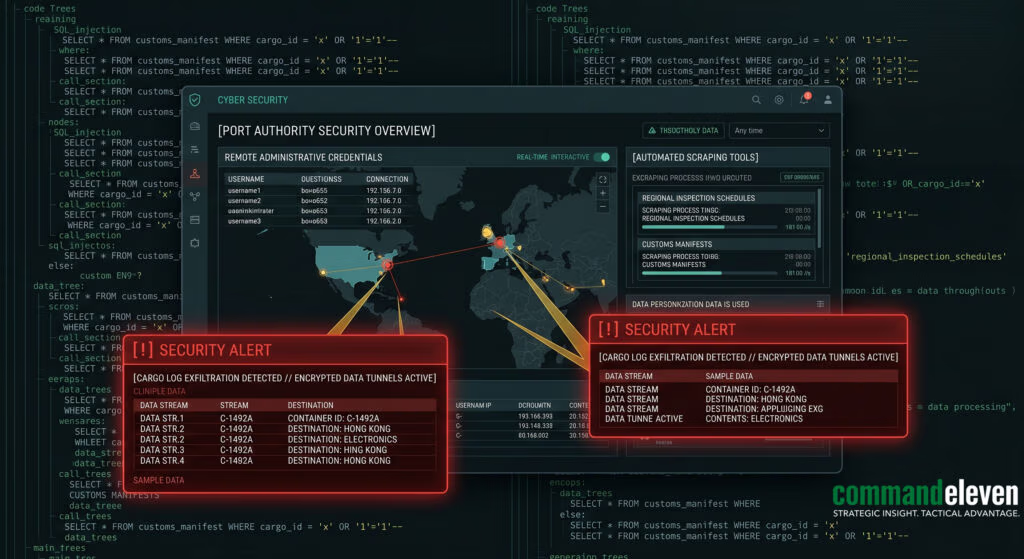
The cartels deploy cyber exploitation units to compromise state maritime port databases and track customs inspection schedules. By gaining unauthorized access to these systems, the syndicates identify containers and vessels scheduled for exhaustive inspection, allowing them to route their white-washed products through compliant channels. This cyber penetration neutralizes the effectiveness of port security protocols, converting state infrastructure into passive facilitators of the illicit trade. The entries are manipulated remotely using stolen administrative credentials harvested through targeted phishing campaigns.
- SQL injection scripts exploit vulnerabilities in port authority databases, allowing the syndicate to extract cargo manifests and customs logs.
- Harvested administrative credentials grant the cartel remote access to shipping databases, permitting the alteration of vessel compliance histories.
- Automated scraping tools monitor customs inspection schedules in real time, alerting the logistics cell to sudden changes in enforcement postures.
- Encrypted data exfiltration tunnels pass stolen port data through legitimate communication protocols, masking the cyber intrusion from network security monitors.
The compromise of port databases creates a structural vulnerability that threatens international shipping integrity. By manipulating customs registries, the syndicates ensure that their front companies maintain clean regulatory records, preventing automated flags from triggering during international transits. This institutional infiltration allows the cartel to wash capital on a global scale, embedding their financial operations deep within the legitimate corporate architecture. The state’s failure to secure its digital customs infrastructure directly subsidizes the expansion of the liquid cartels.
Ground Based Sanctuary Security and Localized Co-optation
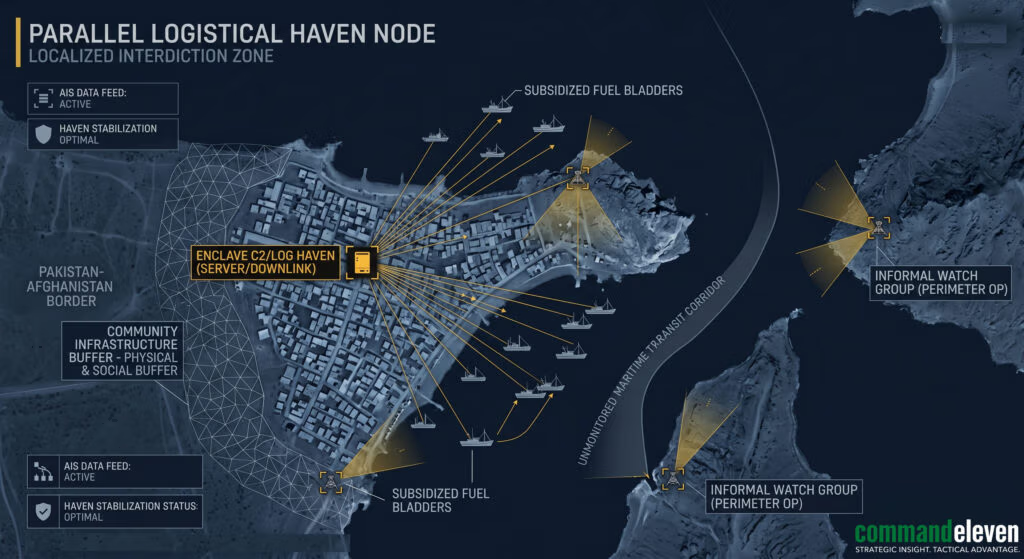
The expansion of the cartel’s digital operations necessitates the creation of secure, shore-based server facilities inside weak sovereign enclaves. These command hubs host the infrastructure required to manage the global financial and logistical networks of the syndicate. The facilities are protected by localized corrupt political structures that receive financial kickbacks from the fuel extraction operations. This symbiotic relationship provides the cartel with safe havens where state law enforcement cannot execute raids or digital seizures.
- Hardened data storage arrays feature automated cryptographic self-destruct protocols if unauthorized physical access to the facility is detected.
- Parallel satellite downlinks ensure continuous internet connectivity even if the host nation’s primary telecommunications grid suffers a disruption.
- Uninterruptible power generation systems utilize redundant diesel generators to maintain server uptime during regional infrastructure failures.
- Biometric access control systems restrict entry to verified core syndicate personnel, preventing infiltration by foreign intelligence operatives.
The stabilization of these shore-based command hubs grants the cartel permanent operational durability against international law enforcement initiatives. Concurrently, financial tracking reveals that these hubs serve as the distribution nodes for localized corruption funds. By injecting millions of dollars into the local economy, the cartel replaces the state as the primary provider of logistical oxygen to the population. This economic dependency consolidates the cartel’s control over the territory, creating an untouchable staging ground for regional maritime piracy.
The syndicates use their financial dominance to establish parallel social support systems that win the compliance of local coastal populations. By funding schools, medical clinics, and local utilities, the cartel builds an intelligence buffer that alerts them to imminent state military or law enforcement actions. The population becomes an extension of the cartel’s security apparatus, providing early warning data through informal human intelligence networks. This social integration renders classic counter-insurgency tactics ineffective, as the community actively shields the criminal network from state intervention.
- Direct financial stipends are distributed to local community leaders to secure their loyalty and ensure the exclusion of state authorities.
- Subsidized fuel distribution networks provide cheap energy to local fishing fleets, embedding the cartel’s stolen assets directly into the local micro-economy.
- Informal watch groups monitor coastal entry points, using encrypted messaging applications to report unusual military or police movements to the cartel.
- Local construction funding builds physical infrastructure that double as tactical observation posts or hidden storage facilities for the smuggling fleet.
The creation of an intelligence buffer within the local population makes tactical surprise impossible for state security forces. Every naval deployment or coastal mobilization is logged and transmitted to the cartel long before the intercept units reach the extraction zones. This population-level compliance ensures the survival of the cartel’s land-based infrastructure, cementing its position as a permanent shadow authority along the maritime corridor. The state cannot regain control through kinetic force alone; it must dismantle the economic dependency that binds the population to the liquid cartel.
Doctrinal Restructuring and Sovereign Reclamation Frameworks
The rise of liquid cartels and geo-financial extraction networks demands an immediate, structural re-evaluation of maritime sovereignty doctrine. The tactical integration of energy theft, signaling manipulation, and informal financial systems allows these syndicates to operate beyond the reach of traditional state enforcement mechanisms. Kinetic interventions that rely on standard territorial patrols are no longer sufficient to disrupt an adversary that utilizes automated logistics and cyber-kinetic capabilities. To achieve strategic containment, the state must deploy an active, sensor-fused interdiction framework that targets the cartel’s digital and financial lifelines simultaneously. Implementing the #72/48 Protocol is mandatory to insulate the command grid from the sensory ruptures induced by the syndicate’s electronic warfare assets. Furthermore, the state must address the regulatory failures that permit the untracked expansion of informal banking systems in port cities. Legitimizing maritime authority requires replacing the shadow logistics of the cartels with persistent state-backed administrative and economic frameworks. The conflict is no longer a localized law enforcement challenge; it is a structural competition for control over the maritime corridors that dictate regional economic survival. Victory requires the systematic weaponization of hardware truth to dismantle the invisible financial ecosystem sustaining the liquid cartels.