
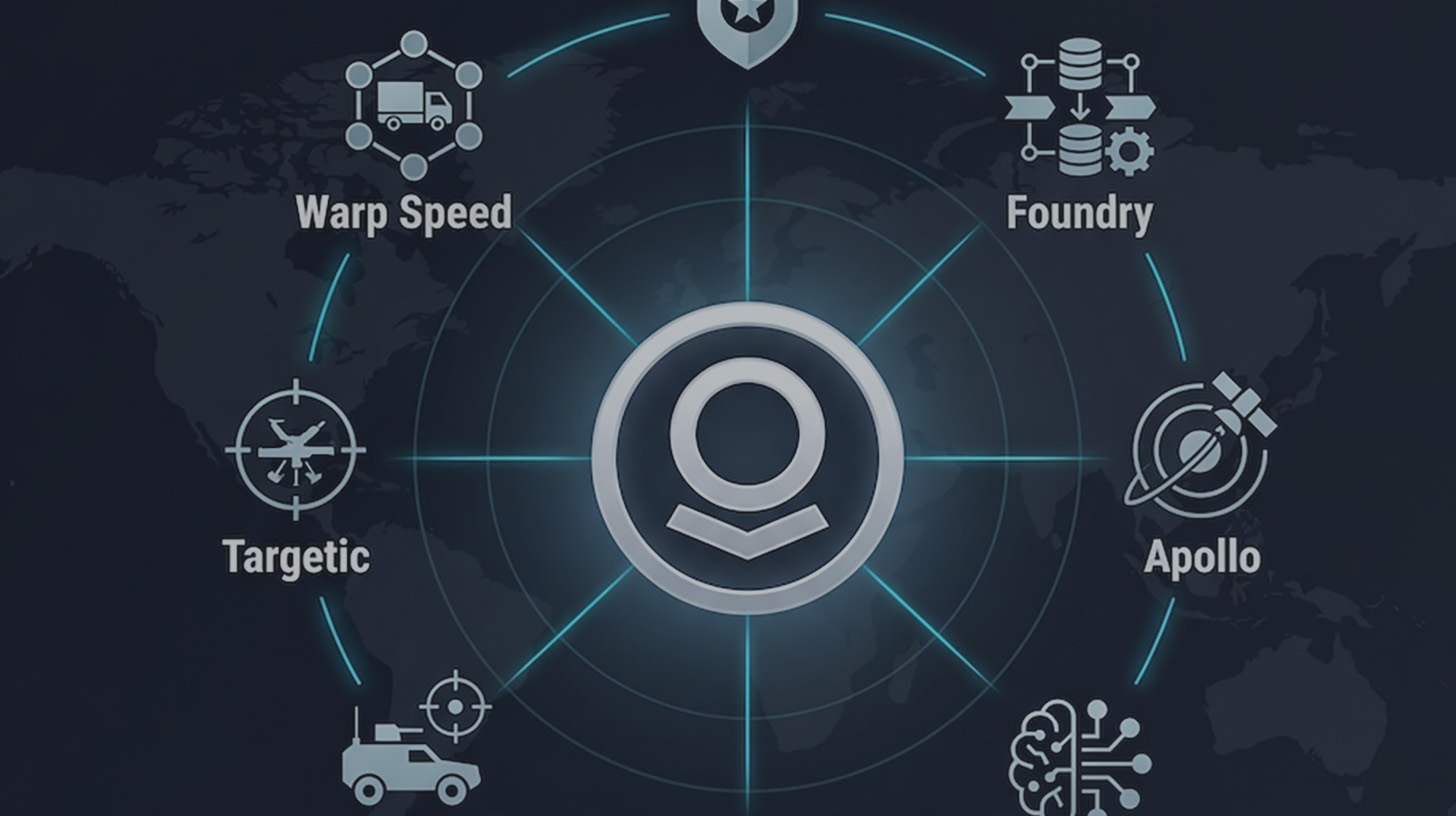
Summary
Co-founded in 2003 by Peter Thiel, Alex Karp, Joe Lonsdale, Stephen Cohen, and Nathan Gettings with seed capital from the CIA’s In-Q-Tel, Palantir Technologies has evolved from a secretive counter-terrorism data-mining contractor into the world’s most pervasive artificial intelligence-driven infrastructure company. As of Q1 2026, Palantir operates across five continents, holds contracts with more than 30 governments, with its software simultaneously touching defense, intelligence, law enforcement, border security, national health services, and commercial enterprises. Its fiscal year 2025 revenue reached $4.5 billion, growing 29% year-on-year, with the US government revenue alone exceeding $1.3 billion.
This intelligence assessment provides a structured analysis of Palantir’s full product architecture, global deployment footprint across countries, cities and government departments, the value addition it delivers to clients, and the systemic risks – civil libertarian, geopolitical, technological, and ethical – that its model of “total information awareness” introduces into democratic governance structures worldwide.
CommandEleven’s core understanding – Palantir has constructed an unprecedented private-sector nervous system for the modern state, removing the requirement of human interaction in the decision-making process. This same platform architecture save patients, guides Ukrainian drone targeting, tracks undocumented immigrants, and monitors global supply chains, while also being the most advanced surveillance and kill-chain facilitation apparatus ever deployed outside classified government systems.
The value is real. The risk is existential.